
New England Power Pool (NEPOOL)
© RTO Insider LLC
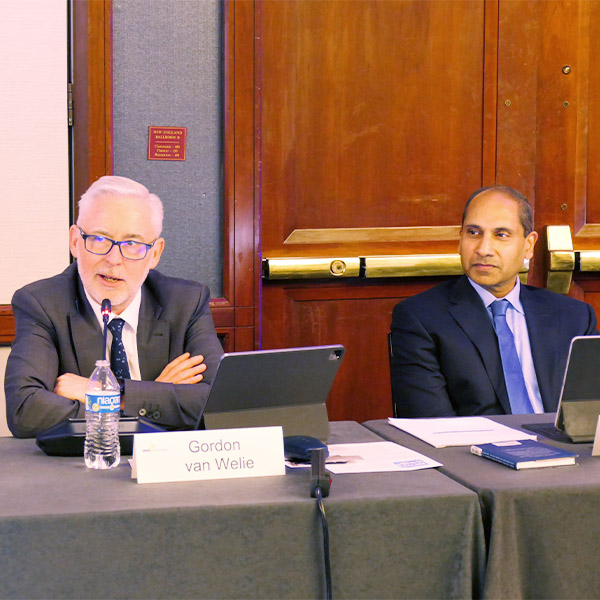
The NEPOOL Participants Committee voted nearly unanimously to support the first phase of ISO-NE’s capacity auction reform project.

Shutterstock
ISO-NE outlined proposed capacity accreditation for active and passive demand capacity resources at the NEPOOL Reliability Committee.
Analysis Group
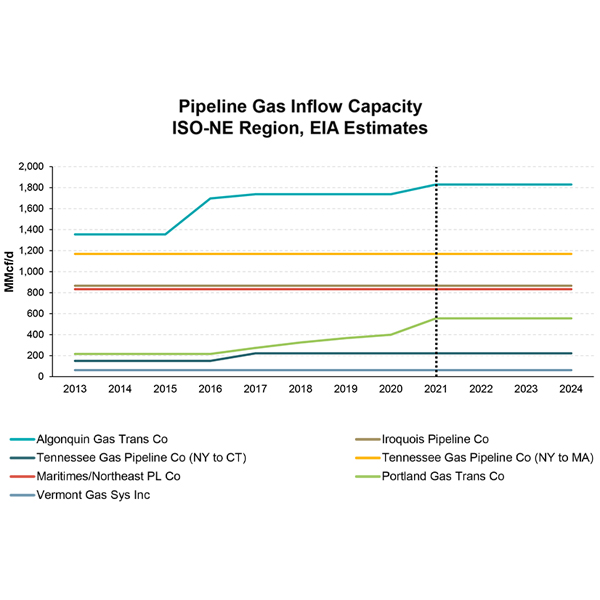
ISO-NE outlined its planned approach for accounting for resources’ gas supply limitations in its new capacity accreditation framework at a NEPOOL Markets Committee meeting.
ISO-NE
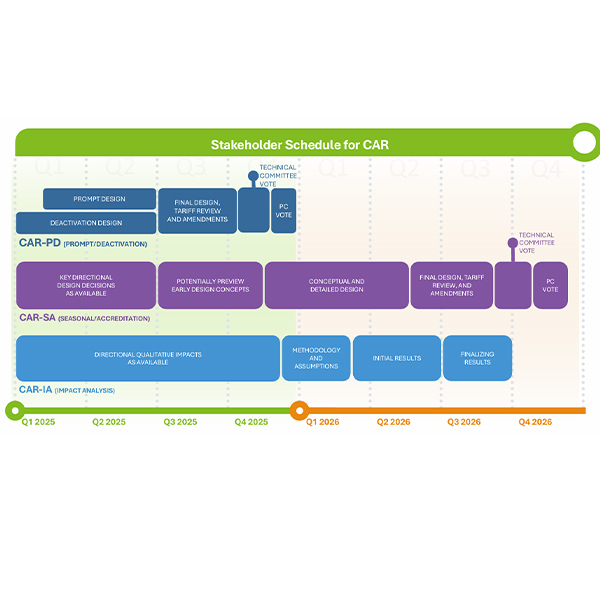
NEPOOL technical committees voted in favor of ISO-NE’s proposal to adopt a prompt capacity auction and update the RTO’s resource retirement process.
NOAA
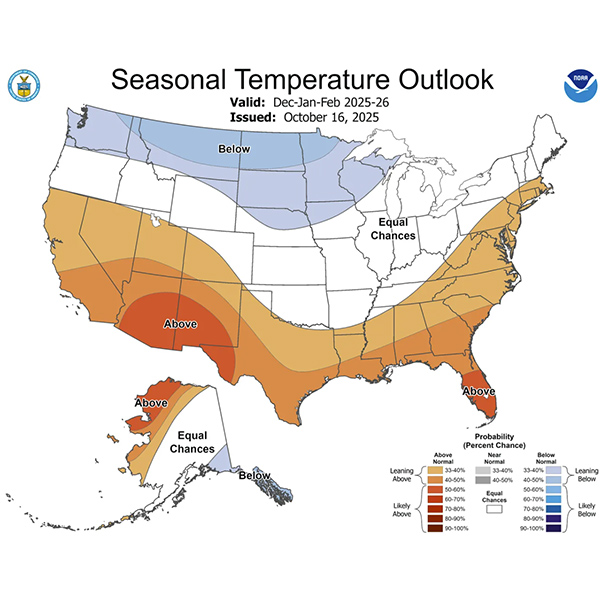
ISO-NE’s probabilistic modeling indicates there is minimal risk of shortfall in the upcoming winter, COO Vamsi Chadalavada told the NEPOOL Participants Committee.

© RTO Insider
ISO-NE is proposing tariff changes intended to update how the RTO assigns capacity rights to resources not subject to its interconnection processes.

Convergent Energy and Power
ISO-NE’s first interconnection cluster study held under new Order 2023 rules is made up mostly of large battery resources and contains only five wind and solar projects.
ISO-NE
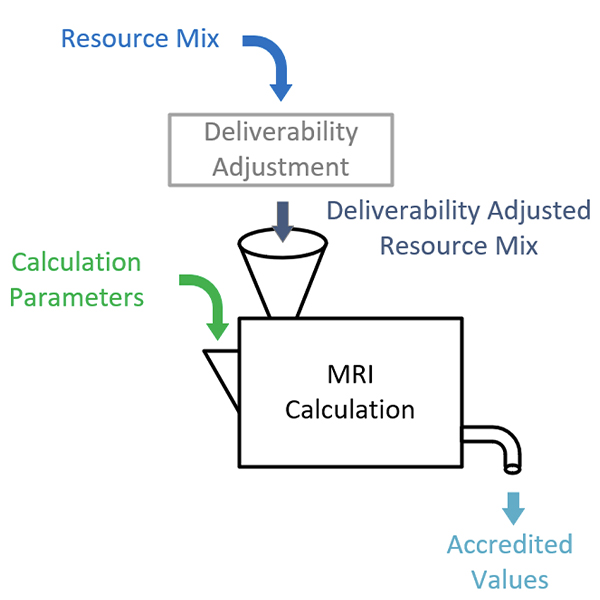
ISO-NE presented a high-level overview of how it plans to account for resource deliverability in its updated capacity accreditation framework.
ISO-NE
NEPOOL members proposed several amendments to the first phase of ISO-NE’s capacity market overhaul prior to the scheduled Markets Committee vote on ISO-NE’s proposal in November.
ISO-NE
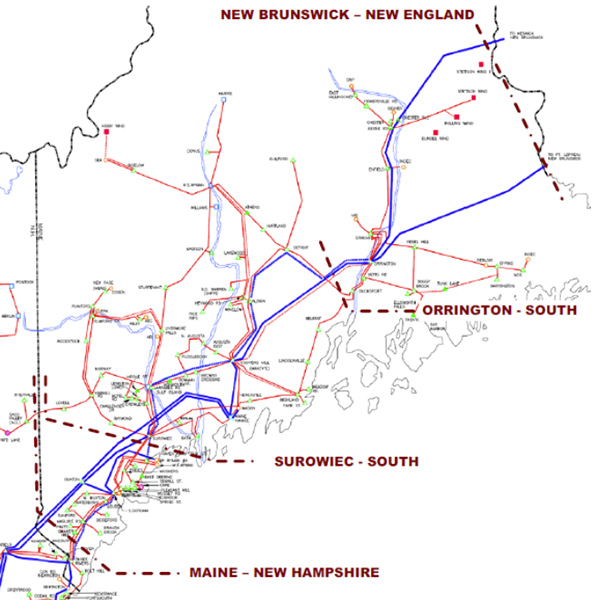
ISO-NE received six proposals from four different companies in response to its request for proposals to address transmission constraints and interconnect onshore wind in Maine.
Want more? Advanced Search
