generator interconnection queue
© RTO Insider LLC
FERC denied SPP’s waiver request to allow the RTO’s interconnection customers without a pending request to ask for interim interconnection service during a period when the study queue cluster’s window is closed.
Alliant Energy
Protests and endorsements have turned up in response to MISO’s second attempt with FERC to annually cap project submittals to its interconnection queue based on a megawatt value.

Minnesota Power
MISO will waste no time in 2025 trying to blunt the threat of a shortage that could arrive in the summer months by encouraging new generation and enacting further resource adequacy measures.
CAISO
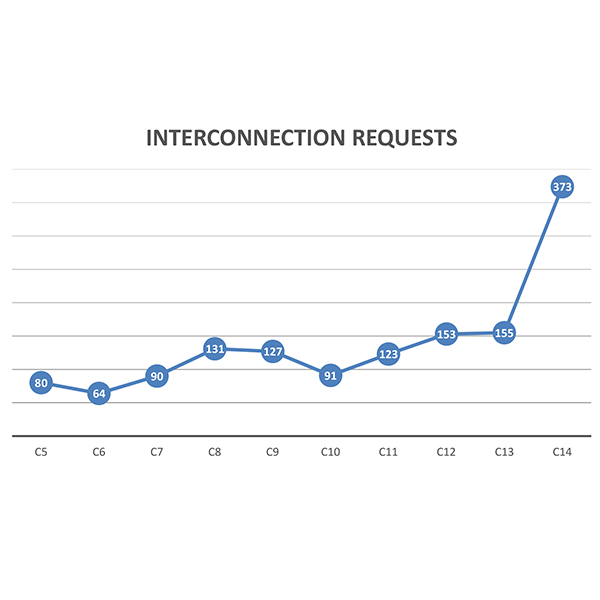
FERC approved CAISO’s request to further streamline its generator interconnection process in response to the high volume of requests in its interconnection queue.

© RTO Insider LLC
MISO told its Board of Directors that drafting an interconnection queue express lane for generators that resolves resource adequacy risks and has stamps of approval from regulators is essential.
Meta
Clean energy organizations are prodding MISO to contemplate prospective load and generation simultaneously, with Clean Grid Alliance asking MISO to coordinate its annual transmission studies with its interconnection queue studies.

Allete
MISO officially decided it will forgo acceptance of a 2024 queue cycle of projects while it works with Pearl Street to automate interconnection studies.
Shutterstock
Advanced Energy United released a report finding major economic benefits from speeding up the queues, which will lead to more investments in generation and associated jobs across the country.

Shutterstock
Stakeholders are split on whether FERC should adopt additional changes to its generator interconnection rules, or focus on implementing Order 2023 while letting specific regions go further on their own, according to comments filed after a September technical conference.
© RTO Insider LLC
MISO said it will design an expedited resource adequacy study process so generation projects in the interconnection queue that are needed for capacity sufficiency will get grid treatment sooner.
Want more? Advanced Search