The problem: meeting inflexible electric demand with a generation mix that is increasingly intermittent.
The increasing intermittency is driven by the replacement of dispatchable fossil fuels (coal, gas and oil) with non-dispatchable renewables (wind and solar).
The problem is well understood. The solutions, not so much.
Prior columns have discussed why nuclear fusion is no answer, why long-duration battery storage is prohibitively expensive, why offshore wind makes no economic sense, and why green hydrogen electricity actually is harmful.
I’ve discussed why the most economic path to net zero involves retaining gas generation in essentially a back-up role and offsetting the occasional carbon emissions with carbon offset credits and/or carbon capture, and I’ve had some other suggestions along the way, including Plan B, solar geoengineering.
Talking Fission
Today, let’s talk about nuclear fission. We need to distinguish new fission from existing fission. Diablo Canyon is a poster child for the latter, and it is fortunate that its premature closure was averted, as I urged many years ago.
But new fission? In the wake of the Vogtle experience in Georgia (more than seven years late and $17 billion over budget), attention has shifted to small modular reactors (SMRs) of around 300 MW (about a fourth of the typical large unit like Vogtle).
As the term “modular” suggests, the basic pitch is that SMRs could be “factory built,” with a lower per-MW cost. Many uncertainties exist about that, and a scorching critique of SMRs from the University of Pennsylvania is here.
The SMR vision persists despite the collapse of the Utah NuScale SMR project in the wake of dramatic cost increases (and despite the $30/MWh federal subsidy). But it’s been suggested that NuScale’s failure was an anomaly.
New Data Point from Ontario
So, which is it? We’ve just received a new data point from Ontario. The project there involves four 300-MW SMRs. It’s been estimated to cost $15 billion. The government’s press release says, no irony intended, that it’s part of “Ontario’s Affordable Energy Future.”
If we do the math, $15 billion for 1,200 MW is $12.5 million/MW. If we plug this capital cost into the Lazard capital cost range, it interpolates to $195/MWh in the levelized cost of energy (LCOE) range. (See Page 38.)
For perspective, this $195/MWh is five times the $38/MWh average cost of generation in PJM. (See Figure 3 net of transmission costs.) Yes, five times!
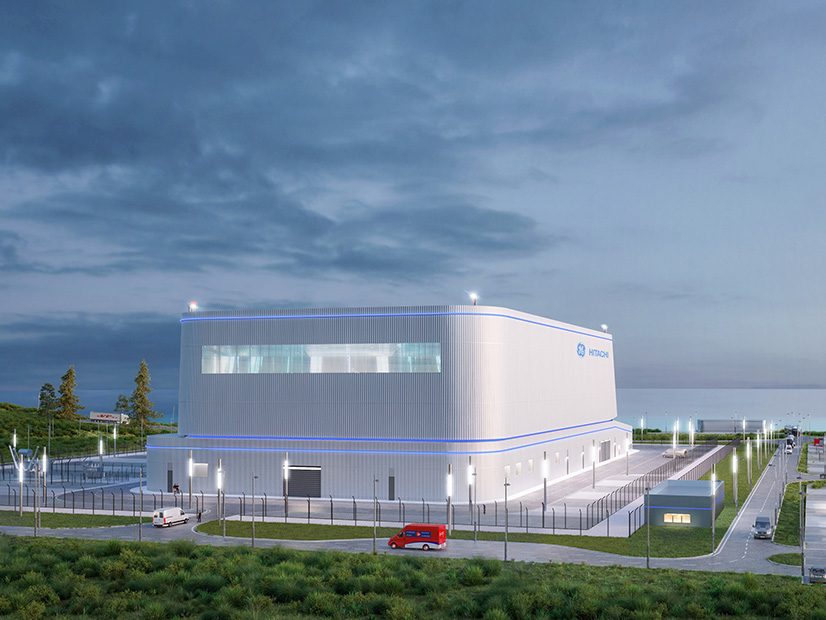
It’s also five times what GE Hitachi told the Nuclear Regulatory Commission in 2019 this SMR would cost, specifically that it would cost less than $2.25 million/MW. (See Slide 6.) GE Hitachi also said: “Nuclear could become a major source of U.S. power generation at $2,000/kW [$2 million/MW].” (Slide 5.) “Yes,” at that cost, and “No,” at six times that cost.
Before Cost Overruns
And even this is optimistic because it assumes the Ontario project will come in as budgeted. Experience with SMRs (like other nuclear) is for massive cost overruns. J.P. Morgan reports: “There are three operating SMRs in the world (two in Russia and one in China), and another under construction in Argentina. The cost overrun on the China SMR was 300%, on Russian SMRs 400% and on the Argentina SMR (so far) 700%. Their construction time frames were also nowhere near the projected 3-4 years; they all took 12-13 years instead to complete.” (By the way, this J.P. Morgan paper is an impressive overview of energy and the environment.)
Who is on the hook for the cost overruns? The Ontario project’s lead contractor says it has been pursuing “collaborative alternative procurement and contracting models with the goal to reduce risk during construction,” specifically including the Ontario SMR project. Doesn’t sound like it’s taking cost overrun risk.
That leaves the utility’s customers and the utility’s shareholder(s) to bear the risk. The utility is owned by the Ontario government, so that means the customers and the taxpayers. Uh oh.
Good luck Ontarians! I think you’re going to need it.
Columnist Steve Huntoon, a former president of the Energy Bar Association, practiced energy law for more than 30 years.