
U.S. Energy Information Administration (EIA)
Venture Global LNG
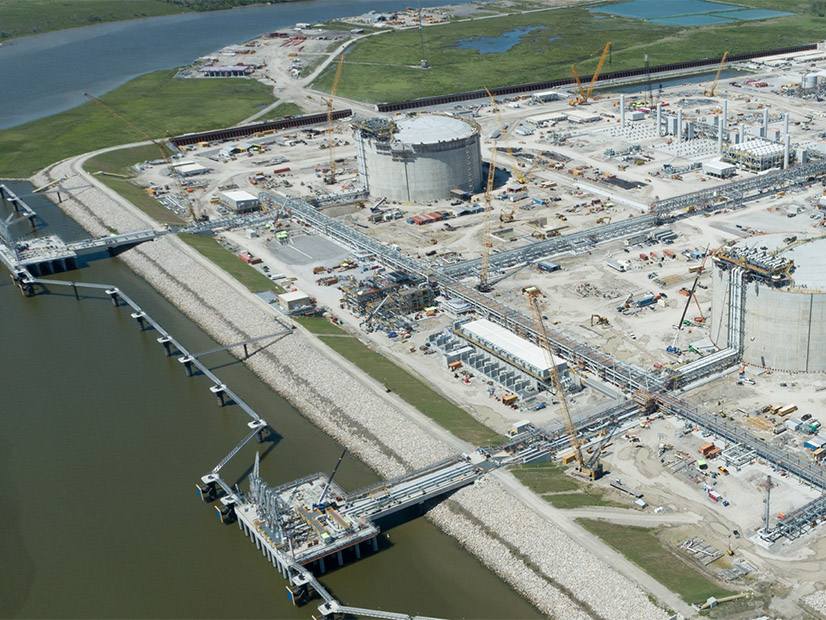
The war in Iran is not expected to lead to higher domestic natural gas prices in part because higher oil prices tied to the closure of the Strait of Hormuz mean more oil production and related gas supply from the Permian Basin, the EIA said.
EIA
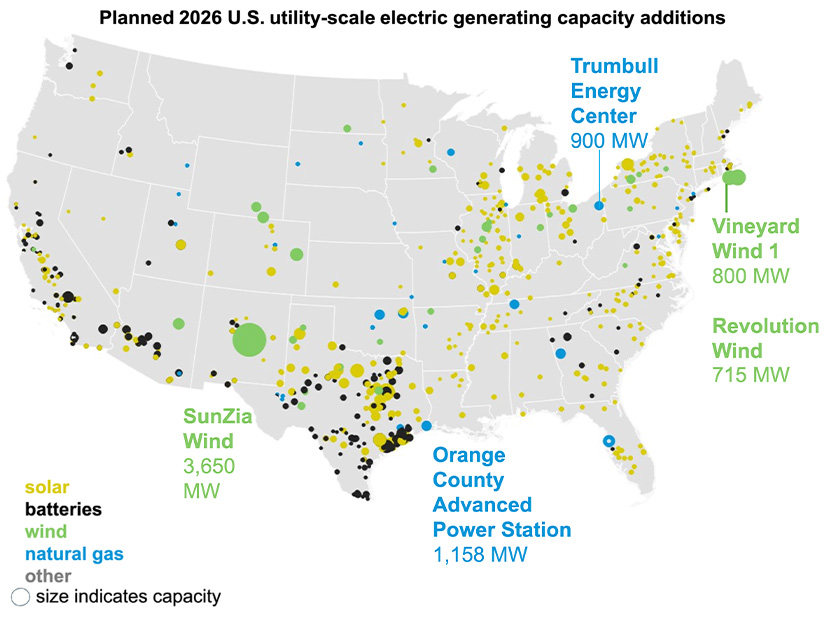
The EIA released a report that said a record 86 GW of utility-scale capacity is projected to be added to the grid in 2026, which if true, would far outpace the 53 GW of capacity added in 2025.
The Century Foundation commentary with data from UC-CCP
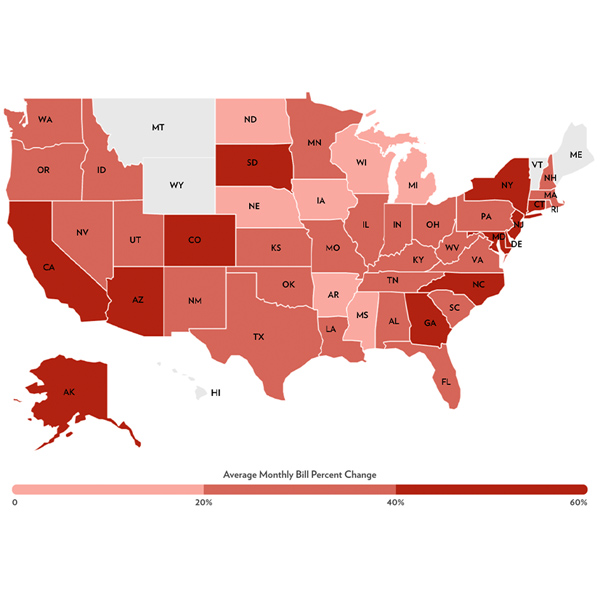
Residential electricity bills have moved from being background noise in discussions about resource adequacy, decarbonization, and transmission expansion to being the loudest political and business risk, says Dej Knuckey.
EIA
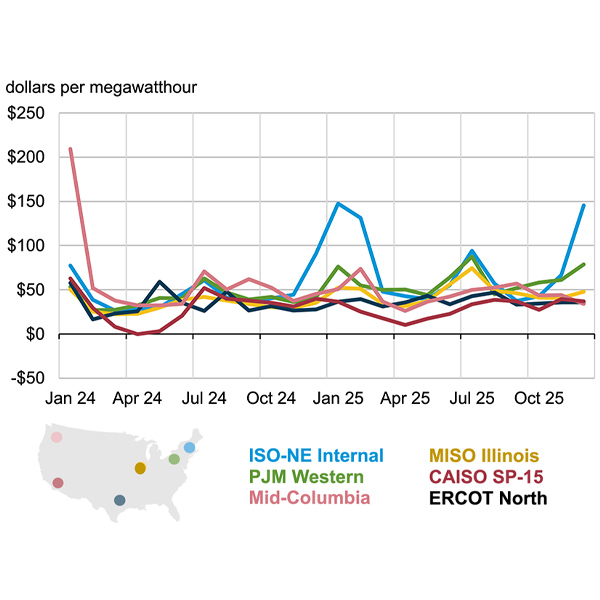
Average wholesale day-ahead electricity prices were higher in 2025 than in 2024 at most but not all major trading hubs in the contiguous 48 states.
EIA
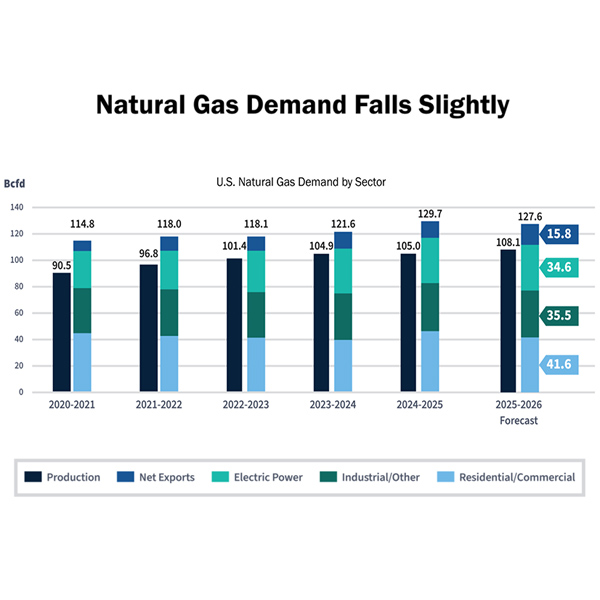
FERC staff warned that severe weather events "could create tight supply conditions" in some areas during the coming winter months.
EIA
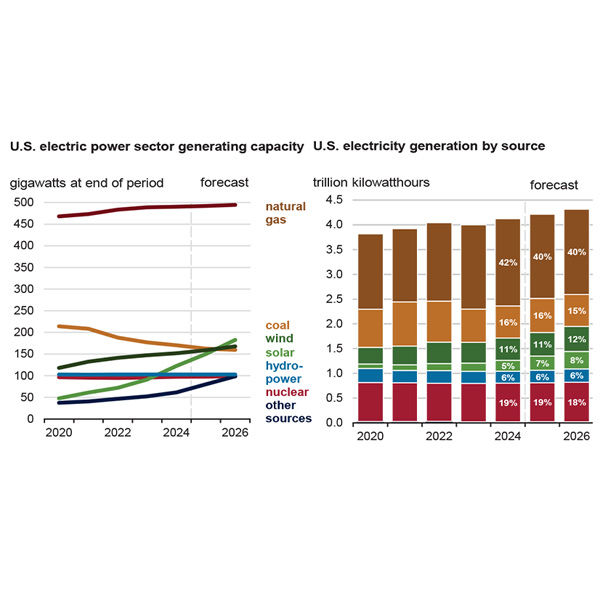
The U.S. Energy Information Administration has revised its forecast upward for retail electrical sales — especially in ERCOT and PJM.
EIA
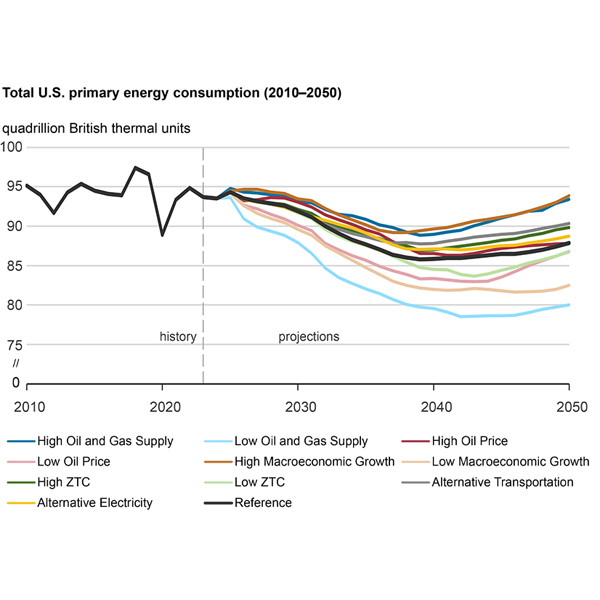
The U.S. Energy Information Administration predicts sharp increases in renewable power generation and sharp decreases in coal-fired power in its 2025 Annual Energy Outlook.
EIA
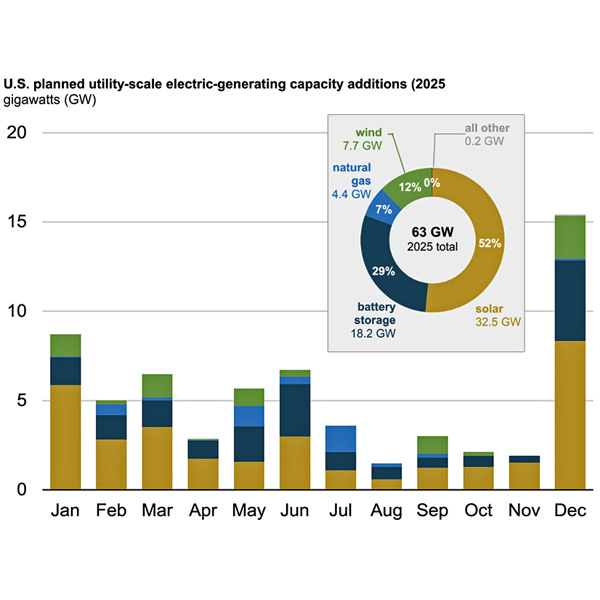
The U.S. Energy Information Administration projects 2025 additions of 32.5 GW of solar, 18.2 GW of storage, 7.7 GW of wind, 4.4 GW of gas and 0.2 GW of all other forms of generation.
© RTO Insider LLC
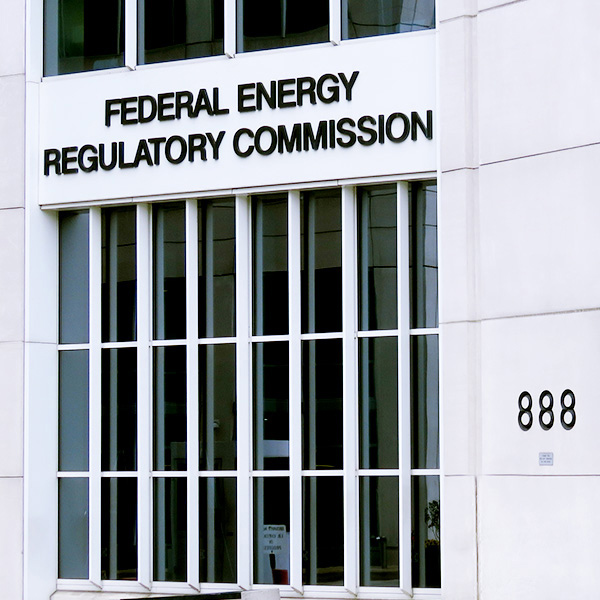
The direction FERC takes during President-elect Donald Trump’s second term is up in the air, but the commission may spend some of its time attempting to cut costs to consumers.
EIA
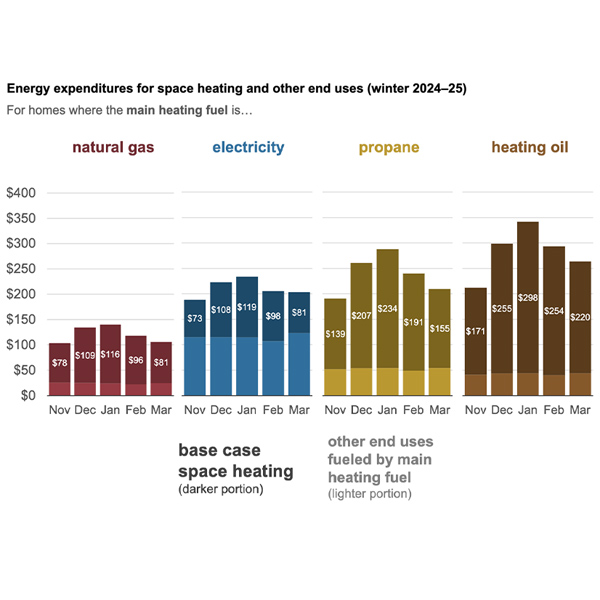
While customers spend more on electric bills overall, the home heating portion of EIA’s electricity estimates is almost the same as those for natural gas.
Want more? Advanced Search
