The last couple weeks remind me of the 1971 comedy record by David Frye during the Nixon administration. Richard Nixon (Frye) hosts yippie Jerry Rubin (Gabe Kaplan) in the White House, trying to make a political connection.
And I need to stop to clarify that “yippie” back then meant members of the Youth International Party.
Nixon asks, “Tell me, Mr. Rubin, what would you do after everything was torn down?” And Rubin replies, “I don’t know, man, maybe we’ll just sit there and groove on the rubble.”
Yeah man, just groove on the rubble.
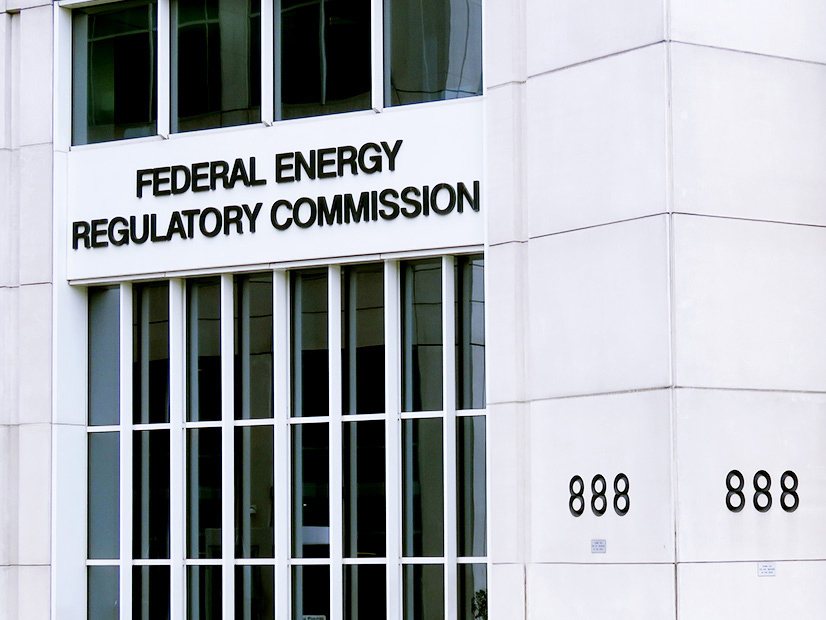
We’ll skip over everything else in the past couple weeks and ask what to make of the Trump administration’s latest executive order directing FERC, an independent agency, to sunset its regulations in no more than five years (or explain why not). In apparently unintended irony, this is “to provide certainty and order.”
The “fact sheet” for the executive order talks repeatedly about “energy production,” which suggests the Trump administration doesn’t know what FERC does. FERC has no direct role in the production of energy except for the licensing of hydroelectric plants (and arguably qualifying facilities under the Public Utility Regulatory Policies Act, which the executive order inexplicably excludes).
FERC is told to sunset all its regulations implementing the Federal Power Act of 1935 and the Natural Gas Act of 1938 in one year but no more than five years. But these statutes don’t exist in any intelligible way without the implementing regulations that have been promulgated and judicially affirmed over the last 80-some years.
Most recently we have the long-term transmission planning regulations in Order 1920. So let’s see how this works: They govern transmission planning for the next 20-plus years, but they’re terminated in one year or five years?
The executive order requires FERC to issue a “sunset rule” for each of its regulations by Sept. 30, 2025, to eliminate each of its regulations by Sept. 30, 2026, except for such regulations that FERC finds should be extended based on “costs and benefits.”
How can FERC get rid of regulations it is required by statute to have? How can FERC amend each of its regulations to add a sunset date without conducting formal rulemakings to do so? How can FERC apply a “costs and benefits” standard (whatever that might be) to its regulations rather than the statutory standards?
FERC is required to coordinate all this with its “DOGE team lead” and with the Office of Management and Budget (OMB). Does FERC have a DOGE team lead employee, as it apparently is required to have per an earlier executive order? How can the DOGE team lead, a FERC employee, coordinate with DOGE, and how can FERC coordinate with OMB, on rulemakings to sunset FERC’s regulations without violating FERC’s ex parte rules?
This comes on the heels of a February executive order regarding FERC and other “so-called independent agencies” (note the “so-called” pejorative) that:
-
- gives OMB control of FERC resources.
- requires the FERC chairman to “regularly consult with and coordinate policies and priorities with the directors of OMB, the White House Domestic Policy Council and the White House National Economic Council.”
- gives the attorney general control of all “questions of law” involving FERC.
- subjects all draft FERC regulations to review by OMB.
Good luck to Chair Mark Christie, his FERC colleagues and our industries.
(P.S. And let us pray for the return of Kilmar Armando Abrego Garcia so none of us have to fear arbitrary U.S. government kidnapping to foreign gulags where we must spend the rest of our lives.)
Columnist Steve Huntoon, a former president of the Energy Bar Association, practiced energy law for more than 30 years.