CAISO/WEIM
CAISO Board of GovernorsCalifornia Agencies & LegislatureCalifornia Air Resources Board (CARB)California Energy Commission (CEC)California LegislatureCalifornia Public Utilities Commission (CPUC)EDAMOther CAISO CommitteesWestern Energy Imbalance Market (WEIM)WEIM Governing Body
The California Independent System Operator serves about 80% of California's electricity demand, including the service areas of the state's three investor-owned utilities. It also operates the Western Energy Imbalance Market, an interstate real-time market covering territory that accounts for 80% of the load in the Western Interconnection.
The CAISO proposal would prevent small transmission owners from bearing high interconnection costs, a circumstance faced by Valley Electric.
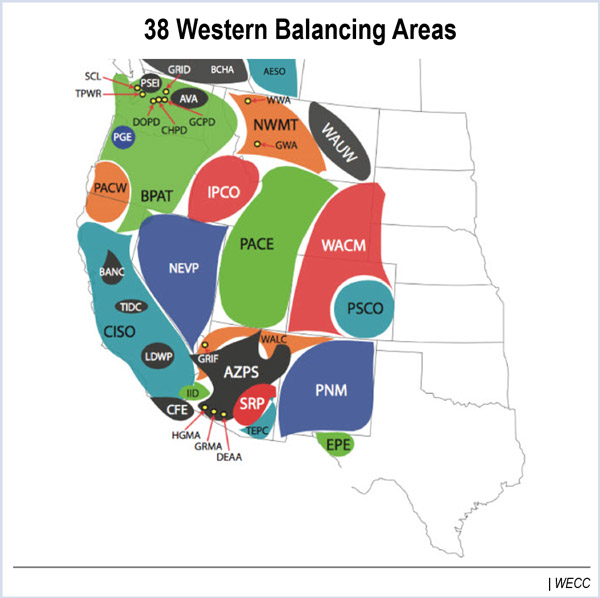
WECC
FERC said it will give CAISO more time to address its concerns over intertie bidding at the borders of the Energy Imbalance Market (EIM).
FERC said that CAISO contracts for transferred frequency response service can include a provision recognizing counterparties.
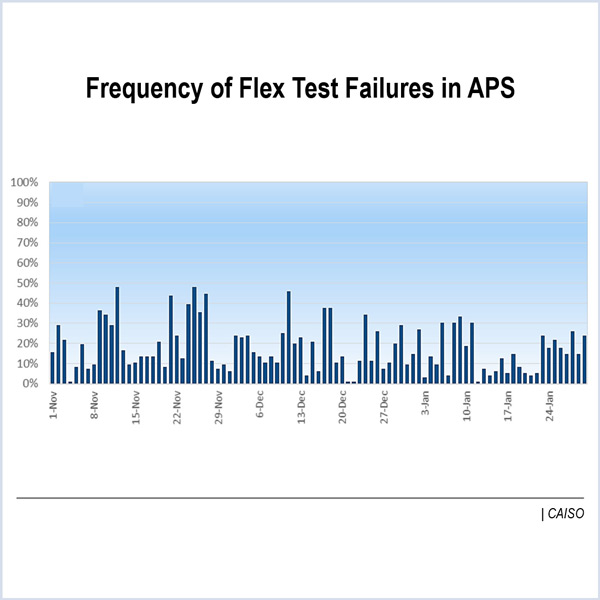
Participants in the Energy Imbalance Market (EIM) should not rely on it to reduce their capacity requirements, CAISO cautioned.
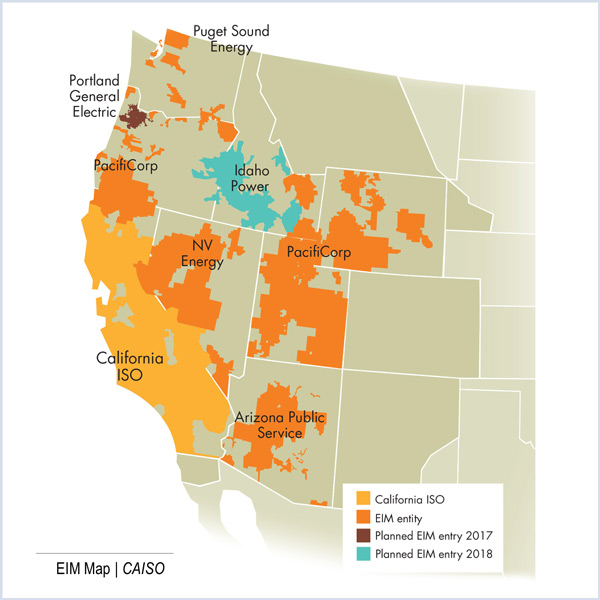
Members of the Energy Imbalance Market (EIM) saw increased savings and profits with the addition of Puget Sound Energy and APS.
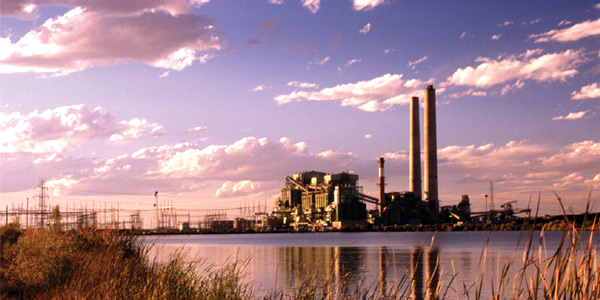
Arizona Public Service (APS) can continue to charge market-based rates in Tucson Electric Power’s balancing authority area, FERC ruled.
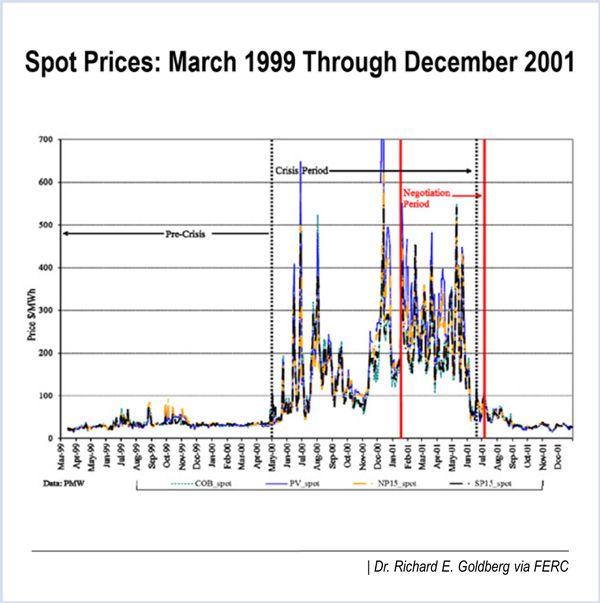
The FERC decision dealt with companies implicated in manipulating prices during the initial "Summer Period" of the Western Energy Crisis.
FERC accepted transmission calculations submitted by Southwestern transmission-owning utilities in support of their requests for market-based rates.

A new, “expedited” CAISO initiative seeks to establish a process for selecting and procuring black start resources.
FERC ruled that Shell and Hafslund can not use the costs associated with illegal trading activity during the Western Energy Crisis to offset their refund.
Want more? Advanced Search