Search
March 22, 2026

FERC Cuts ‘Ping-ponging’ ROE for New England Transmission Owners

Ruling on a series of complaints dating back to 2011, FERC ordered a reduction in the return on equity for New England transmission owners, from 10.57 to 9.57% (EL11-66, et al.).

The commission set an Oct. 16, 2014, effective date for the rate and directed the TOs and ISO-NE to refund with interest all excess funds collected since this date. FERC also required refunds for a 15-month period beginning in October 2011.

The ruling appears to be a win for consumer advocates at a time of elevated concern about energy affordability in New England, though the 330-page order appears likely to face additional challenges and clarification requests.

The ruling comes “three presidents and 11 chairmen” after the initial complaint, FERC Chair Laura Swett noted.

“This ping-ponging of judicial review and agency action that has gone for 15 years is a great example of how our regulatory processes combined with unending ability to seek judicial review can cost ratepayers a huge amount of money,” she said at FERC’s open meeting March 19.

The order follows a convoluted series of petitions, rulings and court challenges.

The initial 2011 petition was filed by a group of utility regulators, consumer advocates and end users, who argued that the 11.14% base ROE in place at the time was unjust and unreasonable.

In rulings following the original complaint, FERC updated its methodology for setting ROE to include longer-term growth projections and alternative financial models. It set the base ROE at 10.57%, with an effective date of Oct. 16, 2014 (Opinion 531, et seq.).

Both the TOs and the complainants challenged this determination in court. The TOs argued FERC had not adequately justified its findings invalidating the original ROE rate, while the complainants argued the commission failed to justify the new 10.57% rate. The D.C. Circuit Court of Appeals agreed with both arguments and sent the case back to FERC.

As the TOs and consumers battled over the first complaint, transmission customers filed two additional complaints about the 11.14% base ROE in 2012 and 2014, along with a complaint in 2016 about the 10.57% base ROE established by FERC in 2014.

To address the issues identified by the D.C. Circuit over the first challenge, FERC in 2018 proposed a new methodology for calculating ROE, which it refined in a 2019 order regarding complaints about the ROE for TOs in MISO (Opinion 569).

The order set a new methodology, based on two financial models, for determining whether a ROE rate is just and reasonable and setting a new rate if needed. FERC amended this determination in follow-up orders in 2020, adjusting the modeling methodology and adding an additional risk premium model (RPM).

But the D.C. Circuit vacated the order and sent it back to FERC, finding that the commission failed to justify the inclusion of the RPM after originally finding this model defective.

FERC responded with an order in 2024 omitting the RPM from its ROE methodology, citing a lack of evidence to support its use. It set a new 9.98% rate for MISO TOs and required refunds for a 15-month period following the initial MISO complaint in 2013 and for the period from the 2016 effective date through 2024 (EL14-12-016, EL15-45-015).

Amid the court challenges, the New England TOs have continued to collect a 10.57% base ROE, though FERC has maintained its authority to set a different rate with an October 2014 effective date.

Determinations

In its ruling March 19, the commission set a 9.57% base ROE for the New England TOs, relying on the same methodology it ultimately used in the MISO proceeding. It found the TOs to have an average risk profile and set the “applicable range of presumptively just and reasonable ROEs” in the first complaint proceeding at 8.72 to 10.41%.

“In light of this and the other circumstances of the case, we find that [the TOs’] 11.14% base ROE is unjust and unreasonable,” FERC ruled.

The 9.57% replacement rate represents the midpoint of the applicable range identified by the commission.

It also set a refund period of October 2011 to December 2012 for the first complaint. Meanwhile, it dismissed the second, third and fourth complaints and did not issue refunds for these proceedings. It found the 9.57% ROE to be within the zone of reasonableness for these complaints.

The refund periods for the second complaint and part of the third complaint would have occurred in between the refund period for the first complaint and the 2014 effective date of the new 9.57% rate. The 11.14% base rate was in place at the time of these complaints.

While consumer advocates argued for refunds for this in-between period, FERC ruled that Section 206 of the Federal Power Act limits its ability to order refunds when not ordering a new rate. It noted that the FPA “explicitly limits the length of time that public utilities may be subject to potential refunds as a result of a commission determination in a proceeding to 15 months after the refund effective date.”

It wrote that issuing refunds for the second complaint and the pre-Oct. 16, 2014, portion of the third complaint “would exceed our statutory authority under FPA Section 206 because it would effectively extend the refund period in the first complaint proceeding beyond the statutory 15-month limit.”

While the TOs argued that the FPA also limits FERC’s ability to require refunds after the 2014 effective date, FERC disagreed.

“In this order, we establish a different replacement base ROE under Section 206 than was set previously,” it wrote, referencing the previous 10.57% rate invalidated by the D.C. Circuit. “In making the 9.57% rate effective prospectively from Oct.16, 2014, and requiring refunds to reflect that rate, the commission is only requiring [the TOs] to reconcile this difference.”

Chair Swett said FERC is “doing everything we can within the limitations of our jurisdiction” to refund customers.

“Given the statutory limitations on FERC’s ability to issue refunds, unfortunately, we could only give relief to ratepayers on the first of the four complaints … because the Federal Power Act limits our authority to revise rates to a 15-month period,” she said.

Implications

The order sets the stage for significant refunds to New England transmission customers amid broad concerns about energy affordability in the region.

According to ISO-NE’s External Market Monitor, transmission rates in New England are more than twice the average rates of other RTOs, largely because of investments made over the past two decades to improve reliability and reduce congestion.

In recent years, consumer advocates have pushed for increased scrutiny around upgrades of existing transmission lines. These asset condition projects account for the vast majority of new transmission investment in the region.

According to some consumer advocates, a lower ROE should reduce the profit incentive for aggressive spending, potentially saving customers money directly by cutting the rate and indirectly by reducing overall spending.

Meanwhile, TOs argue higher ROEs are necessary to attract the level of investment needed to maintain a reliable grid.

“We are pleased that FERC has finally ruled in this matter; that it has lowered base allowed returns on equity and has established a refund requirement back to 2014,” said Drew Landry, deputy public advocate of Maine. “However, we believe that allowed ROEs remain too high and expect to continue to fight for more reasonable rates in future proceedings.”
PJM’s Capacity Market Was Meant to be a Safety Net; It Has Become the Entire Grid

By Glenn Davis

For more than two decades, the regional grid operated by PJM has relied on a capacity market to ensure enough power plants exist to keep the lights on. The concept behind PJM’s Reliability Pricing Model was straightforward: When energy markets alone could not sustain the generation needed for reliability, the capacity market would fill the gap.

It was never meant to carry the entire system.

Originally, the capacity market was designed to procure the final slice of reliability, the last increment needed to ensure adequate reserves. Most generation was expected to be supported by energy market revenues, bilateral contracts or traditional utility planning.

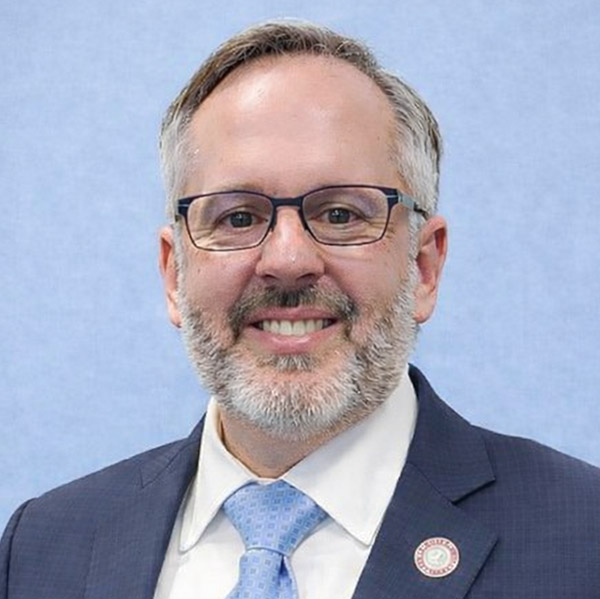
Glenn Davis

But over time, the system changed.

Energy prices remained relatively low. Merchant generation expanded. State policies began influencing wholesale market outcomes. At the same time, dispatchable generation began retiring faster than it was being replaced.

Now demand is accelerating again, driven by electrification and the explosive growth of artificial intelligence and hyperscale data centers. (See PJM Pushing Forward on Efforts to Meet Rising Data Center Load.)

The result is that PJM’s capacity market has quietly evolved from a reliability safety net into the primary mechanism supporting much of the region’s electricity supply. What once was designed to secure a modest share of reliability is increasingly responsible for financing nearly all of it.

That shift has exposed a fundamental problem: The market structure was never designed for this role.

Poorly Suited Structure

Today, PJM’s capacity market relies on a three-year forward auction that provides generators with only a one-year commitment. That structure may have worked in a slower-growing system with lower capital requirements, but it is poorly suited for the infrastructure challenges now facing the grid.

The consequences are becoming clear.

When long-term infrastructure needs are forced into short-term market structures, volatility follows. Even modest changes in supply or demand — plant retirements, transmission constraints or revised load forecasts — can trigger dramatic price swings as the market attempts to correct years of underinvestment in a single auction. The result is uncertainty for consumers and developers alike.

And uncertainty is the enemy of investment.

Power plants, whether natural gas, nuclear, storage or emerging technologies like small modular reactors, require significant upfront capital and long development timelines. They cannot be financed on the basis of a single year of capacity revenue.

If the region expects markets to deliver new generation, those markets must provide the revenue certainty required to build it.

Complementary Tiers

One potential path forward is to restructure the capacity market into two complementary tiers.

The first tier would procure the majority of the region’s reliability needs, roughly 70 to 80%, through longer-term commitments of approximately seven years. Auctions still could occur three years in advance, but the extended contract duration would provide the predictable revenue stream necessary to finance new generation.

This approach does not require higher prices. In fact, the opposite may be true.

Longer-term commitments reduce financing risk and lower the cost of capital, making new generation easier to finance. Existing generation would benefit from reduced revenue volatility and a longer recovery horizon for fixed costs. As a result, new and existing generation could clear the market at lower prices than under the current one-year structure, potentially at or below today’s market cap.

In other words, reliability does not necessarily require higher prices — it requires greater certainty.

The second tier would remain a shorter-term capacity market, covering the remaining 20 to 30% of system needs. This segment would preserve flexibility, allowing PJM to adjust for forecast errors, plant retirements and unexpected changes in demand.

Together, these two tiers would align long-term investment signals with short-term system needs, strengthening both reliability and market efficiency.

Capacity Contracts

There is also an opportunity to better align the market with the fastest-growing source of demand.

Hyperscale data centers, now a primary driver of load growth, often are willing to enter into long-term agreements to secure reliable power. Allowing these large customers to participate in optional long-term capacity contracts, potentially 15 years in duration, could help finance new generation while shifting a portion of reliability risk away from ratepayers.

Major technology companies already are signing long-term energy agreements across the country. Integrating similar mechanisms into the capacity market could accelerate the development of the generation needed to support continued economic growth.

None of these ideas abandon competitive markets. They recognize that electricity markets must evolve as the system around them changes.

When PJM’s capacity market was created, the grid faced slow demand growth and ample reserves. Today, it faces rapid load growth, significant retirements of dispatchable generation and increasing pressure to build new resources quickly and at scale.

The market already has changed in practice. It is time for the design to catch up.

If the capacity market originally was designed to procure the final slice of reliability, the grid now depends on it far more than its architects ever envisioned. The challenge no longer is whether it should play a central role, but how to structure it to succeed.

The future of the grid, and the economic growth it supports, depends on getting that answer right.

Glenn Davis is the president of Davis Energy & Infrastructure Strategy Group and served as director of the Virginia Department of Energy and a member of the Virginia House of Delegates.

FERC Approves SPP Program Mitigating Retirements

FERC has conditionally approved SPP’s tariff revision to implement a system support resource program to ensure the transmission system’s reliability when a generating resource seeks to retire (ER25-177).

In its March 19 order, the commission directed the RTO to submit a compliance filing with the effective date before it implements the program, modeled after MISO’s SSR methodology and other grid operators’ reliability must-run efforts. SPP expects the effective date to be in the fourth quarter of 2026 and was granted a waiver from FERC’s 120-day notice requirement for good cause.

SPP’s SSR program includes a compensation mechanism to incentivize continued operation of resources when a retirement study identifies network upgrades necessary to address reliability that can’t be completed before the projected retirement date. The RTO said the SSR program will be used as a last resort when a reliability concern is identified, preventing the resource’s retirement for up to a year until the concern is removed.

FERC found the grid operator’s SSR program to be a “reasonable backstop measure” that provides a “reasonable balance between SPP’s need to manage reliability and generator owners’ need to manage their assets efficiently.” It also ruled that the RTO’s proposal will “properly allocate” SSR costs to asset owners based on each owner’s share of the reliability benefits received from the continued operation of the SSR.

NIPSCO, CenterPoint Get FERC OK to Use 11-State Cost Allocation for Retirement-delayed Coal Plants

FERC granted a MISO Midwest-wide cost allocation for Northern Indiana Public Service Co.’s and CenterPoint Energy’s coal plants kept online by order of the U.S. Department of Energy.

The commission’s pair of orders March 19 provide a path for the utilities to recover costs of the R.M. Schahfer Generating Station and the F.B. Culley Generating Station, both in Indiana and both operating under emergency orders issued by DOE under Section 202(c) of the Federal Power Act (EL26-36; EL26-38).

The plants are rounding out their first emergency run from the end of 2025 to March 23. If other thermal plants with similarly blocked retirements are any indication, DOE is unlikely to let those orders expire.

FERC said the “most reasonable reading” of DOE’s orders is that the department’s purported emergency lies in MISO Midwest. Therefore, it said putting all of MISO Midwest on the hook for costs via a load-ratio share is appropriate.

To submit a commentary on this topic, email forum@rtoinsider.com.

“In applying the cost causation principle here, we find that it is just and reasonable for the cost allocation method to allocate costs in accordance with the scope of the emergency as described by the DOE order. We recognize that the parties offer different interpretations of the DOE order on that issue,” FERC said.

FERC declined to order MISO to institute stakeholder proceedings to let those involved decide on a cost allocation design. It said there was no need, since a load ratio share allocation based on actual peak demand would “reasonably” tie usage to costs.

NIPSCO and CenterPoint argued that they didn’t have to demonstrate cost causation nor identify beneficiaries of the plant because DOE named all of MISO Midwest under the scope of the emergency order. The two also disputed that MISO should open a stakeholder process to design a cost allocation methodology, saying it would delay cost recovery and pointing out that DOE directed FERC, not MISO to address cost recovery.

The Organization of MISO States pushed for FERC to let the RTO’s stakeholders and regulators decide how to divvy up the costs of sustaining operations at thermal plants whose retirements are delayed by DOE. (See Regulators: MISO Stakeholders Should Decide Cost-sharing for DOE Coal Plant Orders.)

OMS said that “to satisfy the just and reasonable standard required by law, any cost allocation method must demonstrate a clear nexus between the costs incurred and the benefits received, and in evaluating whether such a relationship exists, material differences among states and regions must be considered, including variations in load forecasts, resource mix, retirement schedules, and system conditions.”

FERC said arguments debating the prudence of costs associated with operating the plants are beyond the “limited scope” of the two dockets. It similarly said the limited nature of the proceedings didn’t allow it to consider if refunds would be due should the plants operate beyond the DOE orders.

The Michigan Attorney General and the Illinois Commerce Commission had argued there’s no evidence of an energy emergency to necessitate the continued operation of Schahfer or Culley.

FERC refused the Michigan Attorney General’s requests to defer a cost allocation decision until rehearing requests on the orders are resolved, or establish a “claw back” mechanism, where upgrade costs for the plant could be refunded if the DOE orders are found unlawful.

Public interest groups, including the Sierra Club and Earthjustice, also requested FERC make clear that refunds are a possibility should DOE’s orders be invalidated. The same groups are challenging the Indiana emergency orders at the D.C. Circuit Court of Appeals. (See Groups Contest Indiana Coal Plants’ Emergency Extensions at D.C. Circuit and DOE Defends Use of Emergency Orders in Court Filing.)

The organizations also claimed FERC could not approve any compensation for the capacity contributions of the plant because the DOE order itself says the units aren’t considered capacity resources.

They said Schahfer Unit 18 in particular requires extensive repairs that would disqualify it as a capacity resource in MISO. They further maintained that the DOE order “lacks the authority to compel NIPSCO to repair” the two Schahfer units and that, in their current poor condition, they provide no benefit to the footprint.

But FERC had a different interpretation. It said even though DOE said Schahfer and Culley aren’t capacity resources, that “does not mean that the commission cannot approve compensation that arises” from the plants’ “capacity benefits.”

FERC also said OMS’s argument that granting a cost allocation methodology would entice owners of other aging thermal plants to fast-track retirement announcements for the cash is speculative.

FERC allowed Consumer Energy’s J.H. Campbell Plant in Michigan an identical cost allocation methodology. (See FERC Rules Costs of Mich. Coal Plant Extension Can be Split Among 11 States and J.H. Campbell Tab Rises to $80M on DOE’s Stay Open Orders.)

At the commission’s March 19 open meeting, Chair Laura Swett explained that Energy Secretary Chris Wright’s determination to issue a 202(c) emergency order is “one of the zeniths of his power, and that is wholly aside from FERC’s jurisdiction.”

“Congress has deliberately given FERC the small but very important piece of adjudicating what is a fair and reasonable allocation of the costs that arise from the order, and we are very committed to doing so every single time we have a 202(c) order that has rate implications,” Swett said.

Swett said FERC must examine the facts of individual dockets, “including the market and the ratepayer impact, and when we issue an order, it is with confidence that we have adjudicated those costs and allocated them as fairly as possible.”

Self-reinforcing Market Paralysis Seen in Nuclear Power Supply Chain

A new report by a nuclear advocacy organization lays out some of the obstacles facing the imagined U.S. nuclear renaissance and suggests ways to address them.

Potential bottlenecks such as fuel supply, manufacturing capacity and workforce availability stem from a classic chicken-and-egg standoff, the authors say: Suppliers hesitate to scale without firm market signals, and the market hesitates to signal commitment without supply chain certainty.

Potential solutions include providing durable federal policy clarity, designing repeatable regulatory approval pathways, standardizing designs, converting expressions of interest into firm commitments, supporting fleet-scale procurement and building pipelines of skilled labor in synch with realistic construction timelines and manufacturing needs.

Landscape of U.S. Domestic Advanced Nuclear Energy Supply Chain” was commissioned by the Nuclear Scaling Initiative (NSI), a collaborative effort of Clean Air Task Force, the EFI Foundation and the Nuclear Threat Initiative to build a new nuclear energy ecosystem that can quickly and economically scale.

To submit a commentary on this topic, email forum@rtoinsider.com.

The report, released March 20, was prepared by energy consultant Solestiss and based on 42 in-depth interviews with a variety of supply chain stakeholders as well as on secondary research and practitioner experience.

It was supported by the Bezos Earth Fund, the climate-philanthropic initiative begun by Amazon founder Jeff Bezos in 2020.

The report presents the bottlenecks as capacity constraints rather than technology constraints.

After building the world’s largest commercial nuclear fleet, the United States all but halted construction in the early 1990s. The only two reactors built from scratch in the past 30 years, Vogtle 3 and 4 in Georgia, took far more money and time to complete than expected. Despite more than 100 commercial reactors being built before them, the passage of time made them essentially first-of-a-kind projects.

The hope now is that a new wave of large and smaller reactors can be built in serial fashion so that economies of scale, supply chains and a supporting ecosystem develop, lowering costs and accelerating timelines to bring a high capacity-factor, zero-emission resource online to meet expected power demand.

The report warns that constraints exist within the components of the system that would allow this to happen and must be addressed systematically.

“Unless these constraints are addressed deliberately and in sequence, renewed nuclear ambition risks reverting to bespoke projects rather than sustained, multi-unit delivery,” the authors say.

The “self-reinforcing market paralysis” that now afflicts the supply chain is reinforced by erratic federal policy signals, slow federal funding and the lack so far of a winnowing selection process among the dozens of reactor designs across various technologies vying for market share.

Timelines for fuel, material and manufacturing procurement, as well as skilled labor development, stretch across years and are sequential, so their constraints become mutually reinforcing and cannot be addressed individually, the authors say.

“As this report makes clear, advanced nuclear energy will not scale if suppliers and buyers continue to treat investment risk like it’s someone else’s problem,” NSI Executive Director Steve Comello said. “But solutions are within reach. When buyers come together around durable, multi-unit reactor order books, capital can begin to move with confidence — and that confidence translates into more factories, trained workers, qualified suppliers and gigawatts on the grid. By aligning demand signals with workforce development, we can unlock a repeatable model for building nuclear energy at scale.”

But even as they dissect the headwinds facing the commercial nuclear buildout, the authors flag some tailwinds helping it along:

There is strong bipartisan support, increased government funding, efforts to rebuild the domestic fuel enrichment supply chain, low-cost public financing, tax credits, a growing demand for electricity, regulatory streamlining, improved manufacturing and technological leaps forward.

Problems and Solutions

The analysis focuses on gigawatt-scale Gen III+ reactors and small modular Gen III+ and Gen IV reactors. Microreactors are covered separately. Fusion is not examined.

The report is presented as a starting point rather than a road map: Facts and stakeholder insights are gathered, analyzed and presented in a way that can boost the effort by NSI and many other organizations to scale up nuclear development.

The report offers five core conclusions:

    • Order books are a prerequisite of supply chain scale, not an outcome.
    • Repeatable Gen III+ reactor deployment is foundational for rebuilding manufacturing, workforce and qualification capacity.
    • Demand certainty, qualification pathways and labor availability must be treated in an integrated manner.
    • Fuel pathways must be uranium-based and sequenced for the foreseeable future, with early attention to low-enriched uranium (LEU) for Gen III+ reactors and deliberate market creation for high-assay low-enriched uranium (HALEU) for Gen IV reactors.
    • Coordination is indispensable to a durable industrial base — without it, the present wave of nuclear ambitions risks repeating the failures of the past.

And the report issues five calls to action:

    • The federal government should boost market certainty with policy clarity and accelerated funding, aggregate or backstop early demand to help markets fund and act as a market maker for HALEU.
    • Regulators and standards organizations should expand and formalize alternative quality-assurance pathways, shorten times for code cases and enable repeatable approvals for validated manufacturing methods.
    • Engineering, procurement and construction firms, suppliers and manufacturers should ease downstream constraints by investing in machining, welding, inspection and nondestructive examination capacity; coordinate on standardization; and embed ease of manufacturing in the design process early on.
    • Utilities, offtakers and financial backers should fix bankability gaps by converting their expressions of interest into firm, long-duration commitments; supporting fleet style and standardized procurement and commercial structures; and aligning their contracting approaches with supply chain and workforce strengths and limits.
    • Workforce and training institutions should work to expand the skilled labor force in alignment with realistic and verified manufacturing demand.

Trump Admin. Announces Billions of Dollars in Electricity Investments from Japan

The White House meeting between President Donald Trump and Japanese Prime Minister Sanae Takaichi led to major power industry investments, part of a previously announced Strategic Trade and Investment Agreement.

The U.S. departments of Energy and Commerce are implementing part of that agreement with a public-private partnership with SoftBank and AEP Ohio. The plan is to build 10 GW of new generation (including 9.2 GW of natural gas) to connect to the local grid in southern Ohio and to serve a 10-GW data center being built at the Portsmouth Site. The 9.2-GW gas plant is being funded with $33.3 billion in Japanese funding.

“Thanks to President Trump, the U.S. government is leveraging its assets — like our federal lands — to add power generation, create jobs and ensure the United States wins the AI race,” Energy Secretary Chris Wright said in a statement March 20. “I’m pleased to be working with our partners at SoftBank and AEP Ohio on this important project. By bringing new power online and upgrading our existing infrastructure, this investment supports the AI boom and cutting-edge technologies while strengthening our energy system and helping keep costs down for the American people.”

Overall, Japan has committed to invest $550 billion in the United States. More of it is geared to meeting the growing demand for electricity, which is driven, in part, by the AI race.

To submit a commentary on this topic, email forum@rtoinsider.com.

“With this historic trade deal, we are reindustrializing the country through critical projects like this $33 billion power project in Portsmouth, Ohio,” Commerce Secretary Howard Lutnick said in a statement. The day before, the administration announced “mega projects in Alabama, Pennsylvania, Tennessee and Texas.”

SoftBank subsidiary SB Energy is investing $4.2 billion with AEP Ohio to build out the transmission grid to connect the massive new generator and data center to the grid. DOE said that investment comes at no cost to the public.

AEP Ohio said some of the transmission investment would be for 765-kV lines, which are rare in the United States but growing more common. AEP has plenty of experience with the voltage, having operated lines since 1969. Lines at 765 kV can carry six times more energy than 345-kV transmission.

AEP Ohio and SB Energy will work with regulators and stakeholders to provide details on the projects and the proposed cost-recovery approach in upcoming regulatory filings.

“If it were not for the partnership between all parties — the administration, SoftBank and our team — this type of investment would not be possible,” AEP CEO Bill Fehrman said in a statement. “This partnership unlocks billions of dollars of electric transmission infrastructure, all without increasing customer rates.”

Construction on the project is expected to start in 2026 and is expected to produce thousands of jobs and clean up the Portsmouth Site, which was used to produce uranium for nuclear weapons and reactors. Excess power from the 10-GW generator will be sold back to the grid and reduce prices for consumers, DOE projected.

“Our partnership with the Department of Energy strengthens America’s AI leadership, secures the energy and compute needed for the future, and powers the next era of innovation for the United States,” SoftBank CEO Masayoshi Son said in a statement. “AI will transform every industry, and the PORTS Technology Campus will help deliver the next-generation infrastructure needed to unlock those breakthroughs.”

Other investments for the power sector from the Japanese trade deal include up to $40 billion for small modular reactors from GE Vernova Hitatchi in Tennessee and Alabama, up to $17 billion for natural gas generation in Pennsylvania, and $16 billion for natural gas generators in Texas, the Commerce Department said.

NextEra Energy reported it was going to develop and construct up to 10 GW of natural gas generation in Pennsylvania and Texas. It reported the investment is subject to negotiations, but the power plants would be owned jointly by Japan and the United States while operated by NextEra.

The firm is using its “hub strategy” for the 10 GW of new gas, which pairs investment in power plants with high-demand sites such as data centers.

“Our hub strategy is designed to scale quickly and support rising demand while strengthening America’s energy security — without increasing electricity costs for American households,” NextEra CEO John Ketchum said in a statement. “We are pleased that our Texas and Pennsylvania hubs have been selected to advance the president’s goal of American energy dominance.”

FERC Approves Multiple Cyber Standards

FERC approved a slate of updates to nearly the entire library of NERC’s Critical Infrastructure Protection standards, with Chair Laura Swett calling the ERO’s role in maintaining reliability “important now more than ever” in the face of widespread cybersecurity threats.

The CIP updates comprised three separate items on the agenda of the commission’s monthly open meeting March 19. In the first item, it approved updates to 11 standards intended to establish a baseline of security requirements enabling utilities to use virtualization technologies safely (RM24-8). NERC submitted the standards to the commission for approval in July 2024, along with four new and 18 revised definitions for its Glossary of Terms. (See NERC Sends Virtualization Standards to FERC.)

FERC approved updates to the following standards:

    • CIP-002-7 (Cybersecurity — BES cyber system categorization)
    • CIP-003-10 (Cybersecurity — security management controls)
    • CIP-004-8 (Cybersecurity — personnel and training)
    • CIP-005-8 (Cybersecurity — electronic security perimeters)
    • CIP-006-7.1 (Cybersecurity — physical security of BES cyber systems)
    • CIP-007-7.1 (Cybersecurity — systems security management)
    • CIP-008-7.1 (Cybersecurity — incident reporting and response planning)
    • CIP-009-7.1​ (Cybersecurity — recovery plans for BES cyber systems)
    • CIP-010-5 (Cybersecurity — configuration change management and vulnerability assessments)
    • CIP-011-4.1 (Cybersecurity — information protection)
    • CIP-013-3 (Cybersecurity — supply chain risk management)​

When it submitted the standards, NERC wrote they “would allow responsible entities to fully implement virtualization and address risks associated with virtualized environments.” Virtualization constitutes “the process of creating virtual, as opposed to physical, versions of computer hardware to minimize the amount of physical hardware resources required to perform various functions,” according to the National Institute of Standards and Technology.

Among the changes to enable virtualization are revisions to language that would allow the use of more varieties of security models, permit broader change management approaches “to recognize the dynamic nature of virtualized technologies” and specify how accessibility and attack surfaces of virtualized configurations can be managed. NERC also proposed to replace the phrase “technical feasibility” with “per system capability,” which would allow entities more flexibility when applying the CIP requirements to non-physical systems.

FERC observed that comments from stakeholders on its November 2025 Notice of Proposed Rulemaking to approve the 11 standards generally supported their passage. Respondents focused on the “significant cybersecurity benefits and flexibility in responding to cyber threats” of virtualization, and on the way they allow “for the secure adoption of emerging technology.” (See ERO, Stakeholders Support Proposed Cybersecurity Standards.)

However, the commission also reiterated its concern expressed in the NOPR that the “per system capability” language could “allow responsible entities to self-implement an exception with marginal oversight and no alternative mitigation obligation.” In support of this view, it pointed to comments from the Edison Electric Institute, Pacific Gas and Electric, and MISO that suggested NERC take steps to verify exceptions, either through existing or new programs.

“We are persuaded by commenters that an exception process is still needed for existing and emerging technologies. Indeed, some existing technologies are unable to meet certain CIP requirements and would be out of compliance, with no mitigation opportunity without an exception process,” FERC wrote, adding that it was not convinced NERC’s Compliance Monitoring and Exception Program would be sufficient to catch inappropriate exceptions.

As a result, the commission directed NERC to develop a new program to track per system capability exceptions. FERC specified that the program must include the following three elements:

    • clear criteria to “ensure that responsible entities understand the parameters” for the exception, documentation requirements and the need for entities to implement alternative mitigation approaches;
    • mandatory reporting requirements to NERC, the relevant regional entity or both when the language is invoked; and
    • annual reports to the commission on how entities are using the exceptions, with data anonymized and aggregated.

The annual reports must categorize active exceptions by applicable CIP requirements; include the total number of entities with active exceptions, the total number of reported exceptions that are still in effect and comparisons to the previous reporting period; and discuss the types of assets and systems for which new exceptions are claimed, and the types of mitigation measures employed.

NERC must file the first report with the commission 12 months after the standards become enforceable on the first day of the first calendar quarter that falls 24 months after the effective date of FERC’s order.

Cyber Asset Identification, Low-impact Mitigation

The remaining CIP standards approved at the meeting further modify two of the standards that were part of the virtualization slate.

First was CIP-002-8 (RD24-8), which is intended to “identify and categorize [grid] cyber systems and their associated … cyber assets for the application of cybersecurity requirements.” In its petition for approval, NERC told the commission the major changes from the previous versions of the standard involved updating the definition of “control center” to include transmission facilities controlled by transmission owners and updating language to reflect this change. The new standard will replace CIP-002-7 on the effective date of that standard.

Finally, FERC approved CIP-003-11 (RM25-8), meant to address the risk of a coordinated attack using low-impact cyber systems. NERC filed the new standard in December 2024; in the filing, the ERO outlined three categories of controls that would mitigate this risk: authentication of remote users, in-transit protection of authentication information, and detection of malicious communications to or between low-impact grid cyber systems with external routable connectivity.

FERC mentioned in its approval order that its NOPR proposing acceptance of the standard asked respondents whether the commission should direct NERC to perform a study “on evolving threats as they relate to the potential exploitation of low-impact … cyber systems.” Commenters differed on this point, FERC observed.

NERC and a group of trade associations including the American Public Power Association, EEI and the Electric Power Supply Association replied that “NERC already has multiple initiatives underway” to examine this risk, and a new study would duplicate existing efforts.

But attorneys Tammer Haddad and Michael Ravnitzky supported the study. Ravnitzky recommended that NERC be directed to map out “plausible attack chains from low-impact compromises to system effects,” while Haddad urged the commission to go even further and “establish a federal task force for ‘small utility cybersecurity’” to include representatives from FERC, the Department of Energy, NERC and the Cybersecurity and Infrastructure Security Agency.

The commission wrote that it was “persuaded” by NERC’s discussion of its ongoing efforts and observed that the ERO’s recently released CIP Roadmap incorporates an analysis of the danger from aggregated low-impact compromises. FERC concluded on this basis that an additional study would not be necessary but encouraged NERC to look for further “efficiencies in effort and time” to meet the recommendations of the road map.

CPUC OKs Data Center Tx Upgrades Using Distribution Refund Approach

When the California Public Utilities Commission approved construction of new transmission facilities for a 49-MW data center in Sunnyvale, it relied on a process typically used for distribution projects.

Under the process, data center owner Menlo Equities will pay the upfront costs for connecting to the grid and then be refunded for those costs once sufficient revenue is generated. The approach is intended to shield ratepayers from bearing the costs while allowing the company to eventually recover its expenses for upgrading the grid.

The data center requires energization upgrades on a much larger scale than the standard distribution-level customer, the CPUC said in its approved resolution, issued during the agency’s March 19 voting meeting.

Project work includes extending a 115-kV underground transmission circuit and adding a 115-kV circuit breaker, bus support structures, transformers and other equipment.

The CPUC applied the approach because the project’s transmission upgrades are “costly and should not fall on ratepayers if sufficient load does not materialize to offset costs,” the agency said in the resolution. “As a transmission customer, Menlo Equities would pay lower rates than distribution customers while at the same time potentially contributing to the need for broader transmission network upgrades in the region.”

Without the approach, ratepayer risk would increase if Pacific Gas and Electric receives insufficient revenue from the project. The data center’s forecast revenues are based on limited historical data and are uncertain.

“These factors indicate that energization of the Menlo Equities project presents a higher risk of stranded costs should revenue not materialize,” the CPUC said in the resolution.

The project’s transmission work is not fully addressed by PG&E’s Electric Rules 2, 15 and 16, which normally apply to distribution projects. Electric Rule 15 outlines the customer refund process, known as the Base Annual Revenue Calculation (BARC), for upfront payments of materials and labor.

BARC normally applies to distribution customers who have much lower energization costs, but applying BARC to this project would result in Menlo Equities receiving a full refund for its significant energization costs well before PG&E would recover sufficient net revenues, the resolution says.

The project’s new underground transmission line extension typically would not be eligible for refunds for another reason: BARC typically applies to PG&E’s 115-kV transmission line design for overhead lines.

But due to “extenuating circumstances,” such as easement issues and the possible negative impacts of an overhead line to safety, reliability and cost, BARC can be applied to this project, the resolution says.

To pay for the project, Menlo Equities will give PG&E a deposit for engineering work and long-lead time materials. PG&E’s cost would be considered a refundable amount.

The CPUC required PG&E to limit annual refunds to 75% of the utility’s annual net revenues received from Menlo Equities, along with a tax adjustment based on a modification to the standard BARC refund process, the resolution says.

The CPUC also extended the refund period for the project to 15 years to increase ratepayer protection, while allowing the Menlo Equities project to receive its full refund over time, the resolution says.

The commission is considering a standard rule for PG&E to address this kind of large load energization at the transmission level, the resolution says.

This is the third resolution in which the CPUC authorized use of a modified version of the BARC process for a data center project energizing at the transmission level, CPUC spokesperson Terrie Prosper told RTO Insider.

Also at the meeting, the CPUC approved a 115-kV switching station project for a 90-MW data center in San Jose. The data center owner, STACK, will design, procure and construct the station and then transfer ownership to PG&E.

Cal Advocates filed a protest against the project, saying the cost framework does not adequately prevent cost overruns from affecting ratepayers, according to the resolution.

ROWE to Address Governance of New Western RA Program by Fall

One of the first items the yet-to-be-seated board of the Regional Organization for Western Energy could decide on is whether to administer a resource adequacy program, as backers seek to have a proposal in place later in 2026.

Members of ROWE’s temporary Formation Board discussed the potential of a new RA program at a March 19 meeting.

The discussion comes after non-CAISO participants in the ISO’s Extended Day-Ahead Market announced they are designing a new RA program, with the hope that the ROWE — the independent body established by the West-Wide Governance Pathways to oversee CAISO’s EDAM and Western Energy Imbalance Market — would govern it. (See EDAM Utilities Moving to Develop RA Program.)

Jim Shetler, ROWE Formation Board member and general manager of the Balancing Authority of Northern California (BANC), said the EDAM entities — of which BANC is one — are working on the details of the RA program and aim to have draft proposal by the end of April.

“The concept here is that we would be requesting [ROWE] to administer this service on behalf of the participants,” Shetler said.

He noted the RA program would “in no way” impact the California Public Utilities Commission’s separate RA program.

ROWE has yet to seat a permanent board and is slated to do so later in 2026, at which point that body would decide whether to administer the RA program.

Because ROWE does not yet have a formal stakeholder process, the EDAM entities are proposing to continue developing the RA program through the summer, according to Shetler.

The goal is to have the revised proposal in front of the seated ROWE board later in the year, he added.

“We recognize right up front that the ROWE board will have to make the decision as to whether it, number one: wants to take on this service or not,” Shetler said. “And we also recognize that, and expect that, the ROWE board, if they decide to do so, would want to conduct additional stakeholder processes as appropriate.”

However, because of the time constraints EDAM entities are facing, “we do need to get to at least an initial decision on whether this is a viable outfit or not by this fall,” Shetler said.

Participants in the RA project are PacifiCorp, Portland General Electric, Public Service Company of New Mexico, Los Angeles Department of Water and Power, NV Energy, the Turlock Irrigation District and BANC. (See Alternative Western RA Program Starts to Take Shape.)

The new resource adequacy program is seen as an alternative to Western Power Pool’s Western Resource Adequacy Program (WRAP).

Participants in the day-ahead market competing with EDAM — SPP’s Markets+ — will be required to join WRAP. EDAM members also may join WRAP, but some expected EDAM participants expressed concerns about the program and decided to withdraw. (See PacifiCorp Next to Leave WRAP After Raising Concerns.)

Shetler said the EDAM entities are looking to take advantage of existing ROWE and Pathways contracts to facilitate stakeholder processes and “try to leverage and take advantage of that expertise.”

“With respect to funding, we are not asking that the ROWE make use of any of your existing funds that have been contributed for the development of the ROWE,” Shetler said. “The EDAM sector is prepared to contribute separately for the support of the facilitator in helping us with this effort.”

Kathleen Staks, ROWE interim president, said while ROWE itself is still in its nascent stages, “it is exciting that we’re in a position where we’re already seeing an interest in developing those additional market services under an independent governance.”

Brian Turner, senior director at Advanced Energy United, said he was “excited” about the proposal.

“I recognize and understand the significant need that it’s serving within non-CAISO Western EDAM entities to have a unified resource adequacy accounting and perhaps trading sharing mechanism,” Turner said, adding the program would add “substantial resources to those non-CAISO entities.”

MISO Reassigns Competitive Substation Project to ATC on Data Center Rush

MISO announced it will reassign multimillion-dollar substation work in Wisconsin to American Transmission Co. in order to meet a sped-up construction timeline for data center load.

The grid operator decided to pull Chicago-based developer Viridon Midcontinent from a portion of the Wisconsin Southeast (WISE) project, which consists of 106 miles of 345-kV lines and four 345-kV substations valued at $350 million.

The WISE project is a subset of the South Fond du Lac-Rockdale-Big Bend-Sugar Creek-Kitty Hawk Long-Range Transmission Project in southeastern Wisconsin, one of the projects approved as part of MISO’s $22 billion long-range portfolio approved at the end of 2024.

MISO opened a variance analysis on the project at the end of February because it said its selected developer, Viridon, “is unlikely to attain the regulatory requirements in Wisconsin” in time to build three of the substations on an accelerated timeline. The substations are needed by the end of 2027 for new data center load that ATC is handling. The RTO originally expected the project to be in service in mid-2033. (See MISO Opens 3rd Tx Project Review as Data Center Plans Conflict with Long-range Tx Timeline.)

Enter ATC’s Ozaukee County Distribution Project, which is at the heart of the controversy. ATC proposed the project — which involves rebuilding and upgrading existing 345-kV lines and constructing up to five new substations at a cost of $1.36 billion to $1.64 billion — in September 2025 on an expedited basis to meet anticipated data center load. The Ozaukee project relies on three of the substations in the WISE project.

MISO conducts variance analyses on regionally cost-shared transmission projects when they encounter schedule delays, permitting challenges or substantial design changes or experience at least a 25% cost increase from original estimates. The studies also are triggered when developers find themselves unable to complete the project or if they default on the terms of their selected developer agreement.

After an analysis, MISO can either let projects stand, develop a mitigation plan for them, cancel them or assign them to different developers, if possible. A committee of RTO employees selected by leadership determines projects’ fates.

In this case, MISO’s Competitive Transmission Executive Committee (CTEC) investigated the situation brought on by the accelerated in-service date and “determined that Viridon is unlikely to satisfy the Wisconsin regulatory requirements in order” to finish the substations by Dec. 1, 2027. The committee said ATC was a better fit for the project in light of the expedited data center needs.

According to MISO’s tariff, the committee has “exclusive and final authority” over variance analysis outcomes.

“CTEC determined that incumbent transmission owner and authorized Wisconsin public utility ATC is better positioned to attain the necessary regulatory approvals in Wisconsin and achieve the accelerated in-service date,” MISO said in its public determination. “As such, CTEC has determined that the most suitable outcome to meet the accelerated-service date is to reassign these facilities to ATC as reassignment will most likely result in the successful completion of, or increase the ability to complete, the facilities and will alleviate the ground for variance analysis.”

MISO said the remainder of the WISE project — a substation and the 345-kV line work — will “continue to be constructed, implemented, owned and operated by Viridon.”

Viridon was founded in 2023 and is owned by Blackstone Energy Transition Partners, one of Blackstone’s private equity funds.

MISO said it considered other outcomes beyond reassignment of the trio of substations. It said it eliminated a “no action” outcome because of the urgency of the new data center load and that a mitigation plan was impractical because it’s unrealistic to expect Viridon to clear the necessary regulatory approvals on an expedited or prioritized basis from the Wisconsin Public Service Commission.

The RTO also said project cancellation was out of the question because of the footprint’s dependency on the long-range transmission portfolio, in addition to the anticipated data center load relying on the construction.

MISO said it will coordinate and execute the necessary documents with Viridon and ATC “in due time” to reassign the substation portion of the project.

Viridon said it accepted MISO’s decision.

“We are confident in our ability to have executed successfully on the accelerated timeline for the substations. That said, we respect MISO’s decision. We look forward to completing the remainder of the WISE project on time and on budget, including the Big Bend substation and the 345-kV transmission lines,” Viridon said in a statement to RTO Insider.

MISO has completed 11 variance analyses to date. Until now, it has never reassigned a project developer, despite having the authority to do so. The RTO historically has chosen either to create mitigation plans with the existing developer or to allow the project to stand. In one instance, MISO canceled a 500-kV project because of a new right-of-first-refusal law in Texas. (See FERC Rejects Last-ditch Effort to Save Tx Project.)

ATC said it is “pleased with the outcome of MISO’s variance analysis.”

“Our focus remains on maintaining a safe, reliable grid, and meeting our customers’ needs,” ATC said in a statement. ATC said it would roll the substations into its application for a certificate of public convenience and necessity for the Ozaukee County project. The company said it plans to have the substations “in service by the date needed to serve the load.”

ATC did not answer RTO Insider’s question on whether it was involved in the variance analysis process. 

ATC is among a group of Midwestern utilities rumored to be asking FERC and the Trump administration to suspend competitive bidding so the grid can be built out faster to accommodate the data center explosion. The company, along with Xcel Energy, ITC Holdings and Ameren, have reportedly taken their request to the White House’s National Energy Dominance Council.

MISO Issues Mitigation Plan for Other Long-term Tx Project

Relatedly, MISO rounded out a second variance analysis it conducted on the 345-kV Morrison Ditch-Reynolds-Burr Oak-Leesburg-Hiple line in Illinois and Indiana, which jumped from an estimated $261 million to a $675 million cost estimate in 2024. The project was approved in 2022 under MISO’s first long-range transmission plan portfolio.

MISO said it was able to work with developer Northern Indiana Public Service Co. on a mitigation plan that should reduce cost of the long-range transmission project to $477.8 million.

After its variance analysis investigation, MISO said it “observed higher estimated costs for construction matting, technical services and contingency, as well as additional costs associated with securing and permitting the transmission line right of way.”

NIPSCO leadership and MISO were able to identify “cost savings and efficiencies” that would lower estimated project cost through adjustments to the scope of work, reductions in construction costs “as discrete contracts are executed and reductions in contingency costs as the project was further developed with fewer unknowns,” according to the RTO.

The grid operator opened the re-examination of the project in late 2024. (See Cost Overruns on Project in 1st LRTP Prompt MISO Analysis.)

Again, MISO said it considered all possible outcomes under the variance analysis. It deemed no action unacceptable because of the sheer size of the cost increase. It said it could not reassign the project because of Indiana’s ROFR law, which rendered the facilities ineligible for competitive bidding.

Finally, MISO once again said cancellation was not a realistic option because of the interconnectedness of the Morrison Ditch project with the rest of the long-range transmission portfolio.

MISO said once it and NIPSCO sign the mitigation plan, it will reflect the new estimated cost in its database of transmission project status reports.