Search
March 9, 2026

‘With the Skill to Survive,’ SPP Faces ‘Massive Challenges’

DALLAS — SPP CEO Lanny Nickell took to the stage to Survivor’s “Eye of the Tiger” as he opened the grid operator’s Energy Synergy Summit.

“The ‘Eye of the Tiger? That’s what you chose?’” he asked the event’s organizers as the music faded into the background.

The 1982 rock anthem highlights perseverance, determination and regaining one’s competitive edge, traits that will come in handy for the “massive challenges that are ahead of us.”

“Massive change, massive challenges, massive opportunities,” Nickell said in kicking off the March 2-3 event.

He harkened back to last year’s summit, SPP’s first, when the conversation centered on resource adequacy, increasing extreme weather events and other challenges. The days of excess capacity and unlikely load sheds were numbered.

“Now, we are scrambling, doing everything we can just to maintain a one-day-in-10-year probability of having an event,” Nickell said. “We were having tremendous load growth. Even that’s changed over a year.”

He said SPP was projecting 50% load growth during last year’s summit, but that has increased to 100% over the next 10 years. The RTO has responded, Nickell said, listing the Expedited Resource Adequacy Study process and “industry leading” High-impact Large Load (HILL) study process, both approved by FERC in the past year.

“If you are willing to bring generation with you, either co-located or no more than two buses away, you can get that generator interconnection studied along with the high-impact large load in 90 days or less,” he said. “That’s fantastic speed.”

SPP has also proposed a conditional HILL process for interruptible loads that want to interconnect quickly and a Consolidated Planning Process (CPP) that gives generators more certainty of their interconnection costs and yields affordable solutions through the traditional planning process. It expects commission approval of both in the next few weeks.

“That’s a win, but we’ve got a lot of other things that we want to work on,” Nickell said. “What’s next for us? What’s our next project?”

Whatever the next projects are, Nickell said they will require the same creative, outside-the-box thinking that produced the HILL study in 85 days, from start to finish and through the stakeholder process. They will also require collaboration with and support from members, regulators and market participants.

“We need you to work with us to figure out what it is that’s most important, what it is that we need to solve right now. If you can bring your ideas to the table, I’m convinced that we will come up with the best solutions,” he said. “We have to work together to economically and reliably keep the lights on. That includes solving problems together. SPP [and] staff can’t solve these problems alone. We need your help. That’s why you’re here.”

LaCerte: 765-kV Backbone Necessary

Two days before his nomination for a full five-year term advanced in the U.S. Senate, FERC Commissioner David LaCerte said in a fireside chat with Nickell that the industry’s long-term planning still needs to improve. (See related story, FERC’s LaCerte Clears Committee Vote on Nomination for a Full Term.)
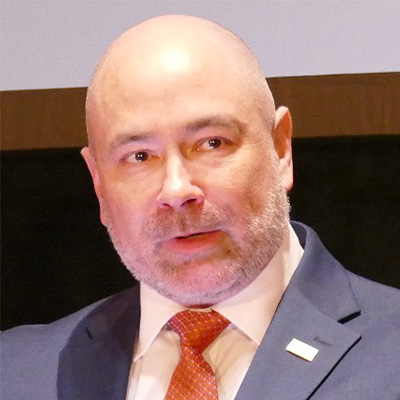
FERC Commissioner David LaCerte | © RTO Insider 

“What that long-term planning looks like now is very much different from 2024 long-term planning,” he said. “It’s difficult. It’s tough because you want to project, but those projections have such a large standard deviation that it’s almost impossible to get it right.”

Picking up on SPP’s approval of four 765-kV transmission projects in its 2025 transmission plan, LaCerte said any future transmission plans should include extra-high-voltage facilities.

“We can’t live without 765s or you’re going to be an invertebrate, right? You don’t want to live your life as an invertebrate. You want to have a backbone,” LaCerte said. “It’s really important that we do these things properly because they have the potential to drive up costs on the consumers even more than they” already are.

He said a “big plus in [his] book” was having the White House come to the table with a bipartisan group of governors and PJM to propose a reliability backstop procurement for the RTO’s capacity auction and begin identifying universal parameters to protect customers from rate increases related to large loads and data centers. President Donald Trump also gathered the leaders of seven large tech firms March 4 to sign a “ratepayer protection pledge.” (See related story, Trump Gets Tech Execs to Sign ‘Ratepayer Protection Pledge’.)

“I think that was a great first step because it brought all those people to the table … together to talk about the problems and identify what [is] acceptable, what’s not acceptable and then just identifying the costs,” LaCerte said. “Even at FERC in our building, we even struggle with identifying which costs we are catching in these tariffs and which costs are we not. … If it’s a struggle for the career FERC staff, it’s a struggle for everyone because these are issues which are novel. We are moving so quickly that it’s imperative that we catch as many of those costs as possible so that there’s not a bunch of hidden costs that are passed along to consumers.”

Shielding Consumers from Costs

Members of a panel discussing pricing reform in these high-growth times agreed those costs need to be transparent.

“The public is now, especially in the post-inflation environment, very conscientious of cost, and I think SPP is rightly [placing] affordability as sort of a central tenet,” said Chris Matos, Google’s energy market development strategic negotiator. “The question is more on the commitment side, and with these load forecasts and the infrastructure expectations, if you plan correctly, costs can go down.”

Chris Matos, Google | © RTO Insider 

He said ERCOT’s 765-kV plan, if the expected load materializes, will reduce system transmission costs because essentially, “We’re leveraging a greater scale of megawatt-miles of transmission.”

A bill introduced in the Ohio legislature would require large data centers to enter contracts with utilities detailing their minimum billing demand, long-term service agreements, the exit fees or liquidated damages for canceled projects, and potential collateral or guarantees before any construction. It would also ban utilities from recovering costs incurred by data centers and shifting them onto customers.

“Google’s answer to this has been in the form of the capacity commitment framework that we’ve instituted in Ohio,” Matos said, “where we’ve agreed to minimum terms and minimum charges that ensure there is equity for the existing system and [customers] are not left constrained in the cost of infrastructure.”

Mark Ahlstrom, vice president of renewable energy policy for NextEra Energy Resources, said the company’s approach is to partner with the developers on multi-gigawatt sites that have the land, infrastructure and accessibility to power.

“We think it has to be a close partnership between large infrastructure investors like NextEra and the hyperscalers to put together something like that and make sure it all works within the community under the right tariffs, working hand in hand with the utilities and co-ops and so forth,” he said. “You have to develop certainty that that project is not going to just go away; that we have the commitments, we have the contracts, and we would find a purpose for that.”

BTM Gen ‘Suboptimal’

Longtime regulator Andrew French, chair of the Kansas Corporation Commission, shared a topic that he said has been top of mind in recent weeks: the growing concern about underinvestment in the transmission system.

“And yes, it can have a bill impact,” he said. “If we don’t move fast enough to make the grid ready or have processes to allow load to get on, folks will talk about doing things like behind-the-meter generation or just totally going off-grid. In my mind, that is a very suboptimal use of capital. It’s something that the customers are going to pursue just because they’re looking for the speed.”

KCC Chair Andrew French (left) shares his concerns as ITC Great Plains President Patrick Woods listens. | © RTO Insider

French said he has heard recent discussion of a “ghost grid” being developed with BTM generation and microgrids.

“That really concerns me that you’re going to have this sort of shadow set … of resources that’s probably not sitting in optimal locations, but it was just pursued for expedience,” he added. “It’s not what we want. It’s another reason why I think we need to move quickly. We need to provide pathways. I think there probably are a lot of these loads that would make sense to integrate into the wider grid. Let them find resources that can contribute to the wider grid.”

PPL CEO Vince Sorgi echoed French as he offered his thoughts and said he doesn’t mind the BTM approach “for a period of time.”

“If a grid is not ready and a hyperscaler can contract with a generator to build generation and serve that data center until that grid is ready, have at it,” he said. “But when the grid is ready, you should connect all generation to the grid for a number of reasons, right? One, the hyperscalers don’t want behind-the-meter generation. Two, just having that generation connected to the grid makes the grid more reliable and more resilient. It will ultimately benefit all customers.

“If we just built a bunch of behind-the meter generation, it would be the most suboptimized solution to this problem that we could have come up with,” Sorgi added.

MISO, SPP Draft New Joint Portfolio that Could Run $3.6B

MISO and SPP put forth two potential 500-kV joint transmission portfolios valued at $1.3 billion and $3.6 billion to beef up their transfer capability.

The grid operators dubbed the two transmission options the “Core Combination” and “Core + Combination.” The more expensive, “plus” version features two additional 500-kV segments to connect neighboring transmission facilities.

MISO and SPP debuted a first look at the potential projects along northwest Louisiana, western Arkansas and east-central Oklahoma during an interregional planning meeting March 6.

The Core + Combination’s five 500-kV segments would:

    • increase import capability by an average of 3,427 MW in MISO and 1,102 MW in SPP;
    • resolve 94 thermal reliability violations in MISO, 75 in SPP and 32 across the tie lines; and
    • offer nearly $300,000 in annual economic congestion relief in MISO, $1.5 billion in SPP and $336,000 across tie lines in a 2034 case.

The Core Combination’s three 500-kV segments, on the other hand, would:

    • increase import capability by an average of 2,578 MW in MISO and 1,529 MW in SPP;
    • resolve 53 thermal reliability issues in MISO, 89 in SPP and six across the tie lines; and
    • extend nearly $83,000 in economic congestion relief in MISO, $895,000 in SPP and nearly $304,000 across tie lines in 2034 alone.

Ashleigh Moore, of MISO’s interregional planning division, said the larger upfront investment from the Core + Combination would establish a “broader” transmission solution set that would address more reliability and economic issues immediately, while the Core Combination would create “foundational upgrades” with the flexibility to add on more projects later.

Moore said the RTOs would use stakeholder feedback to decide which configuration to pursue and how to refine it.

MISO planner Jon George said the portfolio suggestions home in on the “hottest spots in the footprint for load expansion.”

The RTOs have not conducted a benefit-cost analysis on either option.

Benefits Pending

Missouri Public Service Commission economist Adam McKinnie asked if the RTOs have settled on what benefit metrics they would use to justify investment in the lines.

George said those are “not completely” worked out.

Southern Renewable Energy Association Transmission Director Andy Kowalczyk asked if the RTOs would use the seven transmission benefits established in FERC Order 1920 to gauge project usefulness.

“We have some more thinking to do on that,” George said. He added that though “both regions are headed” toward adopting Order 1920 benefit metrics, MISO and SPP are for now focused on “what are the different merits of the indicators we have from the screening” and ascertaining load growth estimates.

George said the RTOs don’t want to “get hung up forever on new business case methodology if we already have a pathway.” He said they can, according to current rules, already consider adjusted production costs and reliability and public policy benefits. He said the draft projects “promise to hit on a few of those and do so impressively.”

Advanced Power Alliance’s Steve Gaw said a broader set of benefits “that support interregional transmission that we know is needed” are critically important. He said MISO and SPP’s inability to devise big-ticket, regionally cost-shared transmission projects illustrates the importance.

“I’d hate to call them failures,” Gaw said of past Coordinated System Plan studies. “I hope we can weave [benefits] in so we’re not continually deciding which to include.”

MISO and SPP’s coordinated study process has never produced a workable interregional project.

The Alliance for Affordable Energy’s Yvonne Cappel-Vickery asked MISO and SPP to consider the more expensive plus portfolio route to achieve the biggest benefits to ratepayers. But she also asked the RTOs to present business cases for both options so stakeholders don’t “miss out on hearing the full breadth” of transmission benefits.

Bill Booth, a consultant to the Mississippi PSC, said the RTOs should develop a minimum benefit threshold soon and demonstrate that projects will actually deliver savings if retail ratepayers are to pay for them over the next 40 years.

SPP engineer Spencer Magby said the RTOs combed through 46 stakeholder-originated ideas and an additional 24 alternative solutions after they opened a second proposal window. (See 30+ Projects Under Consideration in MISO-SPP Joint Tx Effort.) Magby said they focused on three key corridors and conducted three rounds of studies to come up with draft recommendations.

WEC Energy Group’s Chris Plante said he’d like to see MISO and SPP’s recent level of planning and coordination applied to the MISO-PJM seam.

MISO and SPP initiated the joint study in 2024. While it evaluates its two project options, the RTOs are launching another CSP study to take place over the remainder of 2026 and beyond. They are required by their joint operating agreement to perform a CSP study at least every two years.

Some stakeholders suggested MISO and SPP use the upcoming joint study to go a step further than the 500-kV connections and consider linking up their planned 765-kV backbone systems.

2025/26 Most Expensive Winter in History of ISO-NE Markets

The winter of 2025/26 was the most expensive winter in the history of ISO-NE’s wholesale markets, driven by the lowest average temperatures in 20 years.

Energy market values totaled about $6 billion in December, January and February, more than twice the total value of the past two winters combined, according to ISO-NE data. Energy costs hit monthly records in both December and January, and the RTO experienced its second-highest energy market costs for February.

Total winter energy use reached its highest level since 2014, while the winter peak load hit its highest level since 2018.

The RTO’s announcement of record winter prices comes amid significant uncertainty about potential future price spikes triggered by the war on Iran.

Asked at the NEPOOL Participants Committee on March 5 about potential impacts of the war, ISO-NE CEO Vamsi Chadalavada said, “The markets are not expecting there to be a big disruption to the New England markets over the next 18 months, but that could change as events unfold.”

The war has spurred global concerns about oil and natural gas prices, as about a fifth of all LNG is shipped through the Strait of Hormuz, largely to meet demand in Asia.

In New England, wholesale electricity prices are highly correlated with gas prices, and much of the Massachusetts gas system relies on LNG imports.

In 2022, Russia’s invasion of Ukraine was a “large factor” in a major spike in New England gas prices, according to the ISO-NE Internal Market Monitor. Annual average natural gas prices in the region more than doubled in 2022 relative to the prior year, the IMM reported.

Regarding cybersecurity, Chadalavada said ISO-NE has seen a “sharp uptick in attempts to penetrate infrastructure” since the war began. He said the RTO has not been able to pinpoint from where these cyber threats are originating.

He said ISO-NE is working to be “as vigilant as we can” and hopes that “all the preparation that we’ve done is sufficient.”

Also at the meeting, Stephen George, vice president of system and market operations at ISO-NE, provided additional details on the extended cold snap the region faced in late January and early February.

Between Jan. 23 and Feb. 10, temperatures in New England averaged 11.3 degrees Fahrenheit below normal, he said. Over this period, gas generation accounted for 34% of energy, followed by oil at 22%, nuclear at 19%, net imports at 13%, renewables at 8% and hydro at 4%.

To allow generators to operate at their maximum capabilities, ISO-NE obtained a waiver from the Department of Energy enabling specified units to exceed emissions limits. Twenty-six units reported exceeding limits while the waiver was in place, he said.

The elevated reliance on oil-fired generation was driven by record gas prices during this period, causing dual-fuel units to switch to burning oil.

He noted that the region’s generators burned about 111 million gallons of fuel oil during the cold stretch, more than the total consumption for any entire winter since ISO-NE started tracking in the winter of 2015/16. This caused significant depletion of the fuel oil inventories, which dropped to about 20% of total regional storage capacity, the lowest recorded level by the RTO.

Inventory levels have risen following the event and are on track to rebound to pre-winter levels by mid-March, he said.

Wind power accounted for 54% of renewable generation, while solar accounted for just 5% of renewable production. Solar was significantly inhibited by snowfall and sustained cold weather during this period.

ISO-NE has noted that behind-the-meter solar in the region produced just 41% of its forecast potential during this period because of the impact of snow cover.

Kentucky Lawmakers: PSC Makeover Necessary to Bring Down Rates

Kentucky lawmakers are working to overhaul the state’s Public Service Commission in what they say is an effort to combat rising rates, while Gov. Andy Beshear (D) has characterized it as political maneuvering.

The Kentucky Senate on March 6 passed Senate Bill 8, which would add two more members to the three-member PSC and impose professional qualifications on appointments, in a 30-5 vote.

Republican lawmakers say the bill would help address high utility bills by pulling in more experienced candidates.

The bill would also add new rules to the appointment process, where two members of the commission would be appointed by the state’s auditor of public accounts, currently Allison Ball (R). As it stands, Beshear holds authority to appoint all three commissioners, subject to Senate confirmation.

Sen. Brandon Smith (R), a sponsor of the bill, told local news outlets that he believes some past commissioners were appointed as political favors, with “very few” having any experience in the energy sector.

“I think we could all agree that a lot of people got parked over there,” Smith said.

But Beshear said the potential reshaping of the PSC is a partisan attempt at a power grab.

“They never did that while there was a Republican governor. … They’ve done these shenanigans for six straight years,” Beshear said during a press conference March 5. “I’ve never seen them try to move something from a Republican officeholder to a Democratic officeholder, but I’ve seen them try to move a whole lot in the other direction.”

Beshear added that the state auditor’s office has no history of working with the PSC.

At the end of February, the PSC granted a rate increase for American Electric Power’s Kentucky Power, raising electricity rates 5.87% in 2026 and increasing to 6.63% in 2027, over Attorney General Russell Coleman’s (R) objection. While the hike was less than Kentucky Power’s requested increase of 14.6%, residents said it was excessive because they already struggle to pay utility bills.

Prior to the vote, the bill shed some unpopular provisions that would have effectively expelled consumer and environmental advocates from arguing against rate increases or maintaining a thermal generation status quo.

A draft version of the bill stipulated that the office of the attorney general would be “the sole advocate for residential consumers” in cases in which it intervenes. It also would have disallowed individuals from intervening in a case “unless the person can demonstrate, by clear and convincing evidence, that the person has a special and unique interest in the specific rates or service of the utility that are at issue in the case.”

Smith said the intent was to keep out-of-state groups funded by special interests from delaying projects.

Now the bill specifies that individuals who intervene must disclose their interest in the case and attest they are not doing so for the sole purpose of delaying projects. The PSC would be able to restrict or remove parties that cause disruption or delays to proceedings.

The Sierra Club called the draft of the bill “dangerous” and said it would have “kneecapped” organizations’ efforts to “defend local people from increasingly high energy bills and corporate interests.” The nonprofit said the attorney general intervenes in nearly every case.

“Intervention by Sierra Club’s legal team has successfully mitigated bill increases for millions of Kentucky ratepayers and recently secured a tariff that guarantees data centers pay their fair share of costs and have the opportunity to secure clean energy that may help draw businesses to the state,” Sierra Club said in a statement.

In neighboring Indiana, state regulators have opened an inquiry into climbing energy bills and summoned its top five utilities to provide answers. (See Indiana Commission Opens Affordability Inquiry into Utilities.)

AES Indiana said it canceled community open houses that would have helped explain high utility bills because of violent threats it received on social media. The open houses would have occurred March 3, 10 and 11 around Indianapolis. AES announced in early March that it would be acquired by an investor group including BlackRock, Swedish private equity firm EQT AB, California Public Employees’ Retirement System ⁠and ​the Qatar Investment Authority. (See BlackRock and Others to Take AES Corp. Private for $33B.)

Ariz. Commission Axes State’s Renewable Energy Standard

The Arizona Corporation Commission has repealed the renewable energy standard for electric utilities in the state, saying it’s time for renewables to “stand on their own two feet.”

Commissioners voted 5-0 on March 4 to end the Renewable Energy Standard and Tariff (REST) rules that were adopted in 2006.

The rules required utilities to obtain a certain percentage of retail electric sales from renewable resources, starting at 1.25% in the first year and growing to 15% in 2025 and beyond.

REST required utilities to acquire part of their renewable energy from distributed resources such as rooftop solar. The distributed resource requirement grew from 5% in 2007 to 30% after 2011, with half of the amount coming from homes.

Utilities were directed to file tariffs to recover costs of their REST programs. Since the rules took effect, utilities have collected about $2.3 billion from customers for commission-approved REST programs, according to a draft order the commission approved.

All three utilities covered by the rules met or exceeded the 14% renewable standard in place for 2024: Arizona Public Service with 16%; Tucson Electric Power with 22.9%; and UniSource Energy Services with 14%.

Commissioners said although the REST rules helped spur the adoption of renewable energy in the state, they are no longer needed.

“It served its purpose. It’s time to move on,” Commissioner Rene Lopez said. “[Renewables] have to basically stand on their own two feet, like every other [power producer] has to.”

Commissioners noted that utilities now must conduct all-source requests for proposals (RFPs), a requirement that wasn’t in place when the REST rules were adopted. Through the RFPs, utilities choose the least-cost option that reliably meets resource needs.

“The idea that the utilities aren’t going to keep prioritizing affordable renewables … is absurd,” Commissioner Kevin Thompson said.

The REST rule repeal has been in the works since early 2024. In August, the commission directed staff to open a rulemaking docket and hold public comment sessions on the matter. (See Arizona Renewable Standard on the Chopping Block.)

Of about 130 written comments filed, most were opposed to the repeal. Another 363 commenters submitted a form letter supporting the repeal, the draft order said.

During the March 4 meeting, speakers asked the commission to strengthen or revitalize the REST rules rather than repeal them.

“Deleting the REST will send a harmful signal to the clean energy industry, discouraging investment, innovation and job creation in Arizona,” said Sandy Bahr, director of the Sierra Club Grand Canyon chapter.

Alex Routhier, a senior policy advisor at Western Resource Advocates, said REST benefits have included insulating ratepayers from fuel cost risk, lowering peak demand costs, reducing pollution and decreasing water needs.

“It is very likely that over the history of the REST rules, the benefits have far outweighed the costs,” Routhier said.

In comments after the meeting, Brian Turner, senior director with Advanced Energy United, said large-scale renewable energy is “thriving” in Arizona. But another goal of the REST rules was to give residents easier access to affordable, flexible energy, helping to reduce electric bills, he said.

“We look forward to working with the commission on developing new policies that help expand these opportunities, support competition in the market, strengthen energy independence, and put low-cost power within reach of hardworking families and businesses across the state,” Turner said in a statement.

N.J.’s Utilities Board Backs Storage, Solar Expansion Package

Moving quickly to back New Jersey Gov. Mikie Sherrill’s call for a generation capacity increase, the Board of Public Utilities (BPU) approved the state’s first incentivized storage projects and launched new community and grid-scale solar solicitations.

The board voted 5-0 on March 4 to approve three transmission-scale storage projects with a combined capacity of 355 MW as part of the effort to install 2,000 MW of storage capacity by 2030. The projects were the first to emerge from the Garden State Energy Storage Program (GSESP), the state’s first storage incentive initiative.

Sherrill, who took office in January, has prioritized solar and storage capacity. She views it as the quickest way to help address the predicted shortfall in generating capacity, and the related price hikes that raised the average electricity bill by 20% in June 2025.

“This will create our fastest path forward to achieve energy reliability and affordability,” said BPU Commissioner Zenon Christodoulou, who described the state’s position as one of “urgency.”

He noted that when state officials initially conceived of the storage program, it was because of the urgency of climate change.

“That is still an important driving issue,” he said. “But the urgency of needing more electricity, particularly in this region, and having it built in the state of New Jersey is even more pressing right now.”

Affordability vs. Growth

The board also unanimously approved the opening of a second storage solicitation under the same program, authorizing the agency to procure 645 MW of transmission-scale storage, which is larger than 5 MW. Draft application instructions for the solicitation — which supports standalone projects or those connected to solar developments — will be released in April with a bid deadline Aug. 7 and final decision on bids planned for October.

In addition, the board approved three projects totaling 24 MW under the Competitive Solar Incentive (CSI) program, which provides incentives for grid scale projects. And the agency approved the opening of a new solicitation – the state’s fourth — under the program.

Finally, the board authorized the opening of a solicitation that would add up to 3,000 MW of community solar projects.

“States that invest in energy infrastructure today will have lower costs and greater reliability tomorrow — and New Jersey is going to lead the way,” Sherrill said in a statement, referring to the BPU actions. “By investing in battery storage, solar and grid modernization, we’re building an energy system that is ready for the future.”

Investing In the Future

Sherrill, a Democrat and former congresswoman, made the state’s energy difficulties a central element of her campaign and pledged to freeze rates as soon as she took office. On her first day, she signed two executive orders that called for a rapid acceleration of energy source development, especially solar and storage. (See New N.J. Governor Rapidly Confronts Electricity Crisis.)

PJM, which provides power to New Jersey and 12 other states, says dramatic price hikes that have impacted ratepayers in its zone are driven mainly by the sudden demands of data centers under development. At the same time, older, mainly fossil fueled generators have shut faster than new facilities have been built, the RTO says. But New Jersey and other states blame PJM for failing to anticipate the demand.

While the initiatives show Sherrill moving rapidly on her agenda, parts of the package had been in the works for awhile. Among them was the 3,000-MW expansion of the community solar program, which her predecessor Gov. Phil Murphy had enacted.

Eric Miller, New Jersey policy director at the Natural Resources Defense Council, called the BPU’s approvals “a critical step to getting more clean energy generation online as fast as possible.”

Capacity Cost Cuts

While New Jersey under Murphy aggressively expanded its solar and wind sector, the state has lagged in storage. The legislature set the 2,000-MW goal in 2018 but missed a target of 600 MW of storage in place by 2021, and the state’s storage capacity still is minimal. (See N.J. Launches Ambitious Energy Storage Incentive Program.)

BPU launched the GSESP in June. The first phase authorizes storage capacity of up 1,000 MW and will pay annual incentives for 15 years, with a second phase to follow. The board order says the agency will hold at least two more solicitations under the first phase.

The board received 11 applications in the first solicitation, and approved three, for a combined capacity of 355 MW. BPU staff said the incentives will cost $27.58 million per year for 15 years, or about $169 million in total once discounted, and will bring the state financial benefits in the long run. The agency estimated the storage projects will reduce capacity costs by $333 million to $420 million.

Storage offers a variety of benefits, of which capacity cost savings, or the money saved by not having to invest in such large generating plants because batteries can help meet peaks, is perhaps the most “significant financial benefit to ratepayers,” according to the board order. Other benefits include “peak shaving, energy arbitrage [and] deferring costly infrastructure upgrades,” the order says.

Assessing Incentive Benefits

Christodoulou, while supporting the storage approvals, expressed skepticism at the accuracy of benefit estimates, saying the savings are “not as conclusive, as the future will show. These are estimates.”

Still, he said, “the urgency of this moment requires us to take some leaps of faith.” He later urged agency officials to plan for future limits on incentives, specifically referring to those paid in the grid solar program.

“We always incentivize new and infant industries, which is critically important,” he said. But he added that “the industry should never be depending on long term investment tax credits. They need to become like every other mature business in the world, and that is to stand on their own two feet, to gain or lose on their own merits. “

He urged the BPU staff to “accelerate that process to make sure that they (project developers) find ways to gain managerial efficiencies, supply chain efficiencies [and] drive prices down.”

Balancing Incentive with Capacity Goals

The BPU for a while has sought to curb incentive payments, a task complicated by the removal over time of federal investment tax credits by the Trump administration.

In the CSI solicitation, the BPU rejected most of the bidders because they were too high. Of 18 bids received, only two were eligible for BPU approval; the remainder exceeded the confidential maximum incentive agency staff had calculated was acceptable for the state to pay in the current market conditions.

The agency approved the third successful bid — a 10-MW project submitted by the North Jersey District Supply Commission — through a rule that allows the agency to waive the cap for projects whose bid is within 10% of the maximum. The project will be the largest floating solar generation facility in the state.

The board also voted to reduce the incentive for the community solar program as it opened a solicitation for an additional 3,000 MW of capacity, which Sherrill, like Murphy before her, had called for. The board reduced the incentive offered in the program from $80/MWh to $60/MWh.

“Staff believes that the recommended decrease balances the need to reduce costs for ratepayers with the statutory directive to achieve 3,000 MW of additional community solar registrations over the next four years,” the board order stated.

However, Morgan Sawyer, a BPU research scientist who outlined the plan outlined in the order, said the BPU also expects to study the issue further in light of the federal tax credit loss by “soliciting stakeholder feedback and updated economic modeling based on market conditions.”

He added, however, that the process “potentially” could result in a future increase in the incentive.

SPS’ Rodriguez Named AEP Texas’ President, COO

American Electric Power has named Southwestern Public Service Co.’s Adrian Rodriguez president and COO of AEP Texas, the company announced in a news release.

Rodriguez will join the company March 30 and will report to AEP CEO Bill Fehrman, the company said March 6. He will replace Judith Talavera, who has left the organization, AEP said.

The Columbus, Ohio-based company said the move will align AEP Texas with the company’s strategy on long-term priorities, further strengthen operational performance and strengthen relationships with the state’s important stakeholders.

“As the business continues to evolve, we believe now is the right time to bring in a leader with deep experience in stakeholder engagement and a strong operational focus to align with our long-term priorities in Texas,” Fehrman said in a statement. “We see tremendous upside in AEP Texas and its ability to enable growth in the state through our industry-leading 765-kV transmission capabilities. We are confident this move will help take this operating company to the next level.”

Rodriguez joined SPS, an Xcel Energy subsidiary, in 2022 from Puget Sound Energy. He previously held senior positions with El Paso Electric Co. and has had various roles in private law practice, the federal court system, public policy and the Texas Legislature. He has a bachelor’s degree in economics and government from the University of Texas, a master’s degree in public policy from Harvard University’s Kennedy School of Government and a law degree from Columbia University.

Alex Ramirez, vice president of distribution operations for AEP Texas, will serve as interim president and COO until Rodriguez arrives.

Energy Secretary, Congressman Call for Restart of N.Y. Nuclear Plant

U.S. Energy Secretary Chris Wright and the congressman whose district includes the shuttered Indian Point nuclear plant are calling for the restart of the facility.

But no specifics are being offered, and the site’s owner indicates significant financial and political support must be established before such a move could be considered.

The shutdown of the southern New York facility in 2020-2021 removed 2 GW of high-capacity factor generation from the grid in a region where reliability concerns have since come to fore. It followed a lengthy effort by many activists and state officials worried about the aging plant’s safety and its proximity to New York City.

The owner of the Indian Point Energy Center (IPEC) has said it could consider a proposal to restart two of the reactors. But it has made no public move toward any such attempt, and New York’s governor has not supported the concept.

Wright joined U.S. Rep. Mike Lawler (R) in Buchanan on March 6 to call for a rebuild and restart. Their comments focused on the reasons why Indian Point should be reopened, rather than what it might take to accomplish such a feat — five years, $10 billion and likely vast amounts of political cajoling or arm-twisting.

“Across the Northeast, including in New York, Americans are paying some of the highest electricity prices in the country because political leaders blocked critical infrastructure and prematurely shut down power plants that deliver affordable, abundant power,” Wright said in a news release.

“I’m calling for the rebuilding and reopening of Indian Point Energy Center and for an all-of-the-above energy strategy,” said Lawler, whose 17th Congressional District may become one of the keys to control of the House of Representatives. “That means supporting nuclear energy, approving critical infrastructure like natural gas pipelines and ensuring communities like Buchanan are not left behind after decades of helping power our state.”

A contingent of opponents was on hand outside the plant during the news conference to argue that, no, it should not be restarted.

Entergy agreed in 2017 to shut down Indian Point in 2021 after a long tussle with activists and state officials. It sold the site to Holtec International, which commenced decommissioning.

Holtec caused a stir in September 2025 when it told POLITICO it was getting numerous inquiries about a restart, and said such an effort could cost $10 billion.

But terms of the closure agreement require that village, town, school, county and state leaders unanimously consent to any attempt at a restart.

Gov. Kathy Hochul (D) has indicated previously she opposes a restart.

Westchester County Executive Ken Jenkins (D) doubled down on that after the March 6 news conference:

“Absolutely not. Let me be clear — because apparently I was not clear enough for Congressman Lawler and the Trump administration: Restarting the Indian Point nuclear power plant is not welcome in Westchester County … Our communities fought long and hard to close this facility, and we are not going to reopen that debate now and not ever.”

In a statement released after the news conference, Holtec suggested someone else would have to front the money and build political support before it would consider a restart: “While it remains possible to re-power IPEC, we understand that the joint proposal requires the political will of a number of local political bodies; should the political will and financial means be available that the state wants to see a repower, we would be willing to work towards that goal; otherwise, we will continue on our path to safely decommission IPEC.”

Holtec is on the brink of pulling off the first-ever restart of a retired nuclear plant — the 800-MW Palisades plant in Michigan, another former Entergy asset that is even older than the two Indian Point reactors in question. Palisades had been targeted to resume operations in late 2025, but the project has run into delays.

Complicated Contemplation

IPEC sits on riverfront land once occupied by an amusement park that catered to daytrippers arriving by tour boat from New York City. Unit 1 was commissioned in 1962, Unit 2 in 1974 and Unit 3 in 1976.

With its proximity to a deep-blue metropolitan area of 20 million people — Times Square, the “Crossroads of the World,” is only 35 miles away — Indian Point was a particularly ripe target for anti-nuclear activists. One of Wright’s future Cabinet colleagues, Robert F. Kennedy Jr., helped whip up emotion in a 2004 documentary about security concerns in a post-9/11 landscape.

The state and activists mounted a long battle against the facility. Entergy — which had purchased the facility from Con Edison and the New York Power Authority — capitulated in 2017 but framed the closure agreement as an economic decision.

Indian Point, it said, was unable to compete with electricity generated with the cheap natural gas being fracked out of shale formations.

Unit 2 shut down in 2020 and Unit 3 in 2021. Unit 1, a 1950s design, had been retired in 1974.

Five years later, any discussion of a restart is complicated by politics and economics:

Lawler is hedging his bets on an Indian Point restart — on March 4, he introduced legislation in the House to provide economic relief to communities impacted by nuclear plant closures. He noted that the Buchana area has lost tax revenue and high-paying jobs with the closure of Indian Point.

BPA Job Posting Spurs Questions About Search for New Administrator

The Bonneville Power Administration opened the selection process for the agency’s next administrator via an online job posting, prompting questions about the salary range and the level of input Northwestern lawmakers will have.

The Department of Energy posted the job opening March 2 on USAJobs.gov, a government website for federal job opportunities. The salary range is between $199,172 and $228,000 to lead the $4 billion agency responsible for roughly 70% of the Northwest’s high-voltage transmission.

The job posting comes after outgoing Administrator John Hairston announced his exit from the agency to join the Eugene Water & Electric Board in May. (See Hairston to Retire from BPA, Poised to Join EWEB.)

Multiple sources in the Northwest have told RTO Insider DOE seems to be looking for a candidate from outside BPA, breaking from a pattern in which the past four administrators have been selected from the agency’s ranks.

Former BPA Administrator Randy Hardy said DOE appears to intend to launch a competitive process to find its next administrator, which Hardy contended is a step in the right direction.

But finding qualified candidates might prove difficult given the salary offered, Hardy told RTO Insider.

“Anybody with this degree of responsibility should make double or triple that,” Hardy said.

He noted that the salary is dictated by federal guidelines, which is a “big problem in terms of attracting … qualified candidates to run the agency.”

“You’re going to lose a lot of … candidates who would be interested and very competitive, and I don’t know who you’ll get at that lower kind of salary,” he added.

Historically, DOE has consulted with the Northwest congressional delegation to select the next administrator. Hardy said he assumes the agency will continue doing so.

Zabyn Towner, executive director of Northwest Requirements Utilities (NRU), likewise said he hopes lawmakers will get their say in who the next administrator should be to ensure the next administrator understands the agency’s mission of serving small and rural customers.

The delegation has historically acted as an “informal board of directors for Bonneville and has had a say in … selecting the individual who serves as the next administrator,” Towner said. “And what we would like to see is that tradition continue.”

However, “I haven’t seen the level of engagement that I was hoping to see from the delegation so far,” Towner said. “It’s early in the process … I can’t comment on what might happen in the future, and hopefully we’ll see more engagement and direction from the delegation like we’ve seen in the past with previous selections.”

Meanwhile, Public Power Council (PPC) sent a letter to DOE in February, urging the agency to select a candidate who can uphold the principles of BPA.

PPC’s Scott Simms told RTO Insider it appears the job posting included many of the “qualifications and expectations we would hope to see in the next administrator.”

“I think we can definitely see … some of those elements, for instance, upholding statutory obligations of BPA and, of course, statutory obligations for the country in general,” Simms said. Also, ensuring the administrator is “looking out for the interests of a wide array of stakeholders, from utilities to interest groups and tribes.”

Battery Capacity, Coal Use Rise in WEIM in 2025

CAISO’s Western Energy Imbalance Market saw an increase in battery storage capacity and coal use in 2025 compared with 2024, although the total load across the market — which represents about 80% of the load in the West — did not increase over the year.

Battery capacity reached 25,600 MW by the end of 2025, up about 42% from the previous year, CAISO’s Department of Market Monitoring (DMM) said in memo at the joint CAISO Board of Governors and Western Energy Markets Governing Body meeting held March 4.

Most of that battery capacity exists in CAISO’s region — about 17,100 MW — with the rest of the WEIM containing about 8,500 MW.

During evening hours, batteries discharged about 2,500 MW more energy in 2025 than in 2024. This was due in part to a larger amount of solar generation on the system in 2025, which allowed the batteries to charge during the day and discharge at night, DMM said.

Coal-fired output in the WEIM increased by an average of about 800 MW during the hours between about 11 p.m. and 8 a.m. in 2025. In total, coal generated about 17,000 MW/hour in the WEIM over 2025.

The DMM specifically found that transfers out of the Intermountain West region increased during morning and evening non-solar hours in 2025 compared with 2024. This coincided with increased generation from coal resources in the region, DMM said.

Average total system load in the WEIM was the same in 2025 as in 2024 — about 78.3 GW. Load increased in the Pacific Northwest, Intermountain West and Desert Southwest regions but was down about 2% in California to 27.9 GW in 2025. Most of California’s decrease occurred during mid-day solar hours and evening peak net load hours, DMM said.

Although battery and coal usage increased in 2025, natural gas and hydropower resources continued to be WEIM’s primary resources, DMM said. Natural gas hourly generation averaged about 23,110 MW, down about 1,900 MW compared to 2024, while hydropower came in at 22,120 MW, an increase of about 920 MW in 2025.

Big Transmission Lines on Schedule

Three important transmission projects in the WEIM are progressing toward completion, CAISO CEO Elliot Mainzer said in a report at the joint board meeting.

The SunZia project, a 550-mile line across New Mexico and Arizona, began its commissioning and testing phase, Mainzer said. The line’s 3,650-MW capacity will deliver more than 3,000 MW of wind energy to the region.

The Southwest Intertie Project-North, a 285-mile line across Idaho, Nevada and California, is on track to open in June 2028, Mainzer said. Engineering and procurement are on schedule, with construction contracts signed and right-of-way requirements 99% secured.

The TransWest Express, a 732-mile line across Wyoming and nearby states, is on track to provide 3,000 MW of wind generation capacity by Q4 2031. Construction is currently happening at substations, transmission tower pads and access roads.