
The Bonneville Power Administration’s draft decision “solidifying” its day-ahead market choice in favor of SPP’s Markets+ has reignited a yearslong debate over the agency’s direction.
Advocacy organizations, public and investor-owned utilities, data center developers and attorneys general, among others, submitted comments before an April 3 deadline following BPA’s announcement that it is “solidifying its path” to join Markets+.
BPA’s March 12 draft decision differs from the agency’s day-ahead market policy and record of decision (ROD) it issued in 2025 in favor of Markets+ over CAISO’s Extended Day-Ahead Market, according to the agency. The earlier policies were “a direction toward participation in Markets+” when the market was still in a “conceptual stage,” BPA staff said during a March 12 workshop discussing the decision. (See BPA Releases Draft Decision Solidifying Markets+ Choice and BPA Chooses Markets+ over EDAM.)
Recent Markets+ developments have “allowed the agency to advance implementation planning efforts and further evaluate readiness requirements,” BPA Administrator John Hairston wrote in a letter accompanying the draft decision.
One key factor in BPA’s decision to opt for Markets+ over EDAM was market governance. Specifically, BPA argued Markets+ offers independent governance, whereas EDAM risked falling under the influence of stakeholders in California.
In response, EDAM proponents have pointed to the impact of the West-Wide Governance Pathways Initiative and California Assembly Bill 825 of 2025, which together allow CAISO to shift governance of EDAM and the ISO’s Western Energy Imbalance Market to a Regional Organization for Western Energy (ROWE). (See ROWE Close to Finalizing Board Selection Process.)
ROWE was incorporated in Delaware in February.
Some see the ROWE as a means to alleviate concerns among potential market participants that CAISO, whose governing board is appointed by the California governor, plays too large a role in the markets’ governance.
On April 3, Renewable Northwest (RNW), Portland General Electric and the attorneys general of Oregon and Washington said in separate comments that BPA should revisit its governance analysis in light of the establishment of ROWE.
For example, RNW asked BPA to explain how AB 825 and ROWE factored into the agency’s decision.
Those concerns were shared by data center developers in the Northwest.
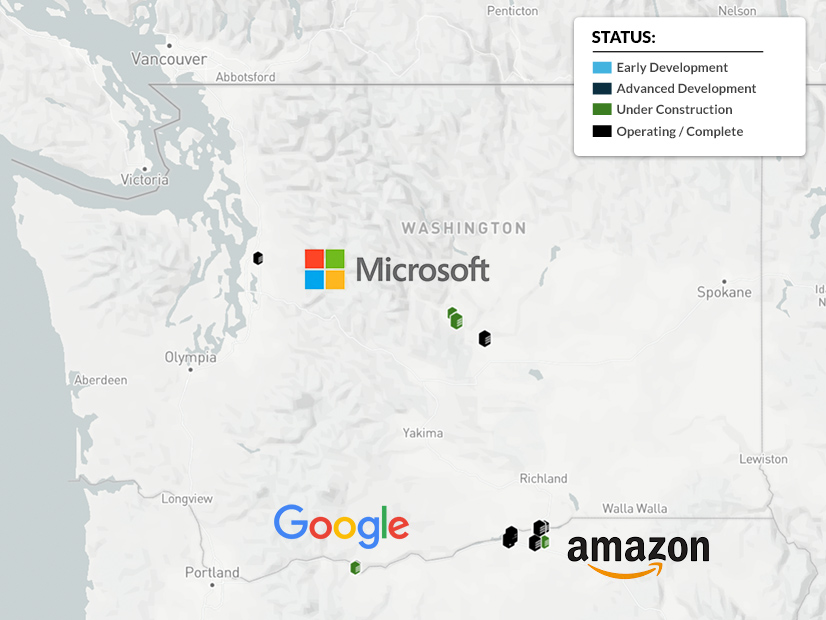
In a joint letter, Google, Amazon, Microsoft, the Corporate Energy Buyers Association and Western Freedom said that “the record should reflect enacted legislation and implemented governance structures, rather than proposals that were still under development at the time.”
“Maintaining an out-of-date record while introducing this additional final proposed decision is unnecessary,” the large customers said in reference to Pathways and ROWE.
Western Freedom’s CEO Kathleen Staks also is co-chair of Pathways’ Launch Committee and is ROWE’s interim president.
BPA plans to exit the WEIM on Oct. 1, 2027, to prepare for its participation in Markets+ one year later. During this period, the agency has said it will trade only in bilateral markets. (See BPA’s Exit from WEIM Necessary for Markets+ Preparation, Staff Says.)
RNW contended BPA has reaped between $26 million and $36 million in benefits since 2022 from participating in the WEIM and asked for more information on how moving to bilateral trading will impact electricity prices and reliability.
RNW’s concerns were shared by the large load customers. The customers also noted that BPA has experienced recent staffing cuts under President Donald Trump. (See BPA Looks to Fill 155 Positions After Hiring Freeze.)
“Bonneville’s departure from the WEIM is a significant change in operations for the West, and it’s one that is not simple to unwind,” the customers wrote. “Any new market may face unforeseen delays pushing that further. While staffing constraints may factor into capacity to participate, stakeholders need a clearer picture of the tradeoffs and alternatives.”
No ‘New Factual Findings’
In its comments, Earthjustice, the lead plaintiff in a suit challenging BPA’s May 2025 ROD in the U.S. 9th Circuit Court of Appeals, contended that the draft decision offered nothing new of substance regarding the “policy direction” BPA outlined in the ROD. (See Nonprofits Tell 9th Circuit BPA’s Day-Ahead Market Decision Poses ‘Imminent’ Harm.)
“While titled the ‘decision to join Markets+,’ Bonneville’s [proposed] decision does not amend or otherwise change its May 9, 2025, final day-ahead market policy and ROD, nor does it affect the finality of that decision,” the organization wrote, characterizing the proposed decision as “no more than the next step on the path to implementing” the decision already made a year ago.
“Bonneville is not making any new factual findings to support its decision to participate in Markets+,” Earthjustice said. “Put simply, Bonneville is no longer considering the economic benefits and drawbacks and environmental consequences of day-ahead market participation, nor is Bonneville considering market alternatives such as participating in the EDAM.”
Earthjustice also cautioned BPA not to withdraw from the WEIM in October 2027, ahead of the winter heating season.
“While Bonneville states it needs to depart the WEIM a year prior to joining Markets+, to provide the agency the opportunity to gain experience in ‘Markets+ mechanics,’ Bonneville has not presented any data reflecting the cost to customers from this early departure,” the group wrote.
Markets+ Supporters Urge BPA to ‘Finalize’ Choice
Meanwhile, Powerex, which is set to join Markets+ on Oct. 1, 2027, added its support for BPA’s participation in SPP’s market and urged the agency to “finalize this decision.”
“BPA’s power customers need certainty to prepare for their market-related roles and responsibilities under the Provider of Choice contracts, and its transmission customers need to work with BPA on representing their BPA transmission rights in Markets+,” Powerex wrote. “BPA’s plan to align its go-live with the BP-29 rate period and initial Provider of Choice deliveries is sound, but the benefits of that alignment depend on BPA’s firm and durable commitment to Markets+, together with timely implementation.”
Snohomish County PUD, Tacoma Power, the Alliance of Western Energy Consumers (AWEC) and Northwest Requirements Utilities (NRU) argued BPA had provided sufficient justification to pursue Markets+, saying the agency should finalize its choice.
“The decision is grounded in thorough, objective analysis; it is aligned with the positions NRU has advocated for consistently throughout this process; and it provides the governance independence, economic benefits and environmental attribute protections that NRU’s members require,” NRU wrote in comments.
On the issue of WEIM, AWEC said the exit from the market is necessary “to transition to a new reliability coordinator, to amend its Provider of Choice contracts with its customers, and to engage in rate and tariff proceedings to fully implement the agency’s decision. AWEC is confident that BPA will work through these issues in lockstep with customers and stakeholders.”
Robert Mullin contributed to this article.