IESO’s Long Lead-Time (LLT) procurement may be delayed beyond its planned April launch because the ISO is still awaiting a directive from the Ontario Ministry of Energy and Mines.
ISO officials announced the potential delay in an engagement session March 26, where they also shared refinements to their buy-local incentives.
The LLT procurement is intended for resources that require longer planning cycles than the four-year lead times in the pending Long-Term 2 (LT2) procurement. IESO plans to seek 600 to 800 MW of capacity from storage resources and up to 1 TWh of energy from hydro resources requiring at least five years of lead time.
“While we were expecting to get our directive to launch the LLT [request for proposals] by the end of this month, we no longer expect that to be the case,” IESO’s Ben Weir said. “Government is continuing to take some time to finalize the [supply chain] policy that’s going to be applicable to this procurement. … There is still hope that the end of April launch timeline does not get impacted by this … but that timeline has been put into question.”
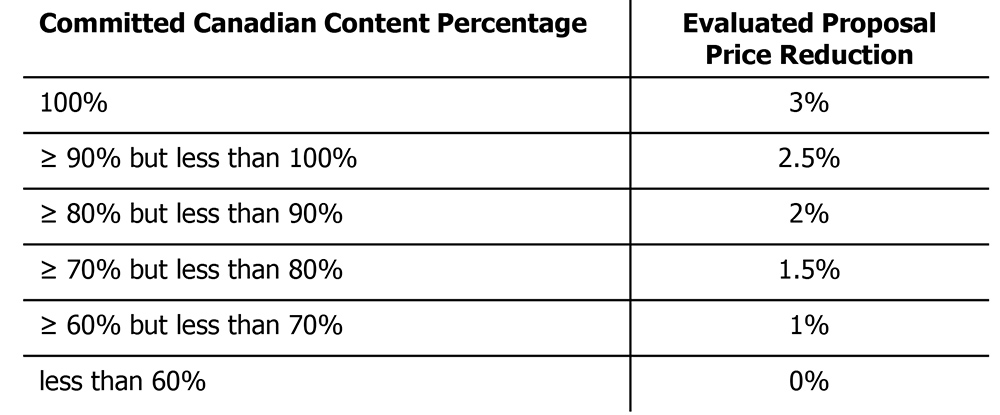
At issue are the government’s rules for incentivizing respondents to use Canadian construction materials and labor. The ISO said previously that developers who commit to sourcing 75% of materials and construction services from Canadian suppliers would receive a 2% reduction in their “evaluated” price. (See IESO Expands Hydro Eligibility in Long Lead-Time Procurement.)
But in its March 26 presentation, IESO revised the incentive to a sliding scale, ranging from a 1% price reduction for using 60 to 70% Canadian supplies, to a 3% reduction for a 100% Canadian commitment.
If a supplier cannot prove they met their committed percentage, they will be subject to up to $5 million in liquidated damages, with higher damages for those falling more than 5 percentage points below their commitment.
Michael Killeavy of Power Advisory questioned the rationale behind the damages, asking, “If there’s a shortfall in Canadian content, how is the ISO actually damaged?”
Weir said the ISO wants a disincentive for suppliers who fail to honor their pledge to use a high percentage of Canadian supplies. “They shouldn’t have been awarded [a reduction in their evaluated price],” he said.
Reserve Price
IESO’s Jasdeep Kahlon again defended the ISO’s plan to use Window 1 of the LT2 procurement as the baseline for the LLT reserve price — a confidential price threshold to ensure the ISO doesn’t pay too much.
The price will be adjusted for inflation to account for the later commercial operation dates for long lead-time projects. IESO also will consider the cost of new entry at Year 21 of the 40-year contract term.
Kahlon said some stakeholders are concerned that the resources procured through LT2 are not comparable to those in the LLT procurement.
“While the ISO is taking this into consideration, I do want to clarify that the reserve price is intended to be … a price ceiling and reflect the ISO’s willingness to pay for LLT energy and capacity resources,” he said. “The ISO is not attempting to set a target or a forecasted price.”
In addition to the CONE baseline cost at Year 21, Kahlon said the ISO will consider the value of other attributes, “including supply diversity and system reliability benefits, longer asset lifetimes, the duration and flexibility that these projects bring” in addition to the domestic sourcing considerations that weren’t required for LT2 Window 1.
“I think a lot of the [stakeholder] concern may stem from maybe a lack of confidence that the ISO is going to correctly value these additional attributes,” he said. “So, this is where I’m … strongly encouraging stakeholders to submit any supporting materials, reports, modeling, analysis — whatever stakeholders believe would help the ISO correctly value these attributes.”
Early Delivery Concession
In response to stakeholder concerns, IESO agreed to relax conditions for its consent for a COD earlier than specified in the contract.
Stakeholders expressed concern that IESO’s veto power over an early COD could undermine the ability to finance projects, saying a project that is financially viable with a six-year lead time may not remain viable with a seven-year lead time.
IESO said it will update the LLT contracts to specify that consent for an early COD “shall not unreasonably be withheld.”
Timelines
The ISO also agreed to extend the RFP’s proposal submission deadline to Nov. 26. Some stakeholders had requested a deadline at the end of December.
Patrick Gillette, of consulting firm CRD Energy, said the November deadline “is somewhat problematic, especially for the greenfield sites that the Ministry of Natural Resources is going to be releasing.”
Gillette said the extended deadline will be helpful for “more mature sites,” but “it’s going [to be] very difficult to convince anybody to put any money into a process where you have the risk of the Ministry of Natural Resources needing to confirm the site is going to be put out there; that you’ve got to do a bunch of technical work in the field, and you’re working on something that normally takes a year, and the timelines have been shrunk down to seven eight months,” he said. “The risk you’re running here is that the really good sites that don’t have as much work done on them won’t be submitted.”
Weir said the deadline could be delayed if the procurement is not launched by the end of April, but he added, “You’re not going to get a year.
“We are balancing here a number of different procurements that have different timelines; that … need resources to be in service to meet needs that show up at different times,” he said. “And there is … only so long that we can push back an LLT proposal submission and still get contracts awarded.”
Next Steps
The ISO plans to post updated drafts of the RFPs, contracts and pre-deliverability test intake forms on April 1, and the deliverability testing methodology by mid-April.
It asked for feedback on the latest engagement by April 15 at engagement@ieso.ca.