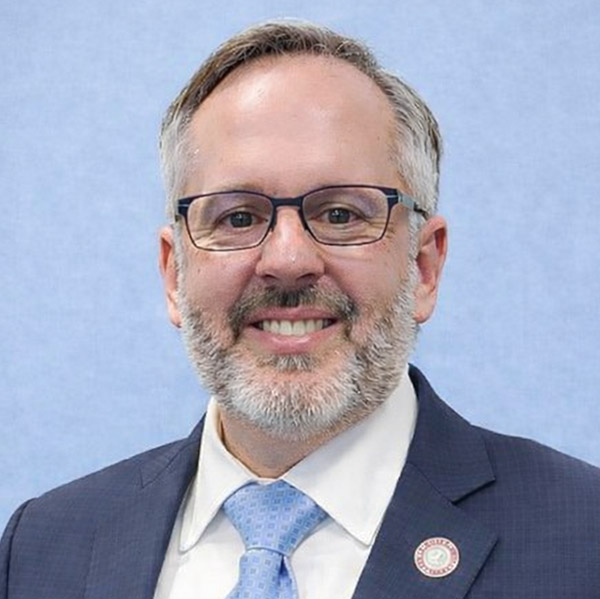
The Bonneville Power Administration announced a $40 million surcharge to rebuild financial reserves depleted after three years of low water, saying the move could lead to an annual average effective rate increase of 2.2% for most power sales.
BPA said the surcharge for power customers is due to increased costs in power purchases because of challenging water levels over the past three years. The agency said it would recover the $40 million surcharge in rates from December 2025 through September 2026, according to a Dec. 18 announcement.
“We know that a surcharge was unexpected by our ratepayers,” BPA Administrator John Hairston said in a statement. “Our third-quarter forecast indicated a low probability of triggering a surcharge, but continued cost increases in power purchases, resulting from a third bad water year in a row, were the primary driver.”
BPA implemented the surcharge under its Financial Reserves Policy (FRP). The policy aims to maintain sufficient financial reserves and promote rate stability. It said the policy and other cost-management efforts “have resulted in rates that are flat or below national inflation over the previous decade.”
The final Power FRP surcharge rate is $1.01/MWh, and the final annual rate is $0.84/MWh. BPA said the surcharge would result in an annual average effective rate increase of 2.2% for non-slice Tier 1 rates, according to the announcement.
Tier 1 “non-slice” contracts represent most of BPA’s power sales. “Non-slice” refers to a type of contract in which the customer is guaranteed a specified volume of energy regardless of conditions on the hydro system; in contrast, total volumes delivered to “slice” customers can vary based on availability.
“We received only one comment on the surcharge and the process itself, and none on the data or calculations,” Hairston noted.
The surcharge comes after the agency announced in July that customers’ power rates could increase by about 8 to 9% over the BP-26 rate period covering the 2026/28 interval. (See BPA Customers to See Increased Power, Transmission Rates.)
“We recognize this surcharge impacts our customers, and we are actively working to improve our forecasting and transparency,” Hairston said. “BPA is committing to leading a holistic reevaluation of our current risk mitigation measures, including surcharges, prior to our next rate case and leveraging the lessons learned from these three consecutive poor water years and their strain on the agency’s financial reserves.”
‘Sound Risk Management’
BPA said it has triggered a surcharge only once — in 2020.
“Since then, BPA has provided rate reduction through its reserves distribution clause in 2022, 2023 and 2024, for a total dividend distribution of $529 million,” according to the announcement. “These dividends help reduce mid-period rate pressure and keep the annual average rate change from 2020 to 2026 at 1.5%, significantly less than ongoing inflation in those years.”
Fred Heutte, senior policy associate at the Northwest Energy Coalition, said in an email to RTO Insider that BPA could take three steps to alleviate the impact of hydro deficits, including supporting the new Northwest Energy Efficiency Alliance joint utility initiative on demand response. He also pointed to the agency’s transmission initiatives: the Grid Access Transformation and the Grid Expansion and Reinforcement Program.
“Together these will open the door to thousands of MW of new renewables and other resources that will expand supply and diminish our exposure to super-peak market prices,” Heutte said. He added the agency should reconsider its choice to join SPP’s Markets+ day-ahead market. (See BPA Chooses Markets+ over EDAM.)
“BPA’s own studies show that having two power markets running on top of their grid will raise costs for everyone in our region and across the west,” Heutte said. “The Extended Day-Ahead Market is poised to substantially expand the benefits of the Western Energy Imbalance Market which almost all of the Northwest is in. That will provide further protection from market price spikes and reliability concerns when we most need it, and reduce the risk of future wholesale rate surcharges.”
Scott Simms, executive director of the Portland, Ore.-based Public Power Council, told RTO Insider that the 2.2% increase in wholesale power costs is “a modest adjustment in the context of total rates, but not insignificant for utilities managing tight budgets and facing cost pressures and affordability issues in their communities.”
“The surcharge also comes on the heels of the 8.9% wholesale rate increase from the BP-26 rate proceeding that came into effect Oct. 1,” Simms said. “It’s important to acknowledge that rate increases are a real and growing concern for utilities and their customers, and at the same time, BPA’s action reflects sound risk management to protect long-term rate stability. PPC sees the surcharge as temporary, targeted, and tied to transparent policy triggers rather than arbitrary cost shifts, and we remain vigilant in thoroughly reviewing any BPA rate changes and their drivers.”
The order, “Building an Affordable and Reliable Energy Future,” was issued Dec. 19 and seeks to optimize permitting processes, agency review and site preparation to facilitate the deployment of shovel-ready projects needed to close the projected capacity gap.
“Over the last few years, utility bills have spiked, and for many Marylanders, energy policy has stopped being technical and started being personal,” Moore said in a statement. “This order addresses the untenable system causing these costs to skyrocket. We are putting affordability and reliability at the center of the conversation to ensure our system works for the people who use it, not just the companies that run it.”
The order creates a new “Energy Subcabinet” that will be chaired by the director of the Maryland Energy Administration (MEA) with members from cabinet agencies, Moore’s deputy chief of staff, and other cabinet-level officials as designated by the governor.
A day before the executive order, Moore’s office announced that Kelly Speakes-Backman would be the new director of the MEA effective Dec. 24, after former director Paul Pinsky retired. Speakes-Backman is a former Maryland PSC commissioner and deputy assistant secretary at the U.S. Department of Energy.
“Kelly Speakes-Backman is a trailblazer in the energy industry with the deep expertise and track record to lead the Maryland Energy Administration,” Moore said in a statement. “She is a proven public servant who believes in our state, understands our energy system, and knows how to turn policy into lasting results. We are proud to welcome her back to state service as we work together to build a more affordable, competitive, and sustainable future for all Marylanders.”
The Energy Subcabinet will meet at least quarterly to align state resources and ensure that energy policy decisions support the state’s affordability, reliability, economic competitiveness and environmental goals. The subcabinet will review proposed energy legislation or administrative policies and draft recommendations on them.
In addition to the subcabinet, the order creates the Maryland Energy Advisory Council, which will be chaired by Speakes-Backman and include representatives from the state Senate, the House of Delegates, the PSC, the Office of People’s Counsel, the Maryland Clean Energy Center, regulated utilities, PJM, and other stakeholders.
The council is charged with identifying barriers to the deployment of generation facilities and affordability. Within 180 days, it will submit a memorandum to the subcabinet identifying the biggest challenges to affordability and reliability.
The MEA must submit written recommendations to the speaker of the House of Delegates and the president of the Senate by Jan. 16, 2026, which identify strategies to mitigate rate impacts. It will evaluate regulatory, administrative and planning tools that align implementation of the State Energy Plan with affordability and reliability; and it will outline consideration for any energy legislation next session.
The order includes a clause saying nothing in it will impact the PSC’s independence, but MEA will file some petitions with the regulator. The first will seek a review of the budget billing programs at utilities. The second will seek a regulatory strategy that prioritizes flexible and optimized lower-cost grid solutions. The third will seek rule changes requiring utilities to evaluate advanced transmission technologies (ATTs) and grid enhancing technologies (GETs).
A work group of the subcabinet will examine ways to modernize the state’s transmission infrastructure, including using ATTs and GETs and building new transmission lines and other infrastructure such as battery storage on state-owned rights-of-way.
Another work group of the subcabinet will be set up to examine sites around the state that can be used quickly to develop new energy infrastructure.
The American Council on Renewable Energy welcomed Moore’s executive order in a statement.
“ACORE commends key provisions in the order to increase the deployment of advanced transmission technologies; streamline the siting and permitting of high-voltage transmission, energy storage, and other infrastructure; advance wholesale market reforms; and more,” ACORE CEO Ray Long said. “As the country enters a new era of electricity demand, initiatives like Gov. Moore’s will facilitate significant progress toward building a modern and reliable grid needed to maintain economic competitiveness and keep the lights on.”
The Michigan Public Service Commission has approved a special contract that will allow DTE Energy to continue its plans to supply a hotly contested, $7 billion data center with nearly 1.4 GW of power.
The less-than-two-month approval process and ensuing agreement with redacted sections elicited harsh words from the Michigan attorney general.
The Michigan PSC conditioned its Dec. 18 approval on DTE absorbing “any” costs to serve Open AI, Oracle and Related Digital’s proposed 1,383-MW data center in Saline Township (U-21990). DTE on Oct. 31 requested expedited approval of the large load supply agreement. The 250-acre data center campus is poised to add more than 10% to DTE’s peak demand.
The terms of the supply agreement specify a 19-year contract; a requirement that the data center owners pay 80% of the contracted electricity use, even if their actual usage is lower; and an early termination fee of up to 10 years’ worth of the minimum 80% payments.
The PSC’s final approval is contingent on DTE updating its emergency procedures so that should load shedding occur, the data center is first in line to be reduced or cut before other customers.
The commission directed DTE to amend the renewable energy plan in its next integrated resource plan that compares what it needs to do to comply with Michigan’s renewable portfolio standard with and without the data center, and how it plans to equitably recover possible additional costs associated with meeting clean energy goals. The PSC said DTE needs to update its capacity demonstration and furnish an analysis showing how the new large load will affect its capacity demonstration.
The deal includes a proposed energy storage agreement in which Oracle, over 15 years, would fund development of 1,383 MW of energy storage facilities to match the data center’s contracted demand. DTE would own and operate the facilities, but Oracle would receive market revenues from operating the energy storage facilities in MISO’s wholesale markets. Like the supply agreement, the storage agreement would require a payout if Oracle exits DTE’s territory prematurely.
The PSC said the arrangement would not increase rates on other customers and “therefore met the standard for an ex parte review under Michigan law and precedent established by Michigan courts going back decades.” The PSC said in the past, it has approved other large special contracts between DTE Electric and customers including Ford, Fiat Chrysler Automobiles and the University of Michigan.
Ex parte proceedings in Michigan don’t allow public hearings, nor do they let interested parties conduct discovery or file testimony.
“These protections will ensure that Michigan is able to reap the benefits of adding a significant new energy user to the grid while keeping any related costs off the utility bills of other customers,” Michigan PSC Chair Dan Scripps said in a press release. Scripps said he heard from “thousands of Michiganders concerned about the risks of higher utility bills for everyday customers and reversal of progress the state has made in decarbonizing its energy production.” He said the commission shares those concerns and enacted cost protections while “supporting economic development.”
The commission said the agreement would make rates more affordable because the data center would share in fixed system costs previously shouldered by DTE’s existing customers. DTE estimated an approximate $300 million net benefit to other customers.
Michigan’s attorney general and environmental and consumer advocate groups said the PSC should not have fast-tracked the contract and should have let hearings play out in a contested case.
Michigan Attorney General Dana Nessel criticized what she called a rushed approach to the massive data center project that kept the public in the dark.
“I am extremely disappointed in the MPSC’s decision to fast-track DTE’s secret application to service this massive data center without holding a contested case hearing. While I am relieved that the commission at least purports to have placed some conditions on DTE’s application, without being able to see the full, unredacted contract, and study the predicate conditions and enforcement mechanisms set by the commission, it is impossible to verify any of these claims today,” Nessel said in a Dec. 18 statement.
Nessel said her office is considering steps it could take to protect residents. She noted that her office fielded more than 5,500 public comments, “overwhelming opposition from community leaders and bipartisan calls from public officials urging the commission to slow down.”
Nessel said the “secret contract still leaves Michiganders scrounging for hidden and vital details that could harm ratepayers should these AI corporations leave, move out of state or simply go bankrupt.” She said she didn’t know what exit fee provisions would be in place before December 2027, as DTE prepares for the construction phase.
Nessel previously said a public hearing would have been the only avenue to ensure transparency and validate details of the deal.
DTE said the data center deal would have been at risk if the commission had not expedited its evaluation.
The Sierra Club, Michigan Environmental Council, Natural Resources Defense Council and Citizens Utility Board of Michigan criticized what they called a rushed approval process and DTE’s “significantly” redacted proposal, which “foreclosed the ability of the public to scrutinize and meaningfully weigh in on an application that will have significant consequences for their communities and could substantially increase utility bills.”
They said the PSC’s multiple conditions on approval remain an “open question” and asked how regulators would hold the companies to their promises. They also said Oracle has increasing debt obligations and waning stock prices and that the PSC “largely punted” on the question of how DTE would meet clean energy mandates to future proceedings.
“We are disappointed that the commission conceded to DTE’s demand for a rushed, ex parte review of a heavily redacted, 19-year contract for one of the largest new electric loads in state history,” Shannon Fisk, an Earthjustice attorney, said in a statement. Earthjustice represented Sierra Club and the other groups in the proceeding. “While billions of dollars and massive amounts of energy will be needed to serve the proposed Oracle data center, DTE provided virtually no support for its claim that the project somehow won’t raise costs for everyday customers or undermine Michigan’s clean energy laws.”
“Unfortunately, the commission has signaled that it’s willing to forgo reasonable public process and scrutiny when big tech wants to make a backroom deal with a utility,” Sierra Club Michigan Director Elayne Coleman said in a statement. “This kind of behavior puts all of us at risk and clearly signals that everyday ratepayers aren’t playing at the same level. The disclosures the commission is seeking belong in a contested case hearing where impacts are reviewed prior to approval — not after.”
“We appreciate the commission’s efforts to shield other ratepayers from harm from the data center, but the contested case process exists exactly to do this and skipping over it sends the wrong message to other companies looking to do business in Michigan,” added Charlotte Jameson, chief policy officer with the Michigan Environmental Council.
The Michigan PSC noted that it doesn’t have authority over the construction and location of data centers, nor permitting power over water use.
DTE previously announced in a third-quarter earnings call that it’s in discussions with other large load developers for projects that could total about 3 GW of additional demand, with the added potential of 3 to 4 GW in new co-located data center load and generation. Company officials have said they likely would need to build new gas plants to accommodate the demand.
The Maine Office of the Public Advocate has asked FERC to initiate evidentiary hearing procedures to answer questions about the prudency of investments by New England transmission owners in asset condition projects placed in service in 2022.
In a filing submitted Dec. 17, the OPA wrote that it has “serious doubts about whether the policies and practices that governed the decisions that led to the asset management projects included in the 2023 ISO transmission rates were prudent” (ER20-2054).
Asset condition spending, which typically is intended to address issues with deteriorating transmission infrastructure, has risen significantly in recent years and accounts for the majority of New England’s pooled transmission investment. TOs spent nearly $4 billion on asset condition projects placed in service between 2020 and 2024 and forecast nearly $1.5 billion on projects placed in service in 2025.
Reining in asset condition costs has been a top priority for consumer advocates and the New England states, and earlier this year, ISO-NE agreed to assume a nonregulatory asset condition project reviewer role to help provide transparency into these investments. (See ISO-NE Gives Update on Asset Condition Reviewer Role.)
The OPA’s request comes after a FERC ruling in September that required New England TOs to provide more information responding to a series of questions issued by the OPA to the companies in 2023.
FERC’s ruling required the companies to provide more details about the timing of projects and directed transmission owners to provide more information about how they evaluated needs and selected solutions. (See FERC: New England TOs Must Disclose More Info on Asset Upgrades.)
In a concurrence with FERC’s order, Commissioner Judy Chang emphasized the TOs’ transparency obligations under formula rate protocols.
“If further action by the commission is needed to ensure customers have access to information needed to assess the prudence of transmission owners’ investments, I encourage parties to bring the issue to the commission,” Chang wrote in her Sept. 18 concurrence.
The OPA wrote that the responses it received following FERC’s order still failed to adequately address questions about the TOs’ processes for minimizing their asset management costs.
Denis Bergeron, an expert tasked by the OPA with reviewing the TOs’ responses, wrote they raised questions about a lack of information on how the companies “weighed various alternatives and their relative costs,” along with concerns about “unexplained differences among the useful life assumptions by New England transmission providers.”
The responses raise “serious doubt as to whether these starkly different practices taken together are providing cost-effective results for the region’s consumers,” he said, adding that it is his “informed conclusion that these questions are left unresolved with the data provided by the transmission owners and can only be answered through further discovery in a hearing to explore the prudence of the transmission owners’ replacement projects.”
He noted that while Vermont Electric Power Co. assumes about a 60-year life expectancy for its structures, Eversource Energy wrote in its responses that “while the physical life of a transmission line may exceed 35 years, due to changing load patterns, it cannot be assumed that the line will be electrically viable after 35 years.”
He said National Grid’s response indicated a complicated and potentially contradictory approach to evaluating the useful life of assets. He was not able to discern Rhode Island Energy’s approach to asset life from the company’s response, he added.
Regarding the evaluation of project alternatives, he said the companies failed to “quantitatively demonstrate how the alternatives were weighed.”
While the responses specifically relate to already-in-service projects, Bergeron said Eversource’s approach raises concerns about the company’s proposed rebuild of the X-178 line in New Hampshire. The project would replace about 580 structures on the 49-mile transmission line, which has an average structure age of about 46 years. Construction is slated to begin in early 2027, according to the project website. (See New England States Raise Alarm on Eversource Asset Condition Project.)
“The [Public Service Company of New Hampshire] decision to undertake this project was presumably based on the same policy governing earlier replacement projects,” he wrote. “If so, it raises a serious doubt about whether the criteria they apply result in the most economic projects.”
Representatives of Eversource, National Grid and Avangrid declined to comment on the OPA’s request.
Representatives of Connecticut, Maine, Massachusetts and Vermont have selected a cumulative 173 MW of new solar generation through a coordinated procurement process, the states announced Dec. 18.
The expedited process was aimed at procuring “advanced-stage projects” that could take advantage of expiring federal clean energy tax credits.
The Connecticut Department of Energy and Environmental Protection (DEEP) initiated the process with a request for proposals issued Sept. 10 and proposals due Oct. 10. The solicitation was open to renewable resources including onshore wind, solar and co-located storage.
The RFP noted the DEEP would “coordinate bid evaluation and selection” with any New England states that opted to join the procurement.
The project selections include:
Viridis Solar in Panton, Vt. (50 MW)
Husky Solar in Plainfield, Conn. (50 MW)
Fair Haven Solar in Fair Haven, Vt. (20 MW)
Knox Solar Energy Center in Warren, Maine (33.1 MW)
Turner Meadow Solar Station in Turner, Maine (19.9 MW)
DEEP selected about 67 MW across three projects; the Massachusetts Department of Energy Resources selected about 41 MW across two projects; the Maine PUC selected about 51 MW across five projects; and Vermont utility Green Mountain Power selected about 14 MW from one project. All projects are expected to be in service by the end of 2030.
The process highlights increased collaboration among New England states to procure clean energy and transmission. Massachusetts collaborated with Rhode Island and Connecticut on an offshore wind procurement in 2024, and the six New England states worked with ISO-NE to establish the new Longer-term Transmission Planning (LTTP) process. The first LTTP procurement focused on onshore wind development in Maine. (See ISO-NE Provides More Detail on Responses to LTTP Procurement.)
Meanwhile, the Maine PUC is hoping to work with other states on an onshore wind and transmission solicitation intended to complement the ongoing LTTP procurement.
Announcing the solar selection, Connecticut Gov. Ned Lamont (D) said “regional collaboration is critical to expanding and diversifying our energy supply, especially as we work to bring down the cost of electricity for Connecticut ratepayers.”
“By working together with New England state partners, and working quickly to take advantage of competitively priced projects, we are able to secure greater affordability and reliability benefits for Connecticut at a fraction of the cost,” DEEP Commissioner Katie Dykes said.
Multistate procurements are “becoming much more of the norm than the exception,” Dykes said at an industry event earlier in December.
Aidan Foley, CEO of Glenvale Solar, the developer of the Knox Solar Energy Center and Turner Meadow Solar Station, applauded the states’ “resolve to advancing low-cost, locally produced, carbon-free energy,” adding that the selections “will benefit communities and energy consumers throughout New England for decades to come.”
The U.S. House of Representatives passed the SPEED Act in a vote of 221 to 196, with just 11 Democrats crossing the aisle to support the Republican-backed infrastructure permitting legislation.
House Natural Resources Committee Chair Bruce Westerman (R-Ark.) and Rep. Jared Golden (D-Maine) were the two main sponsors of the bill, which would speed up reviews under the National Environmental Policy Act (NEPA) and limit the time and opportunities for lawsuits.
“The passage of the SPEED Act is a win for America,” Westerman said in a statement. “For too long, America’s broken permitting process has stifled economic growth and innovation. To build the infrastructure needed to deliver affordable energy to American families and defend against 21st-century threats, we must fix this process. The SPEED Act will encourage investment, bring certainty to permitting, end abusive litigation and allow America to build again.”
The bill would streamline the analysis required in NEPA documents, reducing the burden on developers, and would clarify when a NEPA review was triggered by defining “major federal action.” It would establish a 150-day limit for any lawsuits on NEPA decisions.
More than 11 House Democrats had expressed interest in permitting changes, but many in the end were unsatisfied with the bill and voted against it. Rep. Scott Peters (D-Calif.) spearheaded a letter signed by 30 Democrats seeking some changes from the committee version of the bill to win their support, which did not happen.
“The environmental laws of the 1970s were designed to stop projects. The environmental imperative of today is to build,” Peters said in a statement. “That’s why I support permitting reform and why reforming NEPA is necessary if America is going to remain competitive.”
Peters said he hopes the Senate can craft “truly bipartisan solutions that can become law” and explained what he and his colleagues want changed to win their support.
“We emphasized that projects that comply with the law must be protected from political interference, that courts should have a targeted role to ensure decisions are based on accurate analysis, and that local stakeholders should continue to have meaningful input early in the process,” he said. “We also highlighted the need to avoid provisions that could backfire, delay projects or reduce the quality of environmental reviews. Our goal is simple: a permitting process that is efficient, predictable and fair for investors, communities and the environment alike.”
In the end, conservative Republicans won out and changed the SPEED Act so that even if it becomes law, President Donald Trump will be able to pull previously approved permits for offshore wind, while the version passed by the Natural Resources Committee would have prevented such a move for all kinds of permitted projects. (See Permitting Bill Runs into Difficulty Involving Offshore Wind.)
‘Undermining the Intent’
The change on offshore wind led to the American Clean Power Association withdrawing its support for the SPEED Act and calling for the Senate to pass technology-neutral permitting reform.
The Edison Electric Institute (EEI) welcomed passage as an important first step in cutting red tape.
“At a time of unprecedented electricity demand, our outdated permitting processes can no longer stand in the way of unleashing American energy dominance,” EEI CEO Drew Maloney said in a statement. “We value Chairman Westerman’s leadership and urge the Senate to take the next step on this commonsense legislation that will help provide relief for customers and support the energy infrastructure that powers the American economy.”
EEI also will work to make the permitting system more predictable and durable for all forms of energy as the legislative process continues, he added.
Electric transmission trade group Grid Action also welcomed passage as demonstrating momentum for permitting legislation, Executive Director Christina Hayes said.
“Modernizing permitting is essential, but today’s economy demands more than a faster status quo,” Hayes said. “With electricity demand surging from AI, data centers and new manufacturing, we need permitting reform to strengthen transmission as the missing link needed to achieve a more affordable, reliable grid. As the bill heads to the Senate, Congress must further strengthen siting and permitting reform to reduce the cost of development and, in turn, lower costs for customers.”
Offshore wind group Oceantic Network has said it would welcome permitting changes, but Senior Vice President Sam Salustro decried the late amendment.
“Oceantic is disappointed in the late inclusion of an amendment which is discriminatory toward renewable energy, inviting additional, harmful actions while undermining the intent for tech neutrality and universal permitting certainty,” Salustro said in a statement. “We encourage senators on both sides of the aisle to restore the heart of bipartisan permitting reform and ensure that all American energy sectors are treated equally so all forms of much-needed power reach the grid, lower costs for ratepayers and create jobs.”
Consolidated Edison has been tasked with creating a contingency plan to avert the energy shortfall that it and NYISO have warned may develop in New York City.
The New York Public Service Commission initiated the proceeding Dec. 18 (25-E-0764). It directed Con Edison to first identify the reliability needs facing it over the next 10 years, then start a planning process to identify potential solutions to those needs.
The PSC is limiting those solutions to clean and non-emitting options: energy storage, distributed renewables and demand-side management such as energy efficiency, demand response and virtual power plants.
“Con Edison’s proposed NYC Reliability Contingency Plan must ‘turn over every stone’ to define a portfolio that is consistent with the state’s clean energy and climate goals,” the order states.
Further, the plan must prioritize solutions that are cost-effective for ratepayers; are straightforward and timely to deploy; and avoid or minimize impacts on disadvantaged communities.
With its limitation on emissions, the directive to Con Edison takes a narrower focus than the state Energy Plan, a directional guidebook that was updated Dec. 16 to include an all-of-the-above approach with the possibility of new fossil infrastructure. (See N.Y. Embraces All of the Above in Energy Strategy Update.)
But New York City has air quality problems, and the prospect of new fossil generation there — at a time when existing fossil plants may need to run much longer than many initially had hoped — is politically sensitive.
Con Edison also is directed to identify transmission and distribution upgrades needed to implement the solutions it proposes. The order includes both resource adequacy and transmission security under the “reliability” umbrella.
A spokesperson for the utility offered a broad response to the order: “We have a strong record of meeting system needs through both innovative solutions and traditional infrastructure investments, from pioneering non-wires solutions to building transmission that addressed the Indian Point contingency. We will continue to work collaboratively with NYISO, regulators, policymakers and other stakeholders to make sure the reliability needs of our customers are met, now and in the future.”
NYISO’s third-quarter 2025 Short-Term Assessment of Reliability (STAR), issued Oct. 13, identified reliability violations in Zone J (New York City) and Zone K (Long Island) starting in the summer of 2026.
NYISO’s 2025-2034 Comprehensive Reliability Plan, issued Nov. 21, did not identify actionable reliability needs, but it highlighted three converging trends that threaten reliability in New York: the aging generation fleet, the rapid growth of new large loads and the increasing difficulty of developing new dispatchable resources. Additionally, the advanced age of the fleet raises concerns about performance failures.
Con Edison’s 2025 Local Transmission Plan, submitted to NYISO stakeholders Dec. 3, identifies reliability needs in NYISO Zone J starting at 250 MW of peak need in 2030 and rising to 1,325 MW by 2035.
These reports are the basis for the PSC’s Dec. 18 order. The order “encourages” but does not direct the Long Island Power Authority (LIPA) to initiate a similar planning process leading to a contingency plan for Zone K. LIPA is a state entity not subject to PSC regulation.
NYISO meanwhile is awaiting the results of a Nov. 10 solicitation for short-term reliability process solutions to address the generator deactivation reliability needs identified in the third-quarter 2025 STAR report. Responses are due by Jan. 9. Natural gas generation can be proposed as a solution.
A PSC spokesperson told RTO Insider that the efforts by NYISO and now the PSC are complementary: The commission is setting up a process that is broader than the ISO solicitation but will reflect solutions identified by NYISO from its solicitation, thereby providing the widest possible range of options to address the problems.
NYISO welcomed the PSC’s order. “We’re pleased by the commission’s actions today to bolster reliability of the electric system in New York City and Long Island,” a spokesperson said. “The NYISO has long warned through our planning studies of declining reliability margins in New York City and the need for additional generation to meet rising demand. The order will be beneficial to meet reliability requirements and incentivize investment in new resources, while also supporting the newly approved state Energy Plan.”
PSC Chair Rory Christian spoke not only of the imperative of keeping the lights on in New York City but the impossibility of taking a cookie-cutter approach, as well as the need for innovative thinking if new electrons are to be brought onto the grid without creating new emissions.
“So as we explore solutions to the need identified, we’ll also need to explore new options and new opportunities to enhance reliability created through the ongoing integration of customer-side energy efficiency, demand response, battery storage, renewable energy and other measures,” Christian said. “I believe our utilities can rise to this challenge and look forward to the results of their work.”
MISO officials clarified that the 1,420-MW J.H. Campbell coal plant — kept online and in retirement limbo by the U.S. Department of Energy’s series of emergency orders — is not eligible for the RTO’s capacity market and is not receiving special treatment for dispatch.
Executive Director of Market and Grid Strategy Zak Joundi and Managing Assistant General Counsel Michael Kessler appeared before the Organization of MISO States during a teleconference Dec. 18 to explain the Michigan plant’s role in RTO operations.
Joundi said the plant participates only in the energy and ancillary markets. He told state regulators and regulatory staffers that, based on language in the DOE orders, the plant “cannot be deemed a capacity resource and cannot participate in MISO’s capacity auctions.”
Joundi said “it would not be unexpected for” DOE to continue to issue extensions every 90 days to postpone the plant’s retirement, given the first two extensions.
South Dakota Public Utilities Commissioner Chris Nelson asked whether anyone would conduct a prudence review of the plant’s costs.
Kessler said a review would take place once Consumers files for recovery of its costs with FERC under its MISO Midwest load-ratio share allocation. At that point, Kessler said interested parties can inquire about how the plant was “operated and dispatched in the market” and debate the costs Consumers proposes to collect.
“I think all of those issues will come to the forefront once the cost recovery filing is made at FERC,” Kessler said.
Joundi said at this point, no costs relating to the plant have been recovered. He said MISO members can expect statements stemming from the plant to be charged under the real-time miscellaneous category.
Bill Booth, a consultant to the Mississippi Public Service Commission, asked whether the plant has a must-offer requirement.
Joundi said per MISO’s understanding, the Campbell plant doesn’t have a must-offer requirement like resources that cleared the capacity auction but has “an obligation” to offer energy because of the orders.
Booth questioned whether MISO is dispatching the plant economically.
“If the conditions allow it, it will be dispatched,” Joundi said. “I can’t talk to you about their bidding strategy.”
Mikhaila Calice, a staff member of the Public Service Commission of Wisconsin, pressed the RTO on how it plans to “preserve the merit order” of dispatch while minimizing costs to MISO Midwest.
“We’re using our market,” Joundi responded. He said MISO is committing and dispatching the plant under its normal process and is not using alternative market rules.
Calice asked if MISO is planning for emergency orders for other plants preparing for retirement.
Kessler said any future generation owners under DOE orders would have to follow Consumers’ steps and start by filing a complaint at FERC to seek a cost recovery mechanism. He said MISO considers itself “well positioned” to handle future emergency orders.
Minnesota Public Utilities Commissioner and outgoing OMS President Joseph Sullivan cautioned MISO again about its tone on resource adequacy issues at a Board of Directors meeting Dec. 11.
“We need to ensure that the states’ narrative and MISO’s narrative do not drift too far apart. Data matters, and so do the stories we tell about that data,” Sullivan told board members and leadership.
Sullivan noted the Campbell plant’s costs are rising while the plant isn’t included in MISO’s planning models.
“This is an affordability issue that we must be mindful of — no unnecessary costs,” Sullivan said in summarizing the situation.
Bowing to opposition from suppliers, IESO said it will not include a termination option in its procurement for long lead-time (LLT) resources.
“There has been much discussion on this item. I’ll skip to the punch line: We have heard you, and we have decided not to include any kind of optional termination provisions in the LLT contracts,” Dave Barreca, IESO’s supervisor of resource acquisition, said during an engagement session Dec. 18. “This is … our assessment of balancing the risks and the benefits of such a provision … assisted by your feedback. So this item is now closed, and we can move on.”
The ISO had said it would seek to reduce risks in the procurement by allowing the ISO and generation developers to cancel deals in the first two or three years after the contract date.
But suppliers said the termination option would increase developers’ risk, make financing more expensive and reduce participation levels. They also said it could discourage participation by Indigenous communities that seek to invest in projects with a high likelihood of reaching commercial operation.
IESO officials said they have reduced the minimum security from suppliers from $350,000 to $300,000.
“That is probably not as low as some are asking for,” Barreca acknowledged.
In a presentation, the ISO said it recognized that even the reduced security might prove an obstacle for small hydro projects. But it said the amount needs to be “significant enough” to ensure the proponent has the financial backing to complete the project on schedule and operate it in accordance with contractual requirements.
Potential Delay
IESO plans to seek 600 to 800 MW of capacity and up to 1 TWh of energy from resources requiring at least five years of lead time. The ISO created the long lead-time procurement because energy storage resources such as compressed air and pumped hydro require longer planning cycles than the four-year lead times for resources offering in the pending Long Term 2 (LT2) procurement. (See IESO Open to Broader Range of Storage Technologies in Long Lead-time Procurement.)
The energy stream of the LLT RFP will be open to new build hydroelectric facilities with a nameplate capacity of at least 1 MW that do not include pumped storage. Long-duration energy storage (LDES) projects will be eligible for the capacity stream.
The ISO had hoped to issue a final request for proposals and contracts by the end of the first quarter of 2026, with the solicitation expected in the fourth quarter.
IESO’s Ben Weir said the “biggest risk” to that timeline is uncertainty over whether the ISO will be required to incentivize the use of Ontarian or Canadian components and services under Bill 5 (Protect Ontario by Unleashing Our Economy Act).
“The rest of the stuff that remains under consideration, from a design perspective, I think is well in hand,” he said.
“What we’re doing at this stage … is seeking feedback for these technologies — hydropower and long-duration energy storage,” Weir said. “What are you expecting to do in terms of capital spend on product within Ontario and/or Canada? [And] what would you be capable of doing within Ontario and Canada, and how you expect any of those changes … to affect project costs?
“This is going to be super helpful for us to inform those discussions about … what’s in the realm of the possible.”
Team Member Experience
IESO is revising its proposed requirements for team member experience for the energy and capacity streams.
All projects must have at least two members with experience in planning, developing, financing, constructing and operating at least one “qualifying” project: a generation or storage facility that reached commercial operation in the past 15 years in Canada or the U.S. (minimum 1 MW for energy stream projects and 10 MW for capacity).
Proposed Class II LDES capacity projects must have two team members with experience planning and developing a project with the same technology (minimum 1 MW) that is expected to reach commercial operation in Canada, the U.S., the U.K., Italy, France, Australia, Germany or Japan by the end of 2029.
Midterm Extended Outages
IESO said it will consider allowing more flexibility for midterm extended outages but said it needed more information on their timing, frequency and duration.
The ISO had proposed a single outage of up to 12 months after the 20th anniversary of the contract. Stakeholders said they would prefer the ability to take multiple outages beginning after Year 10 that add up to 12 months.
“What is it that you want to use these outages for? Just give us some details,” Barreca asked. “You can give us this feedback confidentially.”
Must-offer, Regulation Requirements
In response to stakeholder feedback and internal data from the real-time and day-ahead energy markets, ISO officials said they will not include a real-time component to the must-offer provision in the LLT capacity contract.
They said they still are considering the merits and potential costs of expanding the qualifying hours in the LLT(c) contract to include weekends and holidays.
They also are considering stakeholders’ proposal to require all energy projects to be ready to offer regulation services. IESO had planned to make readiness a rated criteria category (non-price factors used to evaluate proposals).
“Rated criteria points and percentage impact on the evaluated proposal price will be established once all rated criteria are determined,” IESO said.
Other Considerations
ISO officials highlighted several other decisions on the procurement:
In contrast to the Long Term 2 RFP, the LLT procurement will not offer incentives for projects to locate in the north. Recognition for projects located outside of Prime Agricultural Areas will be applicable only to capacity projects.
IESO proposes that municipal support confirmations be dated no later than Aug. 21, 2026, to avoid periods during municipal election years in which municipal actions are restricted.
The ISO proposes to award rated criteria points for projects offering more than the minimum eight hours of continuous energy. “The corresponding reduction to evaluated proposal price for a 12-hour duration relative to an eight-hour [duration] will be commensurate with internal IESO studies on the impact of longer durations on effective load-carrying capacity for storage technology,” the ISO said.
Boom-bust Concern
Paul Norris, president of the Ontario Waterpower Association, said he was surprised and alarmed that the ISO is considering only one LLT procurement.
“You’re going to create what we try to avoid, which is a boom-and-bust approach to energy procurement,” he said. “There’s got to be an LLT 2 and an LLT 3.
Paul Norris, president of the Ontario Waterpower Association, said he was surprised and alarmed that the ISO is considering only one LLT procurement. | IESO
“The whole point of a cadenced procurement is to line up … partnerships with Indigenous communities; to work with municipalities; to work with suppliers,” he continued. “A one-shot deal … doesn’t serve anyone well, in my mind.”
Weir noted the ISO previously said it had a government directive for only the initial procurement.
“New-build hydropower hasn’t been procured in Ontario in quite a while. … LDES has not been procured at the scale that we’re procuring it in Ontario ever. So there are a lot of unknowns from a cost-effectiveness perspective as to these resources,” he said. “I think that the outcomes of the LLT will heavily inform what the government wants to do on subsequent rounds.
“Certainly, if we get another directive in the future to run subsequent rounds, we’ll run subsequent rounds,” he added.
Next Steps
The ISO asked stakeholders to provide feedback on its latest refinements by Jan. 15 via engagement@ieso.ca.
FERC issued a long-awaited order Dec. 18 on co-location of load and generation in PJM, which is meant to facilitate service for data centers while preserving grid reliability for consumers (EL25-49).
“Today’s order is a monumental step toward fortifying America’s national and economic security in the AI revolution, while ensuring we preserve just and reasonable rates for all Americans,” FERC Chair Laura Swett said in a statement. “I look forward to tackling more of these critical national issues with my colleagues in the new year.”
The rules require that any existing plant used to serve co-located load can start such a contract only after completion of any needed transmission upgrades to ensure reliability after the capacity is withdrawn from the grid, which Swett told reporters would ensure reliability.
FERC asked PJM for a report within 30 days on the ways it is considering maintaining resource adequacy in its Critical Issue Fast Path stakeholder process. FERC met just a day after PJM’s capacity market cleared short of its reserve margin target, so each of the commissioners mentioned resource adequacy concerns in their comments. (See PJM Capacity Auction Clears at Max Price, Falls Short of Reliability Requirement.)
“PJM has great momentum in addressing, currently, in their stakeholder process, various approaches to getting shovel-ready generation to the front of their process,” Swett said. “And we didn’t want that momentum to stop, which is why we are requiring this informational filing within 30 days, and that will include detailed scheduling proposals, and we’re going to keep a close eye on that to ensure that we have enough reliability.”
The order found PJM’s tariff unjust and unreasonable because it was unclear on the rates, terms and conditions that applied to customers seeking co-located service.
FERC directed changes to the interconnection rules, requiring any interconnecting generators that plan to be paired with a co-located load specify the customer being served. Generators with co-located loads can ask for interconnection service below maximum facility output and can use existing procedures to speed up the interconnection process if it requires no network upgrades or further studies.
The changes allow interconnecting generators to request provisional interconnection service and surplus interconnection service.
PJM now must revise its tariff to require eligible transmission customers serving co-located load to choose from several transmission service options.
Eligible customers can pick from four options — network integration transmission service (NITS), a new and interim non-firm service customers use while waiting for NITS, a new firm contract demand transmission service, and a new non-firm contract demand service.
A chart produced by FERC Commissioner David Rosner explaining the new transmission service options available for co-located load customers | Office of FERC Commissioner David Rosner
Under the new firm contract demand service, PJM is responsible for serving some load from a co-located load customer, but nothing above that specific megawatt level. The non-firm contract demand transmission service could have the co-located customer served entirely by the grid if the capacity is available, but if it is not then PJM has no obligation to serve the customer.
The firm contract demand transmission service and non-firm contract demand transmission service are the subject of a paper hearing that FERC will use to determine their just and reasonable rates, terms and conditions. PJM’s initial briefs for that hearing are due Feb. 16, 2026.
“The replacement rate will ensure that eligible customers on behalf of co-located load take transmission service and incur transmission costs in a way that is at least roughly commensurate with their derived benefits,” FERC said. “The replacement rate will also ensure that eligible customers on behalf of co-located load are able to take transmission services that reflect their actual impact on the transmission system, which in many cases may be more limited relative to conventional front-of-meter load and generation.”
Regardless of which option customers pick, they will have to pay for regulation and black start service on a gross demand basis. FERC is specifically taking comments on whether customers on non-firm contract demand service should face other fees given that regulation and black start rely on the transmission system.
The order also found the RTO’s rules on behind-the-meter generation (BTMG) no longer are just and reasonable because the resources are not fully accounted for in resource adequacy planning and shift costs onto other customers. The BTMG rules will have to be updated, with a transition period and grandfathering for existing contracts.
The order declines to address jurisdictional matters on the interconnection of retail loads served by a co-location agreement. That issue is in front of FERC in Energy Secretary Chris Wright’s ANOPR on the interconnection of large loads.
Rosner and Chang Weigh in with Concurrences
The order drew a pair of concurrences from Commissioners David Rosner and Judy Chang, with Rosner explaining how FERC is trying to reconcile two fundamentals of utility regulation.
“We are trying to meet surging demand while upholding two fundamental values that underpin the electric industry in our country: first, that all customers have a right to receive electric service on a timely basis; and second, that electric service should be reliable and affordable for all customers,” Rosner said. “Given the scale of new large loads putting demand on our grid today, it is clear that fostering both of these values requires intervention.”
The order seeks to break the logjam by requiring PJM rules to allow for the co-location of load at generators and load flexibility, which cuts large loads’ reliance on the grid while ensuring they pay their fair share, Rosner said.
Chang’s concurrence brings up whether the new transmission service options for large loads should come with a minimum charge to avoid cost shifts to other customers.
“All generators, and as relevant here, all generators that are part of co-located arrangements, rely on the PJM transmission system to operate,” Chang said. “Without the PJM grid, co-located loads and their associated generators would be islanded.”
The costs for black start and regulation are nearly inconsequential so just paying for those two ancillary services does not mean co-located loads are paying their fair share, she added. If co-located loads do not pay for anything else, they will not contribute to PJM’s administrative costs that are recovered via transmission charges.
For the paper hearing, the order asks about developing transmission charges to ensure co-located loads pay their fair share. Chang argued that could be accomplished with a minimum charge and sought comments on the concept.
“This minimum charge would provide a floor to the co-located load’s cost responsibilities to pay for a portion of system costs, commensurate with the benefits that the co-located load receives from the system, even where it plans to draw little or no energy from that system,” Chang said.
Early Reactions from the Industry
The Electric Power Supply Association (EPSA) includes members that have considered co-location deals, and its CEO Todd Snitchler called FERC’s order a welcome move.
“The optionality that the commission laid out at the open meeting is helpful in recognizing the variety of co-location approaches that may be utilized to meet the moment,” Snitchler said. “Clearly, this is the first step in a process that will require quick action and durable consensus from many stakeholders and highlights the urgency in getting solutions onto the system, and for that we applaud FERC’s approach. We look forward to working with FERC and other stakeholders to deliver solutions that enable new technologies, encourage the addition of new generation and ensure the continued provision of reliable, cost-effective wholesale power for all customers.”
Advanced Energy United called the order promising, but like the commissioners themselves said at the open meeting, it was only part of the answers needed around resource adequacy.
“The capacity auction shortfall, along with this new FERC order, should be seen as a warning to PJM that more system-wide issues still need attention, including transmission build-out, generator interconnection, capacity reforms, and better integration of demand and distributed energy resources,” AEU Director Jon Gordon said in a statement. “PJM needs to heed FERC’s message that grid flexibility enables speed, affordability and reliability. As PJM proposes new rules to enable fast-tracking large load interconnections, it should prioritize the advanced energy technologies that are quickest to build and enable flexibility.”
PJM Delays Decision on CIFP
FERC’s order recognizes that regardless of the rules around co-location, PJM needs more resources. So it asked the RTO to file a report within 30 days on the options it has examined there.
During the Dec. 17 Members Committee meeting, PJM Board of Managers Chair David Mills revised the target for selecting and submitting a proposal to FERC from December to January. With a dozen proposals submitted, more time is needed for the board to grapple with all the issues raised by the CIFP process and the proposed solutions. (See PJM Stakeholders Reject All CIFP Proposals on Large Loads and PJM Stakeholders to Vote on Large Load CIFP Proposals)
“I had not expected a dozen proposals, and obviously the proposals contain many important elements for the board to consider,” Mills said.
The board also has two members who joined partway through the CIFP after Robert Ethier, a former ISO-NE executive, and Le Xie, faculty co-director of the Power and AI Initiative at the Harvard School of Engineering and Applied Sciences, were appointed to the board in September. (See PJM Members Confirm 2 Board Nominees; States Call for Governance Overhaul.)
The PJM-sponsored proposal would create a 10-month Expedited Interconnection Track for state-sponsored resources, particularly those paired with large loads. Utilities submitting large load adjustments would be required to ask customers whether their projects are duplicative, to identify instances where developers may be considering multiple sites.
The RTO’s price responsive demand (PRD) resource class would be reworked to replace the dynamic retail rate with an energy market bid price and align the resource class with DR by requiring it to respond to dispatch regardless of bid price, subject it to performance assessment interval penalties and mirror their 30-minute energy bid price caps.
The highest vote-getter was a Southern Maryland Electric Cooperative proposal built off PJM’s package, but with a lower energy market strike price for PRD.
A joint package from Amazon, Calpine, Constellation Energy, Google, Microsoft and Talen Energy would establish an alternative reliability backstop triggered if a Base Residual Auction (BRA) clears below 98% of the reliability requirement, allowing eligible resources to submit capacity offers for up to seven-year terms. That would include new or reactivated resources; existing resources with offers higher than the maximum price for the BRA that cleared short; and traditional DR.