The CEO of Enbridge Energy last week said the slump in oil prices won’t affect the company’s ambitious pipeline construction plans, especially those in Minnesota. The company is upgrading two oil pipelines and has proposed the 600-mile Sandpiper project. They are all part of the company’s five-year, $44 billion building program.
“The amount of production that is coming on to our system and the amount of production we forecast from the oil sands or the Bakken is actually well in excess of the capacity we have on our system,” said CEO Al Monaco, whose company operates the world’s longest crude oil pipeline system and has major operations in Minnesota and Wisconsin.
Duke Energy CEO Lynn Good earned about $600,000 less than she could have last year, primarily because the Dan River coal ash spill cut her short-term incentive payment from $1.7 million to $1.1 million. But Good had a good year anyway as, according to securities filings, her total compensation worked out to $8.4 million. She earned $6.4 million the year before, when she was the company’s chief financial officer. Good was named CEO in the middle of 2013.
Dominion Sells Carolina Gas to its Own Midstream Partners Subsidiary
Dominion Resources sold its ownership of Carolina Gas Transmission to its Dominion Midstream Partners subsidiary for $495 million, the company announced last week. Dominion bought Carolina Gas, which owns and operates about 1,500 miles of natural gas pipelines in South Carolina and Georgia, for $493 million in December.
Dominion Midstream is the corporation’s holding company for its natural gas transmission, storage and export business, which includes the under-construction Cove Point liquefied natural gas export facility on the Chesapeake Bay in Maryland.
FERC Approves NextEra’s Acquisition of Hawaiian Electric
The Federal Energy Regulatory Commission has approved NextEra Energy’s proposed $4.3 billion acquisition of Hawaiian Electric, but the Juno, Fla.-based company still needs several more approvals to close the deal. The Hawaii Public Service Commission has set a deadline of Aug. 31 to finish hearings and issue a ruling. Several interveners, including the state’s Consumer Advocate, SunEdison and the International Brotherhood of Electrical Workers, have asked that the deadline be extended to Oct. 30. If granted, the extension could push back complete approval of the acquisition into next year.
NuScale Power Unveils Mock-Up of Small Modular Reactor
NuScale Power has finished constructing the full-scale mock-up of it modular reactor design, one of the final steps before it submits the entire design to the Nuclear Regulatory Commission for approval next year. The Portland, Ore.-based firm said it will be submitting its 12,000-page design application to the NRC in 2016, starting a three-year design review process. NuScale’s design is for small, 50-MW modules that could be joined in as many as 12 units to produce a 600-MW plant. Instead of being constructed on-site, the modules would be built in a factory and shipped to the plant site. NuScale is backed by Fluor Corp. and the Department of Energy.
The Nuclear Regulatory Commission has granted an exemption to Duke Energy Florida’s Crystal River Unit 3, allowing the company to skip its 10-mile emergency planning zone responsibilities in light of the plant’s decommissioning. Duke announced last year that the unit was being permanently shut down. All fuel has been removed from the unit and placed in spent fuel pools. The NRC granted the exemption after determining that the probability of an accident is lower because of the unit’s cold status. All on-site responsibilities for the unit remain in effect.
Survey Shows 86% of Americans Favor Developing Spent Fuel Repository
A new poll shows an 86% majority of those asked favor the development of a federal facility for the storage of spent nuclear fuel in the country. The poll, commissioned by the Nuclear Energy Institute and performed by Bisconti Research, had a margin of error of plus/minus 3%.
Poll results show a less clear picture of who should be in charge of such a repository. Fifty-four percent indicated they thought a hybrid structure of a federal authority steered by a corporate-style board should oversee such a site, with 39% holding to a federal agency-type governance. The poll was conducted just before the introduction in the Senate of legislation that establishing an independent entity to oversee nuclear waste management.
“The public may express changing views about who should manage the storage facilities, but support for consolidating used nuclear fuel has been constant for a long time,” Bisconti Research President Ann Bisconti said.
Interior Secretary Reaffirms 2008 Arctic Drilling Site Auction
In a move that opens the Chukchi Sea to exploratory drilling again, Interior Secretary Sally Jewell this week reaffirmed the government’s auction of drilling rights in the Arctic, saying the region “is an important component of the administration’s national energy strategy.”
Drilling in the Arctic region was halted during a challenge by environmentalists, who argued in federal court that the department’s environmental impact statement was flawed. The results of a new court-ordered study were filed as part of the department’s decision.
Jewell’s affirmation of the auction keeps the door open for Shell Oil to restart its exploratory work in the Chukchi Sea, about 70 miles off the Alaskan coast, this summer. The company must still receive several permits from other agencies, but it is already moving equipment north in anticipation of restarting work.
Former DOE Secretary’s Move to Private Sector Under Investigation
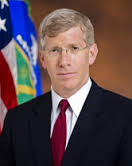
Poneman
Former Deputy Energy Secretary Daniel Poneman’s recent hiring as Centrus Energy’s new CEO is being examined by the House Oversight and Government Reform Committee. Poneman, in his role with the Department of Energy, worked with the uranium enrichment company when it was known as USEC. During that time, USEC received hundreds of millions of dollars in federal funds, according to Politico. House investigators have requested five years’ worth of documents from his time with the department, with an emphasis on any communication between USEC, Centrus and Poneman, who could make up to $1.7 million a year in his new job.
“Given Mr. Poneman’s involvement in the numerous dealings between DOE and USEC since 2009, we are concerned that he may have violated post-employment laws for federal personnel,” Committee Chairman Jason Chaffetz (R-Utah) and Interior subcommittee Chairwoman Cynthia Lummis (R-Wyo.) wrote in a letter to Energy Secretary Ernest Moniz.
A Centrus spokesman said there was nothing improper about Poneman’s activities. “At no time during his employment with the Department of Energy did anyone affiliated with Centrus contact Mr. Poneman to discuss future employment opportunities,” the spokesman said.
NRC Increases Oversight at Vogtle After Waste-Shipping Mistake
The Nuclear Regulatory Commission is increasing its oversight at the operating units of Southern Co.’s Vogtle nuclear generating station near Augusta, Ga., after employees used a wrong container to store and ship radioactive waste. The incident occurred last June, when employees shipped a cask of spent resin radioactive waste to a processing facility in South Carolina. The cask was only approved for storage of a lower class of radioactive waste, according to the agency. Employees at the processing facility noticed the mistake. Vogtle was fined $8,000. Southern said it has instituted increased training and improved procedures.
NRC Finds 3 of Entergy’s Nukes Have Enough Decommission Funds
In response to a petition filed in 2013 by four anti-nuclear groups to order the closing of Entergy’s FitzPatrick and Vermont Yankee plants because of inadequate decommissioning funds, the Nuclear Regulatory Commission found that the plants’ funds are in order. In a preliminary decision released last week, the NRC found that the now-closed Vermont Yankee plant, the FitzPatrick plant in New York and the Pilgrim plant in Massachusetts were all “operating safely and addition actions were not required.” The agency also reviewed financial records relating to the Pilgrim plant and issued a similar finding that there was enough money in Vermont Yankee’s decommission fund.
LaFleur Questioned on Pipeline Review Policies by Va. Officials
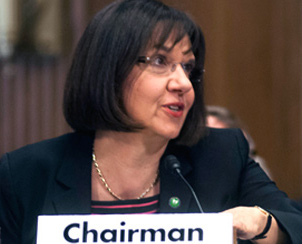
Cheryl LaFleur
Federal Energy Regulatory Commission Chairman Cheryl LaFleur is getting a lot of mail from Virginia officials lately. On March 23, Democratic Sen. Mark Warner shot her a missive asking her about the rules surrounding public meetings in response to concerns about a controversial Dominion Resources-led pipeline proposal, the Atlantic Coast Pipeline.
On Friday, the Nelson County Board of Supervisors sent two letters to LaFleur, one asking to extend the scoping period for the proposed line by an additional 30 days, and a second asking her to schedule another scoping meeting. Pipeline opponents have complained that the public hearing process is rigged, after they arrived to find most of the speaking slots taken by the line’s supporters.
A FERC spokeswoman said that scoping meetings are not required as part of the FERC review and wouldn’t comment on the letters.
NY Underground Pumped Storage Project Application Filed with FERC
A $264.1 million plan to develop a 260-MW pumped storage project in an abandoned mine complex in New York is under review by the Federal Energy Regulatory Commission. Albany Engineering filed applications on behalf of its subsidiary Moriah Hydro to construct the facility at three interconnected mines near the town of Moriah. It would use the flow of underground water through the mines to drive five reversible pump turbines. Electricity would be sent underground about a mile to an existing National Grid 115-kV transmission line.
ST. LOUIS — Cap-and-trade, a pollution-control concept rejected by Congress five years ago, appears to be coming back to life in the Midwest.
Stakeholders from MISO and SPP said Tuesday they are developing the framework for an interstate trading platform to comply with the Environmental Protection Agency’s pending limits on power sector carbon emissions.
The comments came in the Federal Energy Regulatory Commission’s fourth and final technical conference on the reliability and market implications of EPA’s Clean Power Plan, which seeks to reduce carbon emissions from existing generators by 30% from 2005 levels.
More than 100 regulators, utility officials and other stakeholders from MISO, SPP and ERCOT attended the conference at a hotel on Lambert-St. Louis International Airport. The session featured a repeat of the near-universal complaints about EPA’s interim 2020 goals and EPA’s Janet McCabe, who promised the agency was “looking very, very closely” at the issue.
Virtually absent, however, was any talk of fighting the EPA rule, which is due to be finalized this summer.
Instead, speakers said they were seeking ways to meet EPA’s ultimate 2030 goals through a mechanism that would allow utilities to trade emission allowances within and across state lines. It would effectively set a price on carbon, similar to the cap-and-trade program credited with reducing the cost of complying with acid rain regulations in the 1990s.
Even a representative from coal giant Peabody Energy conceded: “There is going to be a value on carbon.”
MSEER
“SPP, MISO and the ERCOT regions have the best wind resources in the world and we have harvested only a small part of the potential,” said Steve Gaw, representing The Wind Coalition, a trade group. “Much can be done now, and certainly once the rule is finalized this summer, to start the [transmission] planning processes. Waiting until the [state implementation plans] are developed will be too late. An understanding of what infrastructure is likely to be available should be an input to the states’ SIP development process.”
On Monday in St. Louis, the Midcontinent States Environmental and Energy Regulators (MSEER) held their fifth meeting to continue their work on a regional solution. Fourteen states, including most of those in MISO and SPP, are participating.
“I think there is broad recognition that a regional response will most likely be more cost-effective and operationally beneficial,” said Minnesota Public Utilities Commissioner Nancy Lange, one of those who attended.
The plans are also taking shape in a larger group, the Midwest Power Sector Collaborative, which also includes utilities and environmental organizations.
Former Illinois Commerce Commissioner Doug Scott, now vice president for strategic initiatives at the Great Plains Institute, said he was encouraged by states’ efforts to find regional solutions. The Minneapolis-based institute and the Washington-based Bipartisan Policy Center are providing staffing support to MSEER and the Collaborative.
“By our estimation, 41 of the 50 states are currently taking part in some discussion or another with other states trying to figure out the potential for multistate collaboration,” Scott said. His count is in contrast with that of EPA critics such as Sen. Jim Inhofe (R-Okla.), who opened a committee hearing last month by displaying a map identifying 32 states he said are opposing the EPA plan. (See Inhofe Decries EPA ‘Power Grab’.)
Rate- vs. Mass-Based Standards
Ameren’s integrated resource plan for Missouri would allow it to meet EPA’s carbon emission targets by 2034 by retiring one-third of its coal generation, adding natural gas and renewables, extending the life of its nuclear power plant and implementing energy efficiency programs, CEO Warner Baxter said. Meeting EPA’s 2020 interim goals would increase Ameren’s compliance costs by $4 billion, he said.
EPA’s initial proposal last June set rate-based goals for each state, measured in pounds of CO2 per megawatt-hour. In response to state requests, EPA in November released a technical support document explaining how to translate rate-based goals to mass-based equivalents, measuring total CO2 emissions in metric tons.
The platform being discussed by MSEER would differ from the Regional Greenhouse Gas Initiative, in which nine Mid-Atlantic and Northeastern states set an overall cap on power sector carbon emissions (91 million short tons for 2014, declining by 2.5% annually from 2015 to 2020).
Instead, states would submit for EPA approval implementation plans using their individual mass-based targets. Once the plans are approved, the states would use trading to reduce the cost of meeting their goals.
“That would be a form of regional coordination that doesn’t require the grand bargain of … all the states trying to” reallocate emissions using the rate-based approach, said Michael Schnitzer, director of the Northbridge Group, and a consultant to Entergy.
RGGI’s approach, “nine states agreeing on a target and what their respective responsibilities are — I think that one is much less likely to come to fruition than this other approach,” Schnitzer added.
McCabe, EPA’s acting assistant administrator for the Office of Air and Radiation, said agency officials have a similar perception of how a regional compliance plan could emerge. “We’ve … heard from many states that they would very much like the final plan to allow for interstate or regional arrangements that are less formal, perhaps, than some of the ones that already exist,” she said.
Winners and Losers
Recounting a recent conversation with an energy trader about the West Coast energy crisis in 2000-2001, FERC Commissioner Philip Moeller said he has concerns about traders exploiting regional compliance disparities under the Clean Power Plan. The West Coast crisis “was essentially caused by seams. California had a market program that was flawed and then those seams issues spilled over into the entire west,” Moeller said. “I hate to be sounding too dark here, but I certainly hope that will be in the minds of our friends at EPA as they put these rules together. When a trader is telling me that there’s going to be a lot of opportunity here … he’s putting out a pretty good warning.”
EPA’s proposed rate-based approach resulted in dramatically different emission rates from one state to another, which state and utility officials said would be an impediment to regional cooperation.
North Dakota, for example, has the nation’s highest target rate at 1,783 lbs/MWh, more than double South Dakota’s 741 lbs/MWh. EPA said the discrepancies reflected its attempt to determine what was “practical and affordable” for individual states, taking into account factors such as their current generation mixes and the availability of natural gas. (See Carbon Rule Falls Unevenly on PJM States.)
Creating a “blended” regional rate could result in some states with low rates having to reduce their emissions more than if they went it alone.
“There’s no question that the rule as proposed creates winners and losers. But the mass-based approach … can provide every state an opportunity to do better through trading,” Schnitzer said. “If it makes sense for [Iowa] to over-comply to reduce their tons even further so that they can sell them to Minnesota, which is cheaper for Minnesota than doing the next most onerous thing … that’s how it’s going to work. It’s self-interest for both states.”
Trading Between Rate- and Mass-Based States
Lanny Nickell, SPP’s vice president of engineering, said the RTO is rich in wind and solar power but that it is mostly located in the western portion of its footprint. “To get it where it needs to go to help states comply with the Clean Power Plan … it’s got to go through the eastern side of our system and into other states that aren’t in SPP. And we haven’t traditionally planned for that.”
The MSEER group hasn’t been able to find a way to accommodate trading between states using the rate-based standard and others using the mass-based limits, said Thomas Easterly, commissioner of the Indiana Department of Environmental Management.
While the mass-based approach would ease trading, it “sets a cap that basically limits growth over time forever,” Easterly said. “The rate-based plan allows you to have really unlimited growth if you can do it in a clean way. That’s why some different states have different views — one of the reasons not the only reason. That’s what making it so difficult to come to a common understanding.”
Mike Peters, CEO of Wisconsin Public Power, said his company did an analysis assuming trading between mass- and rate-based states.
“If you take a state that has a rate-based approach and another state that has a mass-based approach, identical generating units in both states, [with an] identical cost of fuel, you could have a $20[/MWH]-plus differential in the adders on those plants, and that’s going to result in shifting generation in ways that we can’t even anticipate right now,” he said.
Preserving Economic Dispatch
Richard Doying, MISO’s executive vice president of operations, said a “transparent, liquid market” is essential to ensuring MISO doesn’t lose the $1.5 billion in annual savings resulting from the RTO’s least-cost generation dispatch. “How do you avoid that? It’s really pretty simple: You monetize the cost of compliance [through tradeable allowances]. Those tradeable allowances are easily reflected in generation offers, they’re reflected then in the dispatch of that energy, the clearing of the market and they’re reflected in prices. … It allows you to trade those allowances based on market-derived value across the seam just as you would with energy.”
MISO MVP Example Cited
Clair Moeller, MISO’s executive vice president of transmission and technology, said the RTO needs to reconsider “several layers of conservatism” in its planning assumptions, such as the 20-year assumed economic life for assets that last far longer. He said cost allocation will be MISO’s biggest challenge in expanding transmission to deliver renewable energy. “It always is the hardest thing to solve.”
Former Wisconsin Public Service Commissioner Lauren Azar said MISO’s states demonstrated their ability to collaborate through their development of the Multi-Value Project, a transmission concept designed to help them meet individual renewable portfolio standards.
Azar said state officials met every other week for 18 months to develop the MVP plan. The entire stakeholder process, including drafting tariff changes and cost allocation formulas, took about six years, said Clair Moeller, MISO executive vice president of transmission and technology.
“Transmission owners coalesced around the product because the state commissions were leading the process. So they had some certainty with respect to whether their costs were going to be approved later on,” Azar said.
Referring to MSEER’s five meetings since EPA released its carbon proposal last summer, Azar said: “Let me tell you guys, you’re going to have to meet a heck of a lot more, and I recommend you begin as soon as possible.”
Lone Star State
A measure of how far discussions have progressed is the position of Entergy.
“Entergy does not support the proposed rule,” Schnitzer noted. “But the company recognized that if the rule does go forward, it should be designed to be efficient and to minimize reliability impacts. And the mass-based compliance recommendations we offer are to further that objective.”
But while most of the speakers Tuesday indicated a willingness to embrace trading, Donna Nelson, chairman of the Public Utility Commission of Texas, said her state — which is split between MISO, SPP, ERCOT and the Western Electric Coordinating Council — is unlikely to be among them.
“We’re probably … not going to roll over on the issue of a carbon tax,” she said.
CARMEL, Ind. — MISO on Thursday launched the first in a series of stakeholder workshops planned over the next 18 months dedicated to improving resource adequacy as the RTO deals with the retirement of coal-fired generation and the growth of natural gas and renewables.
There’s some urgency: MISO forecasts that its Planning Reserve Margin Requirement, which is peak demand plus the planning reserve margin, could drop below its target as early as 2016.
“Basically, we’re going to have smaller reserve margins and we’re going to have different resources in play,” Joseph Gardner, MISO’s vice president of forward markets and operations services, told stakeholders. “We’re trying to have a common understanding [of] what the issues are.”
The white paper notes that MISO’s current processes do not:
Ensure transparency across all seasons and all time horizons;
Address issues related to resource performance, such as fuel assurance and winterization;
Treat a resource consistently as it moves from interconnection to retirement; or
Provide applicable incentives for all load-serving entities to ensure adequate resources.
Technically, of course, MISO is not the guarantor of resource adequacy. LSEs and states that regulate them are responsible for assuring adequate resources in their jurisdictions.
MISO is building its efforts to support LSEs and the states around four “strategic goals.”
Better Picture Needed
One goal is “Regional Assessment and Transparency,” based on the survey of LSEs that MISO conducted last year with the Organization of MISO States (OMS). Some stakeholders said OMS needs to improve the survey.
Jeff Beattie, a senior engineer at Consumers Energy, said there’s skepticism about the reliability of the data collected, noting that the OMS survey is not subject to peer review. “How can we get further buy-in?” he asked.
“The nature of the OMS survey has been such that confidentiality is strongly protected and only zonal-level shortfalls have been provided to stakeholders. That greatly limits the value of the survey results,” Consumers said in pre-filed comments ahead of Thursday’s workshop.
Consumers suggests that MISO follow the example of NYISO’s “Gold Book,” which provides details for new generators and proposed and actual unit suspensions and retirements.
“If MISO moved in this direction on transparency, it would be much easier for all parties to accurately evaluate resource adequacy in the MISO footprint,” Consumers said.
MISO traditionally has forecast demand based on individual forecasts performed by LSEs, transmission operators and others. However, it recently hired a consulting firm to conduct independent load forecasts through 2017.
“As reserve margins decline, it is now more critical than ever to have confidence that demand forecasting is consistent and accurate,” the paper says.
Looking Outward
Another of the four goals is “Industry Influence, Monitoring and Coordination,” which deals with issues partly or entirely outside of MISO’s direct control, such as fuel reliability, electric and natural gas coordination and support from neighboring systems.
For example, MISO noted that it has been surveying asset owners as to their confidence about fuel deliveries and inventories. The survey is voluntary, however.
As for support from neighboring systems, Entergy has already weighed in by saying that assuming neighboring systems will provide support toward MISO resource adequacy isn’t sufficient.
“If this is an assumption MISO is relying on for [resource adequacy], a study with neighboring systems to determine the appropriate level of support to assume and contractual agreements may be needed to be put in place,” Sarah McCurdy, an analyst with Entergy, said in pre-filed comments.
Other Topics for Debate
Another goal, titled “Evolving the Resource Adequacy Requirements,” deals with MISO’s resource adequacy construct and issues such as retail choice and seasonal and locational considerations.
Traditionally, the focus has been on meeting the summer peak. But one of the questions raised by MISO staff is whether non-summer risk will increase as capacity is squeezed in the years ahead.
“How much of our footprint is winter-peaking?” wondered Amy Jo Miller, commercial market affairs executive at Ameren.
For example, MISO’s paper contemplates that as reserve margins decline, it may have to dispatch seldom-used capacity. This could include increased use of load-modifying resources — such as factories that can reduce energy use by adjusting production schedules and commercial buildings that can reduce air conditioning.
MISO said it has not called on those resources since 2006.
“Because declared emergency conditions will likely become more prevalent as reserve margins decline, MISO may call on LMRs more extensively going forward,” MISO says.
The final goal is “Process Alignment,” which involves identifying and eliminating barriers or inconsistencies within MISO procedures.
One such issue raised by stakeholders is that the current annual construct doesn’t address mid-year retirements and suspensions of generating plants.
Next Meeting
The next workshop meeting is tentatively scheduled for May 15.
A coalition of organizations representing low- and moderate-income households in New York has asked for a clarification and rehearing of last month’s Reforming the Energy Vision order to allow greater participation in the program by less affluent residents (14-M-0101).
The New York Public Service Commission set up a framework for the REV process that limits utility ownership of distributed energy resources with a limited number of exceptions, one of the cornerstones of the state’s path-breaking initiatives in the smart grid, distributed energy resources (DER) and energy storage. (See New York PSC Bars Utility Ownership of Distributed Energy Resources).
“While seeking to pay attention to low- and moderate-income residents, the commission continues to view low- and moderate-income households as merely consumers of energy while providing the opportunity for more affluent residents to be more active participants and owners,” according to a Tuesday filing by the Energy Democracy Working Group, a coalition of six organizations from throughout the state.
The REV generally excludes utility ownership of DER assets, but it allows exceptions for the development of DER intended to benefit the less affluent. The REV order noted that consumer advocates expressed concerns during the proceeding that those residents, including renters, would be excluded from REV benefits.
Energy Democracy agreed with the PSC’s assessment that utility investment may be needed but said the order is unclear regarding what types of investments that may mean, and how partnerships with community groups would be organized.
“We seek clarification as to whether ‘investment’ … means ‘ownership’ or whether it means providing access to financing or other support to allow low-income and moderate-income people to own distributed energy resources themselves,” it wrote.
The group also says that the assumption that DER markets will not develop without utility ownership is “premature” and that the “REV proceeding is meant to change the status quo and reduce barriers” for DER.
While the order does not define low or moderate income, Energy Democracy said it assumes standard measures that define “area median income” are used. “We hope the commission does not mean to write off the approximately 50% of New Yorkers who are low- or moderate-income as unreachable by the new REV markets,” the petition states.
“Low- and moderate-income New Yorkers represent a substantial portion of the state’s population and a large portion of the electricity market. This raises the possibility that … the exception … will represent a significant portion of the market,” it adds.
NYISO asked the Federal Energy Regulatory Commission this week if a recent order meant to mitigate market power in the installed capacity market in New York City would apply to its new capacity zone in the Lower Hudson Valley (EL07-39-006). NYISO wants an expedited ruling by Monday because market participants are preparing for the May monthly auction. Enrollment closes on Wednesday.
The order accepted NYISO’s compliance filing with the exception of its proposal to grant a blanket exemption from offer floor calculations for all payments and other benefits to special case resources (SCR) under state programs. An SCR is a demand-side resource that participates as a supplier in NYISO’s capacity market. (See FERC Upholds Most of New York City Market Power Order.)
NYISO said it is clear the order requires revisions to state programs for SCRs in New York City and will be included in determinations under buyer-side capacity market power mitigation rules. “It is not clear whether that revision is also to apply to new SCRs in the Load Zones G, H and I (i.e., those within the G-J Locality) or in any mitigated capacity zones that may be created in the future,” NYISO wrote.
The New York Transmission Owners on Thursday opposed the NYISO petition, saying it was counter to the plain language meaning contained in the FERC order. “The clarification request is, in substance, an untimely motion asking the commission to expand the scope of a March 19, 2015, ruling in this proceeding far beyond that expressly established by the commission and addressed by the parties during the more than seven years that this proceeding has been pending,” it wrote.
A split Federal Energy Regulatory Commission on Tuesday granted ITC Midwest’s request for an incentive adder but cut the bonus in half, prompting a dissent from Commissioners Philip Moeller and Tony Clark.
ITC had requested an adder of 100 basis points, consistent with what the commission has granted “independent, stand-alone” transmission companies (transcos) since such incentives were authorized by Congress in 2005 to increase transmission spending.
In response to that directive, the commission issued Order 679, concluding that the transco business model responds more rapidly and precisely to market signals and was thus deserving of an incentive.
“We continue to find that the transco business model provides the benefits that the commission recognized in Order No. 679. However, we note that the commission did not specify the size of the transco adder in Order No. 679,” the commission wrote (ER15-945).
Under current conditions, the commission said, 100 basis points is excessive. “We conclude that 50 basis points is an appropriate size for the transco adder, taking into account the interests of consumers and applicants, as well as current market conditions. Granting this 50-basis-point adder strikes the right balance by appropriately encouraging independent transmission consistent with Order No. 679, while acknowledging protesters’ concerns regarding the rate impacts of such adders.”
The commission said the adder would be applied to a base return on equity within the “zone of reasonableness” determined by an updated discounted cash flow analysis being conducted in docket EL14-12. (See ROE Talks Between MISO Industrials and TOs Collapse.) ITC said it would defer collection of the adder, which became effective April 1, pending the outcome of that proceeding.
Dissent
Moeller and Clark blasted the majority’s ruling, the first time that the commission has reduced a requested transco adder.
“The majority has not provided any guidance as to what showing is necessary to support a 100-basis-point adder moving forward,” they wrote.
“We also find it puzzling that the commission would reduce transmission incentives for a transco business model when it is just beginning to see the effects of competitive solicitation under Order No. 1000,” the commissioners continued. “These mixed messages from the commission on the value of innovative business models and transmission investment decrease regulatory certainty at a time when it is most needed.”
The Federal Energy Regulatory Commission on Tuesday rejected PJM’s contingency plan to include demand response in its capacity auctions in the event an appellate court ruling limiting FERC’s jurisdiction over DR is allowed to stand (ER15-852).
FERC called the filing premature, saying it would disrupt the commission’s options in dealing with the aftermath of the Electric Power Supply Association (EPSA) v. Federal Energy Regulatory Commission case.
FERC has asked the Supreme Court to reconsider the 2-1 ruling, which found that Order 745 violated state ratemaking authority by forcing RTOs to pay market-clearing prices to DR resources. While the ruling only directly addressed FERC’s jurisdiction over DR in energy markets, PJM wanted to be prepared in case it were applied to FERC-regulated capacity markets. (See PJM to File Post-EPSA Demand Response Contingency Plan with FERC.)
PJM’s proposal would have altered its demand curve to reflect actual load by accepting DR bids from any “wholesale entity” in May’s Base Residual Auction, reducing the amount of capacity procured and the price at which it clears.
As a result of FERC’s rejection, PJM said in a statement Wednesday, the BRA for delivery year 2018/19 “will move forward under the existing rules for the participation of demand response.” However, the auction, scheduled for May 11-15, may be delayed as a result of a separate FERC ruling Tuesday that required the RTO to provide additional information on its Capacity Performance proposal. (See related story, FERC: PJM Capacity Performance Filing ‘Deficient’.)
FERC ruled that PJM’s DR idea was good but before its time. “While we recognize that PJM’s goal is to reduce uncertainty surrounding demand response participation in its upcoming BRA, in the present circumstances, it is unavoidable that some uncertainty is inherent in the current stance of the EPSA case,” FERC said.
“Moreover, we are concerned that PJM’s proposal introduces uncertainties that may exceed those it seeks to avoid, particularly with respect to potential unanticipated spillover effects on state programs and private sector arrangements.”
Commissioner Tony Clark dissented, saying that the commission was sidestepping the merits of PJM’s filing.
“Today’s order unnecessarily delays action and perpetuates system inefficiencies created by the overcompensation of demand response products in wholesale electricity markets,” Clark said. FERC should “seize the opportunity to provide guidance on a functional demand-side product to the betterment of the PJM markets.”
Clark, however, said he thought that PJM’s proposal may not have gone far enough and ignored the role its existing Price Responsive Demand product could have played. “Enabling functioning price-responsive demand is the right answer to the conundrum in which we now find ourselves, and it is where the commission should expend the bulk of its efforts,” he said.
PJM had requested the proposal go in effect April 1, in time for the BRA. The RTO argued it was being proactive, and that the changes would only be a temporary measure while FERC developed a more comprehensive solution.
PJM noted that if the Supreme Court granted its writ of certiorari, it would have withdrawn the changes from the Tariff and run the BRA under the previous rules. The court is expected to decide this month whether to take the case.
In its protest to the filing, the Advanced Energy Management Alliance argued that LSEs, curtailment service providers and DR owners would not be able to change their business strategies in time for the BRA. The Illinois Commerce Commission and the Maryland Public Service Commission also argued that in some states, laws and regulations would need to be amended in order to enact the changes.
While not taking a strong position on the merits of PJM’s proposal in its protest, Public Service Enterprise Group argued that if FERC accepted the plan, it should require PJM to keep the changes intact regardless of whether the Supreme Court took the EPSA case, as withdrawing them would create uncertainty in the results of the BRA.
PJM proposed creating two new capacity products: Whole Load Reductions and Whole Energy Efficiency Load. PJM General Counsel Vince Duane said in December, when the proposal was first presented to stakeholders, that the term “wholesale entity” was left “deliberately vague” to allow load-serving entities and electric distribution companies to submit DR bids.
PJM’s controversial Capacity Performance plan was turned back Tuesday by the Federal Energy Regulatory Commission, which deemed the filing deficient and gave the RTO 30 days to provide additional information (ER15-623).
FERC’s four-page order questioned 10 areas of the proposal, which was conceived to increase reliability expectations of capacity resources with a “no excuses” policy.
PJM said Wednesday it will respond to FERC’s questions “promptly and seek expedited review” to allow the new rules to be in effect for the Base Residual Auction scheduled for May 11-15.
“We recognize that process may require a delay to conduct an orderly auction process,” Dave Anders, director of stakeholder affairs, said in an email to members. “While PJM clearly would have welcomed approval, we appreciate the FERC’s thoughtful consideration of our proposal and the commission’s demonstrated commitment to reliability and enhanced generator performance.”
Anders said PJM has never delayed a BRA before.
The commission compared aspects of the PJM proposal with ISO-NE’s “pay-for-performance” design, which it approved last year and on which PJM’s proposal was in large part modeled.
PJM’s proposal was expected to result in both larger capacity payments for over-performing participants and higher penalties for non-performers.
FERC asked PJM to explain its derivation of an appropriate competitive clearing price when no new capacity is required in a locational deliverability area (LDA), and to provide more detail on a default offer cap and how it would apply in several situations.
It also requested any analyses the RTO had conducted on expected performance charges and bonus payments under the proposal. The commission asked if it made sense to phase in the penalties — as ISO-NE has — and for ideas of how to provide incentives for resource performance. In addition, it asked PJM how it plans to evaluate the performance of external resources not pseudo-tied to the RTO.
Moeller: Delay Creates Uncertainty
The commission’s order drew a rebuke from Commissioner Philip Moeller. The RTO’s filing “already contains sufficient information to permit the commission to issue an order on the merits of PJM’s proposal in advance of the May 2015 Base Residual Auction,” he said in a statement.
“Markets provide the best prices for both buyers and sellers when participants know the market rules. Regardless of whether the commission ultimately decides to accept or reject PJM’s Capacity Performance proposal, by failing to act, the commission is creating market uncertainty on issues that need clarity now,” he added.
Dynegy and NRG Energy shares fell sharply April 1 on the news of the ruling, with Dynegy down 2.1% and NRG falling 5.6%. Dynegy recaptured its losses April 2 while NRG only partially rebounded.
More than 60 entities filed comments and protests in response to the plan.
States and load-serving entities (LSEs) were skeptical about the need for a major overhaul, while generators split over elements they liked and others they said must be changed. (See States, LSEs Skeptical, Utilities Split Over Capacity Performance.) Many generators complained the penalties were too harsh; others, including Exelon, said the penalties were too lax.
LSEs feared the product redesign was overkill and would result in unnecessary price increases.
As proposed, the changes would have begun to take effect for the 2016/17 delivery year and be fully implemented in 2020/21.
The details are outlined in nearly 1,300 pages filed in two dockets:
EL15-29 contains proposed changes to PJM’s Operating Agreement and Tariff “to correct present deficiencies in those agreements on matters of resource performance and excuses for resource performance.”
ER15-623 proposes changes to the Reliability Pricing Model in the Tariff and Reliability Assurance Agreement.
New York regulators say the Federal Energy Regulatory Commission’s recent order on reliability-must-run agreements “interferes” with state authority as they try to address generation shortages in the state (EL15-37).
The New York Public Service Commission last week asked for a rehearing of FERC’s Feb. 19 order, which said the state must adopt uniform rules to prevent the need for protracted proceedings to ensure generators received compensation for continuing to operate. FERC said the lack of uniform rules created uncertainty that could compromise system reliability. (See FERC Orders NYISO to Standardize RMR Terms in Tariff.)
“The commission must reconsider the RMR order because it ignores the fact that the NYPSC has already exercised its authority to ensure the availability of generation facilities needed for reliability, and interferes with the NYPSC’s ongoing exercise of this authority in approving reliability support services agreements,” the PSC wrote.
The PSC has relied on RSSAs to delay the retirements of generating facilities needed for reliability, such as the Dunkirk plant outside Buffalo and the Cayuga plant in Lansing, near Ithaca.
The PSC said FERC “failed to provide evidence that the NYPSC-approved RSSAs were inadequate to the task of addressing the reliability concerns cited in the RMR order.”
The PSC also objected to a FERC proposal to require what it termed an excessive full cost-of-service rate. “Full COS rates are neither required, nor just and reasonable, where the provider of a public service intends to abandon that service,” the PSC wrote. “Indeed, it has long been a well-accepted regulatory principle that a public service provider may not abandon service and must continue service even at less-than-COS rates until the abandonment is authorized.”
FERC ordered NYISO to create a process for determining which generation resources seeking to deactivate are needed for reliability; how they should be compensated, including accelerated cost recovery for generators that require upgrades; and how RMR costs should be allocated.


 Dominion Resources sold its ownership of Carolina Gas Transmission to its Dominion Midstream Partners subsidiary for $495 million, the company announced last week. Dominion bought Carolina Gas, which owns and operates about 1,500 miles of natural gas pipelines in South Carolina and Georgia, for $493 million in December.
 The Federal Energy Regulatory Commission has approved NextEra Energy’s proposed $4.3 billion acquisition of Hawaiian Electric, but the Juno, Fla.-based company still needs several more approvals to close the deal. The Hawaii Public Service Commission has set a deadline of Aug. 31 to finish hearings and issue a ruling. Several interveners, including the state’s Consumer Advocate, SunEdison and the International Brotherhood of Electrical Workers, have asked that the deadline be extended to Oct. 30. If granted, the extension could push back complete approval of the acquisition into next year.
 NuScale Power has finished constructing the full-scale mock-up of it modular reactor design, one of the final steps before it submits the entire design to the Nuclear Regulatory Commission for approval next year. The Portland, Ore.-based firm said it will be submitting its 12,000-page design application to the NRC in 2016, starting a three-year design review process. NuScale’s design is for small, 50-MW modules that could be joined in as many as 12 units to produce a 600-MW plant. Instead of being constructed on-site, the modules would be built in a factory and shipped to the plant site. NuScale is backed by Fluor Corp. and the Department of Energy.