Northern Indiana Public Service Co. has reached an agreement with environmentalists and consumer advocates on a new renewables tariff that will boost payments to small wind farms while cutting prices for solar power.
The pact on NIPSCO’s revised renewable feed-in tariff (FIT), filed Oct. 9 (Case #44393), awaits final approval from the Indiana Utility Regulatory Commission.
Wind power generators of up to 100 kW would receive $0.25/kWh, up from $0.17.
“The purchase price for small wind in [the original FIT] was too low and as a result, the available capacity was not used,” said Kerwin Olson, executive director of Indianapolis-based Citizens Action Coalition. “Expanding small wind is important, so increasing that price will hopefully drive investment in small wind in Indiana.”
The settlement decreases payment for solar power to $0.17/kWh from $0.30/kWh.
Olson said the decrease reflects the falling costs of solar panels while still providing the price support needed to continue solar’s expansion in NIPSCO’s territory. “Solar is not at grid parity yet in Indiana, so it needs a ‘leg up,’” he said.
Residential customers would pay about $1 per month for renewables under the revised tariff, an increase of about $0.25. “We feel that’s reasonable,” Olson said.
Not everyone got what they wanted. The CAC and the Hoosier chapter of the Sierra Club argued that the definition of “qualifying renewable energy power production facilities” under the FIT should exclude facilities fueled by organic waste biomass derived from forest thinning.
The groups also sought exclusion of some types of waste-to-energy facilities, over air and water pollution concerns.
The FIT program is designed to incent customers who generate green electricity from solar, wind, biomass or new hydroelectric facilities. Facilities between 5 kW and 5 MW are eligible. Total capacity available under the FIT is capped at 30 MW.
Among those generally pleased with the settlement is Bio Town Ag, which operates the world’s largest on-farm anaerobic digester generating facilities with NIPSCO, according to Bio Town president Brian S. Furrer. Bio Town, in Reynolds, Ind., has sought multiple purchasers of electricity generated by methane from animal waste, including NIPSCO and other suppliers. The digester generation facility can produce 5 MW.
Also party to the FIT settlement with NIPSCO was the Indiana Distributed Energy Alliance and the Indiana Office of Utility Consumer Counselor.
NIPSCO officials were not immediately available for comment.
Exelon, which last month announced it would spend $500 million to build two natural gas-fired generating stations in Texas, is selling two other gas plants in Texas and Utah.
An Exelon spokesman confirmed the pending sales last week but declined to give sales prices.
Exelon is selling its five-unit, natural gas-fired peaking plant near West Valley City, Utah, to Wayzata Investment Partners. The 185-MW plant went into operation in 2001 and was folded into Exelon’s fleet in the 2012 merger with Constellation Energy. Investment news service The Street, citing unnamed sources, estimated the price at between $74 million and $93 million.
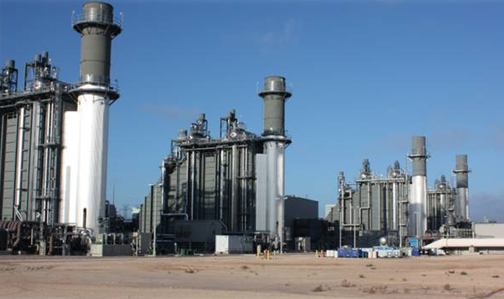
Starwood Energy Group is buying the second Exelon plant, the Quail Run Generating Station near Odessa, Texas. It is a six-unit, 488-MW natural gas-fired combined-cycle plant. The first section of the plant went online in 2007 with the second section going operational a year later.
It too came with the Constellation merger. Constellation acquired it in 2010 for $365 million.
Exelon Generation spokesman Jimmy Porch said the company expects to close on both in the fourth quarter of this year.
Wayzata did not issue any announcements about the purchase agreement. The company describes itself on its Web site as a private equity firm “that specializes in purchasing distressed companies and assets with various strategies to profitably turn them around in partnership with new or existing management.”
The company, headquartered in Wayzata, Minn., has purchased power plants before. It bought Guadalupe Power, a 1,070-MW plant in Guadalupe County, Texas, in 2011, selling it to Calpine in February.
Starwood has numerous holdings in natural gas and renewable generation and transmission. It also declined to give a purchase price.
Exelon has made steady investments in its generation footprint in Texas, starting when it bought the Handley and Mountain Creek generating stations from then-TXU for $443 million in 2002. Exelon also built a gas-fired plant to serve industrial users near Houston called ExTex Laporte.
Last month, it announced it was building two 1,000-MW gas-fired combined-cycle plants, one each at its existing plants at Wolf Hollow, near Fort Worth, and Colorado Bend, southwest of Houston. That would bring the company’s Texas fleet to about 5,500 MW after the sale of Quail Run.
Porch said Exelon had not intended to sell Quail Run but that it “received attractive unsolicited bids” for the plant. “All decisions were founded on optimizing Exelon’s generation mix,” he said.
He said Exelon remains committed to being a player in the ERCOT market.
“Exelon’s decision to build two new natural gas power plants in Texas is part of our ongoing growth strategy and will allow the company to offer more low-carbon electricity to the growing Texas energy market,” Porch said. “Texas is an important area for growth for Exelon because of the increasing demand for electricity in the state and excellent market conditions.”
He wouldn’t say if there are any other deals afloat. “Exelon continually evaluates all opportunities to add value for our shareholders, including M&A,” he said. “However, we don’t comment on rumors about specific M&A activity.”
PJM will forgo $10.2 million in balancing operating reserve (BOR) charges resulting from transactions that two trading companies characterized as internal bilateral transactions (IBTs) under a settlement approved by the Federal Energy Regulatory Commission.
PJM, which contended DC Energy and Scylla Energy mischaracterized the transactions to avoid paying the charges, collected $38.8 million in retroactive payments from the companies after it found in 2011 that the trades did not involve the physical transfer of energy and could not be classified as IBTs under PJM’s Tariff. Unlike increment offers (INCs) and decrement bids (DECs), IBTs are not subject to BOR charges.
Under the settlement, PJM will retain the money it has already collected while dropping its claim to the remaining $10.2 million. The companies, meanwhile, will withdraw their petition to the D.C. Circuit Court of Appeals to review FERC’s March 2012 order that forced the companies to pay the charges.
PJM and the companies said they settled “in order to bring certainty to the marketplace and avoid the costs, risks and uncertainties of continued litigation.”
‘Nonsense’
PJM’s Independent Market Monitor, however, said “the argument that the settlement brings certainty to the marketplace is nonsense.” The monitor said the settlement means that PJM members will not receive $10.2 million to which FERC has found they are entitled. It also said, however, that “more than $10.2 million is at stake in this proceeding. Full enforcement of the commission’s orders is important to discourage inappropriate market behavior.”
FERC ruled that the settlement doesn’t change the commission’s interpretation of PJM’s rules concerning IBTs. “PJM market participants, therefore, remain on notice that IBTs may not be used to avoid deviation charges,” FERC said.
While pondering the biggest change in the capacity market since its inception, PJM is hoping that testing of little-used generating units will ensure they are available if cold weather strains its reserve margin.
Last winter, the RTO saw as much as 22% of its generation on the disabled list as it set new winter peak records. Officials had to admit afterward that they had mistakenly assumed that natural gas plants’ outage rates would be randomly distributed rather than correlated with cold weather and pipeline problems.
The record-setting cold pushed PJM’s load-weighted LMP to $126.80, more than three times the price in January 2012. Operators had to resort to demand response and a voltage reduction to avoid shedding load. The new winter peak of 141,500 MW exceeded the Feb. 5, 2007, mark by nearly 5,000 MW.
It was a humbling experience for an organization long held out as the gold standard among grid operators.
To improve operations in the interim, PJM stakeholders embarked on initiatives in at least five committees and task forces. Earlier this month, the Operating Committee approved plans for voluntary generator testing, while the Market Implementation Committee approved rules to reduce uplift and ensure energy prices better reflect operator actions. (See MIC Briefs)
PJM hopes to test up to 1,000 MW of generation on each of 20 days in December 2014. The tests would be limited to generators that haven’t run in the prior eight weeks and days when temperatures are below 35 degrees Fahrenheit.
The OC also endorsed manual changes to ensure generators keep their operating parameters (e.g., notification times, dual-fuel capability and availability, fuel inventories, resource limitations) updated in eMkt.
PJM officials also have taken steps to improve communication with pipelines, transmission owners and neighboring reliability coordinators.
PJM will enter the winter with 183,000 MW of installed capacity, almost 50,000 more than the projected 50/50 winter peak of 133,510 MW. It will also benefit from transmission upgrades in Pennsylvania, New Jersey, Ohio and Maryland.
The RTO will conduct a fuel inventory survey in November and a dispatcher training webinar covering the changes in December. An emergency procedures drill is scheduled for Nov. 17.
“Based on forecasts, we expect to have adequate power supplies for the winter,” PJM spokesman Ray Dotter told RTO Insider. “We’ve learned from last January’s cold weather and we’re working with our members to improve the availability of generation over the long term.”
“We didn’t have a reliability problem last year. I’m not expecting to have one this year as well,” Executive Vice President for Operations Mike Kormos told the Organization of PJM States annual meeting last week.
One item that remains unresolved on PJM’s to-do list is a potential increase in the $1,000/MWh offer cap. None of three proposals considered by the Markets and Reliability Committee last month could muster a two-thirds majority. (See Members Deadlock on Change to $1,000 Offer Cap.)
Gas and electric futures prices are up sharply, Federal Energy Regulatory Commission staff said in a briefing last week. As of Oct. 1, the average of January and February 2015 contracts at Transco Zone 6 non-NY was $9/MMBtu, almost double last winter. Electricity futures at the PJM Western hub were up 62% to $73/MWh.
PJM is one of nine Registered Entities that has agreed to take part in a review of grid recovery and restoration plans.
The Federal Energy Regulatory Commission announced it and the North American Electric Reliability Corp. will conduct a joint staff review to assess the grid’s bulk power system recovery and restoration planning and determine the effectiveness of NERC reliability standards in maintaining reliability.
FERC spokesman Craig Cano said nine REs, intended as a “representative sample” of the grid, have agreed to participate in the voluntary review. Although FERC declined to identify the participants, PJM spokesman Ray Dotter told RTO Insider that PJM was among them.
Cano said the review is intended as a “proactive” look at the grid’s ability to recover from extreme weather, bulk power system disturbances and cyber or physical attacks. It will include a comparison of the REs’ plans, as well as recommendations based on the identification of good industry practices.
FERC emphasized that the review “is not a compliance and enforcement initiative.”
Storms, blackouts and the threat of cyber or physical attacks “have highlighted the potential to cause widespread adverse effects on the bulk power system,” the joint FERC-NERC data request says. “Effective system recovery and restoration plans are essential to facilitate a quick and orderly recovery in the aftermath of such events.”
The review will focus on the following NERC standards: EOP-005-2 System Restoration Plans from Blackstart Resources; CIP-008-3 Cyber Security – Incident Reporting and Response Planning; and CIP-009-3 Cyber Security – Recovery Plans for Critical Cyber Assets.
If you want to see the value of dual-fuel capability, look no further than New York, where 47% of the generation can run on oil or natural gas.
That flexibility helped NYISO meet its winter load — including a new winter peak of 25,738 MW — without resorting to voltage reductions or other emergency operating procedures.
On the Jan. 7 record-setter, NYISO imported power from ISO-NE and Ontario over the evening peak, issued public calls for conservation and deployed demand response for the first time in winter.
“The primary operational issues during the first three winter 2014 cold snaps were cold-weather equipment issues and gas-only generator outages,” according to a NYISO review.
The ISO said the extreme cold reduced pressure in high-voltage circuit breakers, caused icing in rivers serving hydroelectric plants and froze pipes and valves.
Although the ISO reported no outages from fuel supply shortages, gas price spikes sent wholesale electricity prices skyward. On 18 days in January, gas prices exceeded oil generation. Like PJM, the ISO obtained a waiver from the Federal Energy Regulatory Commission to pay suppliers costs exceeding $1,000/MWh.
Most oil-fired plants were replenished by barge or truck deliveries at rates close to their burn rates. In late January, however, concerns about oil depletion led to increased NYISO efforts to manage projected unit capability on alternate fuels.
Despite the challenges, ISO officials express confidence heading into winter 2014/15.
“The combination of approximately 18,000 MW of dual-fuel generation in the fleet and our continuing work to enhance communications and operational coordination between the electric and gas industries has us well prepared for the coming winter,” NYISO spokesman David Flanagan told RTO Insider.
The ISO cannot afford to be sanguine, however. Its gas-fired production nearly doubled between 2004 and 2012, and natural gas and dual-fuel generators represent more than 70% of proposed capacity in the ISO’s interconnection study queue.
The ISO established the Electric and Gas Coordination Working Group in January 2012, and in October 2013 it released a study comparing the cost of dual-fuel capability to firm pipeline transportation under several scenarios.
In August the ISO outlined its Fuel Assurance Initiative, a stakeholder process to ensure sufficient generation on days with “a high risk for a reduction in real-time resource availability due to factors such as interchange and fuel supply uncertainty.”
The initiative is expected to consider energy, ancillary service and capacity market changes. Possible energy and ancillary market changes include the creation of “critical” operating days and two recommendations in the Market Monitor’s 2013 State of the Market Report: allowing suppliers to submit day-ahead offers that more accurately reflect fuel supply constraints, and requiring generators to provide information on a daily basis regarding fuel availability.
Leading up to this winter, the ISO said it completed a fuel survey of all gas, oil and dual-fuel-capable generators and is coordinating with pipelines on outages and maintenance.
The ISO said it will begin discussing possible capacity market changes — including incentives tied to performance on critical operating days and the possibility of using separate forced outage rate estimates for summer and winter — this fall.
In 2015, the ISO hopes to complete development of shortage pricing rules.
Increased gas pipeline capacity, relatively mild weather this summer and increased supplies of gas from the Marcellus Shale fields have eased pricing pressures.
The Federal Energy Regulatory Commission’s Division of Energy Market Oversight (DEMO) expects about 1.1 Bcfd of pipeline capacity to begin operation this winter to serve the New York market. The additional capacity could reduce pipeline utilization in New York from peaking at nearly 100% of capacity last winter to about 60% during the coming one, FERC staff said in a presentation to the commission last week.
Prices at the Algonquin citygate near Boston and the Transco Zone 6 New York City pricing point have been below Henry Hub since April, with Transco at $2.34/MMBtu as of Sept. 30, a 38% drop from a year ago. The unusual negative basis was caused by a 38% annual growth in Northeast production and low natural gas demand over the summer.
Long Term
Concerns about a potential “generation gap” that arose more a decade ago have receded somewhat as the state added more than 10,000 MW, mostly wind and gas, between 2001 and 2014. Retirements over the period totaled almost 6,000 MW.
Since 2012, however, the state’s surplus generation versus peak demand and reserve requirements has dropped from more than 5,000 MW to about 1,900 MW.
Enhanced inverters serving solar generators and other asynchronous generation will be required to modify their active power in response to system frequency under new rules approved by the Planning Committee Thursday. The rules would also require inverters to autonomously provide dynamic reactive support.
The rules would only apply to new generators.
The Markets and Reliability Committee will hear a first read of the new rules at its Nov. 30 meeting. PJM hopes to win stakeholder approval in time to file the rule with the Federal Energy Regulatory Commission in February.
Manual 14A Changes
The committee approved changes to Manual 14A that create a pre-application process for new and existing generation resource additions of 20 MW or less in compliance with FERC Order 792. Potential interconnection customers will have to submit a formal written request and a $300 processing fee. PJM is requesting these changes be effective beginning Nov. 1. (See PC Starts Work on Small Generator Interconnection Changes.)
Installed Reserve Margin
The committee approved leaving PJM’s Installed Reserve Margin at 15.7% for planning year 2018, unchanged from 2017.
A preliminary reserve requirement study shows the need for a 0.1% increase based on the PJM load shape and another 0.1% from capacity model changes. But these increases are offset by a 0.2% expected increase from imports under PJM’s capacity benefit margin.
PJM is currently analyzing how the new Capacity Product proposal would affect its calculation of its forecast pool requirement (FPR). PJM calculates FPR using the IRM and the average XEFORd, which is the average EFORd excluding outside management control events (OMCs). The proposal would change the definition of an OMC event to make it more restrictive. PJM staff said that they expect the FPR to be slightly lower as a result of the changes.
Maryland’s Office of People’s Counsel is recommending that regulators set tougher energy-efficiency targets for the state’s utilities, which it says are winding down their efforts.
Utilities have largely met their goals under the 2008 EmPOWER Maryland Energy Efficiency Act, which requires them to reduce electricity usage and peak demand by 15% of 2007 levels by 2015.
That’s good news for environmentalists and consumers. But according to a report by the OPC’s consultant, Vermont Energy Investment Corp., that has led to a reluctance by the utilities to continue their energy-efficiency efforts beyond what is mandated.
“While their motivations for this fact may not all be similar, VEIC suspects that a primary driver is that the 15% goals set in the 2008 legislation have come to their natural conclusion, and the utilities have for the most part met those goals,” the OPC said in a letter to the Maryland Public Service Commission. “Without a clear goal established to take the place of the 2008 legislative goals, there is nothing compelling the utilities to expand their efforts.”
Based on VEIC’s report, the OPC is recommending that the PSC direct the five utilities identified by the legislation – Baltimore Gas and Electric, Delmarva Power & Light, PEPCO, Potomac Edison and the Southern Maryland Electric Cooperative – to achieve an average annual net savings rate of 2% of 2012 residential retail sales in its 2015-2017 plans.
According to the report, Delmarva, Potomac Edison and SMECO have already met their 2015 savings goals, while PEPCO is “on track” to meet its goal. BGE, which has by far the highest goal of 3.5 million MWh, has saved nearly 2 million MWh. (See DR at Home: EmPOWER Maryland.)
By William Opalka, Chris O’Malley and Rich Heidorn Jr.
The National Oceanic and Atmospheric Administration says this winter will be 12% warmer than last winter. So why aren’t grid operators jumping for joy?
Maybe because NOAA never saw the polar vortex coming.
The operational challenges presented by last winter’s severe cold has led grid operators from the Midwest to New England to institute winter generator testing, fuel stockpiling and increased communications with natural gas pipelines.
But the reliability cracks that became so apparent last winter are more than a function of the polar vortex. Last winter exposed long-term challenges that will take years to address, from the industry’s growing dependence on volatile and often scarce natural gas, to the market trends threatening the viability of nuclear generation and what some critics say is an overreliance on renewables and demand response.
So RTO and ISO officials’ answers to the question “Are you ready for the coming winter?” are cautiously optimistic at best — some more cautious than others.
PJM spokesman Ray Dotter told RTO Insider the RTO should have adequate power supplies “based on [weather] forecasts.”
NYISO spokesman David Flanagan declared that the ISO is “well prepared.”
Eric Callisto, president of the Organization of MISO States (OMS) and a member of the Wisconsin Public Service Commission, told the Federal Energy Regulatory Commission last month that “there has been an appropriate response in the MISO footprint” to the challenge of tightening reserve margins.
ISO-NE spokeswoman Marcia Blomberg painted the least rosy picture, saying New England will be in a “precarious operating position for the next several winters.”
While the likelihood of a repeat of last winter — the coldest in 20 years — is unlikely, there is no uncertainty about the trends facing RTO and ISO officials as they head into this winter.
Pipeline growth is not keeping up with the increasing dependence of the electric industry on natural gas, and most of the gas-fired capacity lacks firm-fuel contracts.
And while most of the coal-fired generation that helped prevent disaster in 2014 will remain in operation for the coming winter, an estimated 15,000 MW will be gone by winter 2016/17. PJM said plants scheduled for retirement had outage rates of 40% to 50% because of a lack of operations and maintenance spending.
FERC Commissioner Philip Moeller has been vocal about his concerns, saying grid operators have to assume the coming winter will be as bad as last year’s. He has called for exposing consumers to real-time prices as a way to reduce peak-demand stresses — a call that few state regulators have rushed to embrace.
“I think we should brace ourselves, particularly after the AccuWeather forecast from yesterday,” Moeller said at last week’s commission meeting.
AccuWeather’s annual winter forecast, released Oct. 15, predict a polar vortex will occasionally return to the Northeast in January and February, although the cold is not expected to be as prolonged. Higher-than-normal snow totals are forecast west of the I-95 corridor. The forecast predicts the Midwest will see below-normal snowfall and temperatures as much as 7 degrees warmer than last year.
“This winter was an example of the very thing that keeps me up at night,” Donald Schneider, president of FirstEnergy Solutions, told a FERC technical conference in April. “How did we, as regulators and operators responsible for keeping the lights and heat on for our customers, get to a place where we were nearly 500 MW away from depleting all synchronized reserves on the [PJM] system?”
In a June article in Public Utilities Fortnightly, ICF consultant Judah Rose warned that last winter might be a harbinger of a “new normal.”
“What the polar vortex brought to light is that we have had a distorted view of system capacity due to market rules and regulatory assumptions from [FERC] that have failed to properly value (or consider) reliability,” he wrote.
In addition to challenges wrought by the shift from coal to natural gas, Rose blames what he calls “overly optimistic expectations” for the winter contributions of demand response and renewables.
In addition to raising reliability concerns, last winter also boosted costs dramatically. Because of gas purchasing schedules, PJM was forced to run high-cost gas generators through the entire Martin Luther King Jr. holiday weekend to ensure their availability the following Tuesday morning. The combination of heating and power demand led to spikes in gas and electricity prices, forcing a few retail marketers into default and quadrupling bills for many retail electric customers with variable rate plans.
“Last winter, reliability was sustained but at very high cost,” FERC Chairman Cheryl LaFleur said last week.
Maryland Public Service Commissioner Lawrence Brenner is among those who cautions against responding to the challenges with a pipeline- and generation-building spree, saying reliability needs must be balanced against costs. Instead, he said RTOs should redouble their efforts to improve the coordination of energy and capacity across seams.
Winter Reliability Standard?
A commission review of the 2011 Southwest cold snap recommended the North American Electric Reliability Corp. consider a winter reliability standard.
Although NERC has issued winter readiness guidelines, FERC staff told the commission last week that “there has not been any movement on new standards.”
Asked in a press conference after the commission meeting whether she supports a winter standard, LaFleur also cited cost concerns. “I’d want to think about it a little more before I take a position,” she said.
The U.S. Supreme Court declined to hear an industry group’s appeal that the Environmental Protection Agency’s 75 parts-per-billion ozone rule is too strict.
The Utility Air Regulatory Group, made up of mining and generation companies, argued that the EPA’s standard, originally set by the Bush Administration in 2008, restricts industrial growth and power generation. The standard sets a limit for ground-level ozone, a byproduct of fossil-fuel combustion. The EPA said elevated ozone levels can contribute to respiratory problems and contribute to smog. An even stricter standard may be in the works.
Environmental Protection Agency chief Gina McCathy has named a former regional EPA official as the agency’s acting deputy administrator.
Stan Meiburg, second from left, with officials of Volkert Inc., winners of a Gulf Guardian Award in 2011. (Source: EPA)
Stan Meiburg, who retired earlier this year as deputy director of the agency’s Region 4 office in Atlanta, will return to assist McCarthy in the national office. “His experience spans the agency, having worked closely on air, enforcement, toxics, operations and countless other EPA issues,” McCarthy wrote in a memo to employees. Meiburg started with the agency in 1977.
Drilling Boom on Fed Lands Fuels Methane Emissions Rise
The increase in drilling on federal lands and waterways in recent years has caused a steady increase in methane emissions, according to a study by the Wilderness Society and the Center for American Progress.
The study found a 135% increase in methane emissions between 2008 and 2013. Drillers emit or burn off methane when infrastructure such as pipelines and processing facilities is not in place to take away the gas. The practice is common in areas where well construction has outpaced infrastructure development. Much of the increase was linked to the oil and gas booms in North Dakota and New Mexico, according to the study.
The Bureau of Land Management is seeking ways to address the problem on federal lands. The Environmental Protection Agency is considering rules that would regulate methane emissions at all US. oil and gas wells. The study came out days after the EPA released a report that found emissions from the oil and natural gas industries fell 12% since 2012.
Powhatan Energy Fund, charged with manipulative trading practices by the Federal Energy Regulatory Commission, filed a motion last week asking FERC Commissioner Norman Bay to recuse himself because Bay headed the investigation against Powhatan. “It is clear … that Mr. Bay has already prejudged the merits of this investigation,” Powhatan said in the motion. “Mr. Bay himself has already said so – and even put it in writing.”
Bay, who was director of enforcement during the Powhatan investigation, now heads the agency. Powhatan said it would be unfair for him to adjudicate a case that he essentially prosecuted. “There can be no more clear-cut case of bias and conflict,” it said in its motion. The motion cited several U.S. Supreme Court rulings that hold that a fair trial is a “basic requirement of due process” and that fairness “requires an absence of actual bias in the trial.”
FERC has not issued any statement regarding the motion.
The Nuclear Regulatory Commission has appointed a seven-year agency veteran as the new resident inspector of Exelon’s Byron Nuclear Generating Station in Illinois.
Jason Draper joined the NRC in 2007 as a reactor engineer. He will work under Senior Resident Inspector Jim McGhee. Each U.S. commercial nuclear station has at least two resident inspectors.
DOE Declassifies Oppenheimer Security Hearing Transcripts
The Department of Energy last week lifted the veil over the 1954 security-clearance revocation of J. Robert Oppenheimer, one of the fathers of the nation’s nuclear-weapons program.
Oppenheimer headed the Manhattan Project during World War II, which developed the nuclear bombs dropped on Japan. During the Red Scare, he was accused of having Communist sympathies. His security clearance was suspended in 1953 and revoked entirely the following year, though the reasons were never publicly disclosed.
Steven Aftergood, director of the Project on Government Secrecy for the Federation of American Scientists, said the release of the documents finally lifts the cloud of secrecy on the Oppenheimer case that has fascinated historians and scholars for decades.
“This was a landmark case in U.S. history and Cold War history,” he said. “It represents a high point during anti-communist anxiety and tarnished the reputation of America’s leading scientist.”
DOE declassified the entire 20-volume record of the Oppenheimer hearings. The transcripts are posted on the department’s OpenNet website.
Offshore Wind Could Cut U.S. Power Costs by Billions
A report by the Department of Energy determined that offshore wind energy, though relatively expensive now, could ultimately save American energy consumers about $7.8 billion a year.
The report found that installing 54 GW of offshore power would make wind energy a major player in the country’s energy industry. The National Offshore Wind Energy Grid Interconnection Study concluded that the potential for offshore wind energy is enormous – more than 134 GW at 209 identified sites. It also noted that many of the sites are near densely populated areas with high energy prices, such as the coastal Northeast, Mid-Atlantic and northern California.