Search
December 24, 2025

ERCOT Again Revising Large Load Interconnection Process

ERCOT has proposed revisions to its large load interconnection process just days after a new rule established more rigorous criteria for connecting data centers, bitcoin miners and other power-hungry facilities to the grid.

A new framework is necessary because the new process already is outdated, ERCOT leaders told regulators during the Public Utility Commission of Texas’ Dec. 18 open meeting.

“The processes that we’ve historically used to connect large loads are not providing the clarity or the certainty that’s needed for developers, so we’ve made improvements to those processes,” ERCOT CEO Pablo Vegas told the commissioners. “Those changes, however, are already insufficient to manage the increases and the volume that we are seeing coming through … we think additional changes are needed.”

The ERCOT protocols define a “large load” as one or more facilities at a single site with an aggregate peak demand greater than or equal to 75 MW behind one or more common points of interconnection or service delivery points.

ERCOT had 63 GW of requests from large loads seeking interconnection at the end of 2024. It will go into 2026 with more than 233 GW in the queue, a staggering 269% increase. Data centers account for about 77% of that load.

“What we’re dealing with today is fairly unprecedented,” Vegas said.

The long-term solution is developing the infrastructure to serve the large loads, as Texas is doing. ERCOT, SPP and MISO have all approved extra-high voltage transmission projects of 500 or 765 kV, but those lines will not be completed until the 2030s. (See ERCOT Board Approves $9.4B 765-kV Project.)

Vegas said the current interconnection process “effectively studies the system” at a specific point in time. Within three to six months, an approved interconnection point may not be as suitable as once thought. Projects being pancaked in the same areas create a need to restudy and reconfirm the ability to serve the loads.

That introduces uncertainty and a lack of clarity as to where the customer is in the process, Vegas said.

“When you consider the size, the volume and the dollars that are being invested in these kinds of projects, it’s really an untenable process to continue with that approach,” he said.

Batch Process

To address the issue, ERCOT in February plans to roll out what it calls a batch process that will group together projects ready to be studied. That will establish transmission needs and capacity for the locked-in group of customers.

The first group, Batch 0, will create a foundation and baseline for subsequent batches, building on the assumptions that have changed from the previous group.

“There’s an interim period of time where we have to manage how to connect those large loads in a reliable way and do so expeditiously and in a way that optimizes the capacity that is on the grid today,” Vegas said. “There’s plenty of capacity for growth to connect, so we want to optimize bringing resources into that while the grid is upgraded and infrastructure is built.

ERCOT CEO Pablo Vegas (right) lays out for Texas regulators the proposed interconnection process for large loads. | AdminMonitor

“We think that a batch process would best serve and be able to support getting clarity and transparency to developers,” he said.

ERCOT has retained McKinsey & Co. to organize the work and coordinate communications between the grid operator and its stakeholders. Staff plan to talk to transmission service providers (TSPs) and large load customers first to understand their issues and concerns.

At the same time, subject matter experts will develop the framework for the batch study process. General Counsel Chad Seely said ERCOT will use the Large Load Working Group as a forum to “check in” and the member-led Technical Advisory Committee to provide any updates. He said staff will update the PUC during its January open meetings, bringing a proposal on the batch study framework to the commission in February.

“There’s clearly a pressure to move quickly and support the economic growth that’s coming our way,” Vegas said, emphasizing that input from affected stakeholders will be “critical to doing this accurately.”

The work will include modifying ERCOT’s existing large load interconnection processes. The grid operator on Dec. 15 introduced a number of changes to the interim process that has been in place since 2022 with a revision to the Planning Guide (PGRR115).

The PGRR applies time limits to ERCOT’s review of TSP interconnection studies and allows large load projects to be included in other customers’ studies. With the change, ERCOT can evaluate large load projects in a quarterly stability analysis. TSPs also are required to submit a load-commissioning plan establishing the schedule for energizing each phase of the load’s project and update the schedule as the facilities serving the load are identified and eventually constructed.

Vegas likened the process to a restaurant that doesn’t accept reservations but promises a table to customers for dinner at 7 p.m. However, before then, other customers come in and end up with the available tables.

“That’s effectively the way the transmission study process works today,” Vegas said.

“Maybe we’re just so popular now that we have to start having a reservation system,” Commissioner Courtney Hjaltman said.

Vegas said milestones need to be developed to hold capacity committed to the transmission system until a project is built because serious projects ready to develop will be queued up. When milestones aren’t met, a process will be needed to reclaim the transmission capacity for subsequent batches, he said.

‘Whatever the Kitchen Cooks up’

ERCOT plans to process several batches each year, with the entire process expected to last three to five years “until significant infrastructure gets built.”

The PUC has opened a docket in the proceeding (59142) to capture comments from stakeholders and serve as a document depository. Several large load entities wasted little time in filing comments.

Schaper Energy Consulting said ERCOT’s “abandonment” of PGRR115 and “sudden pivot” to an undefined batch study procedure “threatens to undermine transparency and discard stakeholder-approved protocols.”

“It could erase years of development progress. ERCOT’s unannounced reversal introduces severe regulatory risk and undermines the certainty essential for continued investment,” the company wrote. “An abrupt regulatory change without sufficient transparency or thorough stakeholder engagement is not aligned with the stable regulatory environment for which Texas has historically been recognized and risks eroding confidence in ERCOT.”

Referencing Vegas’ restaurant analogy, Schaper said the batch study process “defies the logic of their own metaphor.”

“It is akin to a manager handling a dinner rush by forcing eager patrons into the parking lot to wait for whatever the kitchen cooks up,” the company said.

Google and energy project developer Lancium filed joint comments warning that the PUC needs to maintain cohesion across its proceedings related to Senate Bill 6. The legislation was signed into law earlier in 2025 and requires the commission to determine a cost allocation for large loads to ensure they’re paying their fair share of infrastructure expenses. (See Texas PUC Releases Rulemakings for Large Loads.)

“Without cohesion across proceedings, Texas risks under-planning the system, misallocating financial commitments and slowing substantial economic development,” Google and Lancium said.

IESO Seeks Comment on Revised Monitoring Requirements

IESO has released proposed market rule and manual revisions to require synchrophasor data from storage resources, part of its effort to expand the use of phasor measurement units (PMUs).

The proposed market rules and manual revisions will require storage units rated at least 20 MVA, including aggregations, to provide their voltage and current phasor measurements and frequency for all three phases. The PMU requirements also apply to generators of 100 MVA and larger.

The requirement also would apply to any size storage or generation facility that can impact a NERC interconnection reliability operating limit. (See IESO to Expand Synchrophasor Data Requirements to Storage.)

The ISO also proposes doubling the reporting rate to 60 samples per second for all resources.

IESO officials briefed stakeholders on the changes at a Dec. 18 engagement session.

PMUs “are becoming more important for monitoring the power system as it’s becoming more dynamic,” said Dame Jankuloski, lead power system engineer with IESO’s performance validation and modeling group. “We are seeing within various jurisdictions the utilization of such data for both offline and real-time applications. It also helps us to promote interconnection-wide monitoring by sharing PMU data … with our neighboring jurisdictions.”

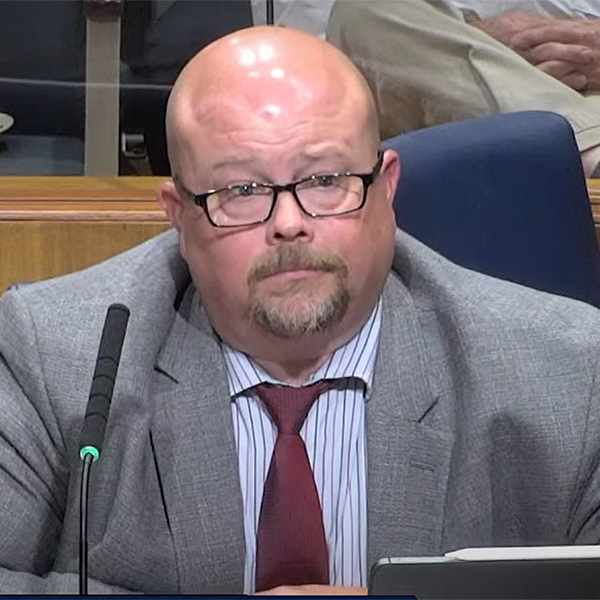
Dame Jankuloski, IESO | IESO

Ontario’s traditional supervisory control and data acquisition (SCADA) uses data from grid-connected facilities every two to 10 seconds, but the data lack precise time stamps needed to evaluate system disturbances, such as the January 2019 event at a steam unit in Florida that caused oscillations across the Eastern Interconnection. (See Oscillation Event Points to Need for Better Diagnostics.)

NERC, which has published PMU guidelines, is expected to elevate them to a reliability standard in the future, Jankuloski said. “The changes that we are proposing here are positioning the ISO to be able to comply with those changes that could come in the future.”

The Novel Applications for Synchronized Power Instrumentation working group — formerly the North American Synchrophasor Initiative — is drafting a research paper to propose future NERC requirements for real-time stability monitoring using synchrophasor data, IESO said.

IESO has 54 PMUs monitoring 24 facilities: four gas-fired generators, 14 wind farms, one solar installation and five substations. It expects to increase that number to 240 PMUs at 111 facilities, including 30 inverter-based resources.

Feedback on the rule and manual changes is due Jan. 22. Technical Panel approval is expected by May, with an effective date targeted for December 2026.

Large loads classified as inverter-based resources are not included in the proposed rule changes but are expected to be subject to such requirements in the future.

IESO applications for such loads should include PMU-capable devices and associated infrastructure in their project design during the System Impact Assessment process.

Texas PUC Approves TEF Backup Power Program

The Texas Public Utility Commission has put out a proposed rule for public comment that would establish the fourth and final program under the $10 billion Texas Energy Fund.

The PUC endorsed staff’s proposal laying out procedures to apply for grants or loans to procure, install and operate backup power systems under the TEF’s Texas Backup Power Package Program during its Dec. 18 open meeting (59024).

The program would provide $1.8 billion in funding for qualifying entities to install and operate backup power equipment at hospitals, nursing homes and other facilities that support community health, safety and well-being. Staff’s proposed rules define a backup power package as a stand-alone, multiday backup power source for facilities without passing through a utility electric meter.

“Applications to this program could be in the thousands,” staff’s Rama Singh Rastogi told commissioners.

She said the program’s loans are structured as forgivable loans, with 100% forgiveness should the applicant comply with performance requirements. The program excludes sourcing power from electric school bus batteries until the PUC further studies their use and integration into the program.

Comments are due Jan. 30, 2026.

The commission also approved staff’s recommendation to approve more than $282 million in grants to six applicants for their 14 projects under the TEF’s Outside ERCOT program. The program offers grants for facility modernization, facility weatherization, reliability and resiliency, and vegetation management (58492).

Southwestern Public Service Co. is eligible for about half of the loans. It applied for $200 million in reliability and resiliency awards and was approved for $148.6 million, covering three projects. El Paso Electric was approved for $61.3 million in loans for two applications covering a variety of reliability projects.

The applicants still must pass a review by the PUC’s executive director before any funds are disbursed.

Maine PUC Issues Multistate Transmission, Generation Procurement

The Maine Public Utilities Commission, in collaboration with the regulators of four other New England states, has issued a request for proposals to procure clean energy in northern Maine and 1,200 MW of transmission to connect it to the ISO-NE grid.

While northern Maine is notable for its significant onshore wind potential, much of the area is not directly connected to ISO-NE; it is part of the Eastern Interconnection through New Brunswick.

As states look to add clean energy to meet growing demand and decarbonize the grid, northern Maine has the potential to be a major area of clean energy growth, but the lack of transmission remains a significant barrier.

The RFP is intended to be complimentary to ISO-NE’s first Longer-term Transmission Planning (LTTP) procurement, which aims to reduce transmission constraints in Maine and establish a new interconnection point to help enable the development of 1,200 MW of onshore wind. The RTO intends to select a project from this procurement by September 2026. (See ISO-NE Provides More Detail on Responses to LTTP Procurement.)

Building on the ISO-NE procurement, the Maine PUC issued its RFP on Dec. 19 in coordination with Connecticut, Massachusetts, Rhode Island and Vermont. The solicitation is contingent upon the success of ISO-NE’s procurement; the PUC wrote that the transmission proposals would need to connect to the RTO “at the northern terminus of the facilities constructed as a result of ISO-NE’s [LTTP] solicitation.”

The RFP allows project bidders to submit standalone transmission or generation projects, or joint projects. The PUC wrote it “will give preference to projects that provide the lowest delivered cost of contract products and exhibit an ability to harmonize the generation and transmission components.”

Proposals are due Feb. 27. The PUC expects to decide on the bids by the end of May 2026. The commission noted that the RFP is intended to align with the timeline of the 2026 ISO-NE cluster request window, which is scheduled to open in October 2026.

Transmission and generation project in-service dates should roughly coincide with the in-service dates of the proposals for the ISO-NE LTTP procurement, the PUC said. The estimated in-service dates for the bids received by the RTO range from the fourth quarter of 2032 to the third quarter of 2035.

The PUC wrote it “is coordinating with other New England states in the evaluation of proposals and consideration of a joint selection in which all or some other combination of the coordinating states would participate.”

The RFP seeks to procure energy and renewable energy credits over a 20-year power purchase agreement. The procurement also allows project developers to include energy storage systems in their proposals.

“Proposals to include an energy storage system must demonstrate how the storage system will be designed and utilized to maximize use of the transmission line and reduce costs for ratepayers,” the PUC wrote.

On the transmission side, proposals “must be capable of delivering at least 1,200 MW of energy to the ISO-NE system from the generation component to the LTTU [Longer-term Transmission Upgrade] northern terminus in the Pittsfield, Maine, area.”

The PUC conducted a similar transmission and generation procurement in 2021 and 2022, selecting a transmission project submitted by LS Power and an onshore wind project submitted by Longroad Energy. However, the commission terminated the process in late 2023 after LS Power said it no longer could meet the fixed contract price.

LS Power attributed the cost increase in part to a delay caused by Maine’s efforts to include Massachusetts in the procurement at a late stage in the process. “The introduction of Massachusetts as a participant added delay due to the need to negotiate contracts in Massachusetts and have such contracts filed for approval in a contested case before the Massachusetts Department of Public Utilities,” the company wrote in 2024 following the termination.

“After a year of delay, without signed contracts in either state, and having no certainty that contracts that would support project financing were even achievable, we could no longer hold our price or schedule,” the company added.

By coordinating with other states from the outset, the PUC’s second attempt at a northern Maine procurement may be able to avoid some of the risks that derailed its first attempt.

Large Load Customers Languish in PSCo Interconnection Queue

With a surge in interconnection requests from large load customers, Public Service Company of Colorado (PSCo) has fallen behind on processing applications, a situation that has sparked concern from state regulators.

The Colorado Public Utilities Commission held an informational meeting Dec. 16 to hear about large load service issues. The meeting was part of an investigatory proceeding the PUC launched in October after hearing a range of concerns from PSCo large load customers including whether they can execute contracts with utilities in a timely manner. The state may have lost some potential large customers as a result, a commission order said.

PUC staff said PSCo’s interconnection delays seem to be a recent phenomenon. The utility was receiving two or three interconnection requests a year from large load customers up until 2024, when the number of requests jumped to 18.

In the past three years, PSCo has received 37 large load interconnection requests, PUC staff said. Only two of those applicants have made it to a signed interconnection agreement. Eight have dropped out or are on hold.

Nineteen requests are stalled in the system impact study (SIS) phase, one of the first steps in the interconnection process. The SIS identifies system constraints and needed upgrades and may include a cost estimate.

Applicants pay a fee for the study and agree to a delivery time frame, which has typically been four months but more recently has increased to six months.

Ten of the 19 applicants stuck in the SIS phase paid for the study six to 12 months ago; four paid more than a year ago. The other five paid two to six months ago.

Of the 37 interconnection requests in the last three years, PUC staff found only one in which the SIS was finished on schedule.

PSCo’s Open Access Transmission Tariff specifies that the utility complete the SIS within 60 days of a signed study agreement. If the utility is going to miss the deadline, it must give the customer an explanation and a new completion date.

“The 60-day timeline … appears overly optimistic relative to PSCo’s ability to process the large load requests it has received in the past three years and is inconsistent with the SIS agreements PSCo is signing with large load applicants,” PUC staff said in a presentation.

One reason for the delays is that PSCo is short-staffed, PUC staff said, in part because employees who handled interconnection requests left for jobs with data center companies. Commissioner Tom Plant found “a little irony” in the situation.

Xcel Energy Responds

In an emailed statement, PSCo parent Xcel Energy acknowledged that large load customers have faced delays and uncertainty with their interconnection requests.

The company has been working over the past year to improve large load customer service. Measures include adding staff, hiring consultants, modernizing processes and collaborating more closely with customers.

But the improvements “will not solve everything,” Xcel said.

“Even with faster project studies and better communication, Xcel Energy cannot energize these customers without adding significant generation and transmission capacity to the grid that serves our communities,” the company said. “Over the past 18 months, the scale and speed of growth have outpaced what Colorado’s energy system was built to handle.”

Xcel is working with the PUC and stakeholders to bring new resources online. The company expects to file a large load tariff in early 2026.

“Customers need certainty to plan investments, and we support efforts to create fair, transparent rate structures that balance flexibility with affordability for all Coloradans,” Xcel said.

Customer Perspectives

As part of their research, PUC staff interviewed representatives of 13 companies and organizations that were current or prospective large load customers of the state’s PUC-regulated electric utilities: PSCo and Black Hills Colorado Electric. Interviewees were with data center companies or other industries with high power demand.

They suggested ways to streamline the interconnection queue and discourage speculative loads. Those included larger, nonrefundable study fees and, for data centers, proof of end user and developer track record.

On the topic of large load tariff design, customers were interested in an option to “bring your own generation” — either in front of or behind the meter.

Many said they’d consider flexible loads to speed up interconnection, especially if their load flexibility could be monetized.

Customers said they’d like to see more consistent large load processes within Colorado, as well as nationally.

Idaho Power Can Retain Market-based Rate Authority, FERC Rules

Idaho Power can continue to sell power at market-based rates after it acquired more than 200 MW in resources in 2023 and 2024, FERC ruled Dec. 18.

The decision — which covers Idaho Power’s market-based rate authority (MBRA) in its own balancing authority area, first-tier markets and CAISO’s Western Energy Imbalance Market (WEIM) — came after the Boise-based utility had submitted a series of change in status notices to report ownership of and control over new resources that came online during those years (ER10-2126 et al.).

Those filings, submitted in October 2023 and July 2024, reported that the utility added a net cumulative 211.8 MW of generation output after entering agreements to take power from two solar facilities and energizing — and then expanding — its Hemingway standalone battery storage facility.

Idaho Power explained that its own market power analysis showed that the utility still passed FERC’s pivotal supplier and wholesale market share screens for the WEIM and the utility’s adjacent first-tier markets, which include the Avista, Bonneville Power Administration, NorthWestern Energy, and PacifiCorp East and West BAAs.

But the analysis also showed Idaho Power failed wholesale market share screens in its own BAA in the winter, spring and fall, with market shares of 31.3, 41.8 and 30.3%, respectively. That put the utility well above FERC’s 20% threshold, prompting the commission to institute a Section 206 proceeding under the Federal Power Act to scrutinize the utility’s MBRA eligibility.

In allowing Idaho Power to retain its MBRA within its own BAA, FERC agreed with the utility’s contention that the commission should give more weight to the utility’s delivered price test (DPT) analyses rather than a sensitivity analysis based on activity at the Northwest’s Mid-C electricity trading hub.

The DPT analyses showed that, when Idaho Power’s obligation to serve its native load was taken into consideration, its “available economic capacity” — that is, energy available to be sold into the market — fell under the 20% market share threshold and the allowable threshold for market concentration of generation capacity as measured by the Herfindahl-Hirschman Index (HHI).

“Because Idaho Power has native load obligations, we find that the available economic capacity measure more accurately captures conditions in the Idaho Power balancing authority area,” FERC wrote. “The October 2023 DPT and the July 2024 DPT show that, using the available economic capacity measure and based on [Electric Quarterly Report] prices and the Mid-C hub prices, Idaho Power’s base case analyses indicate that Idaho Power is not pivotal in any season. The base case analyses indicate that Idaho Power’s market share under the available economic capacity measure is below 20% in almost all season/load periods, and market concentration in those periods is below the commission’s HHI threshold of 2,500.”

FERC’s Dec. 18 order does not cover a separate Section 206 proceeding the commission instituted for Idaho Power in July 2025, after the utility filed a change in status notice showing the addition of 230 MW of generation (EL25-91). The commission expects to issue an order in that proceeding by early January. (See FERC Launches Section 206 Proceeding for Idaho Power.)

NYISO Meeting Briefs: Dec. 16-19, 2025

Installed Capacity Working Group

The final meeting of the Installed Capacity Working Group for the year, held Dec. 16, focused on proposed manual changes for several projects.

These include the alternative ICAP market parameters and the Control Area System Resource capacity market participation projects, which are to facilitate the integration of the Champlain Hudson Power Express transmission line. The parameters are to accommodate the line if it is late in beginning operation, as it will have a major impact on market prices and reliability. The CASR revisions would patch a few linguistic holes regarding how the manual addresses equipment failures.

NYISO will seek approval of the changes from the Business Issues Committee at its next meeting in January. Both projects have related tariff revisions pending before FERC.

The ISO also presented its Market Vision plan to stakeholders, emphasizing familiar themes of a changing grid, decreasing reliability margins, and the role of capacity and energy markets in meeting the energy and reliability needs of New York. The plan is a high-level overview of the timeline of major projects the ISO is undertaking, including the capacity market structure review, CHPE integration and handling the grid’s transition to winter peaking, among many other projects.

NYISO also presented improvements it is working to develop for the Thunderstorm Alert Settlement system because of issues that arose in July. Currently TSA settlements are reviewed manually, which can be time consuming.

Finally, the ISO presented a brief update confirming that it would continue the Storage as Transmission project into 2026.

Management Committee

The Management Committee on Dec. 17 approved two motions recommending the Board of Directors approve and file the tariff revisions for the Improved Duct-Firing Modeling project and the Hydro Quebec-NYISO interconnection agreement.

The committee also heard brief presentations of the accomplishments of NYISO under the 2025 Strategic Plan, and a repeat of the November Operations Report.

Transmission Planning Advisory Subcommittee

The Transmission Planning Advisory Subcommittee on Dec. 18 received a project update on the model development for the 2025-2044 System and Resource Outlook study. The study has nailed down a model for the base case and inputs for several other cases. Cost modeling will be finalized for all cases in the coming weeks.

TPAS also received an extremely short update on NYISO’s compliance with FERC Order 1920. Stakeholders were informed of the timeline of tariff revision development with a tentative filing date of April 30, 2026. (See NYISO Presents Preliminary FERC Order 1920 Plan to Stakeholders.)

Load Forecasting Task Force

The Load Forecasting Task Force heard a presentation Dec. 19 on the 2026 peak load forecast.

NYISO forecasts a peak load of 31,578.6 MW, roughly half of which (15,312 MW) is located in the New York City suburbs, Long Island and the city itself.

All U.S. Offshore Wind Construction Halted

The Trump administration has ordered work halted on all five offshore wind facilities under construction in U.S. waters.

The Dec. 22 announcement by the U.S. Department of Interior said the Department of Defense had identified wind farms as national security risks — claiming that the towers and the spinning blades create a clutter in radar signals that generates false targets and obscures legitimate targets.

Interior said it is pausing the offshore wind leases to give all relevant government agencies time to work with the leaseholders and state governments to mitigate those risks.

The move is a sharp escalation of the campaign against offshore wind power President Donald Trump kicked off on the first day of his second term.

This has included suspension of leasing, attempts to pull back approvals issued during the Biden administration, the end of tax credits and separate stop-work orders against two offshore wind farms under construction.

Some of the individual actions have fallen flat: A federal judge in September lifted the stop-work order imposed on Revolution Wind, and a different federal judge in December ruled Trump’s Day 1 order halting onshore and offshore wind leasing and permitting was unlawful.

But taken together, Trump’s efforts have created a level of risk and uncertainty that has led multiple developers to shelve or cancel their plans in U.S. waters.

To submit a commentary on this topic, email forum@rtoinsider.com.

Just two U.S. offshore wind farms are in operation, one small and one tiny. Four large facilities and one very large facility are in various stages of construction. The rest of what had been a very ambitious pipeline formed during the Biden administration and first Trump administration is in tatters, some of that due not to Trump but to cost and logistics problems that beset the nascent U.S. industry in 2022.

The five projects affected by the Dec. 22 order are Coastal Virginia Offshore Wind (CVOW), Empire Wind 1, Revolution Wind, Sunrise Wind and Vineyard Wind 1.

The order did not address the two facilities already in operation: the 30-MW Block Island Wind farm in state waters near Rhode Island, and the 132-MW South Fork, which is farther south off the Rhode Island coast and directly adjacent to or near Revolution, Sunrise and Vineyard in a cluster of nine wind energy lease areas.

Interior’s announcement Dec. 22 cited the findings of unclassified government reports that turbine towers are highly reflective of radar. This and dozens of spinning blades create radar interference, Interior said; radar operators can change the alarm threshold to reduce false alarms from this clutter, but doing so may cause actual threats to be overlooked.

Interior said recent DOD reports provide further basis for the pausing leases.

The 2.6 GW, 176-turbine CVOW is near the concentration of major military facilities in southeastern Virginia. Its potential to interfere with radar, air and naval operations was flagged early in the federal review process. The Jan. 28, 2024, federal approval of CVOW’s construction and operations plan includes a series of conditions, one of which is a radar impact mitigation agreement to be negotiated with the North American Air Defense Command.

Empire, Revolution, Sunrise and Vineyard are near lesser concentrations of military assets, but their environmental impact statements each contain numerous references to radar. Their construction and operations plans — all approved during the Biden administration — also contain directives to address national security concerns.

What has changed since then, aside from the energy priorities of the White House, is not immediately clear. The recent DOD reports are classified.

But in the announcement, Interior Secretary Doug Burgum said the threat environment has evolved since the approvals were granted: “Today’s action addresses emerging national security risks, including the rapid evolution of the relevant adversary technologies, and the vulnerabilities created by large-scale offshore wind projects with proximity near our East Coast population centers. The Trump administration will always prioritize the security of the American people.”

Reaction fell along expected lines.

Dominion Energy said: “Stopping CVOW for any length of time will threaten grid reliability for some of the nation’s most important war fighting, AI and civilian assets. It will also lead to energy inflation and threaten thousands of jobs. … The project has been more than 10 years in the works [and] involved close coordination with the military, and [its] two pilot turbines have been operating for five years without causing any impacts to national security.”

U.S. Rep. Jeff Van Drew (R-N.J.) said: “For years, I’ve warned that offshore wind can interfere with military radar and threaten our coastal defenses. This pause is the right move. National security always comes first.”

The Oceantic Network said: “The Trump administration’s construction pause issued today on five U.S. offshore wind projects set to deliver nearly 6 GW of much-needed power is another veiled attempt to hide the fact that the president doesn’t like offshore wind. … The U.S. offshore wind industry has continuously worked with the Department of Defense to address national security concerns, and its own clearinghouse has signed off on every offshore wind lease ahead of construction.”

The Committee for a Constructive Tomorrow said: “Today was a historic victory for the little guy taking on the twin Goliaths of big government and big green energy. The Trump administration’s decision to deliver a lump of coal to five major offshore wind projects by placing a hold on their permits delivers a wonderful Christmas gift to those of us who’ve been fighting in the trenches for years to halt them.”

Vet Voice Foundation said: “This isn’t about national security — it’s a political gift to fossil fuel donors that will raise electricity bills for U.S. households and increase our risk of blackouts this winter.”

U.S. Rep. Andy Harris (R-Md.) said: “Good. National security cannot be sacrificed in pursuit of expensive, untested energy experiments that put both the Eastern Shore and the nation at risk.”

Advanced Energy United said: “PJM just failed to secure enough generation in its latest capacity auction this month, and if these wind projects are delayed, it will make keeping the lights on during an energy crunch even more difficult in the Mid-Atlantic.”

U.S. Rep. Chris Smith (R-N.J.) said: “Empire Wind’s close proximity to major international airports, including Newark Liberty, LaGuardia and JFK, and critical military installations, such as Joint Base McGuire-Dix-Lakehurst and Naval Weapons Station Earle, make the project especially dangerous. It must be halted.”

The American Clean Power Association said: “All the projects suspended today underwent rigorous national security reviews during the first Trump and Biden administrations. Today’s decision creates needless uncertainty for any company that seeks to build an energy project in the United States. In America today, the greatest threat to a reliable energy system is an unreliable political system.”

On the Facebook page of Protect Our Coast NJ, users posted “BEST Christmas gift EVER”; “Alleluia”; “Thank YOU Lord Jesus and President Trump”; “Stop onshore wind too”; and “A pause is nice a permanent ban is better. Get it done.”

FERC Rejects Complaint over SPP’s Accreditation Practices

FERC has dismissed as moot a complaint by several public interest organizations over SPP’s accreditation methodologies for thermal and renewable resources (EL24-96).

In a Dec. 18 ruling, the commission said its approval in July of SPP’s new resource accreditation framework rendered the complaint’s target “no longer effective.” (See FERC Approves SPP’s ERAS Process, Accreditation.)

The Sierra Club, Natural Resources Defense Council and the Sustainable FERC Project filed the complaint in April 2024 under sections 206 and 306 of the Federal Power Act. They charged the grid operator’s effective load-carrying capability methodology for renewable resources and performance-based accreditation methodology for conventional resources were unjust and unreasonable as well as unduly discriminatory or preferential.

At the time, SPP accredited thermal and other conventional resources based primarily on installed capacity. It accredited wind and solar resources based primarily on a given unit’s output during 60% of certain peak load hours and storage resources based on performance under a capability test.

The RTO filed tariff revisions in September 2024 to the proposed PBA methodology, adding fuel assurance incentives for conventional resources. FERC noted the public interest groups said the new accreditation methodologies “would completely replace the existing methodologies that are the target of this complaint.”

CAISO Readies EDAM Tariff Changes as New Market Nears Opening

CAISO is proposing a set of tariff changes for submission to FERC early in 2026 to help ease participants into the ISO’s new Extended Day-Ahead Market.

The planned tariff revisions range from formatting changes to rule adjustments that affect the overall market design, said Andrew Ulmer, CAISO assistant general counsel, at a Dec. 17 joint meeting of the ISO Board of Governors and Western Energy Markets (WEM) Governing Body. CAISO plans to file the proposed revisions with FERC in the first quarter of 2026 to keep EDAM’s May 2026 opening date on track.

The first proposed revision is associated with CAISO’s rules for intertie modeling and scheduling. Intertie resources in CAISO currently are modeled at specific scheduling points, but the ISO in 2025 proposed to model intertie resources under EDAM at generation aggregation points (GAPs). A GAP is the collection of supply resources in a balancing authority area or group of BAAs.

The GAP approach would have improved power flow and market accuracy significantly, improved alignment with actual power flows by reducing phantom congestion and reduced operator conformance of transmission limits in real-time, CAISO staff wrote in a November research paper. (See EDAM Intertie Scheduling Processes Raise Stakeholder Concerns.)

Some stakeholders raised concerns about the GAP approach, saying it could lead to a market with multiple prices for the same intertie.

CAISO therefore adjusted its approach in its tariff revisions proposal: The ISO plans to price and model schedules at intertie scheduling points as it does today, CAISO Vice President of Market Design and Analysis Anna McKenna said in a memo presented at the Dec. 17 meeting.

“This [proposed approach] will enable market participants to transition to EDAM without impacting existing commercial arrangements for transactions at the ISO balancing area interties,” McKenna wrote in the letter. “Management will work with stakeholders to determine when the market should transition to modeling and pricing the ISO balancing area intertie scheduling points using the aggregate modeling locations.”

Sticking with the current intertie scheduling approach largely preserves intertie scheduling and modeling practices for ISO interties, McKenna wrote. The current approach represents a reasonable compromise to implement EDAM and reflect the congestion impacts of intertie transactions, she wrote.

“I want to make sure I really understand this. … The generation aggregation points [approach] is being deferred,” Robert Kondziolka, WEM Governing Body member, said at the meeting. “Is it your understanding that stakeholders support how GAP should be implemented, whether it’s 2027 or sometime after that?”

“I think there are questions about how GAPs are modeled,” CAISO Regional Markets Section Manager Milos Bosanac replied. “That’s where [future] stakeholder workshops … will help tease out those questions.”

“It sounds like what we are moving toward is a model that prices electricity differently depending how it got there,” added board Chair Severin Borenstein. “This is sort of moving away from a nodal pricing model, which … worries me because of gaming [opportunities].”

For resource adequacy imports, CAISO’s proposed tariff changes would allow certain scheduling coordinators to reassign their system resource capacities prior to the day-ahead market — specifically when the resource supporting that import is in the EDAM area.

The RA tariff revisions would allow participants to continue to bid RA imports at CAISO interties that also are EDAM transfer locations, specifically when those imports are sourced from outside the EDAM area, McKenna said in the memo. This approach is similar to how the market treats RA imports today, Bosanac said.

At the board’s Dec. 18 general session, members nominated Joe Eto to be the new chair in 2026, replacing Borenstein. Eto joined the board in 2023 after retiring from the Lawrence Berkeley National Laboratory after 40 years.