Search
December 7, 2025

FERC Rejects Tri-State’s ‘High Impact Load Tariff’ Aimed at Data Centers

FERC has rejected Tri-State Generation and Transmission’s proposed tariff designed to manage the projected massive growth in data center load confronting its Mountain West member utilities over the next decade (ER25-3316).

The commission’s Oct. 27 decision could call into question a growing push among utilities to develop such rulesets to insulate ratepayers from the financial and reliability risks stemming from the heavy energy demands of new data centers. (See Large-load Tariffs Touted as Alternative to ‘Side Deals’.)

Modeled on similar tariffs filed by other U.S. utilities, Tri-State’s High Impact Load Tariff would have established a biennial planning cycle for customer loads rated at 45 MW or higher, with the aim of weeding out speculative projects.

In its filing, the Colorado-based cooperative wrote that a “separate HIL planning cycle process is necessary because HILs are of a size that require significant generation capacity additions or procurement of long-term [power purchase agreements], which necessitates proper planning” to prevent ratepayers from bearing the financial burden of grid projects being completed “only for a HIL to not materialize.”

The proposed rules would have required Tri-State members and developers of HIL projects to undergo an evaluation process that included providing evidence that a developer had 90% site control of its project location and submitting an executed member-customer high-impact load (MCHIL) agreement and high-impact load agreement (HILA) to be executed between the utility member and Tri-State.

Developers of projects under 80 MW would also have been required to pay an evaluation fee starting at $35,000 plus $1,000/MW, with the fee increasing to $150,000 for projects between 80 and 200 MW and $250,000 for projects above 200 MW — levels Tri-Sate said were consistent with deposit thresholds under its large generator interconnection process.

The HILA also would have required a HIL customer to provide a minimum security deposit of $2.7 million/MW to offset the risk that the customer “begins commercial operations late [or] ceases operations before the expiration of the HILA term or the HIL does not operate at the expected level (or at all).”

‘A Job for the States Alone’

In rejecting the proposed rules, the commission largely agreed with protests by Data Center Coalition and infrastructure developer Eolian Energy, finding that “certain aspects” of Tri-State’s proposed tariff “appear to present an impermissible intrusion on retail rate regulation,” which falls under the purview of states and is not subject to FERC’s jurisdictional authority under the Federal Power Act.

“We find that several provisions of the HIL Tariff require specific terms and conditions of service by a utility member to an end-use HIL customer (i.e., a retail service) and make the MCHIL a condition of Tri-State’s agreement to provide wholesale service to its utility members to facilitate their retail service of large loads,” the commission wrote.

The commission noted the protesters’ argument that Tri-State was proposing to use a FERC-jurisdictional tariff to set the terms of retail sales by “dictating” the minimum amount of energy a large load customer must purchase at retail.

“For example, Data Center Coalition argues that mandating HIL customers enter into contracts with utility members that contain minimum monthly demand and energy requirements are terms of retail service that are beyond the commission’s authority to regulate. Eolian argues that the MCHIL is a retail agreement, and Tri-State’s failure to explain how the commission can approve a tariff provision that dictates the terms of retail service is a deficiency in Tri-State’s filing,” the commission wrote.

Tri-State did not provide “a sufficient basis” for FERC finding the proposal did not regulate the terms and conditions of a HIL customer’s retail service “in ways that are beyond the commission’s authority,” it said, pointing specifically to the HILA provision that requires a Tri-State utility member to enter into an MCHIL that sets the terms for energy sales from the member to its retail customer.

The commission also disagreed with Tri-State’s contention that FERC has authority to assert jurisdiction over the proposed HILT and HILA, “which condition Tri-State’s service to its utility members on those utility members’ HIL customers complying with certain terms and conditions of retail service.”

“We note that the plain language of the FPA bars the commission from regulating retail sales, and the Supreme Court has been clear: Specification of terms of sale at retail ‘is a job for the states alone.’”

The commission also rejected Tri-State’s argument that it should accept the HIL program because it is similar to the co-op’s FERC-approved demand response program in laying out key terms for utility member participation.

“We disagree because Tri-State’s demand response program does not place the terms and conditions on the retail sale of electricity; instead, it sets forth the technical requirements that a utility member’s demand response resources must meet in order for the utility member to qualify for incentive payments from Tri-State’s demand response programs,” the commission wrote.

Guidance for 2nd Attempt

But the commission left open the door for Tri-State to file a modified version of the HILT that does not infringe on retail rate regulation, outlining a handful of “concerns” about the tariff the co-op should address, including:

    • insufficient evidence that the proposed security deposits are “appropriately sized to mitigate the risks Tri-State identifies”;
    • insufficient explanation justifying why Tri-State should be able to terminate a utility member’s HILA for reasons beyond the member’s control, potentially after the member has already incurred construction costs to help serve the new load; and
    • lack of justification for the “degree of discretion” Tri-State proposed to give itself in implementing various parts of the HILT, such as the evaluation criteria.

The commission also found that the tariff did not provide sufficient detail about the “interactions” between the proposed reliability and transmission criteria in the evaluation.

“We also note that Tri-State’s metrics for assessing the reliability criteria lack the necessary details for the commission to evaluate their effectiveness and whether they ensure not unduly discriminatory treatment across projects,” it wrote.

Reached for comment, a Tri-State spokesperson told RTO Insider: “While this is a disappointing result, FERC provided guidance to Tri-State that we can use to move forward toward our goal of creating a repeatable and fair process to bring high-impact loads to Tri-State and our members, while providing data centers and other large loads a transparent and fair process.

“We still are reviewing the order and determining our next steps, but there may be an opportunity to modify the tariff to address FERC’s comments and deliver the consistency our members seek, in responding to requests for service from heavy energy-users.”

NextEra, Google Announce Nuclear Collaboration

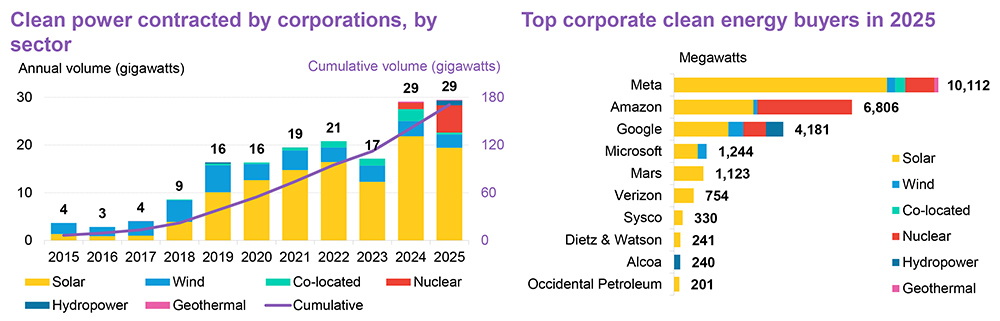
NextEra Energy plans to restart the 50-year-old Iowa nuclear power plant it shut down in 2020 and sell some of its output to Google for data center operations.

The target date for resumed operation of the 615-MW Duane Arnold Energy Center is the first quarter of 2029.

NextEra and Google announced the 25-year power purchase agreement late Oct. 27, and NextEra elaborated in its third-quarter earnings report Oct. 28.

Central Iowa Power Cooperative and Corn Belt Power Cooperative will surrender their 30% ownership stake in the facility to NextEra in return for NextEra assuming their liability for decommissioning.

Central Iowa and Google will purchase the full output of the plant on equal terms, which were not disclosed but which are expected to contribute annually an adjusted 16 cents on average to NextEra’s earnings per share for the first 10 years of the agreement.

NextEra CEO John Ketchum said the company is not ready to disclose the expected cost of recommissioning.

For comparison, Constellation estimates a $1.6 billion price tag to restart the former Three Mile Island Unit 1, a pressurized-water reactor commissioned and retired at roughly the same time as the Duane Arnold reactor, which is smaller and uses the less-complex boiling water design.

Ketchum said the same team that has been doing the decommissioning will bring the facility back to operational status, and some of the employees who formerly operated Duane Arnold are expected to be rehired.

NextEra announced plans to shut down the facility in 2018, in an era when multiple U.S. nuclear plants had become uneconomical due to their high cost of operation and were being retired.

Duane Arnold ceased operation even sooner than planned when an August 2020 windstorm damaged its cooling towers.

Not even five years later, the nuclear power landscape began to change dramatically as demand for power — particularly the emissions-free baseload power provided by atomic fission — began to rise.

The very small number of retired but not disassembled U.S. nuclear plants have become a potentially valuable commodity, able to come back online at a fraction of the cost in time and money of a comparable new facility.

Two other retired nuclear power plants have begun recommissioning processes; the operational lives of existing reactors are being extended rather than cut short; construction may resume on a half-built, two-reactor facility mothballed eight years ago; uprating is planned for existing plants; and corporate offtake agreements are being signed for existing reactors as well as for advanced nuclear technologies that have not even reached prototype testing.

In this environment, NextEra considers the Duane Arnold restart a good move. The company still needs regulatory approvals but has begun the process of obtaining them. (See NextEra Closer to Recommissioning Duane Arnold with FERC Waivers.)

“Because we carefully and methodically went through the decommissioning process, we have confidence in the investment required to restart it,” Ketchum said. NextEra expects the recommissioned facility to qualify for the full range of available federal tax credits, he said.

The first quarter of 2029 is the latest the restart would be expected, Ketchum said. It could be as soon as the fourth quarter of 2028.

NextEra and Google also announced an agreement to explore development of new nuclear generation across the United States.

Counting Duane Arnold, the two companies have executed more than 3.5 GW of energy projects nationwide.

NextEra Energy reported GAAP earnings of $2.44 billion or $1.18/share on revenue of $7.97 billion in the third quarter of 2025, up from $1.85 billion, $0.90/share and $7.57 billion in the same quarter a year earlier.

MISO Advisory Committee Switches Leadership After Freeman Exit

MISO’s Advisory Committee will continue to be led by its vice chair through the end of 2025 after the departure of Sarah Freeman from Indiana’s regulatory agency.

At an Oct. 28 meeting, acting chair and vice chair Brian Drumm, of ITC, agreed to helm the Advisory Committee’s remaining meeting during MISO’s quarterly Board Week in early December in Indianapolis.

Former Advisory Committee chair Freeman exited the Indiana Utility Regulatory Commission — and thus MISO —  Oct. 10 to join the Regulatory Assistance Project (RAP), a global non-governmental organization that helps policymakers tackle the clean energy transition. Freeman concluded 28 years of service to the state of Indiana to become a principal with RAP.

Chris Norton, of MISO’s Transmission-Dependent Utilities sector, proposed Drumm’s extension as acting chair. No committee member objected. Drumm previously led the Sept. 17 Advisory Committee meeting in Detroit as part of MISO Board Week.

At the Organization of MISO States’ annual meeting Oct. 21, OMS President and Minnesota Public Utilities Commissioner Joseph Sullivan said he would miss Freeman and her ability to work toward a goal and “ride over” noise in the industry. He said Freeman was one of the most active listeners he’s ever encountered and that he viewed her as a mentor through her demeanor and conduct.

MISO’s Advisory Committee is pulling together a committee of its members to consider nominations and select new leadership in 2026.

OMS intends to nominate Michigan Public Service Commission Chair Dan Scripps for committee consideration as the next Advisory Committee chair. Sullivan said Scripps is “well-suited to be a neutral voice” and potentially replace Freeman’s leadership on the Advisory Committee.

Separately, IURC Chairman Jim Huston took over Freeman’s representation on OMS until his retirement in early 2026. Huston plans to step down from the commission sometime in January, retiring after more than a decade on the job.

PJM MRC/MC Briefs: Oct. 23, 2025

Stakeholders Endorse Proposal to Offer Cap Advance Commitments

VALLEY FORGE, Pa. — PJM’s Markets and Reliability Committee endorsed by acclamation a proposal to use only cost-based offers for resources committed in advance of the day-ahead energy market.

The proposal was also endorsed by the MC as part of its consent agenda. (See “1st Read on Offer Capping of Advance Scheduled Resources,” PJM MIC Briefs: Aug. 6, 2025.)

The use of advance commitments has grown since PJM implemented its conservative operations protocol, which allows resources to be scheduled days ahead of an event the RTO thinks could strain system conditions. It was established in the wake of the December 2022 Winter Storm Elliott, when many generators had trouble procuring fuel when picked up by PJM dispatchers. (See “PJM Discusses Market Performance During January Winter Storms,” PJM MIC Briefs: Feb. 5, 2025.)

Paul Sotkiewicz, president of E-Cubed Policy Associates, argued against units being limited to their cost-based offers without evidence of market power issues or when their commitment is intended to resolve a transmission constraint.

Paul Sotkiewicz, E-Cubed Policy Associates | © RTO Insider 

He said the proposal represents PJM’s attempt to make up for tariff violations during the conservative operations deployment ahead of the 2025 Martin Luther King Jr. Day weekend. Resources with advance commitments were improperly offer capped despite the conservative operations not being related to transmission issues.

He also raised issues about the scope of what can be included in cost-based offers, saying resource owners can incur unrecoverable costs when responding to a conservative operations commitment. He noted that fuel costs can be high during holiday weekends and must be purchased as a block package for the whole weekend.

PJM General Counsel Chris O’Hara said he is comfortable with the proposal from a compliance perspective after conferring with the RTO’s legal team and speaking with staff at FERC about the issue.

He said stakeholders have mixed views about how frequently PJM should use offer capping and the RTO has sought to proceed with the best solution available.

LS Power Director of Project Development Tom Hoatson said the proposal provides market participants with more certainty around how they will be committed during conservative operations and that improvements to the expenses captured in cost-based offers fall under phase two of the issue charge.

Renewable Dispatch Proposal Endorsed

The committee endorsed by acclamation a proposal to rework how wind and solar resources are dispatched, including establishing an Effective EcoMax parameter intended to capture how a resource is forecast to operate in how it is dispatched. (See “Renewable Dispatch Proposal Endorsed,” PJM MIC Briefs: Aug. 6, 2025.)

The forecast feeding into Effective EcoMax would be updated before each five-minute interval in the energy market and define the maximum output of the unit’s dispatch. PJM has sought the change to reduce the curtailment of renewable resources with outdated parameters, which the existing EcoMax parameter is limited to.

The ramp rate for wind and solar resources would be limited to 20% of their installed capacity per minute, which is intended to reduce the volatility that can result from sudden shifts in output.

1st Read on GDECS Tariff Revisions

PJM presented a first read on a slate of tariff revisions drafted by the Governing Document Enhancement & Clarification Subcommittee (GDECS), which seek to reflect changes approved by FERC and remove outdated language. The subcommittee approved all of the changes.

The proposal removes language referring to capacity storage and environmentally-limited resources from a section on winter-period capacity performance resources to conform with FERC approving the elimination of an exemption from the requirement that resources offer into the capacity market (ER25-785).

A section detailing the penalties for distributed energy resources that fail a test of their capability to respond to capacity deployments would be revised to avoid the potential for double penalization if the event also results in penalties during a performance assessment interval or deficiency charges.

Several changes to Schedule 6A, which lays out black start service, are intended to clarify the capital investments that can be included in the capital recovery factor rate.

Members Committee

1st Read on Changes to Membership Requirements for PIEOUG

Greg Poulos, executive director of the Consumer Advocates of the PJM States, presented a first read on a proposal to rework the membership and voting structure for the Public Interest and Environmental Organizations User Group (PIEOUG) to resolve inconsistencies stemming from the Operating Agreement’s definition of PJM membership.

A unique user group established under the OA, the PIEOUG is exempt from the requirement that user groups be composed of full PJM members.

Greg Poulos, CAPS | © RTO Insider 

He said the user group was intended to include organizations that may not be full PJM Members, signified in the OA by capitalization. However, the voting rules for user groups allowing items to be referred to the Members Committee with 75% support appears to be limited to “Members.” Another section of the OA allows items to be referred to the Board of Managers with 90% support from a user group, but uses the lowercase term “members.”

The proposal would split PIEOUG membership into two categories: consumer advocates who are PJM Members, as well as environmental organizations and general public interest groups. Both would be permitted to vote on motions to refer items to the MC, with 75% support overall and 50% from both classifications required for the vote to pass. If the MC opts to not take up the subject, the PIEOUG could vote to refer it to the PJM board with 90% support overall and 50% from both categories.

Poulos said the two categories for PIEOUG membership is intended to ensure that state-appointed consumer advocates are not outvoted if a large number of environmental or public interest groups are admitted to the PIEOUG, which chooses its own membership.

Poulos told RTO Insider the proposal is intended to find the right balance on giving all members of the user group a voice. He said it’s rare for items to be referred to the MC or board and no such votes are being considered at this time.

Stakeholders Discuss MC Annual Plan

MC Vice Chair Jason Barker opened a discussion on whether language in Manual 34: Stakeholder Process detailing the creation of an annual plan is anachronistic. He said the committee has not created a formal plan detailing its priorities to PJM management in recent years, with approval of issue charges instead fulfilling that role.

Jason Barker, Vitol | © RTO Insider

Carl Johnson, of the PJM Public Power Coalition, said the goal of the annual plan was to ensure items weren’t being overlooked. While there were a few successful efforts to establish annual plans years ago, prioritization within the stakeholder process has largely been ceded to PJM staff. While there could be value in a discussion on whether the annual plan should remain in the manual, this might not be the proper time given the other topics stakeholders are focused on.

Tangibl Group Director of RTO and Regulatory Affairs Ken Foladare said PJM has consistently set agendas that provide little time for discussion of important issues, requiring moderators to cut off conversation to move onto other subjects. He noted that the Oct. 14 Critical Issue Fast Path meeting allowed just 30 minutes for questions on stakeholder proposals, leaving individuals unable to participate. If this is repeatedly happening, the RTO needs to either allot more time or discussion should be allowed to go over time.

Barker said some stakeholders routinely engage in time-consuming behaviors, such as cross-examining PJM staff or asking argumentative questions. That may be appropriate at times, but better management of time could allow everyone to have their questions answered.

Storage Projects Dominate ISO-NE Transitional Cluster Study

ISO-NE’s first interconnection cluster study held under new rules is made up mostly of large battery resources and contains only five wind and solar projects.

The transitional cluster study, which ISO-NE initiated in early October, includes 26 interconnection requests, with a net total of 7,205 MW. The requests include 21 battery storage projects, two solar projects, two offshore wind projects and one onshore wind project.

FERC Order 2023 required RTOs to transition from serial, first-come first-served interconnection processes, to first-ready first-served cluster study processes. The reforms are intended to reduce queue backlogs by disincentivizing speculative interconnection requests and sharing infrastructure upgrade costs among interconnection customers.

The transitional study marks the first cluster study under the new rules and is set to conclude in August 2026.

Alex Lawton, director at Advanced Energy United, said he expects the Order 2023 interconnection changes to “raise the bar for interconnection requests” and “increase the likelihood of projects actually being constructed.”

Looking at the projects included in the first cluster study, he said he was “a little bit surprised to see so few solar projects but not surprised to see so much storage.”

“We absolutely need a lot more storage, but we also need other low-cost clean generation resources too, to bring new supply to meet growing demand,” he said.

The storage requests in the cluster study total 5,632 MW, ranging in size from about 19 to 706 MW, with a median size of 214 MW.

The cluster includes a 1,200-MW interconnection request from SouthCoast Wind; a capacity-only request from Avangrid’s New England Wind 1 project (previously called Park City Wind); and an 18-MW land-based wind project in Maine.

For solar, the cluster includes a 102-MW project in New Hampshire and a 253-MW project in Maine.

In its announcement of the study, ISO-NE noted that “more than 50 other requests with previously completed studies, most of which have signed interconnection agreements, remain in the queue and can continue working toward completing the interconnection process.”

Francis Pullaro, president of RENEW Northeast, said the large number of storage projects in the cluster study likely is a result of procurement opportunities for large-scale storage projects in the region.

Massachusetts has an ongoing procurement for up to 1,500 MW of storage. The state received 13 bids from eight companies in September and is scheduled to select winning bids in December. (See Massachusetts Seeks 1,500 MW of Mid-duration Energy Storage.)

Maine has been working toward a 200-MW storage procurement, and Connecticut is in the process of selecting projects for a procurement open to solar, onshore wind and co-located storage. Meanwhile, state incentive programs generally are focused on small-scale projects.

“Frankly, there’s not a lot of procurement opportunity for transmission-level solar,” Pullaro said.

He added that it is “very challenging to find sites for large projects where you can get through siting and manage public acceptance,” and that, to site large-scale solar projects, “you’re usually talking about farmlands or having to clear cut forests.”

The relatively small number of non-storage projects in the cluster, coupled with the significant number of withdrawals that have occurred over the past year, appears to be a major challenge for state clean energy goals, said Aidan Foley, founder of Glenvale Solar.

According to ISO-NE data, 22,480 MW of FERC-jurisdictional battery and clean energy projects have withdrawn from the RTO’s interconnection queue this year. This includes about 10 GW of batteries, 11 GW of wind and 1.3 GW of solar.

“The sheer supply of projects, other than offshore wind, is terrible,” Foley said. “The region is just totally screwed in terms of meeting its clean energy goals, and the next five years is going to be an absolute dead zone.”

He said cost and new technical requirements posed barriers for projects seeking to enter the transitional cluster study. Because the ISO-NE queue has been closed since June 2024, newer projects without queue positions were not able to join the study, he added.

“The cost is really a humongous amount to anybody trying to weigh the investment needs of their portfolio,” Foley said. He estimated the study process would require a roughly $6 million investment for generators larger than 20 MW seeking to participate in the transitional cluster.

Foley has argued that the study costs — including a $5 million commercial readiness deposit — are disproportionately burdensome for smaller resources that fall under ISO-NE’s Large Generator Interconnection Procedures (LGIPs).

Notably, the cluster study contains only three projects smaller than 100 MW. All three of these requests are less than 20 MW, which is the size threshold that determines whether resources are subject to ISO-NE’s LGIPs or Small Generator Interconnection Procedures (SGIPs).

Generators seeking to interconnect under the SGIPs were required to submit a $1 million commercial readiness deposit in the transitional cluster, compared to the $5 million deposit required from LGIP resources.

In the stakeholder process leading up to ISO-NE’s Order 2023 compliance proposal, several stakeholders pushed for lower commercial readiness deposits, and Foley advocated for scaling deposit requirements to resource size. (See NEPOOL PC Backs ISO-NE Tariff Revisions for Order 2023 Compliance.)

Brookfield Nearing Deal for Unfinished S.C. Nuclear Reactors

Santee Cooper is entering final negotiations with Brookfield Asset Management over two partially built nuclear reactors left in limbo for the past eight years.

The companies expect to reach a memorandum of understanding after a six-week period to examine resumption of construction and talk with potential power customers.

The developments announced Oct. 24 are the latest indication of the strong interest in nuclear power and are a remarkable turnaround for what had been one of the U.S. nuclear industry’s costliest failures.

Work on V.C. Summer Unit 2 and Unit 3 was halted after extensive delays and cost overruns, yielding a patchwork of reinforced concrete and mothballed equipment at a cost of more than $9 billion. Four executives eventually went to prison for their misdeeds in the project, the last of them in November 2024.

In January, spurred by the renewed interest in nuclear power’s steady emissions-free power, Santee Cooper put out a request for proposals for sale of the project. (See Santee Cooper Seeks Buyer for Unfinished Nuclear Project.)

The state-owned public power and water utility said it received more than 70 initial expressions of interest and 15 formal proposals. Its board of directors approved the letter of intent with Brookfield on Oct. 24.

The centerpiece of the deal is the two partially built Westinghouse AP1000 reactors. Their combined 2.2-GW rating is a potentially lucrative asset in an era of rising electricity demand and higher electricity costs.

Importantly, Santee Cooper maintained the equipment already on site during the eight years it sat idle.

“The state of the units, and the fact that they use the same Westinghouse AP1000 technology that is now operating in Georgia and overseas, make these assets very attractive to the nuclear power industry,” Santee Cooper CEO Jimmy Staton said in the news release.

Westinghouse will continue to be involved in the completion of the two reactor units, Staton said. Brookfield is majority owner of Westinghouse.

Of interest to ratepayers — who had to help foot the bill for what became known as Nukegate — the Brookfield deal is built on private funding.

“Brookfield came to Santee Cooper with a proposal that set out the path to turn our prior nuclear investment into lasting value for our customers and all South Carolinians,” said Santee Cooper Board Chair Peter McCoy.

“Our goals include completing these reactors with private money and no ratepayer or taxpayer expense, delivering financial relief to our customers and gaining significant additional power capacity for South Carolina. Brookfield’s proposal would do just that, and the company has the financial capability to stand behind its proposal.”

Patton Calls on ERCOT to Operate its System Less Conservatively

WASHINGTON — ERCOT can ensure long-term reliability with its energy-only market, but it must operate its grid less conservatively for that to happen, said Potomac Economics President David Patton, the Texas grid operator’s Independent Market Monitor.

ERCOT’s ancillary services demand curves, which are part of the soon-to-go-live real-time co-optimization plus batteries (RTC+) initiative, imply a value of lost load of about $35,000/MWh, which is already well short of the $200,000/MWh implied by the one-day-in-10-years reliability standard, Patton said at S&P Global’s Nodal Trader Conference on Oct. 24.

“What makes me pessimistic in Texas is that there are multiple levels of problems getting to an efficient shortage price,” Patton said. “And most of it is driven by an extraordinarily conservative posture by ERCOT in how it operates the system.”

The grid operator pays for excessive ancillary services and has demand response programs that kick in too early, both preventing it from reaching the needed scarcity prices that energy-only models rely on to attract investment, he added.

“I think until we get some degree of alignment between how ERCOT operates the system and the markets, we’re going to be stuck in a state where it’s nearly impossible to set efficient shortage prices,” Patton said. “And, so, I don’t know how it would motivate people to build dispatchable generation.”

Plenty of DR is caused by the market, Patton said, with cryptomining data centers dropping offline when prices start to hit about $100/MWh, when the activity becomes unprofitable. But he said he is worried about DR from “outside the market” such as a residential DR program that will pay the load class to curtail at peak hours.

“The value of residential consumption is like $3,000, $4,000, $5,000/MWh, but the tightest net load hours like when ERCOT imposes that and artificially cuts the load. … I’m guessing the price in those hours is going to be $50, $60, $70[/MWh],” Patton said.

That will serve to artificially hold the price down when the market would proceed to shortage pricing, he added.

ERCOT has grown its renewable energy production more than any domestic market, with 40 GW of wind, 33 GW of solar and 14 GW of batteries — and more of that is coming, said Keith Collins, vice president of commercial operations.

“The peak loads don’t really matter as much with the solar on the hot days,” Collins said. “What matters is when the sun isn’t there, and that’s what we see in the load ramps, the net load that we see in the summer days. In the winters, we’re seeing when the sun isn’t up yet and the peaks are rising, that’s the concern, and it’s a big area of concern for us — the need to get dispatchable resources. That’s where our dispatchable reliability reserve service is hopefully going to point us to focus on getting those types of resources.”

Collins said the problem with scarcity pricing is that it will create incentives for all resources, when ERCOT needs more supply that can actually help balance renewables when their production drops.

Getting the Signals Right

Texas last debated major reforms for its wholesale market nearly five years ago after Winter Storm Uri led to widespread blackouts.

“After Uri, they looked at lots of options,” Collins said. “Many options were crossed off the table and, so, we’ll have to revisit some of those.”

Patton pushed back on Collins’ description of how scarcity pricing works, arguing it favors resources that can produce energy when the grid needs it most.

“If I have an unreliable unit that has a lot of forced outages, they’re going to miss a lot of the shortages; they’re going to make less money,” Patton said. “A solar resource is probably not going to make any money getting shortages, because shortages are going to happen when the sun has gone down. If I have a wind resource, I’m not going to make very much money, because you’re not going to have shortages when the wind is blowing.”

Reliable, dispatchable resources will get high prices when the grid needs energy the most, so a key to getting energy-only models right is ensuring their signals align with that need, he said.

“You may say: ‘We need other products to supplement that, because we have certain reliability needs that go beyond what our needs are in any one five-minute interval,’” Patton said. “So, I think we do need the dispatchable reliability service, but that’s not going to be the answer to providing price signals.”

Ideally, ERCOT would procure fewer reserves and let the system operate in a way that is more conducive to its energy-only design.

“There’s no way to fix excessive conservatism with market design like that. At some point, you have to move from both ends,” Patton said. “You have to operate the system in a manner that’s more consistent with the true value of electricity. And then you have to identify market design issues that are undermining pricing as well, and hopefully then get to a point where your energy price is going to do most of the job in terms of motivating investment.”

The Public Utility Commission of Texas told ERCOT to start operating more conservatively after Uri, Collins noted.

“There have been directions from the commission,” Collins said. “Now, there was some recent discussion about perhaps revisiting that. We’re happy to have that conversation. And if the commission were to direct us, we would take actions.”

Patton argued that many of the conservative operations are coming from the grid operator itself because the PUC has approved only proposals to procure additional reserves that come from ERCOT.

“I think the conservative mindset is coming from ERCOT operations,” Patton added. “Clearly, there’s a sense that [the PUC wants] them to be conservative, but I don’t think they’re driving them to be this conservative.”

Options for Clean Dispatchable Power Each Have Caveats

All seven clean energy technologies evaluated for a new report might someday help New York reach its decarbonization goals, but each would require innovation and support to reach that potential.

The authors say that while hydrogen, biofuels, advanced nuclear, carbon capture and storage, next-generation geothermal, long-duration energy storage and virtual power plants all are in development, none exists at a scale to serve as a dispatchable emissions-free resource to backstop all the intermittent wind and solar generation New York wants to build.

The New York State Energy Research and Development Authority submitted the “Zero by 40 Technoeconomic Assessment” to the Department of Public Service on Oct. 22 (15-E-0302).

The report was prepared by the Electric Power Research Institute. Its title alludes to the state’s statutory goal of a zero-emission power grid by 2040.

The Public Service Commission in May 2023 ordered the report to identify methods of closing the gap between existing renewable energy technologies and future system reliability needs.

The cost and complexity of all-new or greatly expanded infrastructure is likely to be a limiting factor in the near term, giving a larger role by default to technologies that would not require significant infrastructure upgrades, the authors wrote.

The report comes as the state’s clean-energy transition lags well behind the timeline envisioned for it. State officials expect to miss the 2030 statutory goal of 70% renewable energy, perhaps by a wide margin. Delayed fossil retirements or even new fossil generation are being contemplated as a result.

The report groups the seven technologies evaluated into three functional categories: low capacity factor resources to deploy at peak system need (hydrogen and biofuels); high capacity factor resources that can a provide firm supplement to renewables (advanced nuclear, next-generation geothermal and CCS attached to thermal plants); and filling gaps with resources to balance supply and demand (long-duration storage and VPPs).

Hydrogen

Hydrogen can be a zero- to low-carbon energy resource, depending how it is produced. Economywide demand for hydrogen would be the most economical scenario; building a bulk underground storage and pipeline transport system just for the power sector would be costly.

Pipelines are expensive and slow to build. But without them, the cost and logistics of statewide use of hydrogen for power grid reliability would be prohibitive.

The greatest near-term opportunity appears to be in upstate New York, if low-cost or curtailed renewable electricity could power hydrogen production co-located with geologic storage.

However, there may not be excess renewable electricity to generate hydrogen in 2040, and the cost of hydrogen is expected to be significantly higher than natural gas.

Biofuels

Renewable natural gas (RNG) and renewable diesel (RD) are the biofuels most relevant to the power sector because they are drop-in replacements for natural gas and distillate fossil fuels.

RNG has relatively few infrastructure needs, but its feedstocks are limited and are required for decarbonization of other sectors. So RNG would most likely serve as a peaking resource. The air-quality impact of RNG combustion depends on whether it is evaluated by net emissions, which are zero or close to zero, or by gross emissions, which are similar to natural gas.

RD may be particularly important to New York’s grid as it shifts to a winter-peaking system. But it is expected to be significantly more expensive than fossil distillate, and it is less efficient than RNG in combustion turbines.

Biofuels and hydrogen have near-term supply constraints, but the availability of hydrogen has the potential to outstrip biofuels because of the finite supply of biofuel feedstocks.

Advanced Nuclear

Nuclear reactors are expensive; operating them at a high capacity factor is more economical. So while advanced reactors are expected to be capable of more flexible operation than today’s conventional fleet, they are likely to remain baseload power.

Developing any new nuclear generation in New York by 2040 will require early and careful planning, as the timeline may stretch a dozen years per facility, unless federal intervention or economies of scale speeds up the regulatory and construction process.

Carbon Capture and Storage

CCS can be used on a natural gas-fired peaker plant, but it is best used on baseload power plants because it is expensive and less efficient on an intermittent basis.

CCS would require significant buildout of transport and storage infrastructure that does not exist in New York. Such an ecosystem would face challenges in regulation, permitting and public acceptance but could benefit hard-to-decarbonize industrial applications.

Even a carbon capture rate of nearly 100% would not make a significant reduction in upstream emissions totals as tallied by New York’s greenhouse gas accounting system.

Geothermal

The geological landscape of New York is largely unexplored for its geothermal power potential, but the potential is believed to be quite low — less than 1 GW by 2040 — using existing technology.

But in the longer term, with continued technological innovation, there is a theoretical potential for greater use of the earth’s heat to generate electricity in New York. The cost of such an effort is highly uncertain.

Long-duration Energy Storage

Short-duration storage (less than 10 hours) presently can meet most grid-balancing needs, but greater reliance on renewable power will require larger capacities and longer durations of storage.

The report examines 18 electrochemical, mechanical and thermal energy storage technologies capable of operating for durations greater than 10 hours.

Electrochemical and mechanical technologies generally are more ready for deployment. Electrochemical technologies are more modular and can provide more grid services but come with safety considerations, higher costs and shorter lifetimes. Thermal technologies potentially are useful for industrial decarbonization.

All come with round-trip efficiency losses, and some with standby losses.

Emerging technologies must be assessed to mitigate any risks as they move from early development to deployment.

Electricity market design changes are needed to support market-based deployment of long-duration storage.

Virtual Power Plants

VPPs could serve as a key intermediary between flexible distributed energy resources and load-flexible appliances.

A recent study showed VPPs could reach 8.5 GW of flexibility potential in New York by 2040, a cost-effective approach to balancing supply and demand.

VPPs carry low capital costs and short lead times, but realizing their potential would require improving customer recruitment and participation; standardizing communications and market interfaces; and addressing metering and telemetry costs. Programs with easier enrollment and reduced user interface are expected to have the greatest impact.

Where to Begin

The report identifies several no-regrets actions the state can take to set the stage needed for its 2040 goals:

    • Do not overly rely on one technology; pursue a diverse portfolio.
    • Start early.
    • Invest in grid-enhancing technologies to reduce the need for backstop resources.
    • Invest in innovation.
    • Develop strategies across industries to overcome infrastructure hurdles.
    • Engage early with developers, end users and other stakeholders.
    • Model a range of costs and performance attributes of technologies to deploy.
    • Reassess options regularly and remain flexible as new options become available.

Counterflow: Beam Me Up, Scotty

There was a big event the other day rolling out the U.S. Army’s new Janus Program, “a next-generation nuclear power program that will deliver resilient, secure and assured energy to support national defense installations and critical missions.”

The Army will contract for 18 nuclear “microreactors” (two each at nine Army bases). “The reactors will help keep weapons powered and maintain critical base operations when other energy sources go down because of bad weather, cyberattacks or other grid disruptions.”

This is wasteful, counterproductive and dangerous. It is worse than the Department of Defense microgrid initiative that I critiqued eight years ago.

Like the microgrid initiative, the Janus Program ignores the fact that the vast bulk (87%) of Army base power outages are from problems on the base’s distribution system. Existing building-specific diesel backup generators provide backup for distribution system outages. Nuclear microreactors (like microgrids) would not provide backup for distribution system outages. Thus, microreactors would cause base buildings to lose backup for 87% of outages, eliminating the vast bulk of existing backup capability.

Steve Huntoon

Moreover, Army bases don’t need complex microreactors to add to their infrastructure burdens. Instead, our bases need expansion of sensible and incredibly cheap resilience exercises, like those provided by MIT’s Lincoln Laboratory.

With specific focus on cyberattack disruptions, microreactors and the rest of the base’s electric system would be connected to communication networks. Building-specific diesel backup generators are not. So microreactors would create new vulnerability to cyberattacks.

And these microreactors would pose a huge threat to our troops. It appears they would not have containment structures, which means that an attack could spread highly radioactive nuclear fuel across a base and surrounding areas. If captured, the fuel could furnish the nuclear material for a dirty bomb or even fissile material for a crude nuclear bomb. No such risks exist with diesel or other fossil fuel generators.

This vulnerability exposes the irrationality of microreactors. If they are sited overseas because of attack threats to fossil fuel supplies, then those same attack threats would exist for the microreactors, with much worse potential consequences. If they are sited on or close to U.S. soil, then there are no threats to fossil fuel supplies that microreactors would relieve.

This intractable dilemma would appear to explain changing DOD messages about siting: first far-flung bases, then dropping that approach, and then resurrecting it during the Janus Program rollout.

| DOD

Oh, on the minor matter of cost: Diesel backup generators cost about $600,000/MW. The Army says the Janus Program would build on DOD’s Project Pele, which involves a 1.5-MW microreactor contracted for in 2022 at an estimated cost of $300 million, amounting to $200 million/MW. That is 33,300% more than the cost of diesel backup generators. It’s even 1,200% more than the cost of the new Vogtle units in Georgia.

And did I mention that in 2022, the delivery date for the Project Pele microreactor was said to be 2024? The delivery date now is said to be 2028. Two years until delivery has tripled to become six years until delivery, which should surprise no one familiar with the nuclear industry.

Speaking of money, where are the untold billions for the Army microreactors going to come from? The Janus Program rollout mentions the Defense Innovation Unit (DIU), which has an annual budget of about $1 billion. The planned microreactors would cost many times that, hurting existing DIU initiatives and spending money that Congress has not authorized or appropriated (not to put too fine a point on it).

In normal times we might look to the Pentagon press corps to ask about some of this, but the Trump administration has revoked almost all Pentagon press passes. And we know how congressional oversight is going these days.

To the Moon, Alice!

Not to be outdone by DOD, NASA plans to send a 100-kW microreactor to the moon, at an estimated cost of $6.2 billion. This works out to $62 billion/MW. What this microreactor would do on the moon is not entirely clear, other than somehow compete with China and/or Russia in somehow laying claim to something. Maybe it could charge Elon Musk’s cellphone when he shows up?

Speaking of Musk, where is DOGE when we need it?

Columnist Steve Huntoon, a former president of the Energy Bar Association, practiced energy law for more than 30 years.

Van Welie Discusses the Challenges Markets Face in New England

WASHINGTON — In ISO-NE CEO Gordon van Welie’s time running the grid operator, it has seen natural gas come to dominate generation in the region. An even bigger shift is under way now as state policies demand a grid increasingly powered by renewables.

The shift to natural gas led to cleaner generation than the mix 25 years ago, but it also has come with unexpected developments, van Welie said Oct. 23 at the S&P Global Nodal Trader Conference. “One of the big assumptions at the start of the market was that fuel will always be available,” he added. “And of course, the fuel is not always available.”

While natural gas generation is cheap enough most of the time to push other resources off the system, during winter cold snaps, the region struggles to attract enough of the fuel. Gas and electricity prices then skyrocket. With state policy shifting more heating and transportation demand onto the grid, winters promise to become more volatile.

“So, the big point, from a trading point of view, is much higher volatility than we’ve ever seen in the winter,” van Welie said. “The second point is that emissions reduction will be seasonal. We will decarbonize the spring and the fall way before we decarbonize the winter, if ever.”

ISO-NE sees negative prices in the shoulder seasons because of the proliferation of renewables. And van Welie said he expects that trend will grow. But serving a rising share of winter demand with 100% renewables would be costly because the reliability value of wind and solar declines as more resources are added to the grid.

Solar has a massive impact in New England, which van Welie described as a 42-GW system with 10 to 12 GW sitting behind the meter.

“If you can have firm, dispatchable, zero-carbon generation, the mythical ‘DEFR’ as New York invented this resource in their capacity expansion models — dispatchable emissions-free resource — you can really not only support reliability, you can dramatically reduce all that cost,” van Welie said. “The problem is that resource doesn’t exist today. Maybe SMRs will fulfill that role in the future, but for now, the balancing resource is natural gas.”

Another economical answer is price-responsive demand because reductions can happen during winter peaks when producing power is most expensive. On top of price volatility issues, getting the last 15 to 20% of decarbonization will be the most expensive. The grid needs to expand to handle more renewables, which cuts energy market revenues for balancing resources needed to meet winter peaks.

“You need balancing resources to keep the lights on,” van Welie said. “That money has got to come from somewhere, so that’s the resource adequacy construct, and those constructs are under a lot of pressure right now.”

ISO-NE expects the role of natural gas to grow in coming years as demand growth is outpacing the addition of renewable resources, which eventually will bring down emissions, though doing so all on their own could prove too costly for the region’s future policymakers.

“Taking the last bit of carbon out of the system becomes increasingly expensive,” van Welie said.

With affordability an ever present issue, policymakers might decide that 80% of the way to net-zero emissions is enough, he added.

The queue in New England today is dominated by renewables and batteries because that is what investors think can get built and what state policies are pushing. A significant resource the region was counting on was offshore wind, which has 15 GW under development.

“That’s got a big question mark against it. It’s been disrupted,” van Welie said. “My guess is offshore wind has been knocked back at least a decade, and so does raise the question for the region, which is, where’s the supply coming from in order to meet this demand that’s projected?”

The questions around offshore wind have New England policymakers thinking about gas again, but that must be weighed against long-term decarbonization goals that could risk stranded costs. While the markets did well to bring investment onto the grid and shield customers from the risk of bad investments, ISO-NE is making major changes to its capacity construct to better deal with winter reliability issues.

“We need to move to a prompt, seasonal market with marginal accreditation and modeling of the gas constraints,” van Welie said. “We’ll be the first region to actively clear the capacity market by modeling a gas constraint.”

If the markets are going to succeed at guiding New England through an affordable, reliable transition to a net-zero grid, as they did to a system dominated by natural gas, states must embrace the markets,” van Welie said.

“Ultimately, the markets are a means to an end,” van Welie said. “The states are the ones that created the markets. The states are the ones that can undo the markets. So, they need to have ownership and support for the market construct.”

If states support a capacity market it could work. If they do not, they will find a way around it and meet their policy goals some other way, he added.