New York has finalized regulations intended to reduce the timeline and cost of modernizing the state’s grid.
The Public Service Commission on Feb. 12 approved rules (Case 24-M-0433) drafted in response to the state’s 2024 Renewable Action Project Interconnection and Deployment (RAPID) Act.
It is a continuation of earlier efforts to make New York an easier place to develop the infrastructure that is central to state leaders’ vision of an electrified and decarbonized state.
By state officials’ own admission, New York has been a slow and expensive place to carry out the politically fraught business of clean energy and transmission development.
Because of this, along with the national and global factors weighing on energy development, the state is well behind schedule meeting the statutory goals of its landmark 2019 climate law, the Climate Leadership and Community Protection Act (CLCPA).
The first big milestone of the CLCPA is 70% renewable energy by 2030. As of 2024, the state was at 23.6%, and renewables development only got harder in 2025. (See N.Y. Reports Minimal Increase in Renewable Power.)
An early step to address this was the creation in 2020 of the Office of Renewable Energy Siting (ORES), designed to consolidate the many state regulatory layers facing large-scale renewable proposals and, if needed, to override local regulatory authority.
The RAPID Act expanded ORES by giving it similar authority over transmission projects and renaming it the Office of Renewable Energy Siting and Electric Transmission. (See NY Energy Summit: Making the RAPID Act Live up to its Name.)
It remains known as ORES, commonly spoken as OH-rezz, rather than ORESET, which could be pronounced as oh-RE-set, which might convey the wrong message.
Voices on all sides of the renewable energy landscape have said ORES has been successful but not perfect in its efforts, and some have wished it could do more or less, depending on their feelings about renewables and community self-governance.
The RAPID Act lets ORES do more.
The PSC said the regulations it approved Feb. 12 will reduce permitting time for transmission projects by up to 50%.
“These regulations will be essential to the state’s need to integrate new, clean generation and replace our existing aging infrastructure to meet rising electric demand,” PSC Chair Rory Christian said in a news release.
The PSC order and the news release announcing it do not summarize or draw highlights from the new Article VIII of state Public Service Law, which fills 483 pages.
Instead, the news release emphasizes the state’s continued commitment to environmental protection and stakeholder engagement. Discussion at the Feb. 12 PSC meeting followed the same theme before the PSC voted unanimously to approve the rules.
Over the past 22 months, Department of Public Service staff drafted the regulations, held 20 in-person and two virtual public comment sessions on them, twice extended the deadline for written comments until more than 2,000 had been submitted, revised the rules based on that input, took more than 400 comments on the revised version and further tweaked the language before presenting it for the Feb. 12 vote.
There is a hint of irony in naming something “rapid” and then putting it through such a lengthy process.
But things can move slowly as competing priorities are balanced, and “rapid” can be relative or subjective. ORES is an example: It legitimately can be called faster or more streamlined than what it replaced, but “fast” is in the eye of the beholder.
Before the vote, Christian fired off a series of questions at ORES Executive Director Zeryai Hagos intended to counter the many criticisms of ORES leveled by home rule proponents and renewable energy opponents.
Christian knew the answers, certainly, but wanted them stated for the record.
Does ORES take land by eminent domain? How does it use application fees? Does it allow development over landowners’ wishes? Is it a rubber stamp for renewable energy projects?
Hagos shot down each one.
“I would strongly disagree with the term ‘rubber stamp,’” Hagos said. “We frequently hear the exact opposite sentiment from applicants and investors who are engaging in this type of development from around the country. The truth is that ORES has developed an extremely comprehensive application review process that holds developers accountable, successfully limiting environmental and community impacts.”
ORES has rejected only one application, and that was because the project had lost property rights, not because the proposal was flawed or neighbors opposed it. Of the other 38 applications submitted, 29 have been approved, eight are under review and one has been withdrawn.
So on its surface, the record is skewed heavily in favor of renewables. But the record says nothing of the process behind the numbers.
Hagos said ORES has issued 51 notices of incomplete application so far: “We say ‘no’ and we say ‘redo this’ frequently to applicants. … To date, each application submitted to the office has been turned away at least once through a notice of incomplete application.”
Further, many plans never get past the pre-application stage and are not reflected in ORES’ 29-1-1 record.
“The clear publication of uniform standards and conditions in the regulations directly allows the developers to eliminate bad projects before they ever come in,” Hagos said. “Pre-application can take upwards of two years for a motivated applicant. We think it can get down to a year if they do everything in parallel, as quickly as possible.”
After questioning Hagos, Christian alluded to the difference between faster and fast: “One thing I want to make clear — ‘expedite’ doesn’t mean doing less. And you’ve made it very clear that the new regulations actually will require additional work in most instances.”
SAVANNAH, Ga. — As NERC’s Board of Trustees voted to accept the recommendations of the Modernization of Standards Processes and Procedures Task Force, Chair Suzanne Keenan said the ERO’s leadership is focused on delivering needed change while maintaining industry’s role in standards development.
“We’re moving at speed — executing, adapting and delivering while simultaneously redesigning the machine that carries us forward,” Keenan said at the board’s first meeting of 2026 in Savannah, Ga. “The friction we’re feeling and will feel is data. It tells us what needs reinforcement, refinement and modernization.”
“At the same time, speed without structure is risk,” she continued. “We do need guardrails, not to slow us down, but to keep us aligned and stable as we accelerate. Those guardrails give us confidence to move decisively without veering of course.”
The acceptance of the MSPPTF’s recommendations caps a yearlong process that began with the board’s February 2025 meeting in Miami. (See NERC Leaders Highlight Canada-US Collaboration.) NERC kicked off the initiative after the board twice had to step in to use its special authority under the ERO’s Rules of Procedure to accelerate the normal standards development process to meet deadlines set by FERC.
MSPPTF Chair Greg Ford, CEO of Georgia Systems Operations, emphasized that the task force “wanted to make sure that we were accessible to stakeholders” and over the past year gave more than 50 presentations, either standalone or as agenda items at meetings or conferences, that were heard by more than 5,800 participants. NERC also posted the recommendations for a final industry comment period at the end of January. (See NERC Modernization Task Force Leaders Present Final Recommendations.)
The recommendations involve significant changes to the initiation, drafting and balloting stages of standards development, including a new subcommittee of the Reliability Issues Steering Committee to create development plans and a pool of subject matter experts to help NERC staff develop initial standard drafts. Registered ballot body segments would be restructured, and the voting rules would be updated. Also, a “fast track” process would be available for urgent projects.
Howard Gugel, NERC’s senior vice president for regulatory oversight, told trustees the ERO plans to pilot the standards initiation workshop this year and will begin developing the SME pool called for in the MSPPTF recommendations as soon as possible. He said NERC staff is considering using artificial intelligence to help develop the new process “within the bounds of the existing standards process manual.” The MSPPTF will remain in place throughout the implementation as an advisory body.
The final proposal will need FERC’s approval, and revisions to the charters of the ERO’s standing committees, including the RSTC and RISC, also will be necessary, along with the disbanding of the Standards Committee. On page 80 of the meeting agenda, management estimated the final changes to the Rules of Procedure will be submitted to the board in the first quarter of 2027 and, if approved, filed with FERC and Canadian authorities the following quarter. Standing committee revisions should be complete by the end of 2027.
Leaders Tout Accomplishments in 2025
NERC COO Kelly Hanson, presenting the ERO’s 2025 performance assessment, cited the MSPPTF as one example of the organization’s expertise in stakeholder engagement, which she called its “secret sauce.”
That collaboration skill stood the ERO in good stead in 2025, as it accomplished all 10 of its work plan priorities for the year, including:
developing a framework to identify emerging reliability risks from the transforming grid;
identifying critical cyber and physical security risks to the electric industry;
meeting all FERC directives and mandates within the required time frames;
creating a road map for development of NERC’s Critical Infrastructure Protection standards to ensure baseline protection;
expanding stakeholder engagement to reach a more diverse audience;
enhancing the ERO’s online portals;
researching the potential reliability benefits of AI and other new technologies;
improving financial and human resources processes to improve employee experience and accelerate workflow; and
boosting operational efficiency by revising corporate frameworks and consolidating facilities.
NERC finished its priorities despite having several “unplanned activities” added to its plate, Hanson said, naming the launch of the MSPPTF, the turmoil of the second Trump administration, the departure of three FERC heads before the confirmation of current Chair Laura Swett and NERC offering to help investigate the mass outage on the Iberian Peninsula in June. (See NERC Offered to Help with Iberia Outage Investigation, Robb Says.)
“We all know what happens in an organization [when] you have unplanned activities,” Hanson said. “It kind of halts everything. It’s very disruptive. All of a sudden, you have to change all of your priorities around you … your people, your processes, your technology, your budgets. … It’s really impressive, because it starts to show how this industry is becoming more agile [and] more flexible.”
Changes at the Top
The board also welcomed new Trustee Ron Talbot after his approval by the organization’s Member Representatives Committee that day. Talbot will fill the vacancy left by the departure of former Trustee Bob Clarke in February 2025; the MRC elected not to replace Clarke at that time, so it could extend the search for a candidate to handle “the current speed of change” in the grid and the technology, security and policy landscape.
Talbot’s 40-year career in the electric industry has taken him across five utilities in all three U.S. interconnections. He has also served on the boards of directors at several companies and nonprofits. Along with Talbot, Keenan and existing Trustees Jim Piro and Kristine Schmidt were elected to serve another three-year term.
The board’s next meeting will take place in Washington, D.C. on June 18. The meeting will be held under a hybrid arrangement in which MRC and trustees will attend in person and all others will participate virtually.
EPA has rescinded its 2009 finding that greenhouse gases are air pollutants that endanger public health and thus require regulation under the Clean Air Act, along with every vehicle emission standard that it had issued since 2012 as a result.
President Donald Trump and EPA Administrator Lee Zeldin announced the move Feb. 12, with both calling it the “single largest deregulatory action in American history.” They claimed it would save the U.S. $1.3 trillion in regulatory costs and an average of $2,400 on a new car.
Trump called the endangerment finding “a disastrous Obama-era policy that severely damaged the American auto industry and massively drove up prices for American consumers.” He said it “had no basis in fact, had none whatsoever, and it had no basis in law.”
The agency’s rollbacks, while significant, are limited to regulations under Section 202 of the Clean Air Act. The section pertains to emissions from new motor vehicles and engines that “may reasonably be anticipated to endanger public health or welfare.” That phrase is found elsewhere in the law, including Section 111, which allowed for regulation of new stationary sources of emissions.
Zeldin said the Supreme Court had established a “clear precedent” with its decisions in West Virginia v. EPA and Loper Bright Enterprises v. Raimondo that “if Congress didn’t authorize it, EPA shouldn’t be doing it. Congress never voted for these climate mandates. … If Congress wants EPA to regulate the heck out of greenhouse gases emitted out of motor vehicles, then Congress can clearly make that law, which they haven’t done, for good reason.”
Congress, however, did make that the law with the Inflation Reduction Act of 2022, which amended the CAA to specifically classify six greenhouse gases — carbon dioxide, hydrofluorocarbons, methane, nitrous oxide, perfluorocarbons and sulfur hexafluoride — as air pollutants to be regulated by EPA, mostly through incentives for zero-emission vehicles.
The agency issued the endangerment finding in 2009, nearly a year after President Barack Obama took office. It had been ordered by President George W. Bush in 2007 to begin regulating emissions of the six gases after the Supreme Court found it was required to in Massachusetts v. EPA.
“Today, the Trump administration repealed the endangerment finding: the ruling that served as the basis for limits on tailpipe emissions and power plant rules,” Obama posted on X. “Without it, we’ll be less safe, less healthy and less able to fight climate change — all so the fossil fuel industry can make even more money.”
EPA’s recission, which is likely to face a legal challenge, may rely on the court overturning Massachusetts v. EPA, or ruling that the IRA’s amendments do not mean the agency is required to regulate greenhouse gases, though it has the authority to do so. In 2022’s West Virginia v. EPA, the court affirmed the agency’s ability to regulate power plant emissions through reduction technologies. All six of the same conservative justices in the majority on that decision are still serving.
“This decision will drive up costs for businesses and consumers and weaken our economy. It upends nearly two decades of commonsense policy,” Sandra Purohit, federal advocacy director for business group E2, said in a statement. “It discourages capital investment and innovation in the auto industry. And it ignores the economic costs of extreme weather that’s only made worse by rising GHG pollution — including disaster clean-up, higher insurance premiums, lost productivity and supply chain disruption.”
The agency did not respond to a request for comment on what, if any, changes to the proposal, as published in the Federal Register, had been made in the final rule, the text of which had not been released as of publication time.
NEW YORK — After a remarkably bad year for the U.S. offshore wind industry, the Oceantic Network’s annual conference was focused on engineering a rebound rather than licking the wounds.
The official theme of IPF 2026 was “Reimagine Renew Reignite,” and most speakers emphasized one or more of those.
But there was another recurring message: Renewal and re-ignition are on hold until Jan. 20, 2029, when a president more supportive of generating electricity with wind turbines at sea might be inaugurated.
The important thing, speakers said, is that the re-imagining not wait until then — U.S. offshore wind was struggling well before Donald Trump was elected president again, and if the second act is to be more successful than the first, changes need to be considered.
This year’s International Partnering Forum was much smaller than previous editions, for obvious reasons. The active components of the U.S. offshore wind portfolio are five facilities under construction totaling 5.8 GW and a completed 132-MW facility. Stalled, shelved and canceled plans are much greater in number and proposed capacity.
Fewer than 900 people attended IPF 2026, compared with more than 1,500 at the 2025 edition and more than 3,000 in 2024, when 30 GW of offshore wind by 2030 still was the official goal of the Biden administration.
But the midtown Manhattan ballroom that served as the main venue for IPF 2026 was packed. The few empty seats went unfilled only because the people standing in the rear of the room were too circumspect to wade in once the program started.
A metaphorical elephant also was in the room, and Oceantic President Liz Burdock pointed it out immediately in her opening address Feb. 10: “Since January 2025, offshore wind has faced a series of coordinated administrative actions, legal challenges and political attacks unlike anything we have ever seen. We wake up day after day to another headline that questions whether this industry has a future in the United States, and that’s exactly why being here together matters.”
With the elephant acknowledged, she and subsequent speakers reminded listeners what they have accomplished and exhorted them to keep alive the vision behind their earlier efforts: clean, fixed-price power from an abundant source.
What is left of the U.S. offshore wind sector has pushed back against the Trump administration’s attacks and continued to make progress in the 10 months since IPF 2025. It also has generated some operational data.
The Long Island Power Authority’s South Fork Wind, the first utility-scale facility in U.S. waters, began commercial operation nearly two years ago, and its performance counters the criticism of offshore wind as unreliable: It generated power in 90% of the hours and on 362 of the days in 2025, ending the year with a capacity factor of 46.3%.
“That is remarkable production from a wind turbine site,” said Mikkel Maehlisen, head of U.S. offshore generation at Ørsted, the developer and now operator of South Fork.
Vineyard Wind, which is nearing completion off the Massachusetts coast, showed its value by sending up to 600 MW to the strained New England grid during the winter storm of January 2026, Burdock noted: “When the storm hit, offshore wind showed up.”
New York was the host of IPF 2026 and by some measures is the center of the U.S. offshore wind sector. It has contracted for power from three separate wind facilities; no other state has more than one contract.
New York also has had more problems with its offshore wind program than any other state, including multiple contract cancellations and repeated cost escalations. However, New York continues to press forward — in 2026, its portfolio is smaller than in 2023 and will cost ratepayers more, but it has steel in the water, some of it operational and the rest making progress toward operation.
Keynote speaker Doreen Harris, president of the New York State Energy Research and Development Authority (NYSERDA), said offshore wind remains an important part of the state’s future energy strategy, despite the setbacks and roadblocks in its path.
“It’s been a year that we couldn’t have anticipated, but that is why we plan for uncertainty, and collectively, we have demonstrated the durability of our commitment, not just today and not just tomorrow, but into the coming years, as we really see the benefits of these projects move forward.”
The Empire Wind and Sunrise Wind projects are contracted to deliver 810 and 924 MW to New York once operational. The Trump administration has halted work on Sunrise once and Empire twice; the developers won injunctions and resumed work, but the administration has said it will appeal. (See Trump Administration to Continue Effort to Halt OSW Work.)
If these two facilities can reach commercial operation, they and South Fork can be a model for the ecosystem once and still envisioned for the U.S. offshore wind sector, with overlapping benefits such as job creation, industrial development, infrastructure upgrades and new carbon-free electricity for a region of the NYISO grid that is sliding toward reliability violations.
“We will learn not only their operating characteristics, we will learn more about the impacts that they are or aren’t having,” Harris said. “Ultimately, we will be able to demonstrate … that offshore wind can and will be delivered in a durable, responsible and cost-effective manner for New Yorkers and frankly for the entire U.S.”
What Went Wrong?
Multiple challenges faced the offshore wind sector as it attempted to establish itself and develop momentum in the United States. Understanding what went wrong is key to moving forward. Burdock led a panel discussion on this theme.
“We can’t keep importing models that don’t quite fit,” she said, referring to the large and long-running European offshore wind sector, and panelists agreed.
Even so, there have been valuable takeaways from Europe. Many of the early U.S. offshore projects contracted their income long before they contracted their expenses and had to cancel the contracts when inflation set in.
The contract-for-difference model used in European offshore wind projects made an allowance for this, and New York successfully adapted it for its later contracts, said Georges Sassine, NYSERDA’s senior vice president of large-scale resources.
But he said a wholesale adaptation of European practices is unworkable in the U.S. — there are many more regulatory layers here.
“When things are going well, it’s easy to ignore risk, and offshore wind has a lot of risk,” said Will Hazelip, president of National Grid Ventures. “And unfortunately, over the course of the last three, four years, we’ve seen all those risks emerge, and it’s highlighted that some of the frameworks we had in place weren’t fit to manage all those risks.”
Billy Haugland, CEO of the Haugland Group, reminded listeners that the global pandemic with its resulting supply chain disruptions and price increases played a significant role in U.S. offshore wind’s problems. But a too-slow adaptation to those factors damaged the sector and left it less able to fight back when Trump set out to squash it.
Sassine pointed to offshore transmission development as a challenge, but he framed these things as growing pains, rather than failure and errors.
“When we were launching a new industry, it required a very different approach than where we are today, with a more mature industry,” he said. “Now that we have a few projects and more developing, we just have the natural evolution of this industry, where we need to adapt.”
Burdock wondered if the industry and policymakers had erred by framing offshore wind as generation rather than energy infrastructure. No one protested the idea.
Kent Herzog, senior managing director at Burns & McDonnell, later drilled down on this theme.
“We treated offshore wind like a transaction,” he said, “and I’m here to argue that it’s more about infrastructure, which I think you really heard several times this morning. When you try to build infrastructure using transactional tools, procurement models, risk allocation, timelines that assume certainty, you shouldn’t be surprised when those systems break.”
The California high-speed rail project, Boston’s Big Dig and the U.S. interstate highway system saw similar system-level problems in their execution, Herzog said.
“Politics, COVID, supply chains — all those things had impacts on this industry, no question, but they did not cause these problems, in my opinion, they exposed it. Because the systems we built were already fragile. It just hadn’t been stress-tested yet.”
He continued: “We wanted offshore wind, but we also wanted low prices, minimum risk exposure, rapid timelines and one-off procurements that didn’t require long-term coordination. Those demands are not irrational, they’re very understandable, but taken together, they weren’t achievable, not for a first-of-its-kind industrial system.”
Herzog concluded: “President Trump didn’t kill offshore wind. We did, by building a fragile system and hoping politics wouldn’t test it.”
Moving Forward
Most speakers Feb. 10 struck a more upbeat tone than Herzog, as might be expected when urging an audience to retain its professional, financial and personal commitments to a diminished enterprise that the president of the United States is trying to derail.
Burdock said new reality facing the industry in the past year “gives us a freedom and an obligation to design a new model for offshore wind in the United States — reimagine, renew and reignite, that is exactly what this moment demands of us.”
Harris said: “We know that the market has been tested in ways that we could not have anticipated in just one year. These challenges are real, and they are not unique to New York, but what does matter is how we respond to them.”
Sassine said New York is focusing on preservation and then adaptation: protecting the existing projects, getting them built and keeping the industry intact through its struggles. Looking forward, “this is an opportunity for us to pause and rethink and adapt and evolve our model going forward.”
New York State Commissioner of Environmental Conservation Amanda Lefton, a former director of the U.S. Bureau of Ocean Energy Management, said recent experiences highlight the importance of meticulous permitting: All five projects under construction in U.S. waters had defensible permits and were able to secure injunctions against the Trump administration’s December stop-work orders.
Strong regulatory structures can be seen as anti-business, she conceded, but in this situation, they have helped the industry.
Katie Dykes, commissioner of Connecticut’s Department of Energy and Environmental Protection, reminded the audience who will foot the cost of offshore wind projects, which have grown sharply more expensive in the 2020s.
“Other types of resources are facing similar price pressures,” she said. “But that does not mean that our state, at least, is going to purchase offshore wind at any cost.”
Katharine Perry, deputy director of resource adequacy for the New Jersey Board of Public Utilities, said her state’s first swing at offshore wind cost it some credibility with a key constituency: “In New Jersey, we have lost some public confidence in the industry. We’ve talked a lot about investor confidence, but without public confidence, you don’t have the political support to continue solicitations and bring projects forward.”
“One of the things we need to work on as an industry in the state of New Jersey moving forward is rebuilding that public trust, rebuilding momentum for the industry,” she added. “It’s a little bit of a call to action here, we can’t do it alone as the state regulator, and we are going to need support.”
Burdock said circumstances present a window for improvement.
“It isn’t often that you get an opportunity to recreate something better, more durable than the first time around,” she said. “So I view this as a good time for the offshore wind industry, despite all the challenges that we’ve had during the last year.”
ISO-NE updated stakeholders on its methods for assessing the impacts of its proposed capacity market overhaul on Feb. 11 as it prepares to release the initial results of the long-awaited analysis in March.
The RTO’s Capacity Auction Reform (CAR) project includes significant changes to resource accreditation and the timing and format of capacity auctions. ISO-NE aims to implement the changes for the 2028/29 capacity commitment period.
Given the significant effects the changes could have on market outcomes, the impact analysis is eagerly awaited by a wide range of stakeholders. Resource owners and developers are particularly interested in the potential effects of the accreditation changes on how much capacity they can sell in the market.
Chris Geissler, director of economic analysis at the RTO, told the NEPOOL Markets Committee that the feedback showed “strong interest” in better understanding the drivers of changes to the net installed capacity requirement (ICR) and the impacts of a risk split that more heavily weights summer risks. There was less consensus around what future resource mixes ISO-NE should study, he said.
ISO-NE in January outlined plans for a “near-term base case,” relying on its most recent forecast for the 2028/29 CCP, and a future case relying on its most recent forecast for 2035 and assuming additional wind, solar and battery capacity.
Geissler said ISO-NE now plans to develop two more future cases that vary based on how much wind, solar and storage capacity are added and how much oil capacity is deactivated.
Key outputs for each case will include net ICR values; demand Marginal Reliability Impact (MRI) curves for each year and season; winter gas MRI curves for gas-fired resources without firm fuel commitments; and relative MRI values for resource types.
ISO-NE also plans to provide information on expected unserved energy, the value of different storage durations and “additional information on the breakdown of MRI hours.”
The impact analysis will also include model sensitivities building on the near-term base case and three future cases. Using the base case, ISO-NE plans to study a seasonal risk split shifted toward the summer; changes to the storage dispatch methodology; and changes to the total available gas supply. Using the future cases, the RTO plans to study higher annual and winter load levels.
It plans to present results from the near-term base case and the first future case to the Markets Committee in March, followed by results on the two additional future cases in April.
ISO-NE plans to run a separate analysis to estimate the effects of CAR on market clearing outcomes. This analysis is intended to “present ranges of clearing prices, capacity award amounts and revenues to approximate the impacts” of the market changes.
It requested feedback on the proposed modeling assumptions in advance of the March meeting, and it plans to present the initial results of this analysis in May.
Hybrid Resource Accreditation
Also at the Markets Committee, Ben Chenault of ISO-NE discussed the RTO’s proposed approach for accrediting co-located resources, which typically consist of solar and storage components.
Under the new framework, ISO-NE plans “to model each component of a hybrid resource separately, using a framework consistent with the component’s technology type.”
ISO-NE would model the resource facility limit “using the existing interface limit modeling capability” of its accreditation modeling software, Chenault said.
He noted that, if the facility limit reduces the amount of energy a hybrid resource can supply during MRI hours, the resource would see a reduction in its accreditation value.
WASHINGTON — NARUC’s Winter Policy Summit focused on the main issue facing the power industry — how to reliably and affordably interconnect new large load customers.
Its annual meeting in November was held just after the U.S. Department of Energy filed an Advance Notice of Proposed Rulemaking (ANOPR) asking FERC to claim jurisdiction over large loads connecting to the transmission system. That led the state regulator group to issue a resolution seeking to preserve state jurisdiction over customer interconnection. (See Regulators Urge FERC to Honor State Authority over Large Load Interconnections.)
FERC is working its way through voluminous comments with DOE asking for action on the ANOPR by April 30. FERC Chair Laura Swett told state regulators its final action would be guided by the law.
“We are very committed to doing everything that we can within our jurisdiction under the law, but I take that very seriously,” Swett said Feb. 10. “There are some pretty clear lines drawn between federal and state jurisdiction, and some a little bit blurry because these are new issues. But I want you all to know that we are only going to act within the law as it has been designated by the courts.”
States have the important role of siting the generation that is needed to meet rising demand, which means the different levels have to work together to address the challenge, she said.
Swett has been on the job for four months, but plenty has happened in that time, including a major winter storm that stressed, but did not break, the bulk power system.
“My first takeaway is we cannot retire generation without replacing it,” Swett said. “So, because the grid is so tight and supply must meet demand head-to-head, we have to ensure that if we’re going to take large generation offline, then there has to be something to meet that — even maintain the status quo, which we’re already stressing.”
FERC recently approved new rules from PJM to more easily transfer capacity interconnection rights from retiring generators, which Swett said could be a model for the rest of the country. (See FERC Approves PJM CIR Transfer Proposal.)
While the grid is stressed, its operators performed well during the recent storm, avoiding any resource adequacy related outages despite the tight conditions across much of the country, Swett said. The generators that were keeping the lights on at the storm’s peak were 75% dispatchable.
“From where I sit, it’s clear to me that we need more dispatchable generation on a system,” Swett said. “And so not only does that mean not retiring it, but it also probably means building more of it.”
States have the bulk of the authority to get new generation online, with FERC just able to change wholesale market rules that can ensure new projects get fair returns. But the feds have a bigger role when it comes to the main fuel that new dispatchable plants would burn — natural gas.
“So, FERC can help, I think, by permitting more infrastructure as quickly and efficiently and legally durably as possible,” Swett said. “Because if everyone’s saying they need to build gas plants in order to keep our lights on, and our pipelines in many places of the country are constrained or don’t even exist at all, then it seems to me that FERC has to be looking at ways to ensure that we can get the gas to the generation that we need.”
Speaking earlier at the conference, FERC Commissioner David LaCerte said expanding natural gas infrastructure is one of his priorities.
“The economists at FERC could not be more clear: If we add more natural gas capacity to pipelines, that should drive prices down for the ratepayer,” LaCerte said Feb. 9.
LaCerte said that for every question that comes before him at FERC, he considers its impact on reliability and affordability. But with such major issues in front of the commission, the priorities are more difficult to balance.
In addition to the uncertainty around the ANOPR, major changes are being debated in the stakeholder process in PJM and elsewhere. LaCerte told the state regulators to come up with their own proposals.
“That’s probably the ultimate path to success — is telling the folks at FERC, and folks on the Hill, folks on your RTOs, what works best in your own backyards,” LaCerte said. “It’s very hard to create a rule from Washington, D.C., that has durability and longevity across the entire country. It’s almost impossible.”
While connecting large loads presents daunting challenges, the issue comes with opportunities, said Nick Elliot, policy adviser to the White House Energy Dominance Council.
“One of the things that’s inescapable in the utility side is just how much of the total cost structure is fixed and how little is variable,” Elliot said. “And the key message I’ve got there is like scale — selling more megawatts of a fixed cost system leading to better utilization and deflationary overall to prices.”
As long as the costs and risks are properly allocated, he said, demand from data centers and other large loads can help lower rates for other customers.
“Whether it’s a regulated area or a deregulated area, you need to be trying to develop policies where new large loads are accompanied by new large generation, and you grow the system in a balanced way on the capacity side,” Elliot said. “Large loads need to be paying for the transmission associated with the build. And overall, that is deflationary in terms of a better, more effective utilization of the overall system.”
Indiana Michigan Power has a large load tariff, which are becoming more common across the country. Meanwhile, the Northern Indiana Public Service Co. (NIPSCO) has set up a competitive generation subsidiary, or a “GenCo,” to serve large loads, said Indiana Utility Regulatory Commissioner David Veleta.
“The goal of the GenCo structure is ensure that a new customer bears 100% of the cost and risks of new generation that’s built or purchased by the GenCo, and I think that’s like an optimization of what the large load tariffs do,” Veleta said. “The large load tariffs do a good job, but I think that the GenCo model takes it to the next level, and I think that’s just a better step.”
Arizona Public Service has come up with a formula rate that can be updated every year, so consumers do not get bill shocks after several years of increases hitting at once. In its most recent rate case, it asked regulators to approve a 14% increase for most customers and 45% for data centers, said its Senior Vice President Jose Esparza.
“We don’t have a GenCo model, but what we were offering is what we’re calling a subscription rate,” Esparza said. “Whereas you’ll take a portfolio of resources, the customer will have to put up a certain amount of collateral, agree to pay a 20-year agreement or 15-year agreement, to buy down and depreciate those costs as much as possible.”
Those special contracts are reviewed by the Arizona Corporation Commission, which has pushed APS to ensure that “growth is going to pay for growth” with minimum-take requirements and other terms, he added.
The growth of data centers and other large loads comes with a couple types of risk, said Briana Kobor, head of energy market innovation for Google.
“We have stranded cost risk — the flip side of that being risk of underbuild, right?” Kobor said. “We need to get the right signal in front of our utilities to empower them to do what they do best, which is long-term, least-cost planning for an efficient system. And then we have cost allocation risk. And I think it’s really important for us to separate those concepts as we think about building the new models that we need to enable large loads to come online.”
While new models like what NIPSCO and APS have done are helpful, a much more common trend among state regulators has been what Google calls the “capacity commitment framework.” It has several pillars: broad applicability based on customer size alone, long-term contracts of 10 to 15 years, significant minimum demand charges, and fair and transparent fees for exits so other ratepayers are protected and capacity can be freed up for a more viable large customer.
“It enables the utility to have clarity as to what the build signal is. If they have long-term contracts with minimum revenue guarantees, they are empowered to go and do the next step, which is figure out what we need to build,” Kobor said. “And then once we’ve figured out what we need to build, only then do we know how much it costs and how we should be allocating those revenues across all customer classes.”
Google is committed to paying its fair share of the costs required to serve its growing fleet of data centers, she added. The tech giant is cautious about getting “too creative” and moving away from the basic shared system model that has served the grid well for a century.
“When we start to bifurcate planning into ‘these are the plants that are serving large loads; these are the plants that are serving everybody else’ — I mean, that’s not how the electricity system works. That’s not how electrons flow,” Kobor said. “And, so, I spent my entire career in regulation and rate design, and I know a lot of people are going to be very well employed for a very long period of time figuring out what the right cost allocation methods are.”
The focus on load growth comes as residential customers especially have seen their bills climb faster than inflation in recent years. One narrative is that data centers are the main culprit for higher prices. But their impact on pricing depends on the region.
“Are they putting measures in place to accommodate that load growth, or are they chasing it?” Electricity Customer Alliance Executive Director Jeff Dennis said. “PJM is in a unique set of circumstances that we can talk about, certainly, where they’re in a position where they’re kind of chasing it.”
But if the supply can catch up to demand, then it can lead to lower prices, especially on a system that needs spending to modernize old transmission and distribution infrastructure.
“They, in some ways, are coming at the right time as we’re in this period of increased distribution spending, increased needs to bolster the transmission grid,” Dennis said.
Colorado lawmakers have introduced a bill that would put guardrails around new data center development, including renewable energy requirements and a ban on shifting the cost of electricity and grid investments to other utility customers.
Senate Bill 26-102 is sponsored by Sen. Cathy Kipp and Rep. Kyle Brown, both Democrats. It was introduced Feb. 11 and referred to the Senate Transportation and Energy Committee.
The bill would apply to new data centers with a peak load of more than 30 MW, or a group of new data centers with a combined peak load of more than 60 MW. Additions to existing data centers also would be covered.
Starting in 2031, data center operators would be required to generate or buy enough renewable energy to meet 100% of their annual electricity consumption. Also, an operator would have an hourly matching requirement, in which energy use is matched with purchased or generated renewable resources hourly.
The Colorado Public Utilities Commission (PUC) would determine whether the hourly matching requirement should be 100% or another percentage that is technically and economically feasible. The percentage would be updated at least every three years.
Before connecting a data center customer or supplying electricity, a utility would be required to get an upfront payment from the operator or sign a long-term contract in which the operator would cover costs of building or procuring generation, transmission and distribution infrastructure to power the data center.
Utilities would be banned from offering economic development rates to large load data centers. They’d be required to offer demand response programs or flexible connection tariffs.
The bill is backed by environmental groups including Western Resource Advocates and the Natural Resources Defense Council (NRDC).
Proponents say the bill would make Colorado a leader in adopting consumer and environmental protections for data center development.
“A strong data center policy with clear consumer and environmental guardrails is essential for Colorado to ensure rapid load growth doesn’t lock in higher emissions for decades or leave ratepayers bearing the costs,” Alana Miller, NRDC’s Colorado policy director for climate and energy, said in a statement.
The groups say data center development is booming in Colorado even without subsidies for data center developers.
Tax Incentive Bill
SB 26-102 follows the introduction of a bill in January that would create an incentive program for data center development.
Under House Bill 26-1030, the incentive program would be run by a newly formed Colorado Data Center Development Authority within the Colorado Office of Economic Development and International Trade.
Data center operators that obtain a certification for their project would be eligible for a 20-year exemption from the state’s sales tax on the purchase and use of qualified data center infrastructure and systems.
Requirements for certification include investing at least $250 million in qualified purchases within five years and creating jobs that pay at least 110% of the county average.
Certified operators must work to ensure the data center will not cause unreasonable cost impacts to other ratepayers in the area and implement water stewardship measures. Backup generators must meet EPA standards or use a low-emission power source.
The bill would allow regulated utilities to submit a targeted resource acquisition proposal to the PUC for meeting emerging large-load customer needs.
At least 37 states offer some type of tax incentives for data centers, a fiscal analysis noted.
The bill is sponsored by three Democrats: Sen. Kyle Mullica, Rep. Monica Duran and Rep. Alex Valdez, whose occupation is listed as renewable energy entrepreneur. The bill has been referred to the House Energy and Environment Committee.
The Tennessee Valley Authority has revoked its previous decision to wind down operations at two of its coal plants, citing upward demand and the Trump administration’s coal-friendly posture.
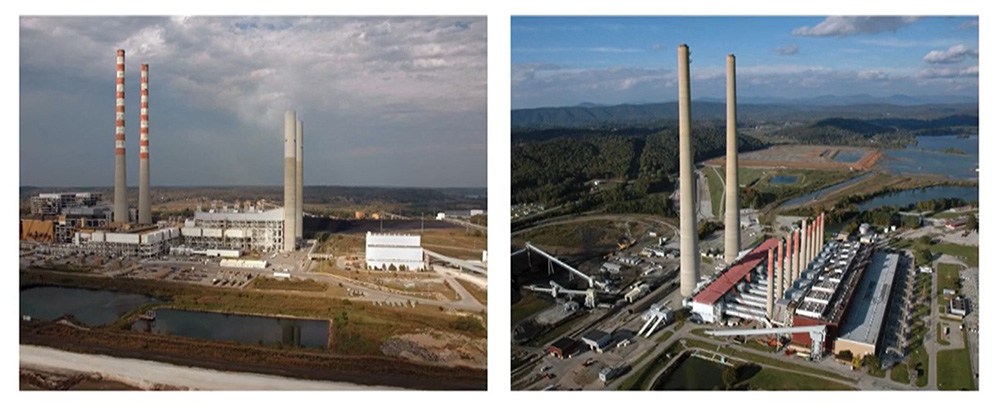
The TVA Board of Directors voted to rescind retirement dates of both units at the 2.5-GW Cumberland Fossil Plant and all nine units at the 1.3-GW Kingston Fossil Plant at a quarterly board meeting Feb. 11 in Hopkinsville, Ky. The plants, all older than 50 years, are to operate indefinitely.
The new, Trump-appointed board members, Art Graham, Mitch Graves, Jeff Hagood and Randy Jones, joined the unanimous vote.
The board’s resolution directs TVA to fund the plants’ continued operations, apply for all necessary permits and secure fuel contracts for the plants for the foreseeable future.
TVA leadership recommended the extensions to its board prior to the vote.
Executive Vice President and CFO Tom Rice began by acknowledging President Donald Trump’s Energy Dominance Council; he said without it, TVA “would not be in the position we are today to recommend continuing to operate over 3,000 MW of beautiful, clean coal that will directly support energy resiliency, reliability and low-cost power for the 10 million people we serve.”
TVA in early 2023 decided to retire one Cumberland unit by the end of 2026 and the other by the end of 2028. A little more than a year later, it decided all nine Kingston units were to power down by the end of 2027.
TVA’s aging coal fleet evaluation, conducted in May 2021, concluded that “although no coal-fired unit has reached mechanical end of life, a phased plan to retire TVA’s coal fleet by 2035 is aligned with least-cost planning and reduces economic, reliability and environmental risks.”
TVA says in the years since those conclusions, its region is experiencing a dramatic rise in electricity demand that wasn’t expected when it made the call to set retirement dates.
Rice said climbing demand, the Department of Energy’s issuance of an energy emergency and a “change in the regulatory outlook, particularly for coal,” creates the opportunity and the need to revisit the retirement authorizations.
Now, Rice said, keeping the plants online fits with TVA’s least-cost planning mandate and commitment to reliability.
TVA is building a $2.1 billion, 1.4-GW natural gas combined-cycle facility at the Cumberland Fossil Plant site that could be completed as soon as fall 2026. It originally was supposed to replace the coal plant. Until now, TVA had been using Cumberland’s retirement as justification for the new generation.
TVA previously said the coal plants are nearing the “end of their life cycle.” In its 2024 final environmental impact statement on Kingston, TVA wrote that the plant is forced to cycle frequently, which is not how it’s intended to run. It said the on-again-off-again output is “outside the intended design of the plant resulting in increased wear and tear, which presents reliability challenges that are difficult to anticipate and expensive to mitigate.”
In its final environmental impact statement regarding the Cumberland retirement, TVA wrote, “The continued long-term operation of some of TVA coal plants, including the Cumberland Fossil Plant, is contributing to environmental, economic and reliability risks.”
TVA Director Wade White said he applauded TVA leadership for the extension recommendation and reminisced on his western Kentucky hometown’s roots in coal mining.
Wade White | TVA
White said the board and TVA had been working out the coal plants’ fate for months.
“Now that we have a quorum, the board can act,” White said, referring to the installment of the four Trump appointees. For half of 2025 and the beginning of 2026, the TVA Board had just three members after Trump terminated a trio of board members appointed by former President Joe Biden. (See Nonprofits Warn of Potential TVA Privatization Ahead of Board Hearings.)
“Over the past several years, the TVA board has faced pressure to make decisions based on stringent environmental regulations that were targeted to reduce the economic viability of important generation resources like coal,” White said. “Coal, like other energy resources, should be a part of a comprehensive strategy for delivering reliable, resilient and affordable electricity to TVA customers.”
White said the coal continuance tallies with DOE’s recent emergency orders to keep retirement-bound coal plants running in Michigan, Pennsylvania, Washington, Colorado and Indiana.
No Public Input; a ‘Staggering Reversal’
TVA did not take public comments prior to holding the vote.
Environmental nonprofit Appalachian Voices called the decision a “staggering reversal.”
It said the public was left in the dark until the moment the decision was finalized, with the only hint it would extend the plants’ operations found in a pair of supplemental environmental impact statements that were quietly published to the TVA website.
Appalachian Voices said TVA bypassed public input through changes in January to its review process under the National Environmental Policy Act. Previously, major TVA changes in direction like this would have required a public weigh-in.
Environmental groups accused TVA of trying to buoy the coal industry and pander to data centers’ large loads. The Southern Environmental Law Center, Appalachian Voices, Sierra Club and the Center for Biological Diversity released a joint press release condemning TVA’s reversal.
Trey Bussey, a staff attorney at the Southern Environmental Law Center, said TVA’s broken promise is a “bait and switch” that will increase pollution, contribute to climate change, chip away at reliability and raise power bills.
“This is a blatant attempt from TVA to take the public out of ‘public power,’” Bussey said.
The Cumberland and Kingston fossil plants are among Tennessee’s three biggest sources of carbon dioxide pollution.
Cumberland coal plant (left) and Kingston coal plant | TVA
“Regular working people shouldn’t have to pay to keep these expensive, polluting power plants online just because some politicians want to prop up the coal industry, or for TVA to supply power to large industrial customers like data centers,” Bri Knisley, a director at Appalachian Voices, said in a statement. Kingsley said more distributed, clean generation would help improve reliability during adverse weather. She also said data centers should fund their own clean generation.
“TVA already found these coal plants to be uneconomical and unreliable, and that hasn’t changed just because the administration wants to keep coal online,” added Leah McCord, a coordinator at Appalachian Voices. “For TVA to take this action without public input is contrary to the public power model these new board members all recently affirmed.”
New York is trying to strike a balance between economic development, grid stability and affordability as potential new large load customers look for electricity.
The Public Service Commission on Feb. 12 initiated a proceeding to address large load interconnection reforms (26-E-0045).
It grows from Gov. Kathy Hochul’s (D) announcement of the Energize NY Development initiative in her Jan. 13 State of the State address, which stipulates that any project causing exceptional power demand must also create exceptional benefits to the state, or else cover the costs it imposes on the grid or supply its own energy.
The PSC order pertains to all large loads but notes data centers often do not promote the same degree of economic development or job creation as other facilities drawing large amounts of electricity.
The PSC is trying to accomplish several things as it crafts a proposed reform:
Modernize the interconnection process for all building loads.
Improve transparency and predictability related to grid upgrades.
Ensure that data centers and similar facilities bear the costs they impose on the electric system.
Provide for the continued reliability of the electric system.
Develop programs and policies for the interconnection of large loads that consider the objectives of the state’s landmark Climate Leadership and Community Protection Act (CLCPA).
Explore ways new large electric loads could lead to downward pressure on rates for all customers.
Beneath those objectives are a set of factors that are complex to address individually, let alone balance as a whole.
New York already has some of the most expensive electricity in the nation, its power generation and transmission infrastructure is aging, portions of the state are an economic backwater in need of new industry, and the CLCPA imposes a series of environmental and social justice considerations that are supposed to factor into decision-making.
The NYISO interconnection queue gained 8.3 GW of new load requests in 2025 and presently contains 11.9 GW attributed to future large load projects. The PSC noted the uncertainty of these numbers due to possible speculative or duplicative requests.
Hochul’s Feb. 12 news release said there were 48 large load projects in the NYISO queue in January and added: “The saturation of these projects in the interconnection queue, without clarity as to which projects will actually proceed to construction, increases uncertainty and complicates electric system planning and investment decisions.”
The PSC said the “beneficiary pays” model it uses when grid upgrades are needed to directly benefit a new customer is in alignment with state Public Service Law. But given the unprecedented load growth being projected, the PSC found it necessary to take steps to protect ratepayers from the costs that would follow.
Separately in New York, not even a week earlier, Democrats in the state Legislature proposed a data center moratorium to give time to better understand the issues involved and draw up policies in response. (See Data Center Moratorium Bill Introduced in N.Y. Legislature.)
Regulators and lawmakers in many other jurisdictions have reached similar conclusions in recent months.
The PSC order notes that approaches elsewhere have included long-term contractual agreements, capacity-based charges, bring-your-own-generation and higher electricity rates.
Some of these are listed as possible approaches in New York, along with flexibility/curtailment requirements, modified cost-sharing and cost-recovery rules, long-term contracts and ratepayer protection charges.
The PSC invited public comments, ordered a technical conference and directed staff at the Department of Public Service to draw up a briefing on the issues involved with large load interconnection.
“New York will continue to lead in attracting new technologies, but we must also grow responsibly, ensuring affordability comes first and those profiting from data growth pay their share,” Hochul said.“To prevent rising costs for everyday consumers, the state will enforce a simple standard: These industries must cover the costs of their expansion as it relates to utilities — just the same way it works for everyday consumers.”
The first couple years of the data center boom have brought significant growing pains across the U.S.
Data center development, coupled with electrification and reindustrialization, has driven dramatic growth in load forecasts after years of relatively stagnant demand. Regulators, policymakers and RTO officials have scrambled to respond to this growth and balance the interests of consumers and private developers.
The scale of growth could be massive: Grid Strategies forecasts U.S. electricity demand increasing by 5.7% annually over the next five years, coupled with 3.7% annual growth of peak load. The U.S. Energy Information Administration forecasts more modest growth over the next two years, projecting 1 and 3% growth in 2026 and 2027. (See EIA Predicts Sustained Power Growth in 2026 and 2027.)
While there is significant uncertainty about how much of the currently proposed large loads will materialize, the potential for rapid demand growth has major implications for consumer costs, decarbonization and infrastructure needs.
Data center demand already has contributed to capacity price shocks in PJM and MISO. In 2025, rising demand helped drive a large increase in coal-fired generation, increasing power sector emissions as human-caused climate change nears 1.5 degrees Celsius of warming.
As demand growth accelerates, a strong regulatory framework is essential to preventing consumer and environmental impacts, said Jesse Jenkins, head of the ZERO Lab at Princeton University. Jenkins also recently co-founded Firma Power, a generation development company focused on providing clean, firm power to large load customers. He will be a keynote speaker Feb. 25 at Yes Energy’s EMPOWER 2026 Conference.
Jesse Jenkins | Princeton University
In a recent interview with RTO Insider, he stressed that data center developers must match their demand with new clean supply to prevent consequences for other consumers and the climate.
At the ZERO Lab, Jenkins’ research focuses on modeling future energy systems to help inform resource development and guide policy and long-term planning. Prior to the data center boom, energy system researchers were grappling with the expectation of substantial demand growth due to electrification, he noted.
“That has had us in this mindset of growth in the electricity sector several years before the rest of the market caught up to us with the growth of data centers — which, to be fair, we weren’t anticipating at the scale it is now,” he said. With the addition of data center load growth, “this is a new epoch in the sector, and it’s certainly awakened a lot of people to the challenges of being able to rapidly expand electricity supply.”
The data center development boom has brought a complex mix of challenges and opportunities, Jenkins said. The power sector could see broad benefits from developers willing to be early adopters of emerging technologies like advanced nuclear. But rapid increases in demand also likely will undermine energy affordability in the absence of strong consumer protections.
Unlike load from electrification, data center demand is highly concentrated — some planned developments would require multiple gigawatts of power.
“These are city-scale electricity consumers in one big building,” he said. “That raises very particular challenges around network constraints and network expansion, and the uncertainty of demand growth.”
“You can’t bring 2 GW of demand to the grid without bringing 2 GW of new supply without either prices going up a lot or grid reliability suffering, or maybe both,” Jenkins added, referencing a deal recently announced by Meta to procure power from multiple proposed advanced nuclear plants and 2,176 MW of capacity from two existing nuclear plants in PJM. (See Meta Announces Nuclear Projects with Vistra, TerraPower, Oklo.)
While high prices eventually may induce new supply to come online, he said treating data center developers like any other customer in the market does not appear to be a viable approach.
Price spikes and environmental concerns have led to increasing blowback against data centers across the country. According to one report, $98 billion in U.S. data center projects were blocked or delayed by political opposition in the second quarter of 2025. In New York, Democrats in the legislature are pushing for a three-year moratorium on data center siting and permitting. (See Data Center Moratorium Bill Introduced in N.Y. Legislature.)
Jenkins emphasized the importance of pairing data center developments with an equal amount of accredited new capacity and hourly matched clean energy. This could be accomplished by regulatory requirements or by fast-tracking the regulatory process for data center developments that meet these parameters, he said.
While developers so far have favored a voluntary process over bring-your-own-clean-supply requirements, a well-designed voluntary process could accomplish the same consumer protection objectives, he said.
“As long as there’s sort of a time to power advantage … it’s still like a competitive requirement to do it, because if you connect slower than your competitors, you’re not going to have much market share,” he said.
Asked about the possibility of FERC asserting jurisdiction over the interconnection of large loads, Jenkins said the idea “makes a lot of sense in theory.”
“I do think there’s a lot of merit to the idea that anything above a certain threshold size that’s connected to transmission voltage should be treated symmetrically to a generator of a similar scale,” he said. “In some ways it could make it more coordinated because you could do simultaneous generation and load interconnection.”
However, he said a lot will depend on implementation, and the change in regulatory approach could create complications for existing efforts to regulate data center loads.
“As with any regulatory change, the question is: Does it blow everything up for a period of time when there’s so much uncertainty about what’s going to happen that it halts all progress as people wait for the process to settle?”
Jenkins’ keynote address, “A Rock & A Hard Place: Challenges and Solutions to Meet the Data Center Demand Crunch,” will be delivered Feb. 25 at Yes Energy’s EMPOWER 2026 conference in Boulder, Colo. To learn more about EMPOWER, visit empower.yesenergy.com.