Search
December 9, 2025

NOPR Would Get Pipelines to Offer More Information for Grid Operators

FERC has issued an official notice that proposes new standards for business practices that are meant to improve coordination between the electric and gas industries involved in interstate natural gas pipelines.

The proposal would incorporate the latest changes to Version 4.0 of the Standards for Business Practices of Interstate Natural Gas Pipelines adopted by the Wholesale Gas Quadrant of the North American Energy Standards Board (NAESB).

“Such coordination is essential to maintaining reliability for both the natural gas pipeline network system and the bulk electric system, especially during periods when both systems have coincident peak requirements,” FERC said in the NOPR. (The notice of proposed rulemaking is part of the FERC process required before issuance of a final rule.)

Better electric and natural gas coordination has been a priority for decades with FERC, NAESB and other entities making iterative changes as the interdependent, but much differently regulated industries, continue to evolve.

“I wouldn’t frame it quite like it’s never going to be done,” FERC Chair David Rosner said at the post-meeting press conference. “I would frame it more like — on Tuesday, we’re having our annual reliability conference, and if you look back at the arc of our reliability work, it’s constantly evolving. And so one thing that’s important to me is that we work with our expert staff and NERC and with our industry partners to make sure that as the world changes, as these sectors evolve, that we’re doing things that are smart and that are durable, and that make sense, and that solve problems ideally, before they become problems.”

The changes come out of a forum NAESB held at the request of former FERC Chair Rich Glick and NERC CEO Jim Robb “to identify actions that will improve the reliability of the natural gas infrastructure system as necessary to support the bulk electric system and to address recurring challenges stemming from natural gas-electric infrastructure interdependency.” NAESB set up its Gas-Electric Harmonization Forum to tackle those issues, issuing a final report in July 2023. (See NAESB Forum Chairs Push for Gas Reliability Organization.)

Other aspects come from FERC and NERC’s Winter Storm Elliott report, which included some recommendations on coordination that NAESB took up. The changes include one revised standard and two new ones.

The revised standard creates a central location on pipeline informational websites where they can post publicly available data such as scheduled quantity information. Now, pipelines will have a new information category: “Gas Electric Coordination,” which can help ISO/RTOs and other parties assess the data during extreme weather or emergency events.

The first new standard facilitates the posting of applicable scheduled quantity information for power plants that are directly connected to the pipeline as part of the “Gas Electric Coordination” category.

The second new standard supports the inclusion of geographic information of affected areas, locations and/or pipeline facilities by a transportation service provider when issuing a critical notice.

Commissioner Judy Chang filed a concurrence, lauding the work NAESB has done to improve gas-electric coordination with the new standards but urging continued work to improve communication between the sectors and to address remaining issues.

“The NAESB standards proposed here exemplify the type of brick-by-brick incremental improvements needed to address pressing gas-electric coordination challenges,” Chang wrote. “However, these proposed standards alone may not be enough to fully address the ongoing challenges.”

More information sharing will improve situational awareness for grid operators and generators, which will help when the systems are stressed. It might make sense to include information about gas scheduled for generators not directly connected to the pipeline system, she suggested.

“I further encourage continued collaboration between pipelines, suppliers, natural gas marketers and owners of upstream gas gathering systems to update pipeline operators and ultimately downstream gas users and electricity system operators of changes in system conditions, such as wellhead freezes, that could affect natural gas users and consumers,” Chang said.

She asked commenters in the NOPR process to suggest other changes that could improve coordination.

AEP Closes on $1.6B Loan Guarantee for Transmission Projects

American Electric Power has closed on a $1.6 billion U.S. Department of Energy loan guarantee to help finance 5,000 line-miles of transmission upgrades.

AEP Transmission will perform the work in Indiana, Michigan, Ohio, Oklahoma and West Virginia. It estimates the preferred interest rate deal will save ratepayers $275 million over the life of the loan while supporting economic development and technology advancements in the communities and regions served by the lines.

These benefits were emphasized by DOE officials as they announced the loan guarantee, which is the first closed under the Energy Dominance Financing Program created by the One Big Beautiful Bill Act in July.

“Energy is central to human lives in the United States and around the world,” Energy Secretary Chris Wright said during a call with reporters Oct. 16. “It’s not one sector of the economy; it’s THE sector of the economy that enables all the other sectors.”

DOE said electric utilities that receive loan guarantees under the DOE program must provide assurance they will pass along savings to their customers.

AEP provided a list outlining the 127 projects in the package. They range from a rebuild of 0.13 line-miles on the Comville-Cyril line in Oklahoma to work on 345 and 349.8 line-miles on segments of the Desoto-Sorenson line in Indiana.

In his remarks, Wright roundly criticized the energy policies of President Joe Biden and the financial support they offered for clean energy and decarbonization efforts. DOE’s Loan Programs Office — which has been renamed the Energy Dominance Financing Office — was central to this, Wright said.

Accordingly, DOE (like other federal agencies) has been canceling programs and funding central to Biden’s green agenda since President Donald Trump began his second term. (See DOE Terminates $7.56B in Energy Grants for Projects in Blue States and Energy Grants Worth $24B Appear Poised for Cancellation.)

But the review of these Biden-era awards — including AEP’s $1.6 billion loan guarantee, which was announced conditionally Jan. 16 — is showing that “not all of them were nonsense,” Wright said.

“The ones that are in the interest of the American taxpayers, in the interest of the American ratepayers, and there’s a helpful role for government capital, we’re happy to support those,” he said.

“We don’t care about authorship,” he told a reporter. “You’re right, this one started under the Biden administration, but it’s a good project. We’re happy to move forward with that. But, boy, there’s a lot [of projects] that don’t check those boxes.”

One of those was the Grain Belt Express, an $11 billion, 800-mile HVDC project under development since 2010. (See DOE Pulls $4.9B in Funding for Grain Belt Express.)

A reporter asked why DOE was backing AEP but not Grain Belt.

Wright said the AEP package is “a lot of bang for the buck” that will allow for better flow of power over existing lines to support economic development and reduce costs in five states.

Grain Belt, by contrast, will be slower and far more expensive per mile because it is new construction. Beyond that, it is a fundamentally different concept.

“Ultimately, that’s a commercial transaction, and it involves some market risk. Is that arbitrage big today, is that arbitrage still going to be big? Is it going to fund and pay off the construction of that transmission line? … It probably will, but it’s a more commercial enterprise that’s just done with private entrepreneurs and private capital.”

Greg Beard, who has been running what was known as the Loan Programs Office, added: “That project had a lot of merchant risk that was yet to be solved, and a consideration was: What’s appropriate for taxpayer risk and what’s appropriate for private market risk?”

Wright said: “I love energy infrastructure. I have nothing against the Grain Belt Express, I suspect it will still be developed.”

AEP hailed the agreement in a news release and said it will work with communities and landowners on siting the upgrades. CEO Bill Fehrman said earlier in 2025 that AEP will meet load growth with a capital spending plan totaling at least $54 billion. (See AEP to Meet Load Growth with More Infrastructure.)

He reiterated the growth in the Oct. 16 news release: “AEP is experiencing growth in energy demand that has not been seen in a generation. As the first company to close a new loan with the Trump administration under this program, we are excited to get to work on these projects to improve the service we provide to our customers.”

9-GW Power Gap Looms over Northwest, Co-op Warns

The Northwest faces a “pretty scary” situation, with a new study showing a potential 9-GW capacity shortfall by 2030, increased energy prices and building constraints, the Pacific Northwest Generating Cooperative’s (PNGC Power) CEO said Oct. 15.

Jessica Matlock, CEO at PNGC Power, told the Northwest Power and Conservation Council that a recent study by Energy and Environmental Economics (E3) predicts that accelerated load growth and aging power plant retirements will create a resource gap starting at about 1.3 GW in 2026 and expanding to almost 9 GW by 2030.

“That’s approximately the load of the state of Oregon,” Matlock said.

As is the case nationwide, data centers are the primary drivers behind the expected load growth. PNGC members already have 15 data centers seeking connection within their service territories, Matlock said.

“And we wonder, is that really going to materialize? Well, they actually already came in and bought all the property and got the permits from the county, and they’re breaking ground. So, it’s actually happening now,” Matlock said.

Matlock added that the data centers are the “mega ones. These are the big ones that you all hear the names of: Amazon, Meta.”

PNGC consists of 25 electric cooperatives spread across seven Western states. PNGC operates as a Joint Operating Entity, allowing the utilities to pool resources and share risks. PNGC also is Bonneville Power Administration’s largest preference customer, according to the co-op’s website.

“Traditionally, we get all our power from Bonneville, but it’s been clear that Bonneville is pretty tapped out of hydropower, and so the region is looking at this huge deficit,” Matlock said.

BPA’s power rate schedule consists of multiple categories of primary rates for federal energy sales, including Priority Firm Tier 1 rate, which represents most of BPA’s power sales. Tier 2 rates are for energy a utility obtains from the agency in addition to its contractual right to power at Tier 1 rates, according to BPA’s website.

The issue now, Matlock said, is BPA’s Tier 1 is fully allocated, and the agency must compete for power on the market “against tech companies and other IOUs … that have deeper pockets in Bonneville.”

In July, BPA published new rates in its final record of decision for the BP-26 rate period covering the 2026/28 interval. Under the new rates, customers’ power rates will increase by about 8 to 9% over the next three years, while transmission rates will jump by an average of nearly 20%. (See BPA Customers to See Increased Power, Transmission Rates.)

“It’s getting pretty scary,” Matlock said. “So, the price of Tier 2 power for Bonneville is going to go up, including Tier 1 power.”

BPA spokesperson Maryam Habibi noted that BPA has created a new methodology for post-2028 under new provider-of-choice contracts.

“We would set the Tier 1 amounts each customer is able to purchase under a calculation outlined in that new provider of choice policy through a process next year,” Habibi said. “We don’t yet know if we would need to augment our resources for Tier 1 or Tier 2.”

Meanwhile, generator resources in active development account for 3,000 MW of new capacity, 850 MW of which are coal-to-gas conversions and 350 MW are hydro upgrades, Matlock noted.

“The others are wind, solar, potentially biomass, a couple other different resources,” she added. “That is not going to get us to where we need to get to.”

Some states, like Washington and Oregon, have strict decarbonization policies, making it difficult to meet the new resource adequacy requirements many utilities will be subject to under the two day-ahead markets emerging in the West: SPP’s Markets+ and CAISO’s Extended Day-Ahead Market.

“For those states that are really confined to what they can develop — because you cannot develop natural gas in some of those — how are they going to meet these? We’re not sure,” Matlock said.

To meet the resource adequacy requirements with just renewable power “would require huge amounts of land.”

“We are developing solar and battery,” Matlock said. “That’s because we get additional capacity. We are continuing to talk to solar companies to develop that to shift to our Washington members. But the biggest problem for us to get this solar power to these members is the transmission system is too congested.”

She noted that PNGC is building a natural gas plant in northern Idaho from which it will ship natural gas to members in Washington state “to help keep the lights on.”

PNGC is exploring building transmission itself with the help of federal grants aimed at connecting data centers to transmission and then partnering with BPA on the buildout. The agency has paused certain transmission planning processes to clear the interconnection queue. (See BPA Transmission Pause Questioned During Workshop.)

“If we can’t get transmission to move solar, wind, natural gas, geothermal across the region to supply power to cities and towns, we are going to have a significant problem,” Matlock said.

Habibi said BPA does not build its own resources, but she noted that the agency has launched initiatives, such as the Grid Access Transformation project, which are “designed to improve access and streamline our processes for connecting resources.” She added that the new power contracts “add flexibility for customers to add new, non-federal resources. That flexibility does not exist today.”

FERC Approves SPP’s New Provisional Load Process

FERC has approved SPP’s tariff change to offer a provisional load interconnection process so the grid operator can study potential data centers and other large loads when there isn’t available power for the new facilities.

In an order issued Oct. 10, the commission accepted SPP’s proposal and directed the RTO to submit a compliance filing within 30 days. The order is effective retroactive to Aug. 4 (ER25-2430).

FERC said the new study process to evaluate requests for new loads when a transmission customer lacks sufficient existing “designated resources” to cover its 10-year load forecast (Attachment AX) will ease efforts to “appropriately and more expeditiously plan to serve their future loads.”

The tariff change will also allow the RTO to identify and address the effects of load additions by finding the resulting network upgrades on its system before sufficient designated resources are available, the commission found. It said the proposed pro forma provisional load process agreements for customers seeking network integration and point-to-point transmission services will provide just and reasonable terms and conditions for how SPP will study new load requests under the provisional load process.

SPP filed its proposed revision in June, saying that because it was seeing increased requests for new loads from data centers and industrial facilities, many transmission customers have been “unable to demonstrate sufficient existing” resources to serve their 10-year forecasts. It said Attachment AX will mimic Attachment AQ, the grid operator’s standard study process, except that it will consider a customer’s planned generation and its existing designated resources.

The RTO said the provisional load process captures the expected reliability effects of planned generation on the grid and will help the transmission customer plan for serving its future load.

Upgrade costs to interconnect new load will be assigned to the customer until planned generation is included in the transmission service agreement. Remaining upgrade costs will be rolled into regional rates.

The grid operator told FERC it has received just over 26 GW of interconnection requests larger than 100 MW since 2020. Data centers account for about 9 GW of those loads, the RTO said.

SPP stakeholders approved the provisional load process in April. It was later approved by the RTO’s state regulators and its board. (See “‘Chicken & Egg’ Issue,” New ERAS for SPP: Stakeholders Approve RA Studies.)

Battery Developers Seek Relief on IESO Ramp Limits

Storage developers in Ontario are pushing back on IESO’s 100-MW/minute ramp limit for batteries, saying it will reduce their revenues.

IESO said the limit is needed to allow it to meet NERC standards requiring balancing authorities to keep system frequency at 60 Hz.

“IESO has experienced negative impacts to system frequency resulting from the fast-moving capabilities of BESS [battery energy storage systems],” the grid operator said in a presentation Oct. 16 on its Storage and Co-located Hybrid Integration Project, which will introduce a single bidirectional resource model for BESS.

The initiative, part of the ISO’s Enabling Resources Program (ERP), initially will focus on electricity storage and hybrid generation-storage resources. It will replace the current two-resource model — which separates the withdrawal portion of the resource as load and the injection portion as a generator — with a single continuous offer curve. The current model creates operational challenges and reduces market efficiency, according to the ISO.

IESO plans to continue using its current 100-MW/minute up and down limit per facility under the new model.

3,000 MW of Storage Expected by 2028

The ISO noted that it expects 25 BESS facilities to join the grid in the near term, with about 3,000 MW of contracted storage expected in service by 2028.

IESO relies on regulation services to compensate fast output changes from batteries, said Ihor Lopuch, a project adviser. “In some cases, ISO control room operators have had to take additional out-of-market control actions, such as constraining some resources or sending one-time dispatches to help rebalance the system,” he said.

Storage operators first raised objections to the static ramp rates following an engagement session July 24. (See IESO Seeks Feedback on Revised Storage Model.)

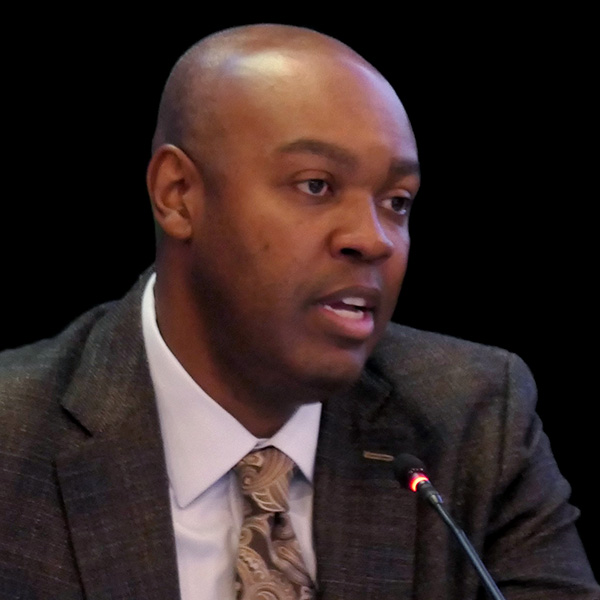
In the most recent session, Travis Lusney, director of power systems for Power Advisory, representing the Energy Storage Resources Consortium, led the opposition. The consortium’s 12 members include Capital Power, EDP Renewables, Brookfield Renewables and Northland Power.

Power Advisory’s Travis Lusney represents the Energy Storage Resources Consortium. | Power Advisory LLC

Lusney asked the ISO to determine the impact of increasing the ramp limit from 100 MW and whether there is an optimal limit that could maintain area control error while offsetting higher costs of regulation capacity. “Can it be 150, 200 [MW]?” he asked.

Lusney also asked for data on how often IESO will dispatch storage resources for operating reserves (OR) versus energy.

“The answer that I’ve gotten consistently is OR resources are … scheduled on the sideline to be there, but their dispatch instructions are only energy, and that there is no OR dispatch instruction,” Lusney said. “Part of that may have had to do with the previous market design, and that might be changed, but it’s not clear that there’s any historical information to understand how often an energy storage resource may receive an energy dispatch and be limited in that 100-MW/minute step up versus an OR dispatch that would allow them to ramp to their full capability.”

Lusney said battery operators face lost revenue because the limits negate the competitive advantage of their ramp speeds. “In a market design that encourages more price fidelity … this is quite restrictive on the competitive advantage of storage,” he said.

‘In Alignment’

IESO officials said the 100-MW limit is “in alignment” with other ISOs, including CAISO and SPP.

Tyler Chuddy, project superviser, said the ISO has limited analysis of batteries’ ramp impacts because it expects numerous BESS facilities to come online at the same time. “One hundred megawatts per minute means like a 500-MW shift in your production over one interval, which is pretty substantial,” Chuddy said.

Tyler Chuddy, supervisor of IESO’s Storage and Co-located Hybrid Integration Project | Tyler Chuddy

He asked Lusney to provide details on how the ramp restrictions would result in lost revenue for battery operators. Lusney agreed to provide some examples from the consortium.

The current phase of the project, which may run as long as through 2028, will seek to establish the single resource model and set rules on state-of-charge management. Phase 2 will consider ways to allow batteries to also offer frequency regulation, which the ISO uses to correct supply-demand imbalances.

Lusney urged the ISO to consider batteries as a potential solution to the ramping challenges.

“If it’s a regulation capacity challenge driven by the fast response of the energy storage, can energy storage provide some of that regulation capacity in its dispatch instruction?” he asked. “[I recognize that] it’s not part of the current engagement process, but it seems like they are interconnected.”

Next Steps

IESO is seeking written feedback to its proposed rules by Oct. 30 deadline at Engagement@ieso.ca. The next engagement session for the project is expected in the first quarter of 2026.

NERC Standards Committee Passes Revised Proposals

In a busy meeting Oct. 15, members of NERC’s Standards Committee agreed to move forward with multiple high-priority standards development projects despite disagreements over details of the proposals from ERO staff.

First on the agenda was a standard authorization request (SAR) stemming from FERC Order 909, which in July approved new reliability standards establishing frequency and voltage ride-through requirements for inverter-based resources. (See FERC Approves IBR Ride-through Standards.)

PRC-029-1 (Frequency and voltage ride-through requirements for IBRs) permits owners of legacy IBRs — resources already in operation when the standard goes into effect — 12 months after the effective date of the standard to request an exemption to its ride-through requirements. FERC directed NERC to clarify within 12 months of Order 909:

    • acceptable evidence to demonstrate hardware limitations for legacy IBRs that would prevent them meeting the ride-through requirements; and
    • whether any additional exemptions should be made for HVDC-connected IBRs with choppers — used in offshore wind projects to protect converters during grid faults — and other IBRs with long lead times “between adopting IBR specifications and placing the IBR in service.”

A group of industry stakeholders developed the SAR and submitted it to FERC, NERC Director of Standards Development Jamie Calderon told attendees. Because the project originated from a FERC directive, the ERO has classified it as high priority. NERC asked the committee to authorize posting the SAR for a 30-day formal comment period and soliciting members of the drafting team for the project, which NERC has named Project 2025-05.

Asked by Claudine Fritz of Exelon whether NERC would reconstitute the drafting team for Project 2020-02 (Modifications to PRC-024 — generator ride-through), which developed PRC-029-1, to address Order 909, Calderon said while that team is no longer active, NERC has reached out to its former members to ask if any are interested in being involved.

Jamie Johnson of CAISO then asked if the comment period could be delayed until after a workshop on Order 909 that NERC is planning for Nov. 5. Johnson suggested this pause could “provide more insight for potential revision to the SAR.”

Calderon expressed concern that delaying the start of the project might leave the development team pressed for time. However, in light of the fact that the comment period is expected to start Oct. 29, she suggested extending its length to 45 days. She said this move would allow commenters to consider the issues discussed at the workshop before giving their feedback. Johnson moved to update the proposal with this extension, and committee members approved it unanimously.

Supply Chain, IBR Proposals Pass

Another FERC directive was next on the plate, as the SC took up a SAR addressing the commission’s order Sept. 18 that NERC develop standards addressing supply chain risk management (SCRM) plans by May 21, 2027. (See “Supply Chain Standards Due in 18 Months,” FERC Tackles Cybersecurity in Multiple Orders.)

The new standards must address the sufficiency of entities’ SCRM plans as they relate to identifying and responding to supply chain risks, as well as whether they apply to protected cyber assets (PCAs), defined as “one or more cyber assets connected using a routable protocol within or on an electronic security perimeter [ESP] that is not part of the highest-impact [grid] cyber system within the same” ESP.

NERC asked that attendees approve the SAR’s posting for a 30-day informal comment period and authorize soliciting drafting team members for 15 days. Members voted unanimously to accept a motion to do so.

Also approved without objection was a proposal to appoint the slate of members recommended by NERC for Project 2025-03 (Order 901 operational studies). This project addresses the fourth and final milestone of FERC Order 901 by establishing requirements for registered entities to perform “operational studies for registered IBRs, unregistered IBRs and [distributed IBRs] in the aggregate.”

However, a proposal to approve members for a project addressing Order 901’s requirement for planning studies met with concerns from committee members about the fact that it contained two candidates from the same company. Paul MacDonald, of the New Brunswick Energy and Utilities Board, said that while he was “typically very supportive” of NERC’s recommendations for drafting team composition, he would prefer to see one of the candidates — who were not identified by name during the meeting — removed from the list.

Conferring privately, NERC staff agreed to drop one of the candidates, after which MacDonald moved to approve the updated list. This motion passed unanimously.

The committee’s last standards action was to authorize drafting new or modified standards to allow PCAs, electronic access control or monitoring systems (EACMS) and physical access control systems (PACS) together in a single standard, a move intended to bring clarity to NERC’s enforcement process. SC members previously agreed to post the SAR for this project for a 30-day formal comment period; NERC Manager of Standards Development Alison Oswald said the SAR has been revised in accordance with the comments received through that process.

Finally, SC members voted to endorse NERC’s 2026-2028 Reliability Standards Development Plan (RSDP), which sets out “time frames and anticipated resources for each project under development or anticipated to begin” within the next three years. The RSDP will be presented to NERC’s Board of Trustees in December, and then to FERC for final approval.

CEC Eyes Major Cuts to Light EV Charger Funding

The California Energy Commission projected significant funding cuts to a key electric vehicle charging program, despite the state setting a record for the number of EVs sold in a quarter.

CEC staff on Oct. 9 published a draft report of the investment plan for the CEC’s clean transportation program, in which forecast funding for EV charging infrastructure for light-duty vehicles dropped from $98.5 million in 2025/26 to $34.2 million in 2026/27. In 2027/28, the projected funding amount decreased slightly to $33.2 million.

But EV sales are going in the opposite direction: In Q3 of 2025, California sold about 125,000 EVs — the most recorded in a quarter in the state and about 29% of total vehicle sales in the quarter, Gov. Gavin Newsom (D) said in an Oct. 13 news release. The previous record occurred in Q3 2023 when about 27% of vehicles sales were EVs.

In February 2025, California had more than 178,500 public and shared-private Level 2 and DC fast-charging ports for light-duty vehicles.

The CEC told NetZero Insider that the decrease in light-duty EV charging funding is due to projected increased investment from the private sector, along with reduced future state budget allocations. If either of these scenarios changes, next year’s investment plan update could allocate funds differently, the CEC said.

As for medium- and heavy-duty charging infrastructure, CEC staff predicted an increase in funding from $15 million in 2025/26 to $44 million in 2026/27. About 5,800 medium- and heavy duty-vehicles were registered in the state at the end of 2024. Most of these vehicles were buses.

In total, California plans to have 1.5 million zero-emissions vehicles by 2025 and 5 million by 2030. As of June 2025, more than 61 percent of clean transportation program and supplemental funds have gone to projects in disadvantaged or low-income communities or both, the CEC said.

EV Data Collection Approved

Separately, at an Oct. 8 business meeting, the CEC approved new EV charging data-collection regulations, which require public EV charging port owners in California to submit data about charger usage semiannually. Required data includes a charger’s location, availability and pricing. The data may be shared with third parties.

California will become the first state to adopt EV charging reliability and reporting regulations, CEC Commissioner Nancy Skinner said at the Oct. 8 voting meeting.

“We are laying the foundation for EV charging station reliability across the nation,” Skinner said. “[EV charging] is so important for our consumers and so important to our meeting the goals of EV adoption, because if there is a sense of unreliability, then it’s going to be harder for people who haven’t yet gone to an EV to go there.”

Publicly available Level 2 chargers have a 96% reliability of working as designed, while DC fast chargers have a 91% reliability, Skinner said.

The data collection will give the CEC, for the first time, the ability to have a comprehensive inventory of the installed chargers in this state, Skinner said. The data includes all chargers not in a residence.

“Those of us who are EV drivers, we know that we commonly use different apps or websites to find a charger,” Skinner added. “Now, if the information is not widely shared, then that charger’s not going to show up, and we won’t know that it exists.”

The regulations, Skinner said, are “going to empower us to have that inventory and to get that more publicly accessible information. So, it’s just going to improve the overall EV driver experience in California.”

VPPs Suffer Setbacks in Calif. Legislative Session

The 2025 California legislative session ended in disappointment for virtual power plant proponents, as Gov. Gavin Newsom vetoed several VPP-related bills and lawmakers didn’t approve new funding for an existing program.

Assembly Bill 740, AB 44 and Senate Bill 541 were vetoed before the governor’s Oct. 13 bill-signing deadline. Bills sent to Newsom that aren’t signed or vetoed become law without the governor’s signature.

Edson Perez, California lead at Advanced Energy United, called the vetoes of the VPP bills “missed opportunities to save billions in energy costs by leveraging technologies all around us in our homes, garages and on our roofs.”

“This policy whiplash undermines confidence across the sector, discourages the deployment of cost-saving technologies and drives away investments,” Perez said in a statement.

Virtual power plants are collections of distributed energy resources, such as solar panels, batteries, electric vehicles or smart devices, that can be called upon to boost the grid when needed.

AB 740 would have directed the California Energy Commission to work with CAISO and the California Public Utilities Commission to explore how virtual power plants could help meet statewide load shift goals and what opportunities are available for VPPs to qualify for resource adequacy. Perez said the bill aimed to make VPPs a core part of California’s energy portfolio rather than solely an emergency resource.

In vetoing the bill, Newsom cited budget constraints.

“While I support efforts to realize the potential of these energy resources and others, this bill results in costs to the CEC’s primary operating fund, which is currently facing an ongoing structural deficit, thereby exacerbating the fund’s structural imbalance,” Newsom said in his veto message.

Newsom also vetoed SB 541, which would have required the CEC to work with CAISO and the CPUC to analyze the cost effectiveness of certain load-shifting strategies, estimate each retail electricity supplier’s load-shifting potential, and report the amount of load shifting that each retail supplier achieved in the previous year.

Newsom called SB 541 “largely redundant and, in some cases, disruptive of existing and planned efforts” by the agencies to maximize the potential of load-management strategies.

AB 44, which the governor vetoed, would have directed the CEC to devise methodologies that load-serving entities could use to modify their demand forecasts in response to measures such as VPPs.

The governor said the bill does not align with the CPUC’s resource adequacy framework.

“As a result, the requirements of this bill would not improve electric grid reliability planning and could create uncertainty around energy resource planning and procurement processes,” Newsom said in his veto message.

Another disappointment for VPP advocates was lawmakers’ decision to not provide additional funding for the CEC’s demand side grid support (DSGS) program. As part of the program, battery owners agree to make their stored energy available to the grid during energy emergency alerts or when day-ahead prices go over $200/MWh. They then are compensated based on the power they shared with the grid. (See Budget Cuts Threaten Calif. VPP Program.)

In an Oct. 1 statement, the CEC said DSGS had about $64 million remaining. CEC expects to have enough money to pay out incentives from the 2025 program season and will look for ways to continue the program in 2026.

Advanced Energy United hopes the state will “course correct” on VPPs as soon as possible, Perez said, starting with more funding for DSGS in early 2026 to keep the program going.

Offshore Wind Funding

In contrast to the setbacks for VPP bills, lawmakers made progress on other energy-related issues.

As previously reported, the legislature passed and Newsom signed AB 825, known as the Pathways bill. The bill will allow CAISO to transition the governance of its markets to an independent “regional organization.” (See Newsom Signs Calif. Pathways Bill into Law.)

Newsom also signed SB 254, a law that will create a “transmission accelerator” to develop low-cost public financing programs for certain transmission projects. The legislation also establishes an $18 billion “continuation account” for the state’s wildfire fund to cover investor-owned utilities’ wildfire liabilities. (See Calif. Lawmakers Pass Bill to Accelerate Transmission Development.)

Offshore wind advocates were pleased that lawmakers passed and Newsom signed SB 105, a budget bill that includes $228.2 million for offshore wind. The funding is the first installment out of $475 million earmarked for offshore wind in Proposition 4, the $10 billion climate bond measure that California voters approved in 2024.

Of the $228.2 million in SB 105, the CEC has already distributed $42 million in grants to improve port facilities for floating offshore wind projects. (See CEC Approves 5 Offshore Wind Projects at California Ports.)

Offshore Wind California, an industry coalition, called the funding “another important proof point of California’s progress and commitment to move forward on offshore wind.”

“California is demonstrating its continued determination to be a clean energy leader, despite the federal headwinds we’re facing this year,” the group said in a statement.

Other legislation that Newsom signed includes a data center-related bill. SB 57 requires the CPUC to send a report to the legislature on the extent to which utility costs associated with new loads from data centers are shifted to other customers.

And SB 80, which Newsom signed, creates the Fusion Research and Development Innovation Initiative to distribute $5 million for fusion energy research and development. The goal is to deliver a fusion energy pilot project in the state by the 2040s.

Surplus Interconnection Bill Vetoed

Newsom vetoed other bills, including AB 1408, which would have required CAISO to consider surplus interconnection service in its long-term transmission planning. It also would have required utilities to evaluate and consider surplus interconnection options in their integrated resource plans. Proponents said unused interconnection capacity creates an opportunity to add renewable energy resources or battery storage at or near fossil plants.

In his veto message, Newsom pointed to the “highly technical structure of processes” used by the CEC, CPUC and CAISO for grid planning.

“This bill risks constraining energy resource procurement and interconnection options, likely increasing customer electric costs and undermining electric grid reliability,” he wrote.

A bill aimed at requiring more accountability from the CPUC didn’t even make it to Newsom’s desk. AB 13 also would have asked the governor and Senate to consider geographic diversity when selecting CPUC members to address a lack of Southern California representation. (See Calif. Lawmakers Seek More Accountability from CPUC.)

The bill died in committee.

SPP Moving Forward with JTIQ Transmission Projects

LITTLE ROCK, Ark. — SPP says it plans to continue working the Joint Targeted Interconnection Queue’s portfolio of five 345-kV projects on its seam with MISO, despite the U.S. Department of Energy’s threat to pull $464 million in previously granted funds.

General Counsel Paul Suskie told stakeholders Oct. 14 that staff’s initial internal assessment has determined “nothing stops these projects from going forward.”

“They can proceed,” he said during a Markets and Operations Policy Committee meeting. “We are having communications with MISO to see if they’re in agreement with that. Staff’s current indication is these projects will still go forward if DOE funds are pulled for the grants.”

Suskie told MOPC that he called Minnesota Public Utilities Commissioner John Tuma, who confirmed that as of Oct. 13, DOE has not yet provided confirmation of the funding’s termination.

The funds were awarded in 2023 to the Minnesota Department of Commerce, the lead applicant in the JTIQ initiative that also involves the Great Plains Institute and the two RTOs. However, the department in early October included the $464 million grant under its Grid Resilience and Innovation Partnerships (GRIP) program on a list of projects that it intended to terminate. (See DOE Terminates $7.56B in Energy Grants for Projects in Blue States.)

POLITICO has reported that DOE has “clashed” with the White House over the administration’s desire to spare most grants so they can be used as bargaining chips with Congress and the states, explaining the lack of confirmation from the department.

“At this point, we don’t know [the grant’s status],” Suskie said. “We know the rumors, the press reports. That’s all we know at this point in time. Really, it’s a wait-and-see game.”

MISO has said it is monitoring the situation and that like SPP and Minnesota, it has yet to receive word of the grant’s termination. (See MISO Says JTIQ Tx Portfolio Stands — for Now.)

The GRIP funds would offset about 25% of the predicted $1.6 billion in capital costs for the JTIQ portfolio’s five projects.

FERC approved the RTOs’ request to allocate the portfolio’s costs 100% to interconnecting generation assessed on a per-megawatt basis. In doing so, it cited the GRIP funding as one of the “unique set of facts and circumstances of the proposed JTIQ framework.” (See FERC Upholds MISO and SPP’s JTIQ Cost Allocation over Criticism.)

“This potentially has not just impacts on the practicality of these lines,” the Advanced Power Alliance’s Steve Gaw said during the MOPC discussion. “I’m not seeing anything that others don’t see, but there are also potential legal implications from this equity impact.”

The portfolio’s projects are centered on the RTOs’ northern seam and have been framed as enabling 28 GW of primarily renewable generation. Each grid operator would have two projects in its footprint and share the fifth.

The SPP projects will be evaluated for system impacts first through its one-time expedited resource adequacy study process and then through the 2024 Integrated Transmission Planning cluster. Staff have targeted March 2026 to execute ERAS generator interconnection agreements.

NYISO Again Identifies Reliability Need for NYC

New York City could be short as much as 650 MW in capacity in the summer of 2026, according to NYISO’s Short Term Assessment of Reliability (STAR) for the third quarter, issued Oct. 13.

The report, which assesses reliability over five years, also identified reliability needs in Long Island and the Lower Hudson Valley, though not until 2027 and 2030, respectively, and both are much less than the city’s.

The findings trigger a formal process by which the ISO will seek solutions including transmission, generation, energy efficiency or a combination of each. “NYISO will begin the process immediately by working with the local utilities and the marketplace to identify and evaluate possible solutions,” it said in a press release.

The shortfall is primarily driven by the impending retirements of the Gowanus and Narrows gas generators in the city, kept online by an ISO designation for reliability under New York state’s peaker rule. NYISO continues to say that several projects — including the Champlain Hudson Power Express HVDC transmission line and the Empire Wind offshore wind facility — would solve the city’s deficiency. But “until these system plans are completed and demonstrate their planned power capabilities to address the identified reliability needs, the previously identified … deficiencies would persist without Gowanus and Narrows,” according to the STAR.

NYISO used its press release to note the findings of its biennial Comprehensive Reliability Plan (CRP), even though it is still being finalized. (See NYISO Reliability Plan Calls for ‘New Dispatchable Generation’.)

“Taken together, these two reports show the grid is at a significant inflection point,” said Zach Smith, senior vice president of system and resource planning for NYISO. “Depending on future demand growth and generator requirements, the system may need several thousand megawatts of new dispatchable generation within the next 10 years.”

Gavin Donohue, president of the Independent Power Producers of New York, said residents should be alarmed by the findings.

“Electricity demand is continuing to drastically rise, and the state needs to look at all possible resources to safeguard strict reliability standards that millions of New Yorkers depend on,” Donohue said in a statement.

The STAR considers planned retirements, upgrades, forecast peak power demand and changes to the generation mix. Thirty-six gas turbines submitted retirement notices, including the 672-MW Gowanus and Narrows generators.

When the planned transmission and generation projects enter service and assuming all existing generators remain available, reserve margins would improve substantially, but the STAR notes that they would “gradually erode as forecasted demand for electricity grows.” As soon as 2029, the city would be once again deficient in the summer, by 68 MW for five hours.

“Even with the Champlain Hudson Power Express transmission project online, reliability margins will be breached in the near future due to lack of resources with the same capabilities coming onto the system to replace the planned peaker retirements,” Donohue said. “Increasing dispatchable generation must be prioritized so the state does not go dark.”

The ISO may extend the operation of Gowanus and Narrows until May 2029 under the peaker rule. They cannot continue operating beyond that date unless they meet state Department of Environmental Conservation emissions requirements.

Long Island could become deficient in summer 2027 by 39 to 116 MW because of the deactivations of the Pinelawn and Far Rockaway generators. Once Sunrise Wind is delivering power, the margins would improve in summer 2028 and again once the Propel NY Energy transmission project comes online in 2030.

NYISO said the Lower Hudson Valley reliability need is an exacerbation of the city’s and that solving the latter would solve the former.

But “the risk of deficiencies beyond the needs identified in this STAR is even greater when considering a range of plausible futures with combined risks, such as the statistical likelihood of further generator retirements or failures,” the ISO warned. “New York’s generation fleet is among the oldest in the country, and as these generators age, they are experiencing more frequent and longer outages.”

NYISO’s pronouncements echo those of its Reliability Needs Assessment just over a year ago. The ISO narrowly avoided issuing a formal reliability need then, but it made similar warnings of generator aging and retirements, and it also warned that the city’s reliability would depend on the Champlain Hudson project. (See NYISO: Large Load Flexibility Eliminates 2034 Shortfall Concern.)