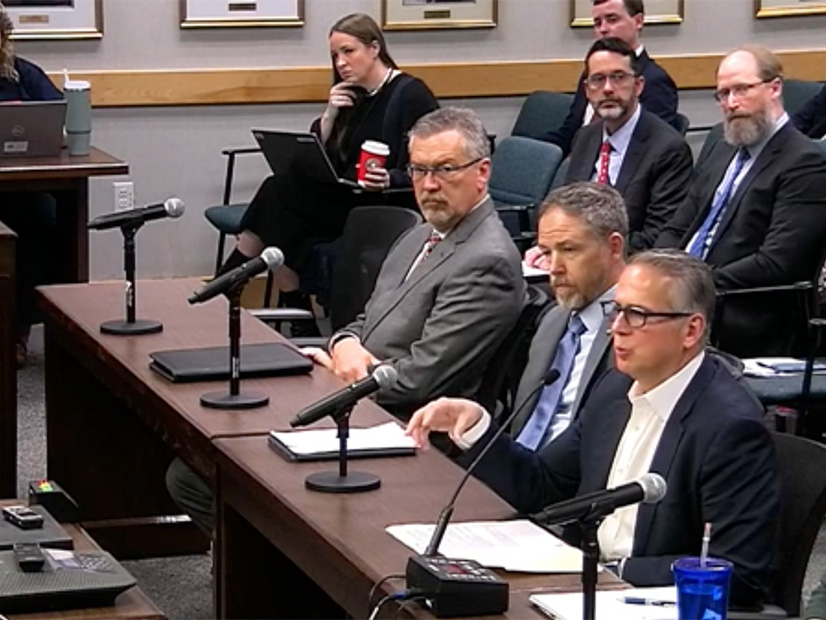
The New Jersey Board of Public Utilities is looking to stimulate energy-efficient construction with a new program launched Oct. 7 that offers a simpler incentive application process and incentives of up to $2.50/square foot.
The New Construction Program (NCP) provides builders, developers and project stakeholders with a “single point of entry” through which they can access a portfolio of financial incentives, the BPU said in a release. It replaces several old programs that were accessed independently with a consolidated system that offers “three distinct pathways” designed to meet the needs of different projects.
Incentives under the new program start at $1/square foot for buildings that are ENERGY STAR certified or meet LEED V4.1 standards, rising to $2.50 for projects that achieve PHIUS certification, the board said. Projects can earn more incentives if they offer greenhouse gas reduction, develop affordable housing, or create industrial and high-energy intensity buildings in priority zones.
BPU President Christine Guhl-Sadovy called the NCP a “pivotal step forward in making high-performance buildings more affordable and comfortable for New Jersey residents and businesses.”
“By consolidating our previous programs and offering enhanced incentives, we’re creating clear pathways for builders to deliver energy-efficient buildings that reduce utility costs, improve indoor comfort and support those who choose to pursue clean energy options,” she said.
Emphasis on Decarbonization
Creating energy-efficient buildings, mainly by electrifying heat and water heating systems, is a key plank of Gov. Phil Murphy’s effort to cut emissions and reach the state’s goal of having 100% clean electricity by 2035.
The NCP “strongly emphasizes decarbonization technologies, offering bonus incentives for projects incorporating all-electric systems such as heat pumps, helping support builders or homeowners who choose to pursue highly efficient and decarbonized air and water heating systems,” according to the BPU.
In one of the options, a so-called “bundled pathway” combines several energy conservation measures that can be used on commercial and industrial buildings. A second, “streamlined” pathway offers a much simpler process for projects that harness only energy conservation measures. And a third, “high-performance” pathway allows the developer to obtain the most generous incentives by meeting “nationally recognized certifications.”
DEP Seeks to Make Electrification Funding Easier
The BPU’s launch of NCP coincided with the announcement by the New Jersey Department of Environmental Protection of a new online tool that seeks to help residents, local governments, nonprofits and businesses find incentives for building electrification and other climate mitigation projects.
The New Jersey Funding One Stop Shop can help reduce project costs by estimating which incentives are available and what percentage of a project is funded. It asks users about the project and provides information on possible grants, rebates, financing options and a technical assistance program, according to a DEP release.
Among the target categories for the website are “building energy efficiency” and “energy generation.” The possible funding sources include the state’s $15 million NJ Cool pilot program, which opened in May and provides financial assistance to commercial, industrial and institutional building owners and tenants undertaking retrofit projects that reduce operating emissions from existing buildings.
Another program reached through the site is one offered by Jersey Central Power & Light, one of four utilities that serve the state, which offers commercial and industrial customers up to $4 million for a “tailored, non-standard energy efficiency project.”
“The One Stop Shop database is an easy-to-use tool that can help residents, local governments and nonprofits pursue critical green projects, like homeowners installing a heat pump [and] a government transitioning to an all-electric vehicle fleet,” DEP Commissioner Shawn M. LaTourette said.
FERC issued a final rule Oct. 7 that removes regulations that paused natural gas pipeline and LNG export facility construction pending appeals in order to encourage the development of plentiful gas at reasonable prices (RM25-9).
The rule reverses Order 871, which stopped the issuance of authorizations to proceed with construction of pipelines and LNG export facilities while rehearing requests were filed in opposition to project construction, operation or need. The order also adopted a policy of presumptively staying projects when a landowner affected by eminent domain protested a project.
In April, the pipeline trade group Interstate Natural Gas Association of America filed a petition for rulemaking seeking to rescind Order 871, arguing a decision from the D.C. Circuit Court of Appeals affords stakeholders the same protections. The court allowed affected landowners and others to file an injunction halting construction as soon as 30 days after a rehearing request has been filed at FERC.
INGAA also argued the order effectively presumed FERC’s approvals of pipeline are wrong, which subjects developers to unnecessary costs and construction delays. Most of the requests under Order 871 came from parties that do not own land, INGAA said, arguing it had become a tool to delay authorized projects.
FERC issued a proposal to eliminate the order and its rules pausing construction in June, saying more gas pipelines are needed to meet increasing demand for the fuel from end users and power plants, and that pipeline expansion would make both the gas and bulk power systems more reliable.
Opponents included major environmental organizations, who argued that the court decision allowing for quicker injunctions still could let developers start construction on land seized by eminent domain before a stay from the courts was issued. FERC said that those concerns are addressed by existing landowner protections.
“The commission will continue to consider stay requests from landowners on a case-by-case basis, as well as continue the presumptive stay policy established in Order No. 871-B,” FERC said in the final rule. “The presumptive stay policy specifically protects directly affected landowners who would be subject to eminent domain.”
INGAA argued that the change was needed to help meet demand growth in the electricity sector, with FERC summarizing that “additional generation capacity is critical to the nation’s energy security needs, particularly given the development of data centers to advance artificial intelligence.”
Opponents acknowledged that demand is growing, but there is a lot of uncertainty in forecasted data center demand, and much of it will be met by renewable generation.
But FERC said the rule around staying construction was procedural, only delaying projects it found to be in the public interest. “Despite comments suggesting the contrary, it is not the mechanism by which the commission determines whether there is a need for additional energy infrastructure,” FERC said. “The commission continues to evaluate proposed projects under the existing standards in [Natural Gas Act] Sections 3 and 7, as appropriate.”
Even if natural gas generation will decrease over the long term, as some reports indicate, the power grid and natural gas system will continue to be interdependent.
“Even though more renewable energy resources, such as wind and solar, are supplying electric generation, the electric power sector has relied on natural gas over the past decades and continues to do so, which leads to increased interdependence,” FERC said. “Accordingly, an increase in electricity demand, without sufficient natural gas supplies and interstate transportation infrastructure to support such demand, could impact grid reliability even if renewable energy source generation increases.”
Opponents also questioned the value of relying on Trump’s executive orders, which independent agencies are not required to follow. But FERC said that those orders were not the primary basis for its decision. It instead relied on its authority under the NGA and considered the added costs and risks a delay of up to 150 days could cause a project it had previously found to be in the public interest.
“The commission did not rely on compliance with executive policy to justify the regulation’s removal; rather it discussed the executive orders as evidence that the pressing resource adequacy and system reliability concerns have been widely recognized,” FERC said.
The new, larger list leaked on Oct. 7 consists of 658 grants totaling $23.88 billion, but it overlaps with the earlier list that emerged Oct. 2.
The U.S. Department of Energy would not comment Oct. 8 on the new list that has been published, but it pointed out the agency’s stated intention had been to continue its review of grants awarded before President Donald Trump began his second term.
DOE Press Secretary Ben Dietderich had the same statement for RTO Insider as for everyone else who asked:
“No determinations have been made other than what has been previously announced. As Secretary Wright made clear last week, the department continues to conduct an individualized and thorough review of financial awards made by the previous administration. Rest assured, the department is hard at work to deliver on President Trump’s promise to restore affordable, reliable and secure energy to the American people.”
Nonetheless, the news media took the ball and ran with it.
But the headline verbs they used pointed to a lack of certainty about what was happening:
Floats. Eyes. Weighing. Mulls. Said to Mull. About to Squash. Threatens to Kill. No Decision Made. Appear Poised.
The Old Gray Lady herself played it with a double caveat: The list “suggests” more cuts “may be coming.”
Advocates were a little more certain with their words, as in the Clean Air Task Force’s broadside headline: “DOE rips funding from over 600 awards.”
But the situation is not always certain with Trump, who has a deliberately unpredictable leadership style.
Could this new, expanded list be the latest in a series of attempts to intimidate or influence one side or the other or both during the government shutdown? DOE certainly isn’t saying.
Furthermore, the grant terminations may not stick. DOE noted that grant recipients have the right to challenge termination and said that some already have begun that process.
The new list of purported grant cuts stretches into Republican strongholds, while the earlier list was heavily concentrated in places that are represented by Democrats in the House and Senate and that voted for Kamala Harris in 2024.
The earlier list targeted grants for two of the seven regional hydrogen hubs that were among President Joe Biden’s signature initiatives. The new list calls for termination of all of them — total value $7 billion.
The other major grants would help fund projects on other research and development tracks that were central to the Biden administration’s clean energy vision, such as electric vehicles, industrial decarbonization and carbon capture.
But sprinkled among the large grants are small awards for efforts to address the multitude of details that crop up in such a broad and ambitious initiative — such as $2.38 million to Bat Conservation International to look for a way to reduce the number of bats killed by the wind turbines that Trump derides.
Colleges in red states and blue states alike are heavily represented on the list, as well as local and state government entities, industry groups and nonprofits.
Projected energy efficiency investments in New England over the next three years will generate an estimated $19.3 billion in lifetime benefits, returning $2.93 for every dollar spent, according to new analysis by the Acadia Center.
The report makes the case that states should not reduce efficiency spending when seeking to provide short-term rate relief, calling on lawmakers and officials to look for ways to fund programs more equitably.
Retail electric and gas rates in New England are among the highest in the country, and prolonged cold weather over the past winter created significant political pressure for lower rates.
In February, the Massachusetts Department of Public Utilities cut $500 million off the state’s three-year efficiency plan. Meanwhile, Rhode Island Energy has proposed reducing its 2026 energy efficiency budget by over $43 million.
In response to the cuts, proponents of energy efficiency are emphasizing the long-term benefits of these investments, while some have advocated for funding efficiency programs outside of gas and electric rates. (See Advocates Defend Energy Efficiency Programs in Massachusetts.)
The report, which relies on state-reported data on expected spending and benefits, found $6.6 billion in total expected spending across New England over the next three years.
The bulk of this spending — $4.5 billion — is concentrated in Massachusetts. The state also has the highest per-capita spending, followed by Maine and Rhode Island. New Hampshire has the lowest per-capita expected spending.
Different calculation methodologies make it difficult to compare program benefits among states, Acadia wrote. The group noted that calculations related to the social cost of carbon vary significantly between states, “ranging from a low of $0/short ton in New Hampshire to a high of $415 in Massachusetts.”
Despite these differences, “all states demonstrate a benefits/program budget ratio above 1.0, indicating that $1 invested in energy efficiency programs [generates] more value than the initial investment,” Acadia wrote.
The authors noted that Maine reported a particularly high benefit-to-budget ratio. They wrote that the state stands out for high reported benefits associated with electrification investments and a higher portion of the costs shared by participants in the program. While program participants are responsible for 15 to 35% of overall costs in other New England states, participants are responsible for 48% of costs in Maine.
The report also highlights ISO-NE data showing how the allocation of efficiency investments has changed in recent years. While traditional efficiency upgrades like insulation and appliance upgrades still make up most costs, the percentage of spending dedicated to electrification increased from 6% in 2020 to 30% in 2024.
Acadia also emphasized the climate, public health and employment benefits of efficiency investments, writing that efficiency programs “play an instrumental role in creating and sustaining the over ~161,000 energy efficiency industry jobs in the region that currently exist,” and that planned investments are expected to reduce emissions by about 25.3 million metric tons.
Efficiency improvements also lead to region-wide cost reductions in the ISO-NE wholesale markets, the authors wrote. However, quantifying these effects is made challenging by recent updates to ISO-NE’s load forecasting methodology, which “now omits reporting on annual and peak demand reductions from energy efficiency,” Acadia noted.
To ensure the longevity and maximum effectiveness of efficiency programs, “more focused attention will need to be paid toward how programs are funded, how ambition can be increased cost-effectively, who pays, and over what time period are costs incurred,” the authors wrote.
“New funding concepts and reforms in this arena will ensure that ratepayers continue to benefit greatly from efficiency as an energy resource while perhaps bearing less of a direct responsibility to invest in program budgets exclusively through electric and gas rates,” concludes the report.
Mass Save Changes?
In Massachusetts, advocates are supporting a pair of bills (H.3577, H.3529) that would provide state funding for building efficiency retrofits, efficiency upgrades and electrification.
However, advocates may face an uphill battle to overhaul the funding mechanisms for the state’s Mass Save efficiency program in the 2025/2026 legislative session.
Massachusetts Gov. Maura Healey (D) included some changes intended to “streamline program delivery and enhance the customer experience” for Mass Save in a wide-ranging energy bill filed in May, but the legislation largely shies away from major changes that would shift efficiency costs away from rates. (See Mass. Gov. Healey Introduces Energy Affordability Bill.)
Meanwhile, Sen. Mike Barrett, co-chair of the legislature’s Joint Committee on Telecommunications, Utilities and Energy, indicated at a recent hearing on efficiency legislation that a major overhaul of Mass Save funding appears unlikely in the current environment.
MISO wants to increase the number of generation projects it may study under its interconnection queue express lane from 10 to 15 per quarter.
The grid operator in late September filed with FERC to increase the 10-project quarterly limit and said it wants the change to become effective Nov. 26, days before it kicks off acceptance of a second cycle of expedited generation requests (ER25-3543).
MISO told the commission the change would allow it to study more interconnection requests in fewer cycles and would enable approved generation projects to more quickly secure generator interconnection agreements. That, in turn, would help address “near-term resource adequacy needs earlier while having a negligible impact on MISO’s workload.”
MISO still plans to study 68 generation projects but tackle them in fewer cycles and potentially wind down the process earlier than its originally planned Aug. 31, 2027, retirement date.
The RTO said with the first study “well underway,” it now has “a far better understanding of how [the expedited process] will work in process and has better visibility into what the next several study cycles would look like.”
“As of today, MISO has already completed most of the initial analysis for the first 10 … projects, which demonstrates that MISO has the capacity to expand the discrete number of projects studied in each cycle,” MISO said.
WPPI Energy’s Steve Leovy said he’s concerned MISO filed for the change abruptly without holding any stakeholder discussions. “Did it occur to MISO that it might be useful to inform stakeholders of the planned decision to make a filing?” Leovy asked at an Oct. 8 meeting of the RTO’s Planning Advisory Committee.
Director of Resource Utilization Andy Witmeier said the RTO is aware that it communicated the existence of the filing to stakeholders only as it submitted it to FERC. Witmeier said MISO was under pressure to file in time to allow for FERC’s 60-day response time so the new limit could take effect by the Dec. 1 deadline for the second intake of projects. He said no stakeholder meetings were scheduled during that time.
MISO said its first crack at long-range transmission planning in the South region likely would take about three years to culminate in potential project recommendations.
Director of Expansion Planning Jeanna Furnish said MISO would form the scope of transmission and build system models over 2026. From there, an assessment of need could continue into 2027, Furnish told the Entergy Regional State Committee Working Group on Oct. 7.
The RTO expects to wrap the study with project recommendations in 2028.
Furnish reiterated MISO’s stance that the first long-range transmission study in MISO South would begin with the Amite South and Downstream of Gypsy load pockets in southeastern Louisiana. She said the study would result in “options that can inform our next steps” and that new generation as well as new transmission would be on the table to solve constraints. (See MISO Kicks off South’s Long-range Tx Plan with More Restrained Approach.)
Given the amount of time, Yvonne Cappel-Vickery, of the Louisiana-based Alliance for Affordable Energy, asked whether MISO would explore other load pockets in MISO South.
Furnish said the study would be limited to Louisiana.
Southern Renewable Energy Association Transmission Director Andy Kowalczyk asked if scoping would be flexible enough to include more of MISO South. The RTO is conducting an assessment to measure reliability risks in the southeastern Louisiana load pockets, along with the West of the Atchafalaya Basin pocket, which extends from southwestern Louisiana into East Texas, and the Western pocket, which is entirely in Texas.
Furnish said MISO hasn’t identified all elements of the study scope yet but said the focus would be the state of Louisiana and would not extend to Texas. It will examine Louisiana’s transfer patterns alongside the state’s “unique weather conditions.”
Windy Beck, of the Deep South Center for Environmental Justice, asked why the study would be limited to a particular geographic area when long-range planning works best at a regional level. She also pointed out the South system mainly comprises Entergy’s assets.
Furnish responded that Louisiana has seen the most load growth and generation retirements when compared to other MISO South states.She promised more to come on the long-range analysis and that her update is merely a “teaser.”
MISO South has accounted for billions of dollars in transmission investment in recent years, mostly classified under reliability needs. In MTEP 23 alone, Louisiana and MISO’s relatively small portion of southeast Texas comprised $3.9 billion of the $9 billion 2023 MISO Transmission Expansion Plan (MTEP).
The South took an almost $2 billion share of the $6.7 billion MTEP 24. For MTEP 25, Louisiana is to receive the most investment of all MISO states, at more than $3.4 billion in reliability projects and projects needed to meet load growth. (See MISO 2025 Tx Expansion Estimate Drops Slightly to $12.4B.) Louisiana contains four of the 10 most expensive projects in MTEP 25. That portfolio is destined for a vote from the MISO Board of Directors in early December.
MISO South states still are weighing whether to propose their own cost allocation under FERC’s Order 1920, which could override the RTO’s current 100% postage stamp-to-load rate used in its long-range planning. (See State Regulators Weigh Drafting Alternative to MISO Tx Cost Allocation.) Southern regulators expect the Organization of MISO States would allow them to form their own agreement to establish a subregional cost allocation for long-range projects.
AUSTIN, Texas — The Gulf Coast Power Association celebrated its 40th anniversary — and the Texas Public Utility Commission’s 50th — during its annual Fall Conference Sept. 30-Oct. 2.
“Two institutions that have fundamentally shaped the Gulf Coast energy landscape,” GCPA Executive Director Barbara Clemenhagen said in welcoming the 860 registered attendees.
The GCPA originally began as the Gulf Coast Cogeneration Association in a new industry birthed by passage of the Public Utility Regulatory Policy Act of 1978. Recognizing that its members’ interests were broader than cogeneration, the organization officially changed its name in 1995 and now boasts 150 corporate members and 350 individual members.
A panel of ERCOT stakeholders kicked things off by agreeing that while the grid operator’s projections of an 80% increase in load by 2030 present a challenge for the market, they are also an opportunity.
“I think we saw the evolution of that perspective throughout the conversation of [Senate Bill 6],” said Data Center Coalition’s Dan Diorio, referencing recently passed Texas legislation that directed the PUC to determine a cost allocation for large loads to ensure they’re paying their fair share of infrastructure expenses. (See Texas Bills Targeting Renewables Come up Short.)
“SB6 started as a challenge … or we can view this is an opportunity. It’s an opportunity for Texas to lead the way,” Diorio said. “There’s a small, little project in Abilene [the massive $500 billion Stargate Project, an artificial intelligence network that includes a 200-MW substation] that got announced that I think is emblematic of that. It’s emblematic of the opportunity for Texas to lead the way in our global competitiveness for digital infrastructure, AI development, all the innovative technologies that we all rely on. So, this is an opportunity for Texas to be that.”
“There’s an opportunity, right? This is a good problem to have, right?” said Casey Kelley, Constellation’s vice president of state government affairs-South. “If you go back five years ago, every market in the country was talking about struggling with low growth. We weren’t seeing this economic boom that’s coming. This is a good thing. We should be looking at this as a chance to build the Texas economy, to build the U.S. economy, to be a leader in artificial intelligence. If we lose the AI race, we lose to countries that probably don’t have the same good intentions that our country [has], so we should look at this for what it is: an opportunity to go out there and try to find ways to seize it.”
Former Texas Commissioner Brandy Marty Marquez, who now runs an eponymous public affairs firm, cautioned against further legislation reacting to the explosion of large loads. Lt. Gov. Dan Patrick said in 2024 that the data center and crypto mining industries produce “very few jobs compared to the incredible demands they place on our grid.”
“We live in a time of scary headlines and knee-jerk reactions and public policy is the last place where we need a knee-jerk reaction,” Marquez said. “The education that’s been done to explain what this AI increase means to the state, what it means to the nation, has been incredibly helpful. It’s incumbent on all of us in this room to make sure that when we’re talking about challenges, there are probably very few people in here who have faced a challenge and not immediately had a few ideas about what the solution is. The market will come up with such innovative answers to questions that are raised that keeping politics out of these conversations can sometimes be the most vital thing that all of us have to grapple with.”
“We see over and over again that, ever since ERCOT was created, the market does figure this stuff out,” Kelley said in agreement. “I believe as long as we keep things within a rational market structure, then we will figure this out and it will be managed.”
Gleeson: We Must Explain Costs
PUC Chair Thomas Gleeson keynoted a pre-conference session Sept. 30 of the commission’s 50th anniversary. In drafting a seven-minute speech for a 45-minute agenda item, he gave himself a “ton of time” to respond to audience questions, “As long as it’s not a question that I do not want to [answer],” he joked.
Asked how Texas regulators can “properly balance” reliability and economic efficiency through markets, Gleeson acknowledged ERCOT participants were comfortable with “operating right on the edge” during tight conditions before Winter Storm Uri dropped the grid to its knees in 2021.
“We heavily focused on affordability, right? We had cheap rates, and it worked really well for a long time,” he said. “People’s relationship with electricity … changed in 2021. There is more tension than there was previously because of that new relationship that Texans have with their electricity delivery. But I do believe that we have to move away from some of the tools we used and some of the policies that we had to implement right after Uri and get back to this being more of an economic market where we provide the incentives, we’re clear about what those incentives are, what our goals are, and then allow private corporations in the industry to respond to those economic incentives.”
Texas Gov. George Bush (left) swears in Pat Wood III to a seat on Texas’ Public Utility Commission in 1999. Family friend Sister Gertrude Levy holds the Bible. | Texas PUC
However, Gleeson said the need for transmission infrastructure, including 765-kV lines, to meet staggering demand growth and the cost of implementing new policies will invariably increase energy prices.
“All of these changes that are happening are going to cost a lot of money, and when a lot of money is involved, people really want to ask a lot of questions, and rightfully so,” he said. “The transmission needs of this state are going to be massive. What we need is the conviction of our decisions. We have to be willing to make those investments, to be honest about what is needed, and educate and inform folks about those costs so they understand the benefit of what they’re getting.”
Balancing Reliability and Costs
The discussion on affordability continued with a panel of four PUC commissioners from the past. Clemenhagen dredged up an old quote from former ERCOT COO Mike Cleary — “Reliability is king and the queen is competition” — and asked Barry Smitherman (2004-2011) how to balance reliability imperatives with the competitive market.
“It’s tricky,” he responded. “We always talk about the three-legged stool. So I can give you reliability, I can give you cheap prices, I can give you clean energy, but you can’t get all three. And over time, one of them has been predominant, but not always predominant. In the beginning of competition, it was about price. We wanted to get the cheapest price.
“Yes, we want them all. We want to balance it, but I think we always need to be cognizant that first and foremost, this market was created to be competitive and pure,” Smitherman added. “Competition should be the North Star of our market design. We want companies banging up against each other to produce power at the cheapest price, and we want [retail electric providers] to be competing against each other for customers, and that’ll translate into cheap prices as well. I understand the focus on reliability, but I think it’s always the case that we should be balancing or rebalancing these three legs of the stool.”
Bob Gee (1991-1997), asked whether ERCOT remains an energy-only market with its ancillary services, heavy use of operating reserves and the $10B Texas Energy Fund to incent more gas generation, responded, “Only nominally.”
He recalled the development of ERCOT’s operating reserve demand curve, a mechanism that rewards traditional capacity and investment in batteries, quick-start thermal units and other new technologies. Gee said he was told by a Ph.D. economist that the ORDC effectively works like a capacity market “because you were asking folks to basically have a plant on standby.”
“You’re giving them [generators] a revenue stream. And then ERCOT has all these other different things that they’re contemplating trying to put into place,” Gee said, referring to yet-to-be-deployed real-time co-optimization and dispatchable reliability reserve service.
“When you layer on all these protections, these band-aids or whatever you want to call it … you become less reliant upon the open and transparent operation of the market to send the price signal,” he said. “I think you’re moving away from an energy-only construct, and more of an administrative oversight regime, which would mask the clear transmission of prices.”
Collaboration Necessary with ERCOT
A pair of longtime ERCOT stakeholders discussed changes they have seen in the ISO’s stakeholder process.
GCPA President Beth Garza, a senior fellow with the R Street Institute, has served as ERCOT’s Independent Market Monitor and currently represents consumers on the ISO’s Technical Advisory Committee. She said as the organization has grown in strength and capabilities, “it has become more of the driving force for change.”
“I compare and contrast that to sort of my day in the stakeholder process, when ERCOT was a group of maybe a couple, 300 people and the first wholesale [deregulation] was driven completely by stakeholders and that was the way that carried us forward,” Garza said. “I think in many ways, a lot of things are sort of before Uri and after Uri. In the aftermath, combined with the sort of growth and development and expansion of expertise and capability of the ERCOT organization, we see that organization being a more powerful and stronger voice for change.
“I’m concerned that may diminish multiple stakeholder perspectives on reaching the good solution, and that’s the concern as I step back into the stakeholder process — that I’m not seeing as much sort of collaboration from a problem-solving perspective. I’m worried about the loss of the multidimensional, problem-solving capability.”
“Today, it is much more of a collaborative effort, and I would give ERCOT kudos for its ability to integrate and make changes to its systems,” said Mark Dreyfus, who represents commercial entities on TAC. “I think the whole market has confidence in ERCOT’s ability to implement these major market changes. But like Beth, I think that policy development has to be collaborative … the policy input from ERCOT has to be balanced with the policy input for this stakeholder community, and I’m worried that today, it’s not quite in balance. I’m working as a stakeholder to work within the process to restore that balance … these issues we face are really challenging. They’re really meaningful for the bottom lines of everybody in here.”
GCPA Award to LCRA’s Holt
The Lower Colorado River Authority’s Blake Holt was presented with the GCPA’s 2025 emPOWERing Young Professionals Award, given annually to an individual under the age of 40 who has demonstrated excellence in the power industry and serves as a role model and leader for others.
A third-generation Texas utility veteran, Holt has more than a decade of experience in the industry. He currently serves as LCRA’s director of ERCOT regulatory policy, overseeing advocacy efforts at ERCOT and the PUC and has spent more than a decade in the industry. Previously, he spent 12 years at ERCOT (2011-2023), working in settlements and leading the Market Designs and Analysis department. He currently represents LCRA on the Technical Advisory Committee and chairs its Wholesale Market Subcommittee.
“Blake exemplifies the kind of leader our industry needs: someone who combines technical acumen with genuine care for developing the next generation of professionals,” Emily Jolly, LCRA’s chief regulatory and compliance officer, said in a statement. “His dedication to mentoring others and his ability to navigate complex regulatory challenges make him a standout choice for this recognition.”
Rising demand and power bills are giving an extra push to expand demand-side management programs like efficiency and virtual power plants, but experts agree the industry needs to do more to educate consumers to take advantage of the resources.
“You have to make sure that you’re not only educating the end-use customer, but you’re educating those that are executing implementing these strategies,” Melissa Washington, Commonwealth Edison senior vice president of customer operations, said during an Oct. 7 webinar hosted by DNV and Canary Media.
Utilities have done a lot of that work already on programs they can market directly to consumers such as efficient lighting and smart thermostats, but the more challenging part is when they have to deal with third parties like contractors, said Andy Frank, president of Sealed, which provides contractors with software and solutions that are aimed at getting more weatherization and electrification programs installed.
“As we move away from the low-hanging fruit of these measures that can be sold directly to consumers, you’re starting to see more and more savings, and more and more impact come from deeper home energy retrofits on weatherization,” Frank said. “And so, regardless of any other information source that they’re getting, homeowners are going to tend to trust the contractor in the home.”
Sometimes consumers will hear about heat pumps from their utility, or a state program, but then a contractor will argue that it does not work and will not save them any money, Frank said. By ensuring that they have access to the right tools to educate and confirm savings, that can be avoided.
Alliance to Save Energy President Paula Glover agreed, calling the lack of education on efficiency among contractors a real gap in rolling out energy efficiency applications.
“Many times, a contractor may not even mention that there’s a more efficient technology. They may not know about it,” Glover said. “And so, I do think it’s time for us to make a significant effort to really make sure that they have all the information that they need about what works, where and how, so that they can best inform customers.”
ComEd has helped its customers save $12 billion with efficiency upgrades, Washington said, and “implementation partners” like contractors are key to getting that done.
“We try to make sure that we’re spending time with our implementation partners to ensure that they have consistent information so that they can have a consistent experience with the customer,” Washington said. “But what we’ve also learned is that there’s opportunities to grow the number of implementation partners in all of these communities, because what we have learned is that people tend to listen to those that they trust.”
The Chicago-area utility has found working with community-based organizations that are trusted in different neighborhoods has helped to get small business and residential customers signed up for energy and money-saving programs because they can spread the word on benefits and how to sign up, she added.
ComEd saw an uptick in interest in such programs during the COVID-19 pandemic as consumers were increasingly interested in ways that they could save money on their utility bills, she noted.
Energy efficiency programs have not been popular on Capitol Hill lately, and ASE’s Glover argued that was partially from lawmakers not looking at it as an “affordability play,” despite her group’s efforts. She argued utilities could help get that message across.
“I’ll use weatherization as an example,” Glover said. “It is very easy to get lots of utility companies in support of LIHEAP [the Low-Income Home Energy Assistance Program]. LIHEAP really rises to the top, but weatherization has been under attack all summer, and we struggle to get people to see that as equally as important and … that absent weatherization, that’s just more people who need LIHEAP.”
Another major issue facing efficiency and the demand side more generally is the regulatory construct, Glover added, because cost-of-service regulation does not favor utilities cutting the amount of electricity that they sell.
Price signals would help to grow efficiency and other demand-side resources more than anything, especially with demand growing in a major way for the first time in decades, Frank said.
“The market needs to have those simple and strong price signals to be able to act,” he added. “And, so, I think it’s all of our responsibility to kind of figure out ways to deliver those price signals.”
The U.S. Senate voted Oct. 7 to approve Laura Swett and David LaCerte to the open seats on FERC, in a package with more than 100 other nominees from around the federal government in a party-line vote of 51-47.
While former Chair Mark Christie was a nominee from President Donald Trump’s first term, the votes give the president nominees on the commission for the first time in his second term. Swett’s term runs until June 30, 2030, while LaCerte was nominated to fill the remainder of former Chair Willie Phillips’ term, which ends on June 30, 2026.
The vote comes less than a month after the nominees cleared the Senate Energy and Natural Resources Committee on a largely party-line vote, after a hearing in which a frequent topic was the future of FERC as an independent agency. (See Swett and LaCerte Nominations Clear Committee on Party Line Votes.)
The issue of whether independent regulatory agencies are constitutional is working its way through the courts, and the Supreme Court has indicated it is likely to overturn their legal precedent. (See Will the Supreme Court End FERC’s Independence?)
The Senate confirmed Swett and LaCerte, along with 105 other nominees, under new rules instituted by the Republican majority this year that allow for a simple majority vote on a batch of picks for sub-Cabinet-level, non-judicial posts. Under the old rules, such nominations could advance as a group by unanimous consent or voice vote, but a single senator could block the motion. It marked the second time the majority used the new rules to confirm a batch of Trump’s nominees after it grew frustrated by Democratic stalling.
Swett and LaCerte still need to be officially sworn in, and it then usually takes some time for new commissioners to set up their offices before they start voting on orders. With the federal government shut down because of a funding impasse, it is unclear how long that will take.
Swett is an energy lawyer at Vinson & Elkins, where she has worked since February 2023. She worked at FERC from 2014 to 2019, first in the Office of Enforcement and then as an adviser to Chair Kevin McIntyre and Commissioner Bernard McNamee.
LaCerte is senior adviser to the director of the Office of Personnel Management. He served in the Marine Corps and as secretary of the Louisiana Department of Veterans Affairs.
Reactions
Groups that do business before the commission were quick to welcome the nominees’ confirmations with statements after the vote.
Electric Power Supply Association CEO Todd Snitchler said the group looked forward to working with the two nominees once they take office, especially on the all-important issues of meeting growing demand and maintaining reliability.
“Long-term investment requires confidence in the rules of the road,” Snitchler said. “That’s why steady federal oversight is critical. Reducing uncertainty and ensuring that competitive auctions are run regularly, fairly and transparently will help unlock the private capital needed to strengthen our grid, support economic growth and meet rising demand from manufacturing, electrification and AI.”
Snitchler added that EPSA welcomes “their commitment to maintaining FERC’s independence, while focusing on reliability, affordability and fair, competitive outcomes,” which is vital to attract investment.
Americans for a Clean Energy Grid also welcomed their confirmation with a statement from Executive Director Christina Hayes.
“As they each recognized in their confirmation hearings, building out our nation’s transmission infrastructure is critical to meeting the energy demand challenges presented by artificial intelligence, data centers and advanced manufacturing,” Hayes said. “FERC serves a vital role in meeting that moment, and we look forward to working with both commissioners to advance common-sense solutions to promote transmission’s role in the American energy dominance agenda through a reliable, affordable and resilient energy grid.”
The Sierra Club struck a different tone, expressing concern that the Senate had approved two nominees that are aligned with Project 2025.
“We are disappointed that the Senate confirmed these new commissioners who have such deep ties to the fossil fuel industry,” Sierra Club Beyond Fossil Fuels Policy Director Mahyar Sorour said in a statement. “We will be watching FERC closely moving forward on behalf of American energy consumers who deserve clean, affordable access to energy.”
New analyses report record growth for the global renewable energy sector in 2025 and project continued expansion through the end of the decade.
Energy think tank Ember reported that solar and wind capacity additions outstripped demand growth in the first half of 2025 and that renewables produced more electricity than coal for the first time.
The International Energy Agency predicted that installed renewable capacity would more than double by 2030 despite supply chain, financing and grid integration headwinds. But IEA lowered its five-year growth forecast for two of the largest markets — the U.S. and China — because of their shifts in policy.
Ember issued its “Global Electricity Mid-Year Insights 2025” report Oct. 7. The U.K.-based think tank, which seeks to accelerate the clean energy transition, said its report is based on monthly electricity data from 88 countries accounting for 93% of global demand.
Global electricity demand grew only 2.6% (369 TWh) in the first half of the year, but solar generation increased 31% (306 TWh) and wind 7.7% (97 TWh).
In total, renewable output grew to 5,072 TWh, or 34.3% of global electricity, while coal decreased fractionally to 4,986 TWh, or 33.1% of the worldwide total.
But first-half results varied, Ember reported, with some countries or regions diverging significantly from the global trend.
Worldwide renewable power generation exceeded coal-fired generation for the first time in the first half of 2025. | Ember
China, the EU, India and the U.S. are home to about 45% of the world’s population but use 63% of its electricity. Fossil fuel generation deceased in China and India but increased in the EU and U.S. China retained its position as the global leader in clean energy growth, accounting for 55 and 82% of new solar and wind capacity, respectively, plus 73% of new nuclear.
The picture was different in the U.S., with solar and wind additions meeting only 65% of the country’s demand increase. This and higher natural gas prices caused a shift toward coal generation, which increased 17% (51 TWh).
“Globally, renewables growth met all the increase in electricity demand,” Ember said. “That certainly wasn’t the case in the U.S.”
IEA is expecting more of this trend in the years to come. “The report’s outlook for global renewable capacity growth is revised downward slightly compared with last year, mainly due to policy changes in the United States and in China,” it said in its Oct. 7 announcement of “Renewables 2025.”
“The early phaseout of federal tax incentives along with other regulatory changes in the United States lowered our growth expectations for renewables in the U.S. market by almost 50% compared with last year’s forecast. China’s shift from fixed tariffs to auctions is impacting project economics, resulting in a reduction in our forecast for renewables’ growth in the Chinese market.”
Beyond the policy changes in the U.S. and Chinese markets, IEA sees other headwinds for much of the world:
Supply chains remain concentrated in China.
Offshore wind delays and cancellations continue.
Major manufacturers of solar and wind components have reported large losses.
The rise of variable renewables has been accompanied in some places by a rise in curtailments and negative prices; demand-side flexibility and dispatchable power plants will be increasingly necessary.
But IEA revised its growth projections upward in some regions because of supportive new policies, faster permitting and proliferation of rooftop solar, particularly in India, Europe and most developing or emerging economies.
With this balance, IEA is projecting 4,600 GW of new renewable capacity to be installed by 2030, 80% of it solar. This would be 2.6 times the capacity in 2022, but it would fall short of the pledge to triple capacity at 2023’s COP28 in the United Arab Emirates. IEA also maps out an accelerated scenario of more supportive polices, under which 2030 capacity would reach 2.8 times 2022 levels.
In its “Renewables 2024” report a year ago, IEA predicted 5,500 GW of new renewable energy by 2030, bringing the worldwide capacity to 2.7 times its 2022 level.
2024 set a record for renewables deployment — 685 GW — and IEA is predicting 2025 will set another record: more than 750 MW under its main scenario, or 840 GW under its accelerated scenario.