IESO is considering ways to grow Ontario’s economy and secure its energy supply without relying on trade with its U.S. neighbors, just as President Donald Trump launched another salvo in his ongoing trade war on Canada.
Trump on Oct. 23 posted on Truth Social that he was ending all trade negotiations with Canada after learning that an advertisement sponsored by Ontario would be broadcast during Game 1 of the World Series the next day. The somber ad included images of Americans working while excerpts from a 1987 radio address by President Ronald Reagan criticizing tariffs are heard.
In a subsequent post Oct. 25 calling the ad “fraudulent” and a “hostile act,” Trump announced he will increase the tariffs on Canada by an additional 10%.
Trump’s posts came just after Prime Minister Mark Carney announced a goal for Canada to double its non-U.S. exports in the next decade, pointing to the president’s ongoing tariffs. “We have to take care of ourselves because we can’t rely on one foreign partner,” Carney said.
The moves are just the latest in the nine months of “chaos” since the trade war began, as Lauren Tedesco, COO of the Automotive Parts Manufacturers’ Association, described them during a meeting of the IESO Strategic Advisory Committee on Oct. 16.
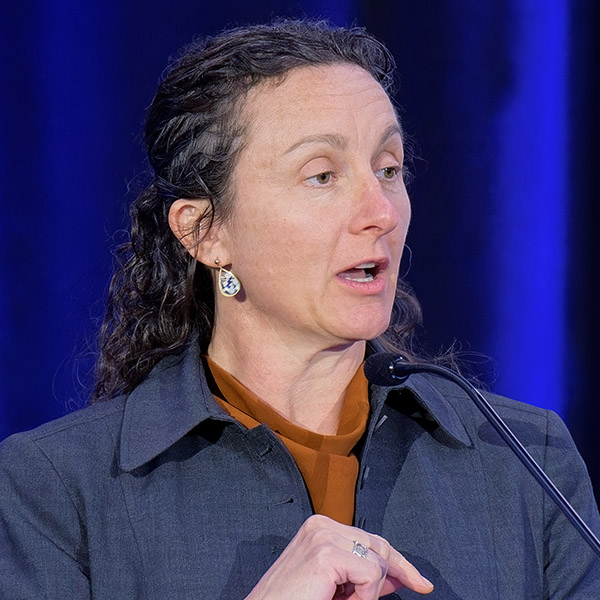
Providing a customer perspective to a panel discussion on the role of electricity in economic growth, Tedesco spoke about “the amount of stability that we need across Ontario right now given what’s happening right now in the south with our biggest trading partner.”
“We have about $45 [billion] or $46 billion that have been invested in the last couple of years across the federal and provincial governments looking at what the future is for electric vehicles here in Canada,” Tedesco said. “We have a lot of advanced manufacturing that takes place” in Ontario that consumes a “huge” amount of energy. “This will grow even further.” That depends on “stability here at home … because of the nature of what’s happening in the world, not just with our partners in the south. …
“Of course, looking at the instability that’s happening across the U.S. right now, it’s only been nine months, and we’ve seen a lot of chaos,” she said. “I think the biggest role of the ISO is that, people do not understand how important the stability and reliability of energy is in the province because they are so used to it. … People often take things for granted. So I think part of that economic growth is also the awareness of the role of the ISO.”
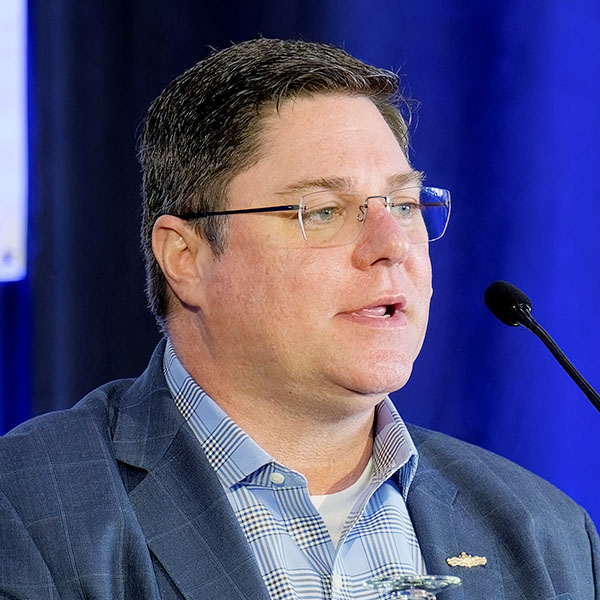
“One of the key strategic issues for the IESO is to broaden its lens to incorporate both economic growth and innovation,” moderator Monica Gattinger, a professor of political studies at the University of Ottawa and chair of the college’s Positive Energy program, said in introducing the panel. “This is new for the organization.” Economic growth “can be quite lumpy in its dynamics and, in the current moment, can also be very uncertain. …
“The IESO plays a pivotal role in terms of economic growth and innovation by fostering integration and alignment across a number of key areas of the energy system,” including between transmission and distribution, and the gas and electricity sectors, Gattinger said.
Much of the discussion focused on how to attract foreign investment to the province — without relying on the U.S.
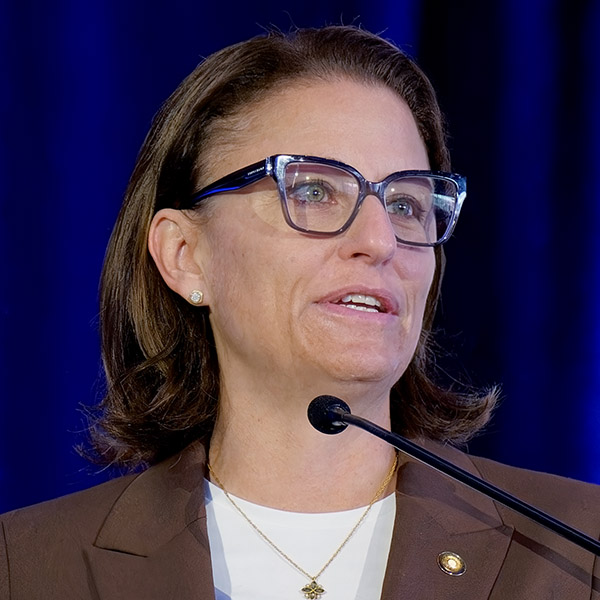
“The reality is, our ability to grow Ontario’s economy is going to found itself in our ability to make sure we can attract investment into the province,” said Heidi Bredenholler-Prasad, vice president of commercial, strategy and business development at Enbridge Gas. “And it really does depend on ensuring that we do have a stable, future-looking energy system.”
Bredenholler-Prasad emphasized “removing red tape and reducing friction for businesses to want to do business in Ontario.”
“The reality is there’s a misalignment right now with respect to the regulatory environment as well as government policy,” she said. “And those two really need to sync up at the pace with which customers need to move.”
IESO can help by providing “well-informed scenario modeling” and set an “example of what good coordinated and integrated planning might look like,” she said. It also can have a role in “advancing coordination between gas distributors, municipalities, as well as the” Ontario Energy Board. “This coordinated planning needs to be streamlined.”
Tedesco urged IESO, and the province, to focus on the benefits they can provide.
“I travel back and forth to D.C. a fair bit, and when we are having these meetings at places like the Department of Commerce … we can stand there with all of our facts and our data to say, ‘This is why Canada is important; this is why automotive is important; this is why you should pay attention and your tariffs are not helpful to us’ — that does not resonate,” Tedesco said. “Could I be so bold as to say they don’t care? They have so many things happening internally, and there’s so much upheaval that is taking place, and their goal is to protect the U.S. …
“When we’re looking to attract investment, it has to be with the eye of not, ‘here’s what Ontario has to offer,’ but with ‘here’s how we can help you.’”
She also praised the country’s new Major Projects Office as important to increasing province-to-province coordination. (See “Major Projects Office,” Ontario Environmentalists Slam New Nuclear Units.)
WASHINGTON — Two FERC veterans shared their worries over the commission’s future as an independent agency as it awaits a crucial Supreme Court ruling.
In a panel discussion at S&P Global’s Nodal Trader conference Oct. 24, former FERC Chair Richard Glick and former FERC economist Devin Hartman cited expectations that the Supreme Court will overturn an FDR-era precedent — allowing President Donald Trump to fire commissioners of independent agencies such as FERC without cause. (See Will the Supreme Court End FERC’s Independence?)
“That has a whole series of ramifications that are not, in my opinion, positive,” said Glick, a Democrat, who was denied reappointment in 2022 after crossing former Sen. Joe Manchin (D-W.Va.) on natural gas policy. (See Glick Bids Farewell to FERC.) “I mean, the reason that we have agencies like FERC is because they perform quasi-judicial functions. … It’s not going to be a positive result when the president tells whatever commissioner, ‘You’re going to vote this way on this particular rate case, or you’re not going to be here any longer.’”
Hartman, director of energy and environmental policy at the center-right R Street Institute, questioned how FERC would operate if it were subjected to Office of Information and Regulatory Affairs (OIRA) review at the Office of Management and Budget.
“So how does this work now? Do the five commissioners sit there and negotiate something and then check in with the White House? Does the chair check in with the White House?” asked Hartman, who worked at FERC between 2012 and 2016.
“OMB isn’t staffed to understand what independent agencies do. We’ve talked with OIRA before. They don’t even know … what taxonomy to apply to cost-of-service regulation. Is this a regulatory action or deregulatory action compliant with the president’s agenda? We don’t even know what box to check on this. That’s literally where we’re at right now.”
The two FERC veterans, and fellow panelist Erin Eckenrod, vice president of environmental products for AES, also discussed permitting reform, Trump’s war on offshore wind and difficulties expanding grid-enhancing technologies.
‘Permitting Permanence’
Hartman said Trump has introduced a new type of risk into the electric industry by rescinding the Bureau of Ocean Energy Management’s approval of offshore wind projects: the loss of “permit permanence.”
“There is so much more artificial risk of executive actions [now]. … This is a huge problem. … When [the Trump administration does] this, it legitimizes and sets precedent for future administrations to do the same thing for resources they don’t like. You have some of the more liberal members of the Senate [thinking], ‘What goes around comes around here.’ And notably, look at how the oil and gas industry — who ostensibly this administration wants to help — responded to some of the punitive actions on renewables. One of the leading LNG developers — I won’t say who — told me right after the offshore wind decision: ‘We have to make decisions over the next seven to eight presidential cycles. We cannot have this much artificial risk.’”
“The risk premiums are going up for a variety of infrastructure projects,” Hartman added. “At the very least, I think that could creep into some of the congressional conversations [on permitting legislation: the concept of] permitting permanence.”
Eckenrod agreed. “The risk premium that is now being built in, I will argue, it’s offsetting any benefits you’re getting from reduced interest rates. It’s counterproductive.”
‘New Environment’ for Permitting Legislation?
Eckenrod questioned whether the Trump administration might seek to undo the Clean Air Act (CAA) if it threatens the siting of natural gas-fired generators.
Hartman said the CAA could be at risk because the courts’ willingness to let Trump stretch the limits of executive authority has changed the outlook for potential congressional action on permitting legislation. (See Bipartisan Transmission Permitting Reform Bill Introduced in House.)
“The White House is feeling very optimistic, frankly, about where they can go with just executive authority alone in this new … environment,” he said. “If you’re going to see a permitting package pass, the Republicans are going to want to see deeper permitting reform than what they sought last year, because they think that the status quo has shifted favorably. So, things like, yes, the Clean Air Act might be on the table now. Should ambient air quality standards have a cost-benefit test? … I think there’s going to be this … new political equilibrium.”
Expanding Use of Grid-enhancing Technologies
Glick said utilities have not embraced grid-enhancing technologies (GETs) because the utilities’ incentives are “backwards,” encouraging them to invest in expensive transmission projects rather than smaller investments that could produce savings for ratepayers.
“When I was at FERC, we looked at … the shared savings approach — we send some of the savings to consumers, send some of the savings to utilities — but it wasn’t nearly enough to really get utilities to change their mindset,” he said.
“It seems to me a good idea — maybe the only idea that can actually work at … the federal level — to get utilities to engage sufficiently in GETs,” Glick said.
“The only real policy progress that’s been very concrete on this topic was Order 881,” which requires transmission providers to use ambient-adjusted ratings, said Hartman. “That was sort of the lowest-hanging fruit, because … it’s a uniform best practice. You don’t need to do a cost-benefit breakdown in every little circumstance. It’s just good utility practice.
“It’s trickier, though, once you start getting into these other GETs, because they’re not uniform best practices; they’re very situation-specific, so you have to start attaching … bits of conditionality to this, and that’s very difficult.”
Hartman suggested FERC and the Department of Energy hold annual technical conferences to establish a record on the commercial viability of emerging GETs.
“I think you can then enable the ability for also some more bottom-up motivation, say an RTO framework where the PUCs and the consumer groups are really motivated,” he said. “Then you start to have the laggards feeling the heat a little bit. … And then if people want to file complaints later, or FERC wants to do an investigation … knock yourself out. But I think we’re only going to be able to squeeze so much juice out of rulemakings.”
The U.S. Department of Energy approved PJM’s request to extend an order allowing Talen Energy to continue operating its oil-fired H.A. Wagner Unit 4 to exceed the 438 hours it is permitted to operate each year.
The Oct. 24 order allows the 397-MW generator, located outside Baltimore, to continue operating for 80 days to mitigate the risk of load shed during “certain system conditions or transmission limitations” within the Baltimore Gas and Electric (BG&E) region. The order lifts the run hour limit when PJM declares or anticipates a maximum generation alert or transmission security emergency. (See DOE Lifts Run Hour Restrictions on Maryland Generator.)
“PJM anticipated that, for the remainder of 2025, there will be a continued need to schedule Wagner Unit 4 in order to maintain reliable system operations during projected peak demand and/or increased flows on transmission facilities that are required to serve the BG&E Zone,” the order states. “Additional circumstances that could cause the need for increased scheduling of Wagner Unit 4 include high system demand, additional transmission facility outages, and generation outages or a combination of these factors.”
In its application asking DOE to exercise its Federal Power Act (FPA) 202c authority, PJM said the EPA and Maryland Department of the Environment (MDE) informed it that the consent order imposing the run hour limitation would not be able to be modified within 2025 and it has taken steps to avoid dispatching the unit as much as possible.
PJM to Seek Extension of Order Defining Wagner, Brandon Shores as Capacity
PJM Senior Counsel Chen Lu outlined the RTO’s intention to ask FERC to include Wagner and the adjacent 1,289-MW Brandon Shores coal-fired generator in the capacity market supply stack for the 2028/29 Base Residual Auction (BRA), extending an order defining the two resources as capacity in the prior two auctions (ER25-682). (See FERC OKs Changes to PJM Capacity Market to Cushion Consumer Impacts.)
PJM’s governing documents allow reliability-must-run (RMR) units to be exempted from the requirement that resources offer into the capacity market.
However, against a backdrop of tightening supply/demand balance, consumer advocates argued that if the generators are being relied on for transmission security, it also should be assumed they will be available during capacity deployments. Opponents of that stance protested that including RMR units in the supply stack would distort market signals and suppress the prices needed to bring on replacement resources.
The commission’s order was limited to two delivery years to give PJM time to work toward a pro forma RMR agreement that defines resources as capacity. That effort is ongoing in the Deactivation Enhancement Senior Task Force (DESTF), where PJM has presented a draft pro formaagreement.
“It’s really a stop-gap for these two Talen units,” Lu said, adding that it doesn’t make sense to shift the two generators onto an eventual pro forma agreement since they’re already operating under a FERC-approved RMR.
ERCOT has told the Texas Public Utility Commission it has prioritized a project in 2026 to gather information from the more than 200 GW of large loads in the interconnection queue, a 227% increase in a year’s time.
Data centers account for nearly three-fourths of the queue, ERCOT said. Crypto mining, which constituted half of the queue last year, is down to 1.3%.
ERCOT staff told commissioners during their Oct. 23 open meeting that the industry’s developers and customers are stating their needs for certainty and transparency. The concern is two-way, as most everyone realizes all 200 GW will not show up.
The project will begin after real-time co-optimization is deployed in the market in December.
“That’s just going to help the [interconnection] process in moving forward and giving us clear information,” Kristi Hobbs, vice president of system planning and weatherization, told PUC commissioners.
To that end, Hobbs said the grid operator wants to re-evaluate whether large loads should have a direct relationship with ERCOT. She said staff proposed a protocol change in 2022 that would increase their relationship with the end-use customers but said it received pushback during the stakeholder process.
“We pivoted to the utilities having the relationship,” Hobbs said. “We work with the utilities and what we find is that it hampers transparency … [for] the large loads and the developers being able to understand where ERCOT is in the process.”
She said having better relationships with the end-use customers would help with their concerns.
“At the end of the day, I don’t think there’s one solution. It’s going to be a combination of all of these things,” Hobbs said, referring to updated ERCOT operating procedures as the bridge between grid improvements and changes to large loads’ systems and operations.
“In the middle, there’s us improving our operating procedures and our planning processes so that we can all meet that same goal for reliable power in the state,” she said.
First up is ensuring the large loads can meet voltage ride-through requirements.
“When you had several thousand megawatts of large loads on the system, it was not as much of a concern,” Hobbs said. “In recent years, we’ve continued to see the number of events where you see faults on the system. We’ve got to be able to protect the system from that, especially as we look ahead to hundreds of gigawatts of potential load on the system. We need to make sure we have the right requirements in place and we’re taking the proper precautions to protect their businesses as well as their neighbors.”
PUC Chair Thomas Gleeson said his foundational issue is to provide certainty to loads in the interconnection process. He provided anecdotal evidence of one large load that entered the process in the first quarter of 2024.
“As of yesterday, it still was kind of in limbo about where they were and how long the process might take,” he said. “I think it’s incumbent on us to talk through that and see if we can improve upon that to give these customers some sense of how long the process may take, understanding that there are a number of variables and unknowns.”
Hobbs responded by saying ERCOT has looked at how its neighboring grid operators’ processes. She said large loads must show a commitment before they’re included in a study.
“The study process is really just a short part. It’s the transmission build and physics doesn’t change that,” she said. “Here in Texas, we can do it in three to five years, where in other regions, it’s six to 12. I think Texas is well positioned to be able to welcome those loads in the future.”
CenterPoint Settlement Corrected
The PUC signed off on CenterPoint Energy’s settlement with Houston and other cities for nearly $1.1 billion in system restoration costs eligible for recovery and securitization after Hurricane Beryl and other storms in 2024 (58028, 58252). The commission approved the order during its Oct. 2 open meeting but held off from signing it until the requested legal consulting and non-consulting expenses could be corrected. The settlement estimated those costs at $2.2 million when they were nearly $2.9 million. Gleeson authorized the expenses to be recovered in CenterPoint’s next ratemaking proceeding.
Year-over-year prices rose in MISO to serve a typical September peak.
MISO members served an average 76.3 GW daily load over September, with a 106-GW peak occurring Sept. 16. The month’s peak demand wasn’t unusual, less than a gigawatt from the 105.5-GW peak in September 2024 and smaller than September 2023’s 114.6-GW peak. Average daily load was up slightly when compared to the approximate 75-GW average in September 2024.
Real-time prices, however, rose almost 1.5 times from September 2024, at $41/MWh versus $28/MWh. Average natural gas prices climbed from $2/MMBtu in September 2024 to $3/MMBtu September 2025. Coal stayed flat at about $2/MMBtu year over year.
MISO’s solar peak was 14.5 GW while wind registered a 20.7 GW peak. Both occurred in early September.
Over the month, MISO experienced 47 GW in average daily generation outages, 9 GW higher than last September.
MISO declared a capacity advisory for the entire footprint Sept. 29 because of forced generation outages and limited transfer availability. It also called conservative operations on Sept. 28 due to unseasonably warm temperatures, generation outages and lower-than-normal renewable energy forecasts.
ALBANY, N.Y. — The Alliance for Clean Energy New York’s Fall Conference could well have had a somber atmosphere, given the way 2025 has gone for renewable energy.
But the annual ACE NY event, held Oct. 22-23, drew its largest audience ever, the mood was not somber, and state policymakers and industry leaders offered messages of full support even as they acknowledged the federal roadblocks thrown in their path.
“New York remains a steadfast leader in our work focused on advancing clean energy and environmental protection,” Department of Environmental Conservation Commissioner Amanda Lefton said in a keynote speech. “We have and will continue to achieve nation-leading progress, which is even more important than ever during these unprecedented times.”
Federal interference is the latest setback for a state that has fallen behind on its self-imposed timeline for grid decarbonization. If New York cannot add enough new renewables, it will need to keep some of the oldest fossil-burning plants in the country online longer or even consider new fossil generation, a prospect that is anathema to many state policymakers.
So the effort now is to get renewable projects off the drawing board and into motion in time to qualify for federal 45Y and 48E investment and production tax credits before the window closes next year.
In September, the New York State Energy Research and Development Authority launched a rush solicitation for late-stage large-scale solar and wind projects that could make the deadline. (See Latest N.Y. Renewables Solicitation a Race Against Time.) NYSERDA President Doreen Harris told the conference that industry rose to the occasion.
“The response was just what we needed and just what we wanted. These are projects that are ready to go, that are ready to compete, and ultimately ready to build,” she said Oct. 23, just two days after the first-stage application deadline for the solicitation.
New York and the renewables industry both need these projects to go forward, Harris said, and Gov. Kathy Hochul has committed to an all-of-government push to get as many new megawatts of capacity into the pipeline as possible. “I’d like to assure you that the shifting federal priorities are not impacting the level of ambition that we have as a state,” she said.
Harris said New York has 100 clean energy projects rated at a combined 10 GW in operation or under development; a dozen large-scale projects are under construction in the state or off its coast.
“That’s a huge pipeline. As someone who’s worked in this industry for decades now, that only happens if we have the durability of commitment, purpose and, ultimately, the ability to get through those challenges together,” she said.
Moving Forward
The first panel discussion was populated by the top ranks of power regulation and delivery in New York.
NYISO President Richard Dewey explained the central problem for New York’s grid in detail, and he also framed it succinctly: New clean-energy generation is not keeping pace with retirements and anticipated load growth, and the ISO is having to make some decisions that are unpopular with clean energy advocates.
“We’re getting pretty dangerously close to the margins,” he said. “It’s bad news if a generating station that is polluting the environment needs to stay online. It’s worse news if the lights go out, and that’s really what we’re trying to balance.”
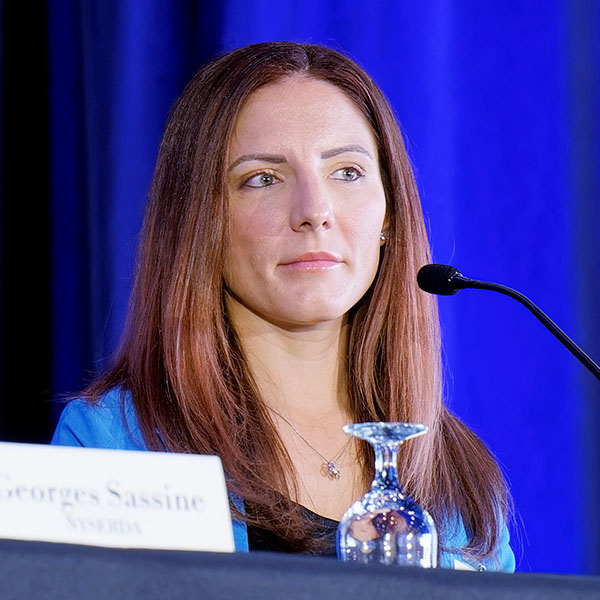
Georges Sassine, NYSERDA’s senior vice president for large-scale renewables, spoke of the scramble unfolding as policymakers try to secure as many clean megawatts as possible before prices jump: “The state of New York has a big role to play in driving industry forward, but we are also, all of us collectively, reacting to this big tectonic shift on the federal front.”
The New York Power Authority is part of the scramble. Its latest mandate — develop at least 1 GW of new advanced nuclear capacity — is still well off in the future. But in the near term, NYPA is trying to maximize the tax credit eligibility of the 64 emissions-free projects in its 7-GW pipeline, Senior Vice President of Development Christopher Hutson said, and devise other funding mechanisms for those that miss out on the credits.
New York’s challenges developing clean energy existed long before President Donald Trump kicked off his campaign against solar and wind energy development in January.
New York is an expensive place to do business, and it typically has had a slow regulatory process for renewable energy development. One obvious example: There still is no official definition of “zero-emissions” power more than six years after the state’s landmark climate law mandated a zero-emissions grid by 2040.
Even attempts to speed things up tend to move at a deliberate pace.
The RAPID Act was signed into law in April 2024 to speed renewables and transmission development. Through great effort, draft regulations were produced in just six months. The draft went through an extensive in-person, virtual and electronic public comment process, then was revised. The revised regulations (24-M-0433) were posted Oct. 22 and are open for public comment though Dec. 8. There is no target date for the Public Service Commission to review the comments then revise and finalize the rules, presumably in 2026.
But all this deliberation is a critical part of the process, said Zeryai Hagos, executive director of the state Office of Renewable Energy Siting and Electric Transmission (ORES).
“We received over 2,000 comments” on the RAPID Act draft, he said, “and we got some really excellent feedback.”
The need to make the process work better is real, and it is pressing. A detail stood out for Hagos in NYISO’s latest Power Trends report: “For every megawatt that we add, we’re losing two when we look backwards over the last four or five years. We can’t keep going on that way. We need to be able to build these projects in a more streamlined manner.” (See NYISO Makes Case for Repowering in Latest ‘Power Trends’ Report.)
There will be attrition among the 110 proposals in the ORES pipeline, he said. For starters, about two-thirds have not reached a safe harbor point where they can qualify for the federal tax credits. Some do not have financing or interconnection or REC contracts secured.
But Hagos said the all-of-government approach Hochul directed means every agency will be pulling to get as many of those projects as possible as close to groundbreaking as possible.
“If you take away one thing from my message here, it’s not going to be because of ORES; it’s not going to be because of a New York state agency and our bureaucracy and inefficiencies that these projects don’t achieve their timelines. We are doing everything we can to coordinate and make sure we’re moving things as efficiently as possible.”
Jessica Waldorf, director of policy implementation at the Department of Public Service, spoke of the many and sometimes competing needs facing New York — updating an aging grid, slashing its carbon footprint, expanding its capacity, protecting its ratepayers and factoring in its stakeholders’ opinions — but also told the audience there are multiple efforts to strike the balance.
“We have a lot of challenges ahead, a lot of opportunities to be creative as a state, and that’s what we’re laser-focused on,” she said.
The Headwinds
Land-based wind and solar can continue in New York in the Trump era; it just will be even more expensive than it has been.
Offshore wind, which New York has been counting on as a significant part of its decarbonization strategy, is a higher level of hurt: The federal government controls what happens in U.S. waters.
After two stop-work orders, the Trump administration is — at the moment — allowing work to continue on the five offshore wind farms under construction in U.S. waters but has moved to block any others from starting construction. (See Judge Lifts BOEM’s Stop-work Order on Revolution Wind.)
New York’s own Public Service Commission canceled planning for an offshore transmission network to serve the fleet of wind turbines envisioned off the New York coast, saying there was no point in incurring costs now for transmission for generation that will not be built anytime soon. (See NY Steps Back from OSW, Halts Offshore Tx Planning Process.)
There has been skepticism about whether investors who have been losing money hand over fist will be willing to lay out billions more under a future president who is friendly to offshore wind.
In a bit of exquisitely literal timing a day before the ACE NY conference, JERA Nex BP announced that it was exiting the U.S. offshore wind market and shelving Beacon Wind, the first phase of which once held a New York contract.
None of these things were featured at the conference, where speakers instead cheered the two New York projects under construction and the one already completed, and looked forward to a brighter future after Trump’s second term ends.
“The state’s commitment to offshore wind is emblematic by the fact that our own governor has stood up for these projects in a way that not only kept Empire Wind 1 alive but ultimately allows us to say that offshore wind can and will be a very significant part of our state’s future,” Harris said.
(Empire Wind 2, meanwhile, has been shelved by its developer, and the Trump administration has said it is planning to reconsider the 2024 approval for the second phase of Empire Wind 1.)
Despite all this, New York is arguably the de facto leader among the states pursuing offshore wind, with three wind farms in operation or under construction — two more than any other state.
Oceantic Network CEO Liz Burdock said $25.5 billion has been invested in the U.S. offshore wind sector, and the market fundamentals remain strong. “We will be able to build a comeback in 2028-2029 because of this.”
The details of any such comeback probably are unknowable so far in advance; Burdock offered none. Harris too spoke about the state’s goal but not the means of reaching it in the current environment. Afterward, NYSERDA offered RTO Insider essentially the same thing: policy but not strategy.
“Offshore wind remains a vital part of New York’s all-of-the-above energy policy for the long term,” a spokesperson said.
Three industry speakers framed Trump’s second term as a reset, a chance to fine-tune the approach to offshore wind development.
Kris Ohleth, executive director of the Special Initiative on Offshore Wind, revised the old analogy that executing the clean energy transition is like designing and building an airplane while flying it.
Offshore wind is the plane, and it is now grounded, she said, so let’s figure out how to get it back into the air. “This is our opportunity to have that more robust conversation and build some of the fundamentals into the system that maybe we just didn’t have time or knowledge to do previously.”
Better risk management is important to developers, said Zach Fuerst, director of business development for Vineyard Offshore. “New York has done a lot already to help developers and take a lot of feedback from developers about how to mitigate that risk through inflation-adjustment mechanisms that are factored into the contract and the PPA, and those are immensely difficult things to get perfect or to get right.”
Matthew Brotmann of Equinor Renewables America said New York state has been a good partner in the push to develop offshore wind, but in retrospect there are things that could have been done differently. “The expectations on offshore wind were extremely high,” he said. “The expectations were unrealistic, but we were all very enthusiastic, and I was totally on board with that.”
Brotmann and Ohleth said the opportunity exists to shift the narrative from the costs of offshore wind to its benefits — reliable power at a fixed cost in a time of rising demand and rising costs for electricity.
Both also spoke of narrowing the scope of what offshore wind is expected to be: a source of electrons rather than a Christmas tree with a host of ancillary benefits for the state economies and local communities. This might lower the strike price.
Brotmann called for states to collaborate rather than compete on supply chains and infrastructure: “I think it’s going to be essential moving forward because, quite honestly, developers are quite gun shy about trying to invest in large infrastructure without a guarantee of a pipeline, which, given the current administration and who knows what the next administration will be, we can’t guarantee that.”
Fuerst spoke of laying the groundwork for 2029 or 2030.
“I think the resource isn’t going away, and I think the fundamentals of this market don’t go away, and I think what we do over the next three years will be critical as to how quickly the industry is able to move toward building again and really be able to deliver on some of the ambitious targets that New York has for offshore wind and for the climate.”
Interesting Times
Trump-bashing was not on the agenda at the conference, although there were plenty of oblique references to the effects of Trump administration’s policies.
As Harris put it: “Every week is a new adventure when it comes to what the federal government will be doing with respect to clean energy.”
But neither was there an atmosphere of defeat.
As Harris also put it: “I have to say, I am extraordinarily thankful this year and every year to be working in the state of New York, a state which has demonstrated the durability of our commitment, our ability to deliver on what we promise, and ultimately an industry that will only continue to build.”
The resolute messages are to be expected: The attendees for the most part have a significant financial or professional or emotional stake in the continued growth of renewables and are not ready to give up.
After the conference, ACE NY Executive Director Marguerite Wells told RTO Insider she saw a similarly cheerful tenor six weeks earlier at the RE+ conference in Las Vegas. (See Livewire: Renewables Ready to Out-innovate, Outlast Trump.)
“I think there is a reasonable amount of optimism for the near term, call it the next three or four years, for people who have projects that they can safe harbor equipment and try to get them built in four years before the tax credits expire,” she said. “There is cautious hope that that’s a path. I think the question in everybody’s mind, which I don’t believe anyone has answered, is, what do you do with your pipeline after that?”
There are factors pulling in opposite directions. The state provides strong support for renewable energy development, and it presents high costs for development. It is also well down in state rankings for solar irradiance and onshore wind speed but has good offshore wind speed.
The state’s 9-GW-by-2035 offshore goal now appears challenging to meet, but the state remains committed to pursuing it, and Wells said that even amid all the damage the Trump administration is inflicting on the U.S. offshore wind sector, there is some cause for optimism for New York. The demand for electricity along the East Coast will only be greater in 2029, she said, and the alternatives to offshore wind — gas turbines and nuclear reactors — are slow to deploy and expensive.
The developers that have shelved offshore wind projects could resume work on them, rather than write off the large investments they have made to date, she added.
“There’s going to be demand for what they have, and for some number of the players, there will be projects to build, assuming a new administration opens things back up again,” Wells said. “There are tons of people who will have fled and licked their wounds and put their money elsewhere after that. There’s a hope that there are some who did not.”
ERCOT stakeholders gathered in Austin on Oct. 22 for a Technical Advisory Committee meeting, only to have a large-load discussion break out.
And with good reason. Staff told TAC members that they are tracking over 200 GW in large-load interconnection requests, primarily from data centers and cryptocurrency mining. Over 130 GW of requests (a 182% increase) have been added to the queue in just the past 10 months. However, only about 6.5 GW have been energized or approved for energization, with an additional 4.7 GW being studied.
That led stakeholders to question whether ERCOT has placed a moratorium on energizing large loads.
Consultant Bob Wittmeyer, chair of the Large Load Working Group, said that is not the case. “More loads have been approved to energize [in West Texas] than we can handle, but those loads are not yet operational, and it will be a while until they are,” he said, repeating what was said at the LLWG’s meeting Sept. 19.
However, Evan Neel, with data center developer Lancium, said the discussion during that meeting was not clear, leading to uncertainty within the market.
“In fact, that following Monday, there were some market research firms that published headlines of the sort that ‘ERCOT pulls the plug on data centers,’” Neel said. “They were citing explicitly things that were said during that meeting,” Neel said. “Obviously that is a concern when we’re talking about bringing investment to the state.”
ERCOT has cited studies that indicate it could lose at most 2,600 MW of load under certain operating conditions, without exceeding the post-contingency frequency limit. Staff said in a June market notice it is “essential” that they have accurate large-load models to assess grid stability risks, saying recent operational events demonstrate “the dynamic models currently representing many of these [loads] do not reflect their actual dynamic performance.”
“We’ve seen conversations around numbers of about 2,600, but the market notice points to a bunch of historical events that have not been anywhere close to that,” Neel said.
Another, more recent market notice bypassed the stakeholder process and addressed large loads potentially energizing on the system without having cleared “certain important hurdles.”
The notice established a new approval process requiring confirmation of all necessary modeling and telemetry is in place before a large load’s energization. The process is effective immediately and applies to any studied large load, regardless of the planning process used to evaluate interconnection’s reliability.
“This is something we don’t do willy-nilly,” Chief Regulatory Counsel Nathan Bigbee said. “Sometimes we may not have time, or we may decide that we don’t have time, to pursue a revision request for the stakeholder process in order to address the reliability risk.
“ERCOT ultimately has a statutory obligation to ensure the reliability of the grid,” he reminded stakeholders. “In some cases where there isn’t sufficient time to pursue a protocol revision or other guide revision, we believe it’s incumbent on us to address that risk. Sometimes that requires establishing policy on an interim basis through a market notice.”
RTC+B Project Eyes Dec. 5
ERCOT’s Matt Mereness said the Real-time Co-optimization + Batteries (RTC+B) project continues to be on the right track as its Dec. 5 implementation date nears.
“It looks like it’ll be a fairly smooth transition without having to take special procedures,” he told TAC during his regular update to members.
ERCOT’s Matt Mereness, UT alum | ERCOT
The project is in its third and final phase, with the focus on go-live. A required live production test to ensure effective frequency dispatch and control, involving almost 100 qualified scheduling entities and additional marketers, is scheduled for Oct. 30, and a cutover workshop is set for Nov. 13.
Mereness said staff have been evaluating historical data to determine potential ancillary service demand factors, the hourly parameters for each service type that indicate an assumed deployment (energy reservation) based on demand forecasts, intermittent renewable resources and other system conditions. These factors are used in the reliability unit commitment (RUC) studies.
The RTC+B Task Force has scheduled an in-depth meeting Oct. 27 to delve into ERCOT’s analysis and planned values. It is part of a tripleheader meeting that day.
The switchover will take place between 11:59 p.m. Dec. 4 and 12:01 a.m. Dec. 5 as the market begins dispatching energy and ancillary services every five minutes in real time.
Members Show Their College Colors
Members were encouraged to show their college spirit, and some did, wearing jerseys or shirts that exhibited their academic ties.
The meeting soon devolved into good-natured ribbing between Texas Exes and Former Students from Texas A&M. (As good Aggies know, there are no ex-Aggies, only Former Students.)
TAC Chair Caitlin Smith, a University of Texas alum with Jupiter Power, was quick to needle American Electric Power’s Richard Ross, a proud Aggie. “Richard Ross told me the theme of the month is ‘Hook ’em Horns!’” she said.
Ross, who usually sets monthly themes for TAC and SPP stakeholder meetings, snapped to attention. “That’s not true! That’s not true at all!” he said. Caught without a theme, he instead recounted SPP staff’s use of the term “trauma bond.”
“That’s when new staff joins the [stakeholder] meetings and they have the anxiety because they oftentimes get candid feedback and discussion,” Ross said. Turning to ERCOT’s Elizabeth Morales, bedecked in a UT T-shirt for her first TAC meeting, he said, “Elizabeth, this your trauma bond with TAC. I will share with you that that is one ugly shirt you’re wearing.”
“It’s a beautiful burnt orange shirt,” Smith responded, coming to Morales’ defense.
Reliant Energy Retail Services’ Bill Barnes wore a football jersey from the Colorado School of Mines bearing his son’s No. 27. A sophomore, Max Barnes led the School of Mines’ 72-14 win over Adams State on Oct. 18 with 201 rushing yards.
ERCOT’s Jake Pedigo had to step in when a fellow alumnus of the University of North Texas couldn’t remember the school’s slogan. “We are the Mean Green Eagles,” he said, “and it’s ‘C’mon Green, Get Mean.’”
RUC Opt-out Window Expanded
TAC unanimously endorsed, with two abstentions, a protocol call change (NPRR1285) that expands the current RUC opt-out window to incent self-commitment, increasing capacity available to the market at lower expense and reducing RUCs and associated costs.
The endorsement came despite an objection from the Independent Market Monitor.
“On a principal level, it doesn’t really improve self-commitment,” said the IMM’s director, Jeff McDonald. He agreed with staff’s assertion that the change increases flexibility for a generator and its settlement options, but he said that “by increasing the amount of flexibility you have for your settlement options, it would actually decrease the incentives for self-commitment for resources who believe that they might be near the margin of being needed or not needed.”
Dave Maggio, ERCOT’s commercial operations principal, said NPRR1285 eliminates an extra two hours from the lead time before an opt-out decision, which becomes a telemetry function.
“[I] just wanted to make sure it’s clear that it’s not a reversion back to what we had previously,” he said.
TAC’s combination ballot, or consent agenda, included the annual major transmission elements list, five NPRRs, a Nodal Operating Guide revision (NOGRR) and a system change request (SCR) that, if approved by ERCOT’s board, would:
NPRR1263: remove the accuracy testing requirements for coupling capacitor voltage transformers.
NPRR1280: establish a regional planning group review process for proposals to permanently bypass an existing series capacitor or un-bypass a series capacitor previously designated as permanently bypassed.
NPRR1293: clarify the “Update Network Operations Model Production Environment’s” milestone dates.
NPRR1294: incorporate the other binding document “Demand Response Data Definitions and Technical Specifications” into the protocols, standardizing the approval process.
NPRR1299: clarify and clean up language related to the emergency response service program, including a data file produced at the end of the procurement process using code managed entirely within ERCOT’s Demand Integration group. The file is manually produced and must be posted manually, which is affected by weekends and holidays.
NOGRR279: modify the monitoring equipment installation deadlines established by NOGRR255 (High Resolution Data Requirements) to Jan. 1, 2029, consistent with NERC standard PRC-028-01 (Disturbance Monitoring and Reporting Requirements for Inverter-Based Resources), and clarify that synchronized resources with standard generation interconnection agreements executed prior to July 25, 2024, have 12 months after their commercial operations date to comply with the new equipment standards.
SCR831: modify the network model management system, operational data management system, topology processor and the modeling-on-demand system to incorporate short-circuit modeling data for maintaining models built by the system protection working group.
Key organizations across California voiced strong opposition to Pacific Gas and Electric’s proposed rate increases that are under review at the California Public Utilities Commission.
Protesting organizations include the California Farm Bureau Federation, the California Community Choice Association and the Environmental Defense Fund, among many others.
The proposed rate increases are part of PG&E’s 2027 general rate case application, which was reviewed at an Oct. 22 public forum with CPUC officials. PG&E submitted its current general rate case application on May 15, and the commission plans to approve adjusted rates in May 2027.
Critically, PG&E’s application does not include costs associated with recent wildfire mitigation work, community rebuilding projects, billing system upgrades, undergrounding, electricity procurement, fuel and purchase power, or costs to own and operate the Diablo Canyon Power Plant, the CPUC said.
Increases in prior PG&E rate case applications have been driven by wildfire mitigation work, safety work and inflation, PG&E said in its application.
Proposed increases in the 2027 general rate case application are about 8% in 2027 and about 6.1% in 2028, 2029 and 2030.
In 2027, the rate change would increase the average residential customer’s gas and electric bill by about 3.6% compared to a bill in 2025. Electric bills would increase by about 5.2%, while gas bills would decrease by about 0.6%.
The average residential bill would increase by about $9.94/month in 2028, $10.50/month in 2029 and $11.08/month in 2030.
PG&E requested $72 billion over four years to fund its operations and investments, and the application controls a little more than half of PG&E’s overall revenue, CPUC Commissioner John Reynolds said at the Oct. 22 public forum.
“I am mindful that when PG&E pledges that rates will remain stable for years to come, the rates are currently unaffordable for many residents in the state,” Reynolds said at the forum. “Stable rates will not offer [relief] to those who are struggling to pay their bills.”
Displeased Organizations
In comments to the commission, Kevin Johnston, representative of the California Farm Bureau Federation, said PG&E’s rate application contained “a number of assumptions and misdirection” that minimize what continue to be “significant increases” built upon “years of skyrocketing increases” in revenue requirements.
“The authorized revenue requirement in 2017 was $8 billion. The adopted revenue requirement in 2026 was $15.4 billion. A 92% increase in nine years,” Johnston said. “Customers want transparency, not spin.”
The California Community Choice Association added in comments that PG&E’s rate case application raises “critical questions concerning cost shifting.”
CalCCA is concerned specifically with PG&E’s request for $2.45 billion of capital investments between 2027 and 2030 in the company’s hydroelectric generation fleet. Many of the hydroelectric assets have outlived their expected lifespan, and PG&E is not required to relicense these assets, CalCCA said.
The Environmental Defense Fund said in comments that it’s concerned with PG&E’s capital forecasts for setting initial rates and the lack of information about data center forecasts in PG&E’s territory.
Texas Gov. Greg Abbott has appointed Morgan Johnson to the Public Utility Commission, adding a fourth member to the five-person panel.
Morgan Johnson | Morgan Johnson via LinkedIn
Johnson, a deputy general counsel for the Office of the Governor, was appointed Oct. 23 and sworn in. By being appointed while the Texas Legislature is out of session until 2026, Johnson can be seated immediately without confirmation.
“The electric, water and telecommunications industries are complex and have an enormous impact on the lives of millions of Texans,” Johnson said in a statement. “I look forward to working with my fellow commissioners and [PUC] staff ensuring affordability and reliability of these life critical services.”
Before joining the governor’s office, Johnson was a senior counsel at the Texas Commission on Environmental Quality. She also worked as an attorney at McGinnis Lochridge.
Johnson holds a bachelor’s degree in finance from the University of Texas at Austin and a law degree from the South Texas College of Law. Her term expires Sept. 1, 2031.
U.S. Secretary of Energy Chris Wright has directed FERC to initiate a rulemaking to accelerate the interconnection of large loads by asserting jurisdiction over end-use customers’ connections to the grid for the first time.
“It is my view that the interconnection of large loads directly to the interstate transmission system to access the transmission system and the electricity transmitted over it falls squarely within the commission’s jurisdiction,” Wright said in a letter sent to FERC on Oct. 23 with an attached advanced notice of proposed rulemaking (ANOPR).
Asserting FERC’s jurisdiction is in the public interest and in line with the Trump administration’s goals of revitalizing American manufacturing and driving innovation in artificial intelligence (AI), both of which require extraordinary quantities of electricity and substantial investment in the transmission grid.
Wright used his authority under Section 403 of the Department of Energy Organization Act to direct FERC to initiate rulemaking procedures and consider the ANOPR on reforms to ensure the timely and orderly interconnection of large loads to the transmission system.
“In light of the unprecedented current and expected growth of large loads seeking to interconnect to the transmission system, and to provide open access and non-discriminatory access to the transmission system, it has become necessary to standardize interconnection procedures and agreements for such loads, including those seeking to share a point of interconnection with new or existing generation facilities (hybrid facilities),” the ANOPR said.
The document lays out four legal justifications for the regulatory change, the first being that large load interconnections are a critical component of open access transmission service that require minimum terms and conditions to ensure non-discriminatory transmission service.
Second, the interconnection of large loads is a practice that directly affects FERC-jurisdictional rates, and the Federal Power Act has vested the regulator with exclusive authority to ensure wholesale rights are just and reasonable.
The ANOPR’s third justification argues it will not impinge on state authority over retail sales because FERC will not exert jurisdiction over any retail sales to the large load.
“Similarly, nothing in the proposed reforms governs the siting, expansion or modification of generation facilities,” the ANOPR says. “Authority over expansion or siting of generation facilities remains reserved to the states.”
Fourth, any contrary view of the proposed reforms conflicts with the Federal Power Act’s core purpose that grants FERC exclusive jurisdiction over transmission in interstate commerce and large loads connecting to the grid to obtain service benefit from that.
Any new rules should apply only to transmission facilities, consistent with FERC’s seven-factor test. The new rules also should apply only to customers with 20 MW of load, or for hybrid facilities where the load is greater than 20 MW.
DOE’s ANOPR suggests studying large loads and new generation together where possible as that would allow for efficient siting and minimize the need for network upgrades. Load and hybrid facilities should be subject to study deposits, readiness requirements and withdrawal penalties.
The studies should be done based on injection and withdrawal capacity available and be required to install system protection facilities to stay at or below those levels.
Curtailable load and hybrid facilities should have their studies expedited and the ANOPR asks whether requirements around curtailability can be included in the interconnection study process, or by other means.
Any generator that enters a partial suspension to serve large load will have to go through a reliability-must-run type study that will consider system conditions, including load growth, at least three years after the suspension.
FERC will have to justify its departure from long-standing rules that gave states jurisdiction over customer interconnection, which despite decades of orders on restructuring markets it has never claimed.
“Thus, while we believe in most cases there will be identifiable local distribution facilities subject to state jurisdiction, we also believe that even where there are no identifiable local distribution facilities, states nevertheless have jurisdiction in all circumstances over the service of delivering energy to end users,” FERC said in its Order 888 in 1996.
FERC Commissioner David Rosner posted on X that he was happy to take up Wright’s proposal and that dealing with the issues has bipartisan support on the commission.
“I am excited to work with my colleagues on Secretary Wright’s proposal,” he posted. “Getting large load interconnection right is a generational opportunity that is key to winning the AI race, reshoring American manufacturing, and keeping electricity reliable and affordable for everyone.”
Former FERC Chair Mark Christie said in an interview Oct. 24 that the ANOPR overlapped with the ongoing debate at FERC over co-location of load, which he wanted to get a final rule out on, but was unable to secure enough votes before stepping down in August.
The devil is in the details, and many questions will be answered as FERC works through a rulemaking process, but Christie warned that the change in jurisdiction could lead to problems.
“It’s going to have a monumental impact certainly on state authority to govern interconnection and set the terms of interconnection, and also it’s going to have a monumental impact on the states’ ability to maintain the integrity of their integrated resource planning process (IRP),” Christie said.
The order directs FERC to process large load interconnection requests with 60 days, which could mess up load forecasts on which IRPs rely. In RTO states, it will have the effect of removing existing generators from the market and putting upward pressure on prices to the extent it encourages co-location, and the issue of load forecasting also is pertinent due to the use of demand curves in capacity markets.
“That demand curve is set by load forecast,” Christie said. “So, if load is basically unpredictable, because FERC is now saying every single large load customer has to be interconnected within a short time frame, that’s going to potentially drive up the demand curve in the PJM capacity market.”
The main questions FERC will have to answer are what the rule change would mean for reliability, what it will mean for costs and cost allocation and whether it can claim an authority previously reserved for states.
“I think they’re all questions at this point, not conclusions,” Christie said. “I want to emphasize that they’re all questions at this point, not conclusions.”
Speaking at S&P Global’s Nodal Trader Conference, NRG Vice President of Regulatory Affairs Travis Kavulla said that hopefully the order moves the ball forward on dealing with large loads.
“Obviously all of these loads are connected at relatively high voltages, basically to the transmission system,” Kavulla said. “So, I have sometimes puzzled why state-regulated utilities acting in what seems to be solely in keeping capacity would be the arbiters of how that load gets on the system.”
One of Texas’ big examples is that it does not have separate authorities for transmission and distribution, which has helped make it a major market for hyperscale data centers, he added.
A key difference with Texas is that it is operating an intrastate market and it is not having its authority potentially usurped by the federal government, Christie said.
NARUC spokesperson Regina Davis said in an email that the proposal was being reviewed by the group and its state regulator members so it could not comment on specifics.
“Naturally, the matter of adequate load growth is a priority for NARUC and its members,” Davis said. “We engaged with FERC on the Joint Federal-State Task Force on Electric Transmission, which has evolved into the new Federal and State Current Issues Collaborative exploring cross-jurisdictional issues.”
Davis added that “the ANOPR points to data centers as one of the drivers of load growth, which is the focus of our Demand Roundtable that convenes hyperscalers and mega users in dialogues to discuss the critical issues surrounding increased demand.
“Achieving the grid reliability and flexibility needed to accommodate growing demand will require input and collaboration with state regulators and NARUC looks forward to working with FERC and other stakeholders to ensure the grid can meet future demand,” Davis said.