Search
December 7, 2025

A Cooperative Path for Large-Load Interconnection: Why States and FERC Must Work Together

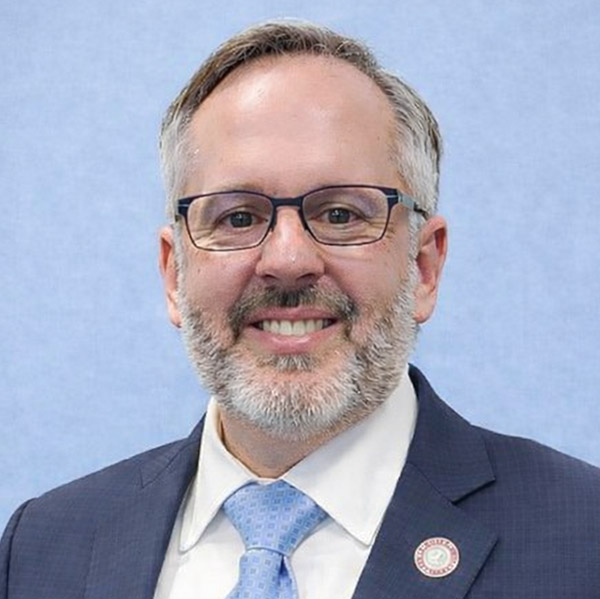
Nick Myers

By Nick Myers

The U.S. is entering one of the most transformative periods in the history of its electric grid. Demand growth once projected to be flat or modest has surged dramatically due to the rapid expansion of data centers, semiconductor manufacturing, electrified industrial processes and artificial intelligence infrastructure.

States like Arizona, Georgia, Texas and Virginia are experiencing unprecedented requests from large-load customers — sometimes hundreds of megawatts at a time, often with aggressive deadlines and nearly always with major implications for transmission planning, resource adequacy and local reliability.

Recognizing the magnitude of this coming shift, the Department of Energy issued a rare Section 403 directive Oct. 23, requesting that FERC initiate rulemaking procedures and consider an Advance Notice of Proposed Rulemaking (ANOPR) to create a new framework for the interconnection of large loads to the transmission system. The resulting ANOPR, now underway, will shape how quickly, fairly and reliably large loads gain access to the grid for years to come. (See Energy Secretary Asks FERC to Assert Jurisdiction over Large Load Interconnections.)

This development has generated broad national discussion, including among state utility regulators. At the National Association of Regulatory Utility Commissioners’ recent annual meeting, NARUC adopted a resolution emphasizing the need for FERC to respect state jurisdiction and collaborate closely with states as it considers how to regulate large-load interconnections. Far from attempting to block federal action, NARUC instead articulates an important message: States and the federal government must be partners in this process, not competitors. (See Regulators Urge FERC to Honor State Authority over Large Load Interconnections.)

Collaboration, ultimately, must be the animating theme of our national approach. If we treat this as a jurisdictional contest between Washington and the states, we will fail to meet the urgency of the moment. If, instead, we treat this as a shared responsibility — with states leading on retail impacts and FERC serving as a federal backstop where interstate coordination is essential — we can deliver the infrastructure needed to support economic growth, protect reliability and ensure that retail customers are not unfairly burdened by the costs of new large loads.

The Moment Requires Cooperation, not Competition

It is tempting — especially in the traditionally divided landscape of energy regulation — to gravitate toward turf protection. But the challenge before us is too large, too complex and too time-sensitive for regulatory silos. State regulators, utilities, transmission providers, regional planning authorities and FERC must adopt a posture that is less competitive and more cooperative if we want to succeed.

Large-load interconnections today face three fundamental challenges:

    1. Timing: Study processes never were designed for single customers requiring 100 to 1,500 MW of new demand in a matter of months.
    2. Cost Allocation: Uncertainty about who pays for transmission upgrades can stall or kill major projects.
    3. Reliability: Sudden new demand can strain generation reserves, transmission capacity and local distribution systems.

States understand these impacts more directly than anyone. They see the near-term pressures on local substations, on summer reliability margins and on the retail rates their constituents ultimately will pay. That is why NARUC’s resolution emphasizes the need to preserve state jurisdiction and ensure retail customers are not left subsidizing massive data center and industrial loads.

At the same time, FERC is the only entity with legal authority to ensure consistent treatment across interstate transmission systems. Large loads have regional impacts. Their interconnection often triggers bulk-system upgrades that span multiple states. Without a federal backstop, transmission planning across state lines becomes slower, riskier and less predictable.

Neither side can succeed alone. For that reason, cooperation — not competition — must be our guiding principle.

FERC as a Backstop Authority, not the Front-line Regulator

The most productive framing is one that treats FERC as a backstop authority — the referee who steps in when interstate coordination or minimum national standards are needed, but who does not displace the states’ essential authority to ensure resource adequacy, reliability and affordability.

Under this model:

    • States retain jurisdiction over retail rates, distribution infrastructure and siting.
    • States lead the conversations around cost shifts, local planning and reliability impacts.
    • Regional transmission operators and utilities handle the technical study processes, applying state-approved resource adequacy and planning assumptions.
    • FERC sets the minimum guardrails for transparency, open access and interconnection timelines on the transmission system.
    • FERC uses its authority only when regional issues cannot be resolved at the state level in a timely manner.

This approach ensures fairness and consistency without undermining state sovereignty. It also provides large-load customers with something they increasingly demand: certainty. Certainty that timelines will not drag on indefinitely. Certainty that rules will not change midprocess. Certainty that their project will not be subject to a patchwork of incompatible interconnection standards across the country.

In other words, FERC should not be the first mover. It should be the backstop — the stabilizing presence that steps in only when needed, and only where states agree that interstate coordination is indispensable.

Why States Must Lead — but not Alone

State regulators are closest to the impacts of large-load interconnection. When a data center proposes a 200-MW facility, it is the state commission that will hear from residents about reliability concerns. It is the state that will be responsible for ensuring adequate generation and reserves. It is the state commission that must determine how costs are recovered — and who bears them.

The NARUC resolution rightly stresses these points. It does not oppose federal involvement; instead, it advocates for a balanced framework in which states maintain authority over matters that directly affect retail customers. The resolution also acknowledges the need for collaboration with FERC and other stakeholders, recognizing that a purely state-led approach cannot solve every regional transmission challenge.

This dual recognition — that states must lead but cannot act alone — is essential. No state wants to see its retail customers subsidizing another state’s economic development. No state wants to compromise its reliability due to regional planning failures. And no state wants to be left without the tools to assess or assign the costs of substantial new load growth.

The Path Forward: A Shared National Strategy

To deliver the infrastructure required for the next generation of American energy and innovation, we will need a coordinated national strategy built around the following principles:

    1. Clear, transparent interconnection processes. Large loads must know exactly how long studies will take, what upgrades are needed, and how costs will be allocated.
    2. Strong state-federal coordination. State commissions must be at the table from the beginning—not reacting after federal rules are finalized.
    3. FERC as a backstop — not an adversary. Federal authority should be triggered only when regional solutions are required and state-level mechanisms are insufficient.
    4. Protection for retail customers. States must have a decisive role in evaluating whether new load will shift unfair costs to existing ratepayers.
    5. A commitment to reliability above all else. New development cannot come at the expense of reliability or resource adequacy.

Conclusion: Meeting the Moment Together

Our country is facing an unprecedented wave of demand growth. We can either rise to meet it or fall behind and risk delaying economic development, hindering innovation and compromising the reliability of the electric grid.

Competition between states and FERC is not the answer. Cooperation is.

By embracing a framework in which states lead, FERC can be an essential federal backstop and provide large-load customers with clarity and predictability. This collaborative approach can support the next era of American growth while maintaining affordability and reliability for all consumers.

This moment demands partnership. It demands humility. And above all, it demands a shared commitment to building the grid of the future — not through conflict, but through collaboration.

Nick Myers is vice chair of the Arizona Corporation Commission.

IESO Tweaking Make-whole Payments for Operating Reserves

IESO is proposing rule changes to eliminate unwarranted make-whole payments (MWPs) to operating reserve (OR) providers under Ontario’s nearly eight-month-old Market Renewal Program.

“These are very specific and limited circumstances and only became apparent after the Renewed Market ‘go-live’ and relate to the interaction between payments for energy and operating reserve,” the ISO said at an engagement session Nov. 21.

MWPs are intended to incentivize market participants to follow their schedules by compensating a resource for the financial difference between its actual dispatch and what it would have been based on its offer curves and LMPs.

Although improved alignment between schedules and LMPs under the new market has reduced the need for MWPs, they still are needed because of manual out-of-market actions taken for reliability and differences between scheduling passes and pricing passes.

Real-time MWPs should represent a resource’s physical capabilities and are calculated considering co-optimization of energy and OR. IESO calculates payments for lost costs and lost opportunity costs (LOCs) based on economic operating points (EOPs), which reflect the output a resource could have achieved based on its physical capabilities and LMP, under actual market conditions.

EOPs are based on offers and bids, resource-specific characteristics and LMPs. Lost cost scenarios occur when the LMP indicates a resource should have been scheduled lower.

The Renewed Market, which launched May 1, created a financially binding day-ahead market (DAM) and about 1,000 generation, load and intertie pricing nodes to replace its provincewide price. (See Ontario Nodal Market Nearing ‘Steady State’ After Nearly 4 Months.)

Hok Ng, IESO’s senior manager of market development, identified three types of inappropriate real-time make-whole payments:

EOPs and ‘Forbidden Regions’

Some hydro generators have “forbidden regions” in which they cannot maintain steady operation without damaging their equipment and thus must ramp through.

Although the forbidden regions are considered in dispatch schedules, they are not reflected in determining the EOPs on which MWPs are based.

The energy market accounts for cases in which EOPs are physically unattainable with a settlement process that subtracts the portion of the MWP resulting from an energy schedule in a forbidden region or at the upper boundary.

IESO’s proposed rule change (MR Ch.0.9 Section 3.5.6) would add a similar adjustment for OR MWP calculations.

OR Ramping in LOC EOP Calculations

An inconsistency between OR ramp constraints in the dispatch scheduling optimizer and EOP calculation engine is overstating EOPs beyond what resources can physically perform, resulting in unwarranted MWPs.

The EOP calculation engine is missing constraints containing the interval-to-interval energy ramp impact on available OR ramp.

IESO’s proposed revision would add equations including the interval-to-interval change in energy to the LOC EOP OR calculations (MR Ch.0.7 App. 7.8).

MWPs not Offsetting Energy and OR Products

Make-whole payments are intended to keep a resource whole for following dispatch instructions that are co-optimized across energy and reserve products, such as 10-minute spin, 10-minute non-spin and 30-minute reserves.

But the current LOC MWP settlement is ignoring profits realized for the same capacity in the market, resulting in market participants being paid twice for the same megawatts.

The proposed Market Rule Amendment (MR Ch.0.9 Section 3.5) and Market Manual changes (MM 0.5.5 Section 2.7) will clarify how the offsetting should be calculated.

Next Steps

IESO requests comments on the Adjustments to RT MWP engagement by Dec. 1 via its feedback form. The ISO will respond to feedback and present a red-lined draft of the market rule amendments on Dec. 16.

IESO’s Technical Panel will conduct an education session on the changes on Dec. 2 with a vote to recommend to the IESO board scheduled for Feb. 10, 2026.

Implementation is planned for April 2026.

FERC Report Urges West to Address Looming Market Seams Issues

A new FERC report adds to the growing body of work showing the complexity of confronting the seams issues likely to arise between the West’s two day-ahead markets when compared with challenges at the borders between RTOs and ISOs in the Eastern U.S.

In their white paper “Seams Coordination in the Western Interconnection,” released Nov. 21, FERC staff urge Western electricity industry stakeholders to get ahead of seams issues before CAISO’s Extended Day-Ahead Market (EDAM) and SPP’s Markets+ both go live, scheduled to occur in 2026 and 2027, respectively.

And the authors recommend steps the two market operators can take to manage the myriad challenges — mostly unique to the West — related to the existence of seams between the markets.

The authors acknowledge the analyses already published on the issue, saying their report is intended “to support the ongoing discussions among stakeholders and highlight the importance of collaboration by relevant parties to address these complex issues.” (See ‘Islanded’ BAs Face Tough Choices in Western Market Future, Experts Say and Western Market Seams Issues to Differ from East, Study Finds.)

“These seams can create operational and reliability hurdles that arise from several related issues: overlapping transmission ownership and rights, differences in transmission modeling, and congestion caused by loop flow,” they said. “The same issues could diminish the economic benefits of EDAM, [CAISO’s Western Energy Imbalance Market], and Markets+ by limiting the ability to trade across markets.”

The paper outlines the history of seams coordination in the Eastern Interconnection, including the development of congestion management processes and market-to-market agreements typically wrapped into the joint operating agreements among RTOs such as PJM, MISO and SPP, and their neighboring non-market areas. Those JOAs include provisions for handling emergency energy flows between balancing authorities and managing trades across boundaries, such as through coordinated transaction scheduling (CTS), FERC staff noted.

The paper points to two efforts already underway to address seams issues in the West.

The first, not directly related to the two markets, is the joint work by CAISO’s RC West and SPP RC to propose improvements to the Western Interconnection Unscheduled Flow Mitigation Plan to the North American Energy Standards Board.

In April 2024, NAESB’s Enhanced Curtailment Calculator (ECC) Task Force — which includes members from both reliability coordinators — issued a white paper describing the problems with current unscheduled flow mitigation practices in the West. It explained that the region’s BAs and transmission operators largely rely on their own individual methods to resolve unscheduled flows, meaning that transmission customers on one system might experience curtailments for different reasons than similarly situated customers on a different system. To remedy the problem, the task force recommended expanded use of the ECC tool to bring more uniformity.

The second seams effort underway is the Markets+ Seams Working Group (MSWG), as well as work undertaken by other working groups helping to develop that market.

“From its inception, the MSWG was charged with supporting the development of seams coordination frameworks and identifying potential seams-related tariff content; early discussions on the working group’s scope included import/export and wheel-through issues and congestion management topics,” the paper says.

At the direction of the Markets+ Participant Executive Committee, the MSWG in 2024 began developing the Seams Strategy and Roadmap, designed to identify focus areas for policies and governing documents related to seams issues with neighboring areas.

Going to Flow-based Modeling

In the paper, FERC staff called out “three primary categories of issues that Western entities should consider addressing through seams coordination agreements,” including:

    • use of flow-based modeling rather than contract path modeling;
    • coordinating interchange between market areas to prioritize maintaining reliability and managing congestion; and
    • coordinating electricity flows to maximize economic efficiency.

On the modeling issue, the authors note that transmission availability in the West is mostly modeled on contract path-based models that assume flows on contracted paths between generation sources and load sinks, compared with the flow-based approach in the East that relies on a flowgate methodology to calculate available transfer capability (ATC).

“Because flow-based modeling uses actual power flows to model the transmission system, it is generally considered to be more efficient and robust than the contract-path based methodology,” FERC staff wrote, adding that use of the two methods is “inconsistent” across the West.

“The continued use of contract path-based modeling and the use of different modeling methodologies may complicate efforts to maintain reliability, mitigate congestion and enhance economic benefits in the Western Interconnection. Thus, before discussing more specific approaches to coordinating operations in the West, it is important to ensure that the transmission availability and usage metrics these markets rely on be modeled as consistently and accurately as possible,” they wrote.

Adoption of flowgate modeling would have two benefits, they said: more accurate estimation of ATC and “better coordination across seams during day-ahead and real-time operations by market operators and BAs.”

Given that EDAM and Markets+ will rely on transmission capacity being made available by market participants rather than transmission owners handing over control of their systems as in a full RTO, FERC staff said, “flow-based modeling of ATC could provide a more accurate view of how much transmission is actually available to allocate between the markets compared to the results of contract path-based modeling prior to the actual day-ahead and real-time market runs.

“Western entities could investigate whether this would ease longer-term transmission expansion needs and make more transmission available for day-ahead and real-time market optimization.”

Managing Reliability, Congestion

On the subject of coordinating interchange between markets, FERC staff called the process a “key tool” in maintaining reliability and managing congestion.

“Agreements that formalize interchange procedures during critical system conditions between markets, as well as those between markets and non-markets, have generally provided greater certainty to system operators and improved cooperation between BAs. These include agreements such as emergency energy agreements, reserve sharing arrangements and JOAs,” they wrote.

The paper recommends that Western entities consider how reliability agreements across seams address data and model coordination, emergency event protocols, and loop flow management.

FERC staff wrote that the expansion of centralized markets in the West “introduces new challenges and opportunities for managing congestion between markets areas as well as between markets and non-markets,” with EDAM and Markets+ schedules potentially causing loop flows that extend beyond their borders.

To limit the effects of congestion, the paper recommends the adoption of M2M coordination, which seeks to reduce congestion at the lowest cost through the sharing of market pricing data between two RTOs/ISOs to bring about the most efficient redispatch.

Economic Trading Across Seams

The paper says cross-seam coordination of electricity transfers for cost savings likely will take on different forms in the West than in the East.

Part of that has to do with the differences between how EDAM and Markets+ deal with bidding at their interties with non-participating BAs.

Under existing WEIM and EDAM rules, participating BAs can decide whether to allow non-resource specific bidding at their interties with non-participating BAs. In Markets+, intertie economic trading will be implemented uniformly along its seams, allowing participants to submit buy and sell offers for imports and exports as long as they have the necessary transmission rights — an approach the authors say “could facilitate more economically efficient trading across its seams.”

FERC staff suggest that Western market operators could implement coordinated economic trading between their two areas. That might entail a practice such as CTS, which allows market participants to use a single portal to submit bids based on spreads between delivery points on either side of market seam.

The market operators also could implement “some form of interchange optimization” that gives them visibility into each other’s system and pricing for each trading interval. That approach would allow market participants to submit bids within their own markets, with the operators then using that information to determine whether they can meet their needs most economically from their own resources or from transfers out of a neighboring area based on transmission constraints and other factors.

The FERC paper did not explore another complicating factor for the Western markets compared with the East: the highly fractured boundaries between EDAM and Markets+ that likely will effectively island some participants — particularly in Markets+.

During a meeting of CAISO’s Western Energy Markets Regional Issues Forum in April, Richard Doying of Grid Strategies, one of the designers of the MISO market, noted that non-contiguous market zones “will require drive-out, drive-through and drive-in transmission service and schedules,” an arrangement that will require new types of transmission service and coordination to avoid diminishing the value the markets are intended to bring.

“The complex seams arising in the West from the expansion of Western markets presents challenges to operations, reliability and the efficiency of the markets,” FERC staff wrote in the conclusion of their paper. “To address these challenges, FERC staff believe it is important that Western entities continue their work coordinating operations to ensure the reliability and efficiency of their markets and BAs as Western markets proceed toward implementation and in advance of live operations.”

Collaboration Key to Energy Affordability, Say U.S. and Canadian Officials

BOSTON — Energy affordability and regional collaboration dominated talks at the New England-Canada Business Council’s annual Executive Energy Conference on Nov. 19-20.

While the event featured similar themes and rallying cries as the 2024 conference, calls for collaboration have taken on a different tone amid heightened tensions between Washington and Ottawa. (See US, Canadian Leaders Discuss Affordability of Energy Transition.)

Massachusetts Gov. Maura Healey (D) and Nova Scotia Premier Tim Houston both attended the event and emphasized the strong ties between the people and economies of the Northeast states and provinces.

“Our energy future is inextricably tied to Canada’s,” Healey said, noting that states and provinces are in regular communication on energy policy and planning through the Northeast International Committee on Energy, which reconvened in 2024.

She highlighted a resolution passed at the Annual Conference of New England Governors and Eastern Canadian Premiers during the prior weekend reaffirming “the importance of continued regional collaboration, including interregional information sharing, planning and analysis on energy matters.”

“We look forward to continuing to build on that and to strengthen the ties that bind us, especially on energy transmission,” she said.

Healey directly criticized the tariffs imposed by President Donald Trump for creating “needless friction” between the countries and driving up costs throughout energy infrastructure supply chains.

Massachusetts Gov. Maura Healey | © RTO Insider 

“Higher infrastructure costs ultimately make higher energy costs for our people, and it’s our businesses, our consumers and our residents who lose out,” Healey said. “Lift these tariffs, Mr. President, and lower housing costs and lower energy costs for the American people.”

Houston also touted the strength of cross-border relationships in the Northeast while emphasizing his commitment to transforming Nova Scotia into an “energy superpower.” The province has outlined plans to scale up offshore wind and offshore oil and gas drilling, with an eye toward ramping up its exports.

“Nova Scotia is the next frontier in generation,” Houston said. “As long as I’m in this chair, I will do everything I can to grow this industry.”

Several presenters spoke about the massive potential for wind generation in the province. According to the strategic plan for the province’s Wind West project, “Nova Scotia’s already studied and identified sites alone [that] have the capacity to generate 62 GW of new electricity supply, with capacity factors of up to 60%,” equal to about a quarter of Canada’s total energy capacity.

The Canada-Nova Scotia Offshore Energy Regulator has initiated a process of issuing licenses to develop up to 3,000 MW across three areas, while leaving the door open for licenses up to 5,000 MW.

Houston said he is confident about the viability of the sites, ports, workforce and matureness of the technology to support a large-scale wind buildout but acknowledged that questions remain about how to transport the power to markets in Canada and the U.S.

Dave MacGregor, associate deputy minister for the Nova Scotia Department of Energy, said he is “struck by the fact that we were talking about the exact same things 25 years ago — and I’m referring specifically to transmission.”

But despite the challenges of the past, he expressed hope that renewed collaboration efforts finally could make transmission projects a reality.

“For the first time in close to three decades, the staff are coming to Nova Scotia to figure this out,” MacGregor said. “I really have seen marked improvement, and I do see a path where New England can benefit and Canada can benefit.”

Transmission paths to New England or Quebec could follow either submarine or overland routes. Several panelists at the conference advocated for a subsea path.

“We would say submarine cable all day long,” said Donald Jessome, CEO of Transmission Developers Inc. “There’s no engineering issues; the technology is there today.”

Stuart Nachmias, CEO of Con Edison Transmission, agreed that the technology is available to support a submarine line but said there are challenges related to siting, permitting and offtake.

“Who’s going to pay? That’s always the issue,” Nachmias said.

Phil Bartlett, chair of the Maine Public Utilities Commission, concurred, emphasizing the importance of understanding what the costs would be and how they would be shared.

“It’s going to take regional collaboration. I think you would need multiple states interested in a project to move forward,” Bartlett said.

He expressed optimism about the recent increase in collaboration between the states on transmission issues, pointing to the ongoing ISO-NE Longer-term Transmission Planning (LTTP) procurement, which aims to reduce transmission constraints in Maine and help support the connection of 1,200 MW of onshore wind. (See ISO-NE Provides More Detail on Responses to LTTP Procurement.)

The newly established LTTP process includes a cost allocation framework, in which the costs of a solution selected by ISO-NE will, by default, be allocated by load share. The states have the option to submit an alternate cost allocation method or terminate the process.

In coordination with the LTTP solicitation, Maine has initiated a separate process to procure onshore wind in northern Maine and a transmission line connecting the generation to a new substation that would be created through the LTTP process.

Bartlett said he expects at least five of the six New England states to participate in this separate procurement, adding that “having the states working together on these procurement issues really helps to get it done.”

Bartlett said that 1,200 MW of onshore wind “is just the “tip of the iceberg of what’s available in Maine,” and that “we consider this Phase 1 of that buildout, recognizing there’s a lot more to do.”

‘Build, Baby, Build’

Some speakers called for increased efforts to address the infrastructure constraints that limit the flow of gas into New England.

Toby Rice, CEO of the EQT, praised the Trump administration’s energy policy approach and stressed the need to build more gas infrastructure to “win this AI race.”

“I don’t want to find out what happens if we don’t win this race,” Rice said.

It will be won, he said, by the country that can scale up generation most quickly. He noted that China is adding power at a far faster pace than the U.S.

“It’s no longer about ‘drill, baby, drill’; it’s about build, baby, build, and we’re hopeful that permitting reform will be a priority over the next 12 months,” Rice said.

He said the growth of intermittent renewables has caused gas resource capacity factors to decline, putting strain on the economics supporting gas generation in some areas. To address the issue, he advocated for increased incentives for gas resources to be available on standby.

At the same time, he opposed capping capacity prices, saying, “We have to experience a little bit of pain for the market signals to be there.”

John O’Brien, CEO of JERA Americas, said industry leaders should do more to advocate for adding gas pipeline capacity into the Northeast.

Business groups, such as the Associated Industries of Massachusetts and regional chambers of commerce, “have to be re-energized to actually take on those issues,” O’Brien said. “You should take on an agenda, and the agenda might be controversial, but that’s why you pay the big dues.”

He said New England “should recognize that we need this infrastructure to continue to have our key industries” and pushed back on the idea that it is a foregone conclusion that the gas constraint will prevent the region from hosting data centers.

“Are we going to say, ‘We’re going to forgo that opportunity because we would have to expand the gas system?’” O’Brien asked.

Other speakers focused their comments on the importance of demand-side actions and reining in spending on upgrades to existing assets.

Weezie Nuara, Massachusetts’ deputy secretary for federal and regional energy affairs, emphasized the “need to add transparency and scrutiny” to local transmission spending. She said ISO-NE’s recent work to establish a new in-house asset condition reviewer should “help us get our hands around the largest component of [transmission] spending.” (See More Oversight Needed on Local Transmission Spending in NE, Panel Says.)

From left: Sarah Tracy, Pierce Atwood; Liz Anderson, Massachusetts Department of Public Utilities; Christine Bonnell-Eisnor, Canada-Nova Scotia Offshore Energy Regulator; Phil Bartlett, Maine Public Utilities Commission; and Joshua Walters, Connecticut Department of Energy and Environmental Protection | © RTO Insider 

Massachusetts Department of Public Utilities Commissioner Liz Anderson noted that, under state law, electric utilities cannot charge ratepayers for long-term gas pipeline contracts. She said the DPU is focused on addressing affordability through the means within its jurisdiction, including demand-side actions and scrutiny on infrastructure spending.

In recent years, the DPU has pursued an ambitious strategy promoting a phased electrification of the state’s gas distribution network. (See Outgoing Mass. DPU Chair Van Nostrand Discusses Gas Transition.)

Advocates of this strategy argue that, without a focus on strategic electrification and pipe decommissioning, gas customers will be saddled with a rapidly increasing share of the gas network’s fixed costs as electrification customers exit the system.

In an op-ed published in the Boston Globe on Nov. 17, former DPU Chair Jamie Van Nostrand wrote that gas supply, which accounted for about two-thirds of customer costs a decade ago, now makes up less than a third. Meanwhile, “roughly 70% of the bill pays for infrastructure, profits and taxes,” he argued.

Anderson emphasized the importance of investment in energy efficiency and advanced metering infrastructure (AMI). The Massachusetts electric utilities aim to complete their deployment of AMI infrastructure by 2029. Once in place, the meters likely would enable development of time-varying rates that incentivize customers to reduce demand during peak periods.

“That’s a huge untapped resource, and I think that’s something we can do at the state level,” Anderson said.

FERC Mostly Accepts Calif. IOUs’ Order 2023 Compliance Filings

FERC largely approved filings by California’s three major investor-owned utilities to comply with interconnection queue requirements under Order 2023 (ER24-2776, ER10-1391-003 and ER24-3032).

In three separate orders Nov. 20, FERC mostly accepted Southern California Edison, San Diego Gas & Electric and Pacific Gas and Electric’s tariff revisions, but the utilities must clarify some issues within 60 days.

In SCE’s case, FERC ordered the utility to file revisions related to storage operating assumptions, network upgrade cost allocation requirements, site control, the definition of regulatory limits and cluster study provisions.

On the operating assumptions, SCE argued it did not need to include those because it already offered similar provisions for electric storage resources under a commission-approved settlement agreement.

FERC rejected this argument, siding instead with renewable energy company Terra-Gen and the California Energy Storage Alliance (CESA), which contented the settlement agreement “is expressly conditioned on future compliance with commission orders.”

“Terra-Gen and CESA explain that while the settlement agreement has a moratorium prohibiting revisions to SoCal Edison’s tariff, there is also an exception allowing changes to be made if directed by a commission order or a final rule, such as Order No. 2023,” FERC said.

The two protesters asked FERC to reject SCE’s proposed revisions and direct the utility to revise its tariff to allow interconnection customers to provide operating assumptions for storage resources, according to the order.

FERC agreed, stating that “SoCal Edison has failed to adequately justify excluding the requirement for transmission providers to use operating assumptions, at the request of the interconnection customer, in interconnection studies that reflect the proposed charging behavior of an electric storage resource.”

“We are evaluating the order and are pleased to see much of our proposal approved,” Jeff Monford, spokesperson for SCE, told RTO Insider.

Meanwhile, in the SDG&E docket, CESA, along with the Clean Energy Alliance, San Diego Community Power and the Clean Coalition, also filed objections.

In one matter, CESA objected to SDG&E’s proposed rules regarding affected systems, arguing that they “are insufficiently detailed and could give rise to discriminatory practices.” FERC said it was “unpersuaded” by CESA’s arguments, finding that the utility included “requirements for circumstances where SDG&E is the host service provider.”

But the commission did order SDG&E to file revisions related to network upgrade cost allocations, commercial readiness and regulatory limits.

FERC likewise required PG&E to clarify or correct provisions pertaining to co-located generating facilities, operating assumptions, cluster study and site control, among other issues.

CESA contended PG&E failed to “provide interconnection customers with electric storage resources with the ability to design and charge their facilities in a manner sufficient to satisfy their proposed operating parameters,” according to FERC. The organization argued PG&E failed to explain how it would review interconnection customers’ requested operating assumptions or whether the company would allow customers to operate in accordance with those assumptions after entering service.

FERC noted that some of CESA’s concerns should be addressed by PG&E in its subsequent compliance filing but that its “concerns about PG&E not describing how it will analyze requested operating assumptions or allowing additional flexibility for interconnection customers to adopt control technologies are outside the scope of this compliance filing because these requirements were not established in Order No. 2023.”

The utilities said in their filings that they must navigate between Order 2023 requirements as well as their CAISO tariffs. FERC noted this and pointed to overlap in, for example, cluster study requirements in both CAISO and Order 2023.

PG&E spokesperson Jennifer Robison told RTO Insider that “FERC’s order will help expedite interconnection of wholesale generation on markets managed by [CAISO].”

“This is an important step in meeting CAISO’s load forecasts, which project significant electric demand growth in California driven mostly by new data centers, EV charging and building electrification,” Robison added. “We look forward to continuing to work with CAISO and other stakeholders on additional improvements to the interconnection process.”

FERC issued Order 2023 in July 2023 with the goal of clearing backlogged interconnection queues by implementing a first-ready, first-served cluster study process; increasing interconnection customers’ financial obligations; and penalizing grid operators for missing study deadlines. (See FERC Partly Accepts SPP’s Order 2023 Compliance.)

In 2024, the commission rejected challenges to the order, though it made several clarifications and minor modifications and established an extended compliance deadline with Order 2023-A. (See FERC Upholds, Clarifies Generator Interconnection Rule.)

House Natural Resources Committee Advances Permitting Bills

The House Natural Resources Committee has passed a package of permitting legislation, which includes reforms to the National Environmental Policy Act meant to speed up the deployment of infrastructure.

The main bills, including the SPEED Act (H.R. 4776), had bipartisan co-sponsors. Committee Chair Bruce Westerman (R-Ark.) and Rep. Jared Goldman (D-Maine) cosponsored the SPEED Act, which cleared the committee 28-15.

“The committee took an important bipartisan step toward lowering energy prices for hardworking Americans and building critical projects,” Westerman said in a Nov. 20 statement. “The increasing demand for electricity and critical minerals is fueling new investments, and federal permitting laws must keep up. The SPEED Act eliminates bureaucratic delays that hinder projects and restores NEPA to its original purpose.”

The bipartisan support for NEPA reform is a victory for government efficiency, economic growth and lower energy bills, he added.

The SPEED Act seeks to speed up the processing time for permits at agencies and limit opposing litigation to parties directly affected by projects. It requires lawsuits to be filed within 150 days of a permit being issued.

Golden introduced an amendment, which was approved by the committee unanimously, that would block the executive branch from revoking permits for projects once they have been approved.

“Both parties have agreed on this problem for years, and today’s support from the committee gives me hope that Congress is finally ready to take the win,” Golden said. “I’m grateful to Chairman Westerman for his commitment to earning bipartisan support for our bill, and I’m ready to get this passed on the House floor.”

Golden and Republicans said presidents of both parties have used their authority to pull permits for projects that were underway. While that will not be possible should the package become part of a broader bill that passes Congress, many Democrats said it was not enough.

Rep. Seth Magaziner (D-R.I.) said during the mark-up hearing Nov. 20 that he was happy Golden’s amendment passed, noting that his state has faced the issue with the Revolution Wind project. (See Judge Lifts BOEM’s Stop-work Order on Revolution Wind.)

“All across the country, from solar projects in Nevada to onshore wind in Idaho, the Trump administration is indiscriminately canceling projects that have already been fully permitted and approved, showing that they care more about culture wars than lowering costs for Americans,” he said.

Magaziner submitted an amendment that would have made the language Golden submitted retroactive to Jan. 20, 2025, covering all the projects the administration has blocked since taking office.

“If we do not adopt my amendment, not only will clean energy projects already being held up by the administration not be covered, but also any other projects that they decide to block from now until final passage of the bill,” Magaziner said.

The amendment was not agreed to, meaning the prohibition against yanking approved permits would go into effect only when the SPEED Act becomes law.

The desire to address the Trump administration’s actions against clean energy projects goes well beyond Democrats on the committee: The 104-member Sustainable Energy and Environmental Coalition, the 116-member New Democrat Coalition and the nearly 100-member Congressional Progressive Caucus released a joint statement saying it was a pre-requisite for any permitting package.

“Ensuring that clean energy projects are treated fairly and can move forward where appropriate is the prerequisite for serious, practical negotiations on a reform package capable of meeting the nation’s energy needs,” the statement said. “Additionally, to be comfortable with any sort of agreement, we need to be able to trust that this administration is going to follow the law that we write.”

The committee opposition to the SPEED Act came from Democrats, with ranking member Jared Huffman (D-Calif.) saying the bill effectively guts NEPA.

“This bill is so extreme that there’s simply nothing left in a meaningful way of NEPA if this were to become law,” Huffman said. “Now, Democrats are very interested in working constructively in problem solving. We would love to have a meaningful conversation, but it has to start with ending the war on clean energy, which this bill does not do in any significant way.”

Several other bills cleared the committee, including the ePermit Act (H.R. 4503) from Reps. Dusty Johnson (R-S.D.) and Scott Peters (D-Calif.). The bill codifies how federal agencies should implement electronic permitting systems.

“The ePermit Act moves us toward a modern, efficient, fully digital permitting system that will cut red tape, and today’s passage brings us one step closer to delivering results faster,” Peters said. “As energy costs continue to rise across the country, it’s important we meet the growing demand for electrification, data centers and clean-tech manufacturing.”

Peters has backed reforms to how electric transmission is sited, which is under the Energy & Commerce Committee’s jurisdiction. That is one of the other committees, in addition to the Senate, working on permitting legislation. (See Bipartisan Transmission Permitting Reform Bill Introduced in House.)

ITC Holdings is one of hundreds of firms and interest groups that endorsed the SPEED Act. RTO Insider interviewed its director of federal affairs, Devin McMackin, on the prospects for legislation passing the full Congress in 2025.

“The real limit on when things can get done this Congress is as we get closer to the midterms,” McMackin said. “So, there will come a point when, certainly it will be harder to make a bipartisan deal. But I think there’s time now for Congress to do that, and it’ll depend on a lot of things. But we are cautiously optimistic that there’s a window of time right now that kind of goes into the beginning part of next year where something could actually get done.”

The SPEED Act would help the major transmission upgrades being planned in the MISO and SPP, he added.

“I think it’s reasonable to foresee that there are some number of these projects, especially the greenfield ones, that are going to need to traverse some sort of federal land or some sort of protected area,” McMackin said. “And then that, of course, triggers federal reviews under NEPA and other environmental laws, and the potential for there to be litigation, because there usually is whenever there’s sort of federal permitting processes happening.”

The SPEED Act does not render NEPA toothless environmentally. Rather, it provides better clarity for how agencies can review projects and places limits on litigation.

“Litigation is kind of the thing that can really hold up projects when you have sort of injunctions and starts and stops and things like that, and that can also really raise the cost of projects, which we’re very conscious about as well,” McMackin said.

The American Clean Power Association also supported the SPEED Act. CEO Jason Grumet said it would create key milestones throughout the permitting process that provide greater certainty for developers.

“The SPEED Act reforms are necessary to develop all forms of American energy infrastructure enabling a comprehensive response to soaring energy demand,” Grumet said in a statement. “Absent these improvements and additional efforts to support pipeline and transmission infrastructure, energy prices will spike and system reliability will be threatened.”

The Sierra Club, Earthjustice and the Union of Concerned Scientists all signed onto a letter, along with about 100 other environmental groups from around the country, in opposition to the SPEED Act.

“The urgency many feel to accelerate this buildout [of better transportation systems, more affordable housing, semiconductor fabrication facilities, transmission lines, renewable energy and more] is well founded, but the SPEED Act takes exactly the wrong approach,” the letter said. “We cannot simply deregulate our way to a smarter, more efficient permitting system. Stripping away safeguards does not create better processes or stronger projects. It only invites more mistakes, conflict and harmful development.”

CPUC Approves PG&E Cancellation of University Electrification Project

The California Public Utilities Commission approved a request to cancel Pacific Gas and Electric’s contract with California State University, Monterey Bay to convert hundreds of the university’s residential units from gas and electric service to all-electric service.

The project between PG&E and CSU Monterey Bay included retirement of about eight miles of existing natural gas piping and installing electric-only service and equipment at about 1,200 dwellings. As part of the project, the university would have waived its right to receive gas service in the future, said the decision, approved at a Nov. 20 voting meeting.

The project would have addressed customer safety needs, long-term rate affordability and customer energy preference, and would have aligned with California’s climate goals, PG&E said in its application.

PG&E originally introduced the project as a case study in “how a utility can use building decarbonization as a tool to both reduce emissions and promote long-term gas ratepayer affordability,” the decision says.

The company’s original application showed that electrification instead of new gas infrastructure would have resulted in “net present value of approximately $1 million to benefit utility customers,” the Natural Resources Defense Council said in a filing.

“This is in addition to the climate and air quality benefits of these investments, and the avoided risk of future stranded assets,” the NRDC said in the filing.

But in January, PG&E requested to withdraw the project application due to safety concerns, specifically around plastic fusion failures on the existing gas piping system. These failures needed to be repaired or replaced by Dec. 15, 2026.

However, PG&E said 2026 was the earliest year the regulatory approval process for the project would have concluded. This timeline would be too late to safely remediate the piping issues, the decision notes.

The NRDC disagreed with PG&E’s request, saying the investor-owned utility did not prove the timing of the project was infeasible.

CPUC ruled that it is “reasonable and in the public interest” to grant PG&E’s motion to withdraw the project application: The terms agreed to by PG&E and CSU Monterey Bay allow either entity the option not to pursue the project at any point, the decision says.

CPUC ordered PG&E to submit a lessons-learned report that summarized ratepayer impacts and operational experiences associated with the canceled project, the decision says.

SCE Reliability Contracts Approved

At the meeting, CPUC approved eight Southern California Edison contracts with energy storage and solar generation facilities as part of SCE’s midterm reliability request for offers to cover the agency’s 2023-2028 resource procurement compliance requirements.

The battery storage and solar facilities have capacities between 20 MW and 238 MW and are expected to start providing energy in 2026 and 2027, according to the resolution.

The contracts are part of CPUC’s Decision 21-06-035, which required load-serving entities to procure 11,500 MW of midterm reliability capacity.

MISO TOs Oppose Tx Cost Containment Suggestions

Multiple transmission owners have questioned the need behind a suggestion that MISO work more checks into its process for reviewing troubled transmission projects.

MISO transmission customers have asked MISO to use a 20% cost overrun on transmission projects in progress to trigger the RTO’s variance analyses. That would take the place of the RTO’s existing 25% over-budget threshold. MISO uses its variance analysis to reassess transmission projects that experience significant cost increases or other obstacles.

The group of transmission customers asked MISO to involve its Board of Directors with project reviews and decisions on transmission projects. They’ve also suggested MISO draw on third-party experts to decide projects’ fate.

After it wraps up a variance analysis, MISO can decide either to let projects stand as-is, develop a mitigation plan for them, cancel projects or assign them to different developers if possible.

At a Nov. 18 stakeholder cost allocation meeting, Ken Stark, with the Coalition of MISO Transmission Customers, said that although transmission construction is needed, it must be done in an affordable manner. Stark has advocated for tighter rules around the variance analysis since late 2024. (See End Users Push MISO for More Intensive Cost Overrun Evals on Tx Projects.)

“It’s top of mind for regulators right now,” Stark reasoned. He pointed out that SPP uses a 20% cost overrun to trigger reviews.

ITC’s Cynthia Crane criticized the proposal for borrowing some of SPP’s transmission cost containment process while ignoring key components. For instance, she said the 20% threshold SPP uses to re-examine projects is applied later, only after cost estimates are much more concrete than MISO’s preliminary estimates.

Further, Crane said the SPP board is much more directly involved with day-to-day operations, having to sign off on tariff changes before they’re submitted to FERC. The MISO board, on the other hand, takes a self-proclaimed “noses in, fingers out” governance approach, she said.

Stark said the board could have a “discreet and focused” role that doesn’t drastically expand its authority.

MISO’s Jeremiah Doner said the RTO provides frequent updates on the status of transmission projects. He said the board is not “hands off” when it comes to transmission development.

Stark said it then “makes sense” for the board to have a say in transmission projects that have hit a snag, given that the board approves MISO’s annual transmission expansion plans.

Crane said MISO’s End-Use Customer sector is “cherry picking” pieces of SPP’s process.

“I fail to see how the proposal you’re proposing is adequate,” Ameren’s Justin Stewart added.

Other stakeholders said MISO’s 25% cost overrun threshold had stakeholder backing and would be more appropriate than borrowing another RTO’s approach just for the sake of it.

The Planning Advisory Committee will take written stakeholder opinions on the proposed variance analysis edits through early December and hold a special meeting on Dec. 16 for further discussion on the topic.

MISO South Regulators Ready to Strike Out on Their Own for Tx Cost Allocation

MISO South states have signaled their intent to strike out on their own on a cost allocation design for long-range transmission projects located exclusively in the South subregion.

South regulators proposed their own cost allocation design process under FERC’s Order 1920, which could produce a cost-sharing plan that could override MISO’s recommended allocation for new transmission projects. (See State Regulators Weigh Drafting Alternative to MISO Tx Cost Allocation.)

During a Nov. 18 MISO teleconference, New Orleans City Council attorney David Shaffer, representing MISO South states, introduced the proposal southern regulators put together.

“What’s envisioned is the state agreement process would apply to long-range transmission projects in the MISO South region,” Shaffer explained.

Shaffer emphasized that the MISO South state agreement process document is simply a framework to be used to design a cost allocation, not a cost allocation methodology itself.

According to the document, the South’s design process would last no longer than six months after the MISO Board of Directors approves a slate of long-range projects.

The document instructs MISO South states to devise cost allocations that are roughly commensurate with estimated benefits. It also stipulates that benefit estimations should meet the Entergy Regional State Committee’s criteria of “accurate, objective, measurable, quantifiable, non-duplicative, forward-looking, replicable and supported by data.”

Participation in the development of and votes on cost allocation methods would be limited to relevant state entities, Shaffer said. However, state entities could agree unanimously to designate more organizations to participate in the process.

Some MISO stakeholders said the document was ambiguous as to when the design process would start.

FERC’s Order 1920 directs RTOs to involve states when developing or amending a long-term regional transmission cost allocation. It gives states the go-ahead to meet independently to negotiate and devise cost allocation methods to offer to FERC in place of RTOs’ methods.

MISO must file the state agreed-upon allocation alongside its own suggested allocation, even if it doesn’t agree with it. MISO previously said its established, 100% postage stamp to load allocation could work for South long-range planning. The RTO changed its stance after it announced that the first MISO South long-range planning effort would be limited to Louisiana and a portion of Texas. MISO leadership said they couldn’t picture using a subregional postage stamp allocation on a load-ratio basis for projects limited to just two states.

MISO South’s Entergy Regional State Committee has said it won’t support any postage stamp aspect in MISO’s long-range transmission allocation.

Prior to Order 1920, the Entergy Regional State Committee Working Group proposed an allocation in early 2024 for upcoming MISO South long-range transmission plan portfolios. It involves assigning 90% of costs based on adjusted production cost savings and avoided reliability projects; the remaining 10% would be charged to new generation that interconnects in MISO South based on a flow-based methodology. (See Entergy States Debut Long-range Tx Cost Allocation Proposal, MISO Members Unconvinced.)

Clean energy nonprofits have said Entergy and MISO South’s preferred approach isn’t broad enough and will leave the South continuing to build expensive local projects that don’t yield regional benefits. (See Clean Energy Orgs Push Entergy Players to Consider Broader Cost Allocation.)

MISO’s Jeremiah Doner said MISO will review the South state agreement process when it’s finalized around March 2026. He said the South’s allocation process will “have to be memorialized” in MISO’s tariff as part of Order 1920 compliance.

MISO’s Order 1920 compliance filing is due to FERC in June 2026.

FERC Winter Outlook Warns of ‘Tight’ Conditions

FERC staff expect “grid operators will have adequate generating resources to meet demand across the United States under normal conditions” during the coming winter months, presenters said at the commission’s monthly open meeting Nov. 20.

However, “difficult to predict” severe weather events “could create tight supply conditions” in some areas and require operational mitigations to avoid reliability issues, they warned.

Presenting FERC’s 2025-2026 Winter Energy Market and Electric Reliability Assessment, Eric Primosch, of the Office of Technical Reporting and Economics, told commissioners the National Oceanic and Atmospheric Administration predicts higher-than-average temperatures across most of the southern continental U.S. for the winter months of December, January and February. Only in the northernmost states are mildly lower-than-average temperatures expected.

For this reason, the U.S. Energy Information Administration predicts the number of nationwide heating degree days — a metric that measures how cold a given location is by comparing its average outdoor temperatures to a reference temperature — to drop by about 8% from the previous winter.

Multiple states in the West and Southeast U.S. also either are likely to develop drought conditions over the winter or to see current droughts continue, Primosch said. These dry conditions “could significantly reduce hydroelectric output in WECC, disrupt fuel deliveries and impair cooling for power plants in the Central U.S., and elevate wildfire risk across the country,” he said.

Despite the warmer conditions, and a slight expected increase in natural gas production from last year, Primosch said gas prices are expected to be higher at most hubs than they were last winter. Henry Hub futures averaged $4.39/MMBtu as of Nov. 4, up 26% from last winter’s settled average of $3.49/MMBtu. FERC’s report attributed the rise to growing demand for gas in the South-Central region.

In its seasonal temperature outlook, NOAA forecast higher-than-average temperatures across most of the southern continental U.S. | NOAA

Possible explanations for rising prices at other hubs include competition with other regions for LNG at the Algonquin Citygates hub, potential supply constraints at Transco Zone 6, and infrastructure constraints at both SoCal-Citygate and PG&E-Citygate in California. However, gas storage inventories stood at 3,915 Bcf at the beginning of the withdrawal season, near the top of the five-year range, and are expected to “remain relatively robust through winter,” helping to moderate price volatility.

Solar, Batteries Lead Capacity Additions

On the electricity side, Shannon Zaret of OTRE told commissioners that EIA predicts total electricity consumption of 1,035 TWh this winter, slightly less than the 1,041 TWh recorded the previous winter but still higher than the five-year average.

Zaret said the greatest use is expected in the residential sector, at 387 TWh, followed by commercial users at 359 TWh and industrial at 254 TWh.

Electricity usage in the commercial sector is projected at 5% above its five-year average, Zaret said, with EIA attributing the rise in part to data centers in the PJM region.

EIA forecasts the electric sector to have new generation capacity totaling 64.7 GW this winter, comprising 25.7 GW of generation completed between March and November and 39 GW expected between December and February 2026. The new generation is offset by 2.4 GW of retirements already completed by November and 6.2 GW of further retirements expected by February. Most of the retirements are coal-fired plants, while solar generation accounts for half of the capacity additions and batteries 30%.

NERC Senior Engineer Robert Tallman shared a summary of the ERO’s Winter Reliability Assessment, published Nov. 18. (See NERC Winter Reliability Assessment Finds Many Regions Facing Elevated Risk.) That report found that several subregions face elevated risk for outages this winter if they experience severe weather, with the highest risk in the WECC Northwest and Basin subregions, ERCOT, SERC Reliability’s Central and East subregions, and the Northeast Power Coordinating Council’s New England and Canadian Maritime Provinces subregions.

Asked by FERC Chair Laura Swett whether gas production in the U.S. will “keep pace” with demand this winter, Primosch said the elevated production, along with precautions taken by producers, gave cause for optimism.

“We’ve seen producers really focus on improving winterization … in terms of preventing equipment failure [and] wellhead freeze-offs, [and] really trying to maintain as much production as possible on their system during these winter weather events,” Primosch said. “This strategy was effective last winter, as we saw the collaboration of producers, pipelines [and] storage operators all work together to help meet peak record demand, [and] we expect that to be the case again this winter.”