Colorado regulators have approved Tri-State Generation and Transmission Association’s plan to add 1,657 MW of new resources from 2026 to 2031, despite objections about the inclusion of a new natural gas plant.
The Colorado Public Utilities Commission voted 3-0 on Aug. 1 to approve the plan.
New resources in the plan include 400 MW of wind, 300 MW of solar and 650 MW of battery storage, along with 307 MW from a new natural gas plant in Moffat County in northwestern Colorado. The battery resources will be Tri-State’s first experience with battery storage systems.
In addition, Tri-State plans to replace turbines at the J.M. Shafer gas-fired plant to boost capacity.
The 1,657 MW of resources were included in Tri-State’s preferred portfolio, one of six analyzed in the implementation report for its 2023 electric resource plan (ERP). The report follows commission approval for Phase 1 of the ERP and a competitive bid process.
Another plan, referred to as Portfolio 6, excludes the new gas plant but increases battery storage to 1,175 MW, for a portfolio total of 1,900 MW. That plan also includes new turbines at Shafer.
Tri-State chose its preferred portfolio “as a result of the portfolio’s overall performance across the reliability, environmental and financial categories,” the Colorado-based power cooperative said in its implementation report.
The preferred portfolio was the least-cost option based on the present value of revenue requirements (PVRR), not including the social cost of emissions. The PVRR of the preferred portfolio would be about $88 million less than that of Portfolio 6.
Like all the portfolios analyzed in the implementation report, the preferred portfolio meets reliability targets. It achieves an 80% reduction in greenhouse gas emissions in Colorado in 2030 relative to 2005 levels.
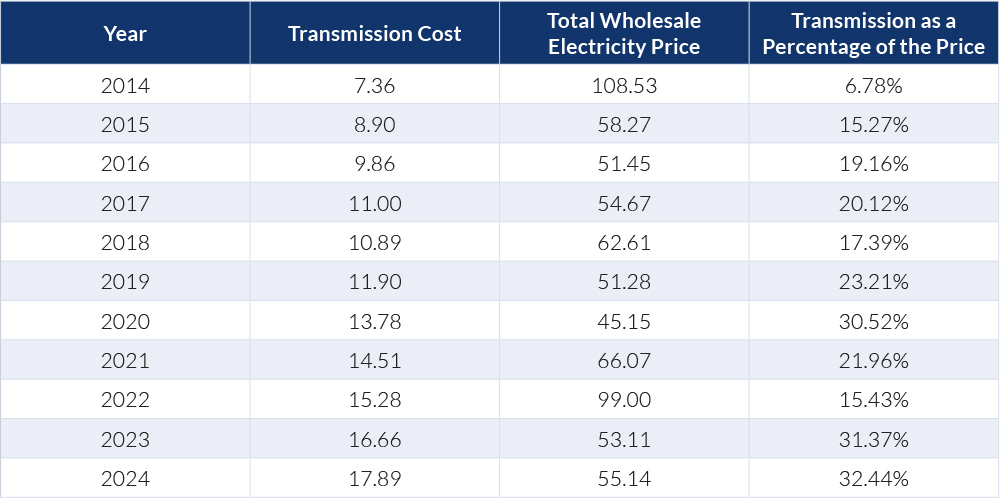
“However, the other portfolios analyzed result in significant, unnecessary financial burdens by aggressively pursuing resources with high transmission interconnection upgrade costs” not needed to achieve the same benefits, Tri-State said.
The new resources are needed in part due to the retirements of the Craig and Springerville coal-fired power plants, slated for 2028 and 2031, respectively.
“Retirement of dispatchable coal resources cannot be affordably or reliably replaced solely with semi-dispatchable resources,” Tri-State said.
Commission Chair Eric Blank said he understood the resource diversity benefit of natural gas.
“For me, given our lack of rate regulation over Tri-State, I don’t think we should be substituting our judgment for that of the utility when there’s a tough choice to be made between competing portfolios where either could be deemed reasonable,” Blank said.
Commissioners also agreed with Tri-State that “time is of the essence” for procuring new resources due to a “volatile” market for renewable energy equipment and recent federal tax and trade actions.
Non-gas Portfolio
Other parties had urged Tri-State to choose Portfolio 6, which excludes the new gas-fueled power plant.
The Natural Resources Defense Council and the Sierra Club, filing together as “the conservation coalition,” said the present value of revenue requirements for Portfolio 6 was similar to that of the preferred portfolio when considered over the 19-year analysis period. Portfolio 6 had the lowest PVRR when the social cost of emissions was included, they said.
Portfolio 6 would result in lower GHG emissions for Tri-State “for little to no incremental cost,” the coalition said in a filing. The groups noted that Tri-State must eliminate its Colorado GHG emissions by 2050.
The groups also questioned the excess capacity resulting from the new gas plant and the “explicit assumption that Tri-State will overbuild capacity in order to sell into the market.”
“The commission’s rules, and prudent utility planning, simply do not countenance a regulated utility operating like a merchant generator in the way Tri-State proposes,” the coalition said.