The Bonneville Power Administration released its draft proposed decision to join SPP’s Markets+, noting that a year after the agency issued its record of decision in favor of the market, preparations have advanced to a point where BPA can “move forward with implementation and propose joining Markets+ in October 2028.”
The draft decision differs from the agency’s day-ahead market policy and record of decision that it issued in 2025. Those were “a direction toward participation in Markets+” when the market was still in a “conceptual stage,” BPA staff said during a March 12 workshop discussing the decision. (See BPA Chooses Markets+ over EDAM.)
“We are pleased to share that we have advanced our planning for systems, processes and market implementation because of the rapid progress in Markets+ development,” BPA Administrator John Hairston wrote in a letter announcing the draft decision. “This progress in market development has allowed the agency to advance implementation planning efforts and further evaluate readiness requirements. We are now positioned to move forward with implementation and propose joining Markets+ in October 2028.”
Hairston touted Markets+’s day-ahead and real-time capabilities, writing the market would “ensure a reliable, affordable and abundant energy supply for consumers in the Northwest.”
The decision will allow BPA to continue preparing for market entry and work with customers on day-ahead market implementation, according to the letter.
Hairston’s letter briefly notes that in the lead-up to the earlier ROD, the agency found it would reap greater benefits in Markets+ than in CAISO’s Extended Day-Ahead Market.
The agency is not “revisiting” the issue. Rather, BPA seeks comment only on the March 12 draft decision, Hairston wrote.
Following the release of the ROD, BPA began reviewing its ability to satisfy Markets+ obligations. The agency joins not only as a market participant but also as a balancing authority, transmission operator and transmission service provider, and must therefore “have the capability to perform numerous tasks,” Hairston noted.
“Bonneville will continue to engage in proactive planning for both agency and customer Markets+ participation activities throughout this process,” according to the letter. “Bonneville’s customer and stakeholder engagement will be ongoing, including through its day-ahead market workshop series, tariff proceedings and rate case processes.”
The first wave of participants will join Markets+ on Oct. 1, 2027: Arizona Public Service, Salt River Project, Tucson Electric Power, Powerex and Xcel Colorado. BPA expects to join a year later alongside Chelan County Public Utility District, Grant County Public Utility District, Puget Sound Energy and Tacoma Power.
Stakeholders have until April 3 to comment on the draft decision.
PJM’s Independent Market Monitor warned that the cost of wholesale power in the RTO will continue to rise with the rapid addition of data center load without enough capacity to serve it.
According to the Monitor’s State of the Market report for 2025, released March 12, PJM’s total cost of power rose nearly 49%, from $55.52/MWh in 2024 to $82.67/MWh in 2025. Of that, the cost of capacity rose 262%, from $3.61 to $13.09, after two Base Residual Auctions that saw record clearing prices.
“Data center load growth is the primary reason for recent and expected capacity market conditions, including total forecast load growth, the tight supply and demand balance, and high prices,” the Monitor wrote. “But for data center growth, both actual and forecast, the capacity market would not have seen the same tight supply demand conditions; the same high prices observed in the 2025/26 BRA [held in 2024], the 2026/27 BRA and the 2027/28 BRA; and the currently expected tight supply conditions and high prices for subsequent capacity auctions.”
In both the report and in a teleconference with reporters, Monitor Joe Bowring blasted PJM for “continuing to simply accept the interconnection of large data center loads that cannot be served reliably because there is not adequate dispatchable capacity.”
“But the consensus seems to have moved to, ‘Well, let’s interconnect them, but let’s curtail them whenever that capacity is needed by other customers,’” Bowring told reporters. “That’s easier said than done.”
The high capacity prices have had a direct effect on retail prices, with ratepayers seeing spikes beginning June 1, 2025. “Just a simple fact,” Bowring said. “There’s been a lot of attempts to confuse the issue. … It is entirely about data centers.”
The Monitor urged changes to the capacity market to account for data center load before the next BRA in June. It also argued that its proposal for the reliability backstop auction, instigated by the governors of PJM’s member states and the White House, is the only one consistent with both the principles laid out by the government and the Ratepayer Protection Pledge signed by several large tech companies.
Those documents “establish two essential core principles: that the data centers must bear their own costs and risks and not shift them to other customers, and that the data centers must bring their own new generation in any one of a number of forms or be fully curtailable,” the Monitor wrote. “The temptation to create complex regulatory structures to shift data center costs and risks to other customers should be resisted. … Other PJM customers, whether residential, commercial or industrial, should not be treated as a free source of insurance for data centers.”
Bowring was blunter on the teleconference: “Really the only purpose of running this backstop auction is for data centers that have not managed or don’t want to be involved in negotiating bilateral contracts with generation developers to meet their demand.”
A reporter asked about data centers’ opposition to long-term bilateral contracts with utilities, as they argue load forecasts are uncertain. Instead, they want PJM to act as the counterparty for a predetermined amount of capacity in the backstop auction. (See PJM Plans to Release Reliability Backstop Design in April.)
“I mean, think about what that’s saying: that individual data centers don’t know what their demand is?” Bowring replied. “That’s not a plausible statement. I think part of what the data centers are doing is trying to make things sound more confusing than they are in order to avoid taking responsibility for their load.”
Making the RTO a counterparty “makes every other customer in PJM a source of free insurance for the data centers, which is ironic because these are some of the biggest, most profitable companies in the world,” he said.
The quarterly meeting of NERC’s Reliability and Security Technical Committee in Phoenix saw updates and progress on key ERO initiatives, as NERC leaders confirmed that big changes are coming.
NERC Trustee Sue Kelly, who has served as liaison between the ERO’s Board of Trustees and the committee for the past two years, told members that “management is already hard at work” preparing to implement the recommendations of the Modernization of Standards Processes and Procedures Task Force. Trustees voted to accept the recommendations at their most recent meeting in February, and NERC’s management said it hopes to finish the transition by the end of 2027. (See NERC Board Accepts MSPPTF Recommendations.)
Implementing the MSPPTF’s proposals would put the RSTC at the center of NERC’s standards development process and “require a collective change in mindset” from members, Kelly said. The committee would be in charge of vetting all standard initiation requests twice a year to determine the appropriate action.
“This committee will definitely be in the mix as things move forward, [and] I will do all I can to support that effort,” Kelly said. “Your role in SIR review is going to have to take place in a substantially shorter time frame than you all are used to working under, and we’re all going to need to adjust our time expectations accordingly.”
Kelly and NERC Chief Engineer Mark Lauby highlighted the importance of the committee’s work on large loads, which Kelly called an “incredibly high-profile” topic that “we do not have a moment to lose … to address.”
Lauby told attendees that NERC is “moving swiftly toward” a Level 3 alert on large loads that will identify “essential actions” for recipients to follow. It follows a Level 2 alert in 2025 that provided recommendations on large loads; Lauby said NERC will release a report on the responses to that alert “soon.”
Action on Large Loads, DERs
The discussion of large loads continued as committee members approved a proposed policy paper on challenges integrating large loads into the electric grid. NERC’s Large Loads Working Group developed the paper, which includes topics on the interconnection process, planning and resource adequacy, modeling, security and resilience, disturbance ride-through and load balancing; industry provided comments June 16-July 17, 2025.
Members also approved a technical reference document from the System Planning Impacts from Distributed Energy Resources Working Group, created in response to industry comments on a standard authorization request relating to the role of DERs in operational planning analysis and real-time assessments. SPIDERWG members developed the document to suggest possible resolutions to stakeholders’ comments and to “demonstrate the current industry practices associated with modeling DERs.”
Also approved was a security guideline on voluntary best practices for physical security protection at electric facilities. NERC’s Security Working Group proposed the guideline as a replacement for an existing document based on input from asset owners and operators. It emphasizes a layered defense approach incorporating physical security controls, electronic systems, security personnel and effective corporate security policies.
The last document approved by RSTC members at the meeting was an implementation guidance document for reliability standard PRC-023-6 (Transmission relay loadability). The paper applies to requirement R1 of the standard, which concerns protective relay settings, and clarifies the criteria by which asset owners can evaluate phase protective relay element settings.
The RSTC also accepted several documents to post for industry comments, including reliability guidelines on operating reserve management and on modeling of aggregate DERs, and a security guideline on DER aggregators and inverter-based resources. A policy paper on the use of artificial intelligence and machine learning also was accepted for comment by RSTC members, as was a technical reference document on supply chain risk mitigation strategies.
In a potential hurdle to Blackstone Infrastructure’s acquisition of TXNM Energy, state regulators have ordered Blackstone to provide legal justification for its purchase of 8 million shares of TXNM stock without the regulators’ consent.
Two hearing officers with the New Mexico Public Regulation Commission on March 11 issued an order to show cause related to the stock purchase. The order starts an investigation but does not determine whether any violations occurred.
TXNM and Blackstone Infrastructure announced in May 2025 Blackstone’s proposed $11.5 billion purchase of TXNM, the parent company of Public Service Company of New Mexico (PNM) and Texas-New Mexico Power (TNMP). Under the proposal, TXNM would be acquired by Blackstone Infrastructure subsidiary Troy Parent Co.
In June 2025, Troy TopCo LP, which owns Troy Parent, closed on a deal to buy 8 million shares of TXNM stock for $400 million. The stock purchase made Troy TopCo TXNM’s third-largest shareholder, with about a 7.59% ownership, according to filings in the case.
On Feb. 6, Prosperity Works filed a motion asking the commission to look more closely at the stock purchase. On its website, the group says its mission is to promote “economic prosperity for all New Mexicans.”
Prosperity Works argued that under New Mexico Statutes section 62-6-12, buying stock of a public utility or holding company requires PRC approval if the purchase is for the purpose of acquiring a public utility or holding company. Without commission approval, the purchase “shall be void and of no effect,” the statute states.
In their response, TXNM and Blackstone said the statute applies only to transactions that result in a change in control of a public utility or holding company. They said the stock purchase was a financing transaction separate from the proposed acquisition.
The PRC hearing officers’ order said Blackstone’s response does not fully address Priority Works’ concerns.
“Further inquiry is necessary to ensure that the joint applicants have properly adhered to the statutory obligations presented in Section 62-6-12,” the hearing officers said in their order. TXNM and Blackstone must show why the stock purchase didn’t violate state law and, if a violation did occur, what the legal and practical implications are.
Blackstone and TXNM are required to file briefs by April 6. Other parties in the case may also file comments by that date, and responses are due by April 20. Hearing examiners will then hold a hearing.
Among parties formally supporting Prosperity Works’ motion is the New Mexico Department of Justice, which filed a brief in the case Feb. 19.
“State law requires oversight when public utility stock is issued in connection with a transaction like this,” Attorney General Raul Torrez said in a statement. “We are asking the commission to ensure that all legal requirements are satisfied and that the public interest remains the guiding priority.”
Other supporters include New Energy Economy, the New Mexico Consumer Protection Alliance, the Coalition for Clean Affordable Energy and PRC staff.
Blackstone’s bid to buy TXNM Energy comes after a previous attempt to buy PNM failed. Avangrid announced in January 2024 that it was pulling out of its proposed $8.3 billion acquisition of PNM Resources, as the deal remained tied up at the New Mexico Supreme Court. (See Lights out for Avangrid’s PNM Acquisition.)
As part of the proposed Blackstone acquisition, PNM would provide $175 million in benefits to customers and the state — including a $105 million acquisition rate credit, the companies said in August 2025. PNM said the acquisition would help it meet key goals, including transitioning to clean energy, modernizing and hardening the grid, and building new transmission. (See PNM Seeks Approval for Blackstone Acquisition.)
The Trump administration has sued California over its electric vehicle law, claiming it amounts to an illegal, state-specific mileage requirement for carmakers.
The U.S. Department of Justice filed the lawsuit on behalf of the National Highway Traffic Safety Administration (NHTSA), which under the Energy Policy and Conservation Act is supposed to establish “uniform, nationwide vehicle fuel economy standards.”
“Oppressive, expensive electric vehicle mandates drive up costs for American consumers and violate federal law,” Attorney General Pamela Bondi said in a statement March 12. “California is using unlawful policies from the last administration to create exorbitant costs for our citizens.”
The lawsuit names the California Air Resources Board (CARB) as a respondent, arguing that its carbon and zero-emissions vehicle mandates are related to fuel economy standards because they effectively increase fuel economy, which is determined by how much carbon is emitted from a vehicle’s tailpipe.
“CARB’s standards and mandates also undermine and conflict with NHTSA’s congressionally assigned role in establishing nationwide, uniform vehicle fuel economy standards,” the lawsuit said. “CARB’s CO2 standards and ZEV mandates create a patchwork of inconsistent regulation for vehicle and engine manufacturers in an area where Congress imposed a uniform, national approach.”
The Environmental Defense Fund called the lawsuit “reckless,” saying the ZEV standard protects Californians from health-harming and climate-destabilizing pollution.
“California’s standards are firmly anchored in our nation’s clean air laws,” EDF Associate Vice President Peter Zalzal said in a statement. “For more than half a century, and across both Republican and Democratic presidential administrations, California has adopted standards that cut pollution and result in enormous health benefits for people across the state.”
DOE Announces Funding for ATTs
The U.S. Department of Energy announced a $1.9 billion funding opportunity to accelerate upgrades to the nation’s power grid, saying the investments will meet rising electricity demand and resource needs while lowering costs for consumers.
DOE said the “Speed to Power through Accelerated Reconductoring and Other Key Advanced Transmission Technology Upgrades” opportunity builds on the Grid Resilience and Innovation Partnerships program, which offered up to $10.5 billion in funding over five years to states, tribes, utilities and others to strengthen grid resilience and innovation. (See DOE Announces $2.2B in Grid Resilience, Innovation Awards.)
“Thanks to President Trump, we are doing the important work of modernizing our grid so electricity costs will be lowered for American families and businesses,” U.S. Secretary of Energy Chris Wright said in a statement March 12.
DOE wants concept papers by April 2, and full applications are due May 20. The agency expects to make selections in August.
The funding was welcomed by the WATT Coalition, with its Executive Director Julia Selker saying ATTs can help address affordability.
“American utilities have demonstrated that ATTs could unlock gigawatts of grid capacity and save billions in electricity costs if scaled across the country,” Selker said. “This funding will help utilities scale up their ambitions and timelines for transmission grid modernization.”
A new MIT study posits that while retail electric rates are higher in states that have renewable portfolio standards, the standards are not to blame. Instead, utility-scale wind and solar generation show a weak correlation with lower prices, the authors say.
More likely drivers of rate increases include cost-recovery mechanisms for rooftop solar embedded in certain tariffs, grid-hardening necessitated by climate change and the proliferation of data centers.
The correlation between renewable energy policies and electricity prices is relatively straightforward, but correlation famously does not imply causation, and as the title suggests, much of the study is devoted to separating and explaining the factors and causes at play.
Professor Christopher Knittel, MIT Sloan’s associate dean for climate and sustainability, and Fischer Argosino, a graduate researcher at the MIT Center for Energy and Environmental Policy Research, analyzed U.S. electricity and utility spending data from 1998 to 2023, including residential prices, power generation mixes, utility spending and state renewable portfolio standards (RPS).
They said the opposite rate impacts they found for utility-scale and distributed renewables are due partly to the fundamental differences in their design.
“Energy generated by large-scale solar plants, for example, comes with lower transmission, distribution and maintenance costs for utilities, and these efficiencies can be passed on to the consumer,” Knittel said in the news release.
But rooftop solar creates a two-way system out of distribution networks that were designed for a one-way flow from central generation plants to consumers, the authors said. They found this bi-directional flow was strongly correlated with higher operations and maintenance costs, as utilities managed the complex harmonization of thousands of decentralized generators across an aging grid.
“Our antiquated distribution networks are struggling to manage these flows,” Argosino said. “When we defer essential grid upgrades while simultaneously incentivizing rooftop exports, we create an operational strain that inevitably shows up as higher costs on everyone’s utility bills.”
But not uniformly higher. State financial incentives for rooftop solar can shift some of the costs of maintaining the grid onto ratepayers who do not have solar panels, even though solar owners derive full benefit of the grid to power their homes and export their solar panels’ output.
This exacerbates existing inequities, the authors said — those who put solar panels on the roofs of their homes are likely to be wealthier than those who do not.
Knittel and Argosino say decarbonization need not be at odds with electric rate affordability, if policies can be updated to match the changes in technology.
They suggest prioritizing utility-scale wind and solar to maximize economy of scale, modernizing distribution networks and adjusting fee structures so that all who benefit from grid infrastructure contribute to the cost of its maintenance.
The research is built on data from the U.S. Energy Information Administration, FERC and the Lawrence Berkeley National Laboratory. The years studied span a period before, during and after the widespread adoption of state RPS.
Although large loads are not new to California or the West, CAISO is formulating technical standards that address their potential boom over the coming years.
Developing the standards is a critical step to ensure artificial intelligence data center and electric vehicle large loads will reliably and safely interconnect to CAISO’s grid. The ISO established a working group on the issue in 2025 and opened a new large loads initiative Feb. 27.
“Large loads are a topic of extreme urgency and interest lately, especially with the emergence of artificial intelligence,” Danielle Mills, CAISO principal of infrastructure policy development, said at a March 10 workshop. “But we also consider large loads to be more than just data centers and AI. While data centers do present the largest use case, we are also looking at things like electric vehicle charging, electrification of buildings, and industrial processes and agricultural processes and the like.”
CAISO’s 2025/26 transmission plan shows 4.5 GW of data center capacity online currently, with an additional 1.8 GW added by 2030 and 4.9 GW more by 2040.
“We do proactively plan for these types of large loads through the integrated planning process with the California Energy Commission,” Mills said. “We are always trying to stay ahead of any new demand for large loads, but we are aware that this is really dynamic space right now and that we are seeing increasing numbers of large load interconnection service applications at the utilities.”
CAISO is developing a definition of what constitutes a large load and new requirements for voltage and frequency ride-throughs, along with setting limits on rapid ramping and pulsating load levels. (See CAISO Examines ‘Pulsating’ Data Center Loads.)
One topic of concern is how large loads consume power or reduce load during grid disturbances, such as during a post-fault active power recovery (PFAPR) moment.
“Our mission is to ensure large loads continue to draw power from the grid during and following grid disturbances,” Ebrahim Rahimi, CAISO senior adviser for transmission planning, said at the workshop.
During a PFAPR, large loads will be allowed to reduce their power consumption during and immediately after severe faults, Rahimi said. However, after the fault is cleared and voltage returns to normal, the power consumption from the grid should be required to recover to — or close to — pre-disturbance levels within a given time, Rahimi said.
Another concern is persistent small load fluctuations. Even modest but continuous fluctuations in load can produce voltage flicker or unacceptable variations in local power quality, CAISO staff said in a large loads issue paper.
Over time, these load fluctuations might increase mechanical fatigue in equipment, such as in rotating machines and transformers. Requirements will need to ensure that persistent small-signal load variations remain within acceptable limits, staff said.
CAISO is also following NERC’s formulation of national standards for large loads, such as for computation loads from AI training centers. Rahimi said those standards will be ready for approval at the end of 2026, and NERC plans a large load Level 3 alert in May or June.
CAISO has not yet decided where large load technical requirements ultimately will be documented and enforced, he said.
“Although we are coming up with these technical requirements … how these requirements will be documented has not been decided at this point,” Rahimi said. “The whole idea is to come up with these requirements and ensure reliability, and then at a later stage a decision will be made about where to document them.”
CAISO plans to publish a straw proposal in April that includes technical requirements, transmission service offerings and cost-allocation methods for large loads.
New York energy storage and solar trade groups are seeking an immediate end to what they say is an effective freeze on interconnection of distributed storage facilities by the state’s largest investor-owned utility.
The New York Battery and Energy Storage Technology Consortium (NY-BEST) and New York Solar Energy Industries Association (NYSEIA) filed a petition for emergency rulemaking March 11 asking the Public Service Commission to restrict Consolidated Edison from applying an “unlawful and arbitrary” review standard for New York City storage projects.
They charge that Con Edison’s review process was implemented without legal justification, is causing irreparable harm to the storage industry and is exacerbating grid reliability concerns in the region. There was no need to change the way storage is studied under the state’s Standardized Interconnection Requirements, they argue, but if such a need did exist, there are much better ways to address it.
The utility stood by its actions.
“Con Edison supports battery storage as a critical part of New York’s clean energy transition, and the rapid growth in applications reflects strong market momentum,” Vice President for Distributed Resource Integration Raghu Sudhakara told RTO Insider via email March 11. He added, however, that the sector’s expansion must be carried out in a way that does not shift new infrastructure costs onto the utility’s ratepayers.
The disagreement has been fermenting for months, and it spans PSC cases on energy storage (18-E-0130), distributed generation and storage (24-E-0621) and New York City reliability needs (25-E-0764).
Battery energy storage systems (BESS), with their dispatchable output and lack of on-site emissions, are one of the potential solutions in the densely populated region; over 2,000 MW of capacity have been proposed.
On Aug. 15, 2025, Con Edison notified developers that it had placed on hold all BESS proposals seeking interconnection at seven constrained substations. It added 21 more substations to the list Sept. 16.
NY-BEST on Jan. 13 petitioned the PSC for “urgent action” on the utility’s move. It supported its call for immediate relief from Con Edison’s new restrictions on BESS interconnection with a white paper outlining suggested changes in interconnection and market rules to better enable storage to provide maximum value to the grid.
The infrastructure upgrade requirements resulting from Con Edison’s changes to the Coordinated Electric System Interconnection Review rendered most of the energy storage projects proposed in New York City economically unviable, NY-BEST said.
The organization also flagged the “fundamental misalignment between utility financial incentives and New York’s energy affordability goals”: A utility earns a regulated rate of return on capital expenses such as infrastructure upgrades, but not for facilitating third-party BESS interconnections.
The PSC on Feb. 20 solicited public comment on the petition but took no action to change or limit Con Edison’s practice.
On Jan. 14, Con Edison told the PSC there were 115 MW of operational BESS and 865 MW with executed interconnection agreements in the utility’s service area as of Dec. 31. But the interconnection queue for BESS proposals with 5 MW or less capacity had reached 2,500 MW, up 300% in two years.
That is a quarter of its 10-GW peak load in 2024, Con Edison wrote.
A problem, it said, was that the BESS proposals were being concentrated in areas with less expensive land and more favorable zoning — 65% of the storage megawatts in the queue would be supplied by just 10 of the company’s 63 substations. More than 20 substations were at or near hosting limits.
Because BESS typically would seek to recharge overnight, full buildout would make night peaks exceed daytime peaks and require new infrastructure that otherwise would not have to be built. Con Edison sought to put the developers on the hook for the resulting costs, which it said could run in the $100 million to $1 billion-plus range.
“As the market scales, storage must deliver real benefits to customers — not drive new infrastructure costs that show up on bills — which is why we are working with regulators and stakeholders to align growth with real-world grid conditions preserving grid reliability while also protecting affordability,” Sudhakara explained. “Without reforms, current policies risk shifting significant new costs to customers, undermining both affordability and the long-term success of storage.”
NY-BEST and NYSEIA in their petition attempt over the course of 26 pages to punch holes in the legality, accuracy and necessity of Con Edison’s steps to carry out the priorities Sudhakara cited.
They ask the PSC for an emergency rule to immediately block Con Edison from using the restrictive requirements for distributed storage applications and keep the ruling in place while it considers NY-BEST’s Jan. 13 petition.
As Nevada regulators consider NV Energy’s request to join CAISO’s Extended Day-Ahead Market, the debate over the independence of EDAM’s governance has reached a critical point.
EDAM proponents and opponents shared their views during a Public Utilities Commission of Nevada hearing March 10. The parties also sounded off in written testimony and rebuttal comments filed with the PUCN in February. The commission is expected to vote April 3 on NV Energy’s EDAM request.
“I recommend that the commission prioritize the independence of the market’s governance over most other factors,” David Patton, president of Potomac Economics, an independent market monitor for four RTOs/ISOs, said in written testimony filed on behalf of Powerex and Wynn Las Vegas, a luxury resort and NV Energy customer. Powerex has committed to joining SPP’s Markets+, a competing day-ahead market.
Through the West-Wide Governance Pathways Initiative and California Assembly Bill 825 of 2025, governance of EDAM and CAISO’s Western Energy Imbalance Market is being shifted to a Regional Organization for Western Energy (ROWE). Some see the ROWE as a means to alleviate concerns among potential market participants that CAISO, whose governing board is appointed by the California governor, plays too large a role in the markets’ governance.
Patton said the ROWE is “a very positive step” in the governance of EDAM and WEIM. But he said the entity is proposed to have minimal staff and that “critical roles,” including market operation, would remain with CAISO.
During the March 10 hearing, NV Energy representatives and intervenors in the case presented witnesses for questioning by the other parties in attendance. PUCN Chair Hayley Williamson presided over the session.
Attorney Curt Ledford with Davison Van Cleve grilled Stacey Crowley, CAISO’s vice president of external affairs, about EDAM governance. Ledford represents Powerex and Wynn Las Vegas.
Ledford asked Crowley to read aloud Section 345.5(a) of the California Public Utilities Code, which directs CAISO to “conduct its operations … consistent with the interests of the people of the state.”
“When you read ‘the state,’ do you understand [that to mean] the state of California, not the state of Nevada?” Ledford said.
“Correct,” Crowley responded.
Ledford asked Crowley about the steps needed to establish the ROWE. While the ROWE has an interim board, it doesn’t yet have staff. A consumer advocate office must be established, and a service agreement needs to be drawn up between the ROWE and CAISO. That agreement must be reviewed by the California Public Utilities Commission for conformance with AB 825 and likely will need FERC approval.
CAISO wants to wait until the permanent ROWE board is in place before negotiating the service contract, Crowley said.
“Would it be fair to say that this entire ROWE exercise could be for naught if CAISO doesn’t pursue it?” Ledford asked.
Crowley disagreed.
“The [ROWE] could exist without California participation,” she said, later clarifying that the ROWE “could take on other Western services if they so choose.”
In response to Ledford’s questioning, NV Energy attorney Roman Borisov asked Crowley whether the Pathways Launch Committee has the most control over the Pathways Initiative at this time. Crowley said yes, noting that the committee has broad representation from across the West and industry sectors.
Until the ROWE takes over governance, EDAM and WEIM are being overseen by the Western Energy Markets Governing Body, which has shared authority with the CAISO Board of Governors.
Without NV Energy, EDAM would lose a large and central piece of its footprint.
David Rubin, NV Energy’s federal energy policy director, said Section 345.5 of the California Public Utilities Code was adopted before CAISO was running a regional market. He noted that AB 825 added Section 345.6, which allows California utilities to participate in a CAISO market that has independent governance if the FERC tariff for the market includes a requirement to respect the authority of each participating state. That authority includes setting procurement, resource adequacy, environmental, reliability “and other public interest policies.”
The language “reflects a clear recognition that the regional markets — including the EDAM — must accord equal respect to the policy interests of all participating states,” Rubin said in written rebuttal testimony.
Rubin said market participants and regulators must have confidence in the overall fairness of a market’s governance.
He said other key reasons why NV Energy chose EDAM are the company’s positive experience in the WEIM; expected costs of day-ahead market implementation; EDAM’s expected market footprint and interconnectivity of participants; and transmission work within the footprint that will enhance interconnectivity and supply diversity.
Additional reasons are EDAM’s market design and projected financial, reliability and environmental benefits.
“These factors favor the EDAM over Markets+,” he said.
Oregon and Washington lawmakers are exploring ways to build new transmission independent of the Bonneville Power Administration as electric sector stakeholders in the Pacific Northwest worry about the agency’s struggle to build transmission fast enough to keep up with aggressive clean energy laws and increased load.
BPA paused certain planning processes in 2025 to consider how to address nearly 61 GW of transmission service requests. The agency presented several proposals to reduce the queue, but concerns have been raised that many of the efforts would go into effect after the 2030 deadline for utilities in Oregon and Washington to meet strict greenhouse gas standards.
Former BPA Administrator Randy Hardy has argued the issue lies with the states’ respective clean energy laws, which he said set off a “gold rush” among developers, leaving BPA to solve the issue of building enough transmission to keep up. His comments received support from utilities and other organizations during BPA meetings. (See BPA Tx Planning Overhaul Prompts Concern for Northwest Clean Energy Compliance.)
For Gamba, the issue is not the law’s requirements but rather that BPA, which controls approximately 75% of the region’s high-voltage transmission, has failed to build enough transmission.
“I’m less concerned with HB 2021 and the law as I am with the fact that we are still burning fossil fuels in the state of Oregon to supply energy to a rapidly growing load. That needs to come to a screeching halt,” he said. “But the only way that’s going to happen is if we build more transmission.”
As a federal entity, BPA does not have to follow mandates imposed by the Oregon legislature. The agency has focused on its preference customers — publicly owned utilities that rely on it for generation — and failed to realize “they are the backbone of the transmission system in the whole Pacific Northwest,” Gamba contended.
The situation worsened in 2025 after approximately 200 employees accepted a “deferred resignation” buyout offer under President Donald Trump’s effort to slim down the federal government, according to Gamba.
BPA declined to comment for this story, but the agency has noted its efforts to build out transmission and generation.
For example, when BPA paused its transmission planning processes to deal with the 61 GW of generation in its current interconnection study, it identified 16 GW of late-stage projects that are being integrated at a rate of roughly 1 to 1.5 GW/year, with the goal of integrating the full 16 GW by 2035, according to the agency.
As for transmission, the agency secured $773.8 million in transmission capital for 2025 with the goal of doubling transmission capital execution by 2028. It plans to issue awards to contractors in March 2026 that will cover a 10-year period with a maximum value of $25 billion to build and modify lines.
BPA also launched its $5 billion Grid Expansion and Reinforcement Portfolio initiative in 2023 with the aim of building 23 new transmission lines and substation projects.
However, Gamba said BPA was “pretty nonresponsive” even before staffing cuts, adding that he doubts the agency will “start building significant new lines anytime soon.”
Instead, the Democratic lawmaker thinks Oregon should take matters into its own hands. Gamba presented a bill in 2025 aimed at creating a transmission authority (TA) and intends to revive that effort in 2026.
“We just need some entity to act like an adult in the room and actually start developing the transmission that we need,” Gamba said.
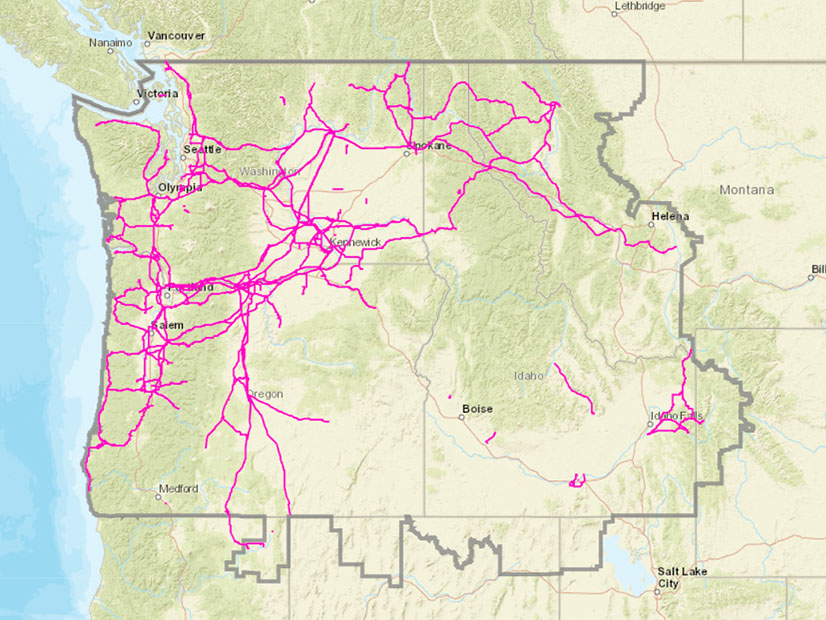
A map over BPA’s transmission assets within the Pacific Northwest | BPA
The TA would explore where transmission is needed and begin the siting and permitting process. It then would work with utilities or third parties to get lines built. The approach has found success in New Mexico and Colorado, according to Gamba.
When asked about Gamba’s initiative, Oregon Gov. Tina Kotek’s office noted that the governor issued an executive order in November 2025 aimed at streamlining transmission siting and permitting approvals.
The order recognized that “a coordinated, statewide approach to planning and designating transmission corridors is essential to long-term infrastructure development that will support economic growth and ensure clean energy can be delivered efficiently and reliably to consumers.”
The governor’s office is working with the state’s Department of Energy on developing the framework, which is expected to be completed in fall 2026 to support policy discussions next year, according to a spokesperson.
In an email to RTO Insider, JD Podlesnik, Portland General Electric’s senior director of transmission delivery, said the utility is ready to work with BPA and other regional entities to expand transmission.
Podlesnik noted that PGE has added more than 3,000 MW of clean energy and storage to the grid and recently finalized agreements for an additional 1,000 MW of clean energy resources, “making steady progress toward customer-driven clean energy targets.”
“At the same time, transmission capacity remains a key challenge across the region, both for reliability and clean energy targets,” Podlesnik said in the email. “BPA plays an important role in expanding the transmission network and accelerating the interconnection of new generation resources. Continuing to execute on BPA’s Grid Expansion and Reinforcement Portfolio is one of the critical steps in addressing those constraints.”
Washington Issues
Oregon entities are not alone in grappling with transmission constraints and compliance with clean energy laws. Washington utilities face a similar situation.
A study by Energy and Environmental Economics predicts that accelerated load growth and aging power plant retirements will create a resource gap in the Northwest starting at about 1.3 GW in 2026 and expanding to almost 9 GW by 2030. That is approximately the load of the state of Oregon.
For context, BPA’s White Book released in May 2025 projected the Northwest would have about 27.9 aMW of total (not just federal) generation available in 2026.
As is the case nationwide, data centers and electric vehicles are the primary drivers behind the expected load growth.
And just as in Oregon, Washington’s Clean Energy Transformation Act (CETA) requires all electric utilities in the state to become greenhouse gas-neutral by 2030 (allowing for use of offsets and other programs) on the way to generating all power from emissions-free resources by 2045. It also prohibits utilities from serving their Washington customers with any coal-fired generation after 2025. (See Washington Agencies Adopt New Rules to Implement CETA.)
But again, lack of transmission poses challenges for utilities to meet the law’s requirements.
There is collaboration across state lines to build more transmission independent of BPA, according to Washington Rep. Alex Ramel (D).
Washington lawmakers also seek to create a transmission authority under Senate Bill 6355.
“There is this sort of federal government monopoly in the space,” Ramel said.
Relying too much on the federal government as BPA struggles with staffing shortages “is a real concern,” according to Ramel.
“That, to me, is part of the reason why we need to be more expeditious about how we think about putting together these kinds of projects,” Ramel said in referring to a potential Washington TA. “Because if [BPA] is losing staff, that can only … impact negatively our need to be able to increase clean energy transmission opportunities.”
As for CETA, Ramel said he is not ready to “pull the plug on it.” He acknowledged the law was passed when the region did not have the same electricity use that comes with the development of AI and electric vehicles.
“I could be persuaded to have reasonable extensions or extenuating circumstances for utilities that really can’t meet those goals,” Ramel said. “But right now, I haven’t seen anything that persuades me that those goals can’t be met. We could revisit that in the future if we need to. Right now, I think we should stay full steam and let’s build out clean energy and let’s accelerate transmission.”
Puget Sound Energy, which is one of BPA’s largest transmission customers, has removed coal from its energy portfolio in accordance with CETA and is focused on providing 80% of its electricity from renewable or non-emitting resources by 2030-2033, according to Matt Steuerwalt, PSE’s vice president of external affairs.
Still, BPA’s ability to expand transmission capacity and allow new resources to come online “will have a major impact on our progress toward Washington clean energy laws,” Steuerwalt told RTO Insider.
“We also have to consider permitting and siting for energy infrastructure development undertaken by entities other than BPA, which is a major challenge to building any project,” he added. “We have been following the current legislation closely to see the extent to which it can address these and other issues.”
‘Morass of People’
But for Scott Simms, executive director of the Public Power Council, there are risks with creating separate TAs.
“I think that once you create an additional apparatus to try to do the exact same thing that other organizations are statutorily obligated to do, it’s going to create a morass of people trying to all do the same things,” Simms said.
Instead of solving the transmission challenges, the risk is that additional TAs would “exacerbate the very problem you’re trying to solve,” he added.
Rather, Oregon and Washington should fix the challenging operating environments they have created for consumer-owned and investor-owned utilities alike, Simms contended.
“There’s a variety of things on both the energy policy side with regards to resources and there are fixes on the transmission side when it comes to permitting and the planning process,” he said. “If the states were just to focus on how to best facilitate and streamline the transmission permitting and siting elements, that would be a huge help.”